


By Peter A. McCullough, MD, MPH
When there is an effective solution, many times that is an inflection point for understanding the enormity of the problem. We found that out with micronized Ivermectin-Mebendazole from The Wellness Company.
🦠 The Hidden Burden: Foodborne Parasites
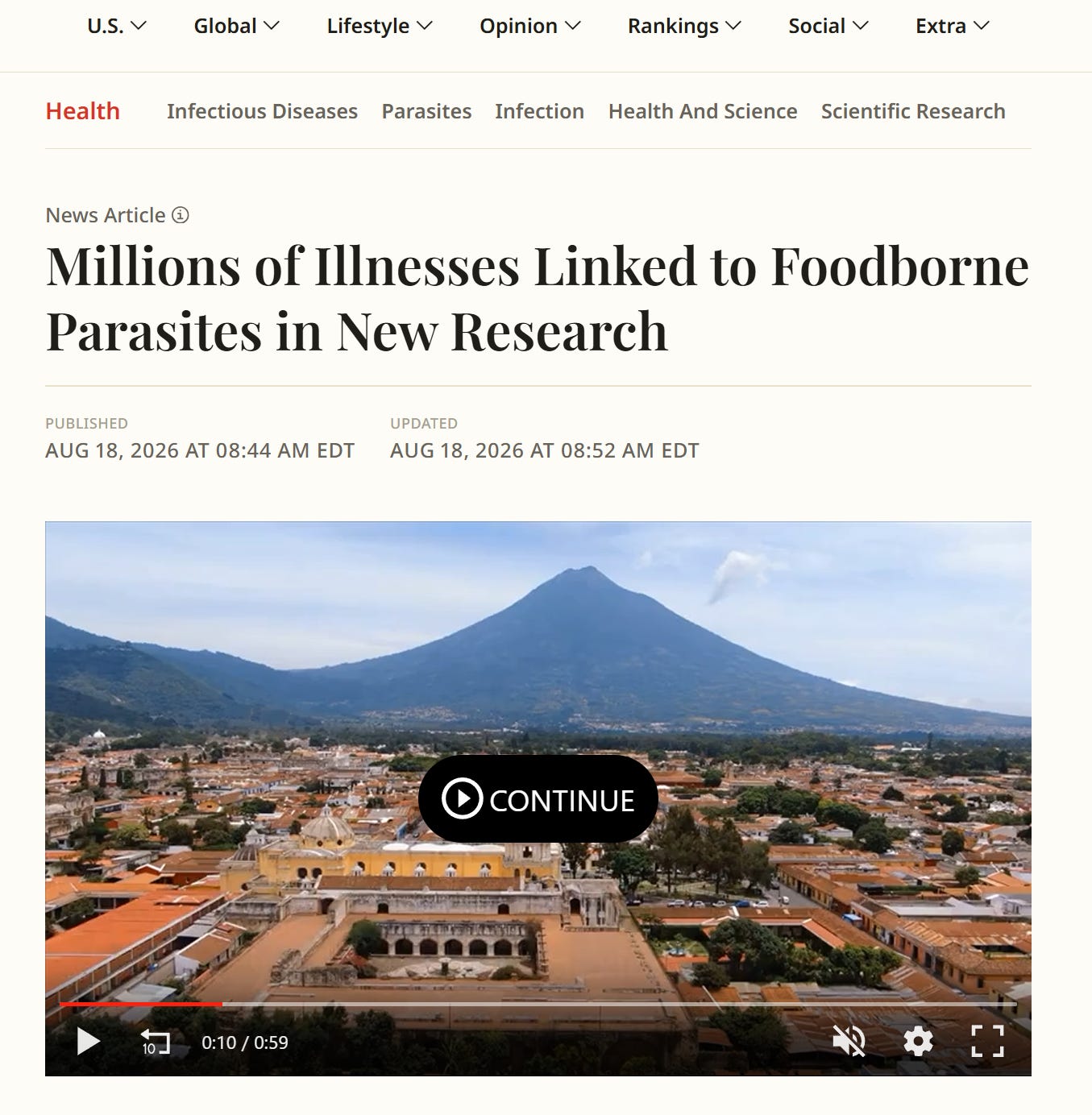
We tend to think of food poisoning as a bad shrimp cocktail or undercooked chicken — a few miserable hours, maybe a day, then back to normal. The Newsweek piece covering a new Lancet Global Health study shatters that comfortable assumption. We’re talking about 277 million illnesses annually linked to potentially foodborne invasive parasites, with roughly 171 million directly attributable to what people eat. These aren’t stomach bugs that come and go. These are parasites that set up shop in your organs, your brain, your heart — and stay there.
📊 The Scale of the Problem
The study examined 14 parasitic diseases across two decades (2000–2021), and the numbers are staggering. An estimated 4.89 million foodborne DALYs (disability-adjusted life-years) were associated with these infections. The biggest contributors were Taenia solium — the pork tapeworm that can cause neurocysticercosis, where larval cysts lodge in the brain triggering epilepsy — and Clonorchis sinensis, the Chinese liver fluke acquired from raw or undercooked freshwater fish.
Professor Lucy Robertson, the study’s lead author, put it bluntly: “Food poisoning is not only bacteria.”
Public health messaging has drilled bacterial contamination into everyone’s head — Salmonella, E. coli, Listeria. But parasites? They’re treated like a tropical curiosity, something that happens elsewhere. Yet the Americas carried the highest burden in this study, largely driven by Chagas disease, which most people associate with kissing bugs, not their dinner plate. Robertson notes that foodborne Chagas transmission actually produces more severe disease than the vector-borne route.

🔴 The Wakeup Call Nobody Asked For
Here’s what should make public health authorities uncomfortable: the overall burden of parasitic diseases was enormous between 2000 and 2021, and Clonorchis sinensis increased on the trend line. Robertson called it unexpected and said it “should be a wakeup call for relevant authorities.”
Testing will identify the serious infections that will require treatment other than IVM-Meb or Bactrim.
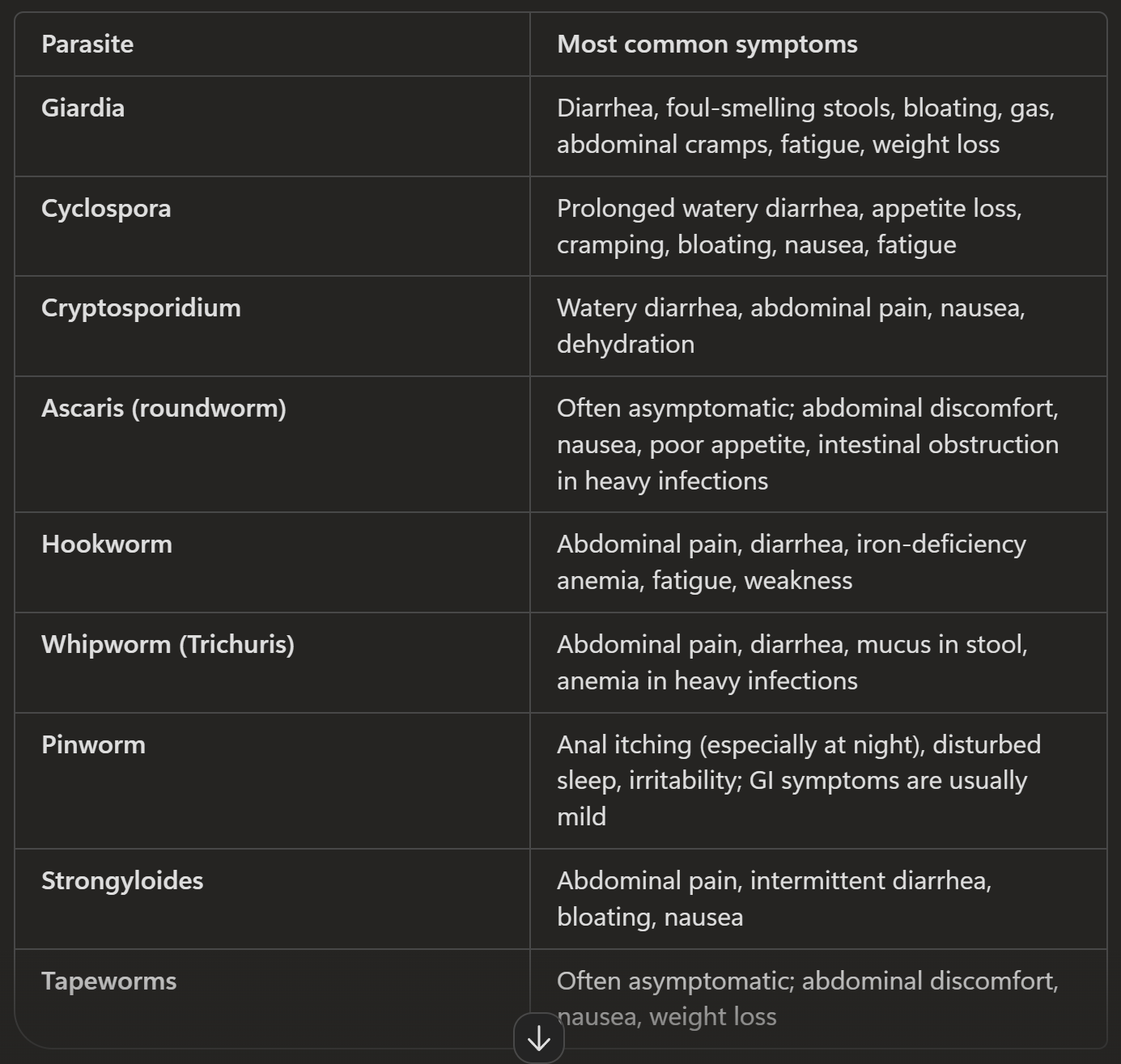
If you are developing new abdominal symptoms, consider the usual suspects: changes in food production and distribution, more international travel, and — critically — the growing appetite for raw or undercooked foods. Sushi bars, ceviche, rare steak, raw milk.
🧬 What Prevention Actually Requires
The article correctly emphasizes that prevention isn’t simple. You can’t just tell people to cook their food thoroughly and call it a day. Many of these parasites are zoonotic — they cycle between animals, the environment, and humans. That means a “One Health” approach is essential: veterinary surveillance of animal hosts, control of infection in livestock, safe water systems, proper waste disposal, and food-safety infrastructure that actually works.

Most doctors in developed countries aren’t trained to think about parasitic infection when a patient walks in with seizures or heart failure. That diagnostic delay means more suffering, more transmission, and worse outcomes.
From the list of parasites in this paper Ascaris and Trichinella are treatable with IVM-Meb. However in the United States their is a more responsive range of organisms:
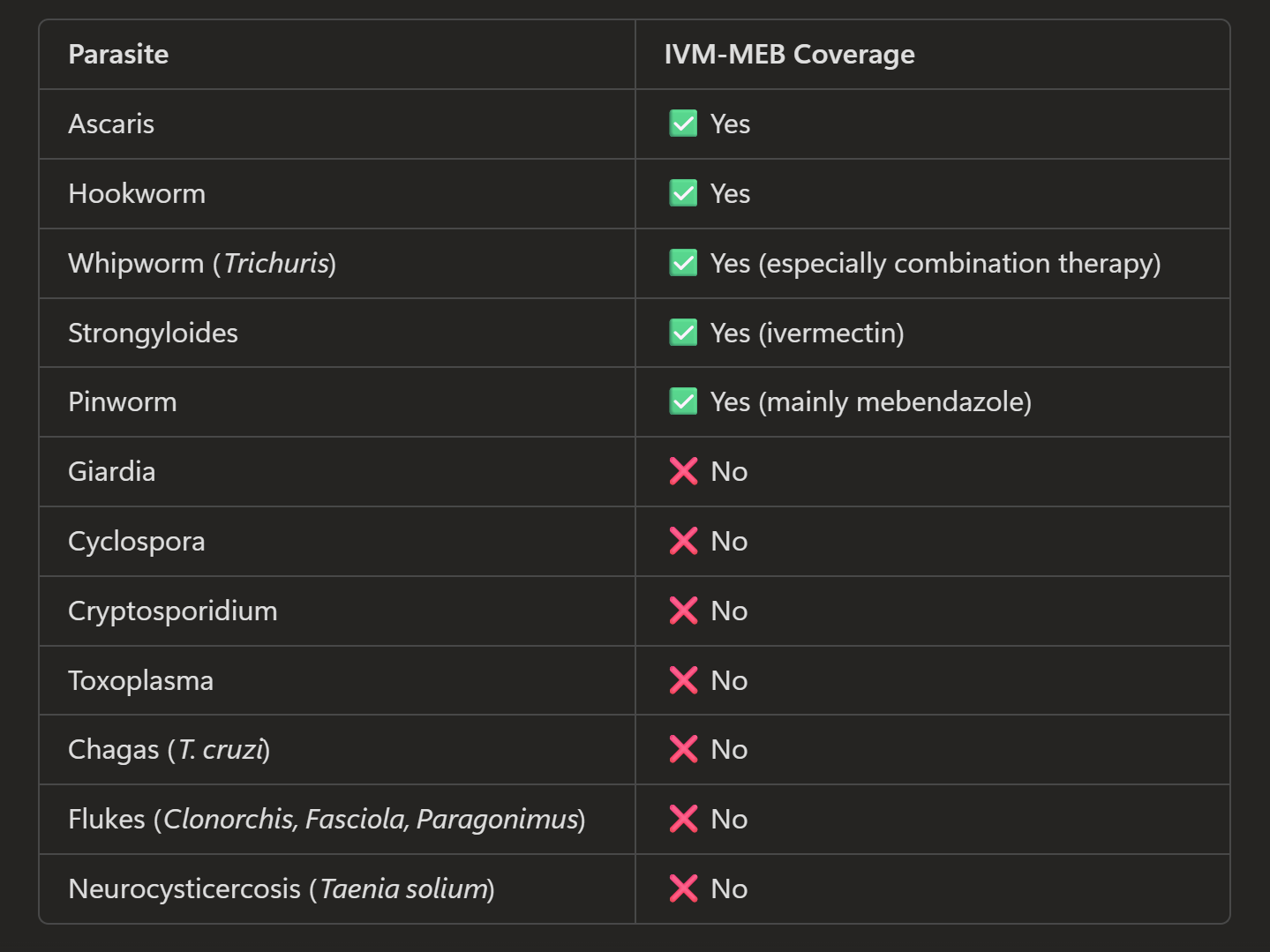
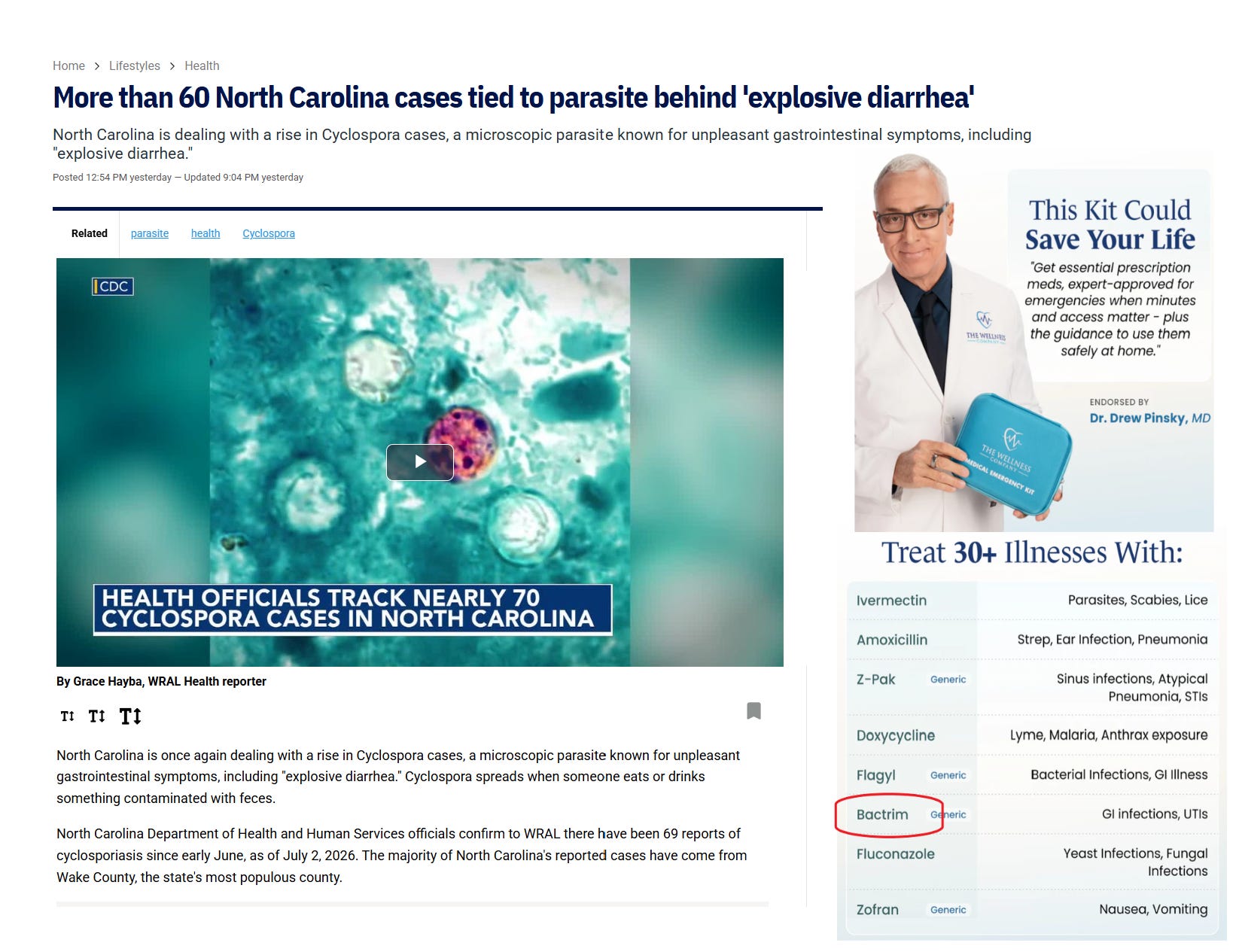
It’s important to remember that the current outbreak this summer in the United states is from Cyclospora a protozoa, where the treatment is TMP-SMX in the Emergency Medical Kit from The Wellness Company.
🧠 What the Article Gets Right — and What’s Missing
The Newsweek piece does a solid job translating the study’s findings into accessible language, and it avoids the trap of sensationalism. Authors are both quoted directly, and the key statistics are presented clearly.
What’s missing — and this is a limitation of the format, not necessarily the reporting — is any real scrutiny of why parasitic disease surveillance remains so neglected. The pharmaceutical industry has little incentive to develop novel antiparasitics when the patients who need them can’t pay premium prices.
There’s also the uncomfortable reality that global food supply chains have made these diseases everyone’s problem. That ahi tuna steak in Manhattan could be carrying something that originated in a Southeast Asia. The boundaries that once contained these parasites are gone.
Please subscribe to FOCAL POINTS as a paying ($5 monthly) or founder member so we can continue to bring you the truth. AlterAI may be used to assist in searches, synthesis, and review.
Peter A. McCullough, MD, MPH
Chief Scientific Officer, The Wellness Company
📝 References
Robertson, L. J., et al. (2026). “Burden of foodborne invasive parasitic diseases, 2000–2021: a systematic analysis for the Global Burden of Disease Study.” The Lancet Global Health. https://www.sciencedirect.com/science/article/pii/S2214109X26001440
Dewan, A. (2026, August). “Millions of Illnesses Linked to Foodborne Parasites, New Study Warns.” Newsweek. https://www.newsweek.com/millions-illnesses-linked-foodborne-parasites-new-study-warns-12332674
After returning from Cambodia, I returned home feeling 100% fine. But several months later, I developed very sudden onset periodic fevers followed by a severe wracking cough that would last several weeks. Then I would be fine for the next few months and then it would repeat. The doctors were puzzled and kept talking about TB or lung cancer. One wanted to do a lung biopsy which I declined. This happened several times a year. I finally quit asking the doctors because they clearly didn't know and I did not want so many lung x-rays. Secretly I thought I was dying of lung cancer. The episodes kept happening several times a year for 2 years until a colleague who traveled constantly to Asia witnessed the sudden onset. He asked me, "when you come back from Asia do you worm yourself? We always do". Suddenly everything made sense because I had not actually connected the cough to my earlier trip to Asia. I remembered the " gift frog" I ate at a night market, thinking it was deep fat fried, but realizing as soon as it was in my mouth that it was raw and dried! I choked it down because my Cambodian friend had bought it for me as a tasty gift. I believe that is where I contracted Paragonimus westermani, Asian lung fluke. Long story short I convinced the doctor to prescribe Biltricide, praziquantel for me. And just within very few days I was completely fine and it never returned again.
Some people can't take Bactrim. What is the treatment of cyclosporiasis for those people?