


Yesterday I received a complaint from a reader who pointed out that I am not doing enough to moderate reader comments that contain extremely intemperate language, ad hominem attacks, and expressions of the desire and intent to commit acts of violence.
He was referring to comments on my critical posts about the US government’s war on Iran. I thanked him for his email and assured him I would beseech all readers to refrain from using extremely intemperate language in this forum.
The reader’s request touches on why I believe that war should only be undertaken as a last resort, after the greatest diligence has been applied to finding a nonviolent resolution to a conflict.
While war occasionally provides young men with the opportunity to distinguish themselves for gallantry, it brings out the worst in most people, animating them with jingoistic sentiment that renders them unable to think straight.
The word jingoism derives from a popular 1878 music hall song containing the chorus, “We don't want to fight but by Jingo if we do...” The term comes is a euphemism for “by Jesus”.
The song was performed by Gilbert H. MacDermott to support British Prime Minister Benjamin Disraeli’s aggressive policy against Russia during the Russo-Turkish War of 1877–78. The term was then generally applied to supporters of this belligerent British policy toward Russia.
Nowadays we often hear about the purportedly grave threat to Christendom posed by Islam. Prime Minister Disraeli believed that Russia posed a greater threat to Britain’s interests in the Black Sea and Balkans, so he supported the Ottoman Turks. During World War I, Britain reversed this policy and allied with Russia against the Ottoman Empire and Germany.
Though Lord Salisbury (Prime Minister from 1885 to 1902) didn’t possess Disraeli’s dazzling wit, he was, it seems to me, a more prudent statesman when it came to foreign policy.
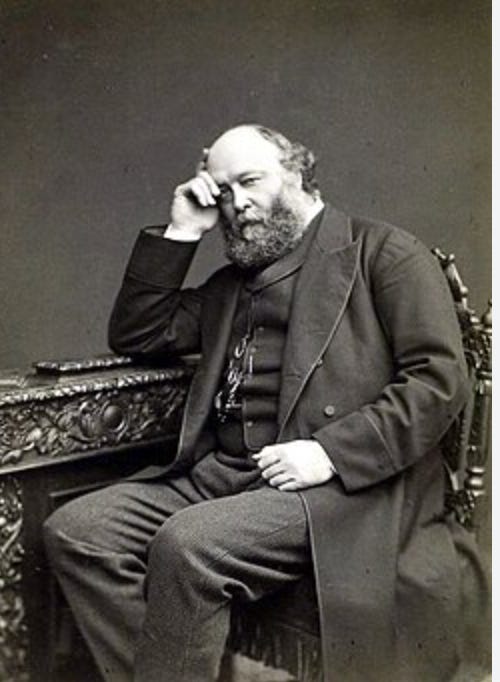
Since I started posting critical essays about the Iran war, I have received texts and emails that remind of Salisbury’s remark that serving as Prime Minister during outbreaks of jingoistic sentiment was “like having a huge lunatic asylum on one’s back.”
As Prime Minister at the height of the British Empire, he understood the human tendency to perceive the world as bristling with dangerous and depraved enemies who pose an imminent threat that must urgently be neutralized by the British army right now or else!
In a 1898 House of Commons debate, Salisbury explicitly talked about “jingoism” while defending his approach. He criticized “too much shouting... and not enough of foresight—too much of what I should call a blind and indiscriminate feeling and use of Jingo language.”
He repudiated the frequently expressed sentiment that it was Britain’s responsibility—expressed in religious terms—to subdue other peoples to bring them civilization and Christianity. In this respect (and countless others) he starkly contrast with US Secretary of War, Pete Hegseth.

Salisbury despised the vulgar press that amplified jingo feelings, dismissing the Daily Mail as a newspaper “written by office boys for office boys,” to stir up clamor for bellicose adventures without regard for long-term costs or risks of overextension.
Salisbury saw jingoism as “promiscuous“—indiscriminate hawkishness that would likely result in exhaustion, ridicule, and unnecessary conflicts by substituting passion for cool calculation.
He favored “splendid isolation”—diplomacy backed by naval strength to avoid being dragged into conflicts by jingo pressures. While he supported a large empire, he rejected the passionate, saber-rattling imperialism of jubilees.
Salisbury believed that true statesmanship required realism about power, patience, and the avoidance of moralistic or emotional excess in foreign affairs.
At the heart of Salisbury’s foreign policy was an understanding of costs and limits. All of the resources that the government spends on war could be used to do something creative and useful to strengthen Britain and the welfare of its people.
In the United States today, in which both political parties no longer exert any effort to slow down deficit spending, costs are no longer even counted. On April 9, 2026, a U.S. Navy MQ-4C Triton surveillance drone was lost in the Persian Gulf after what the US military is calling a “mishap”—i.e, probably shot down by an Iranian missile. Especially stunning to me was the price tag— $240 MILLION.
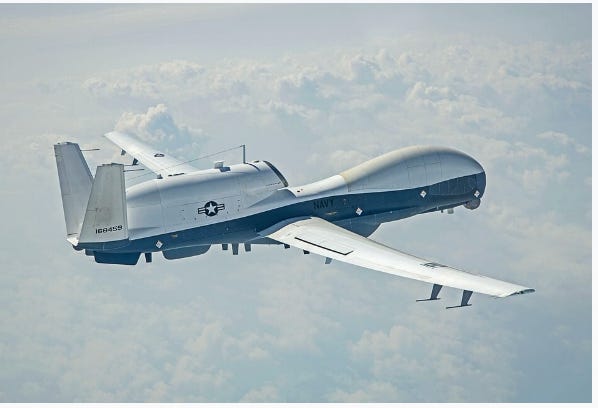
Two hundred forty million dollars for a single piece of military hardware, powered by a single engine that could flame out, lost in the Persian Gulf.
Easy come, easy go.
I agree with and appreciate your light-handed approach to culling comments. Better to err on the side of open dialogue than censorship. Some substack writers are thin-skinned to the point of not tolerating disagreement. Which tells you something about their lack of open-mindedness and so hurts their credibility.
I was not astounded over the price of the piece of military hardware, or that little was made of it. Not when you consider that BILLION and BILLIONS of taxpayer funds have been wasted on fraudsters in social programs all across the country jut in the last couple of years! And apparently we don't have even the minimum of qualification , or verification to be sure that data is correct when we give out these monies. I will NOT BE SURPRISED TO SEE THAT MOST OF THE COUPLE OF PEOPLE CHARGED SERVE NO TIME either. We are a nation of stupid citizenry.