


With Europe’s bizarre “leaders” apparently determined to have another military showdown with Russia, despite those of 1812, 1918, and 1941 going horribly wrong, I have returned to an old graduate school hobby—that is, reading the history of Russia.
An especially fascinating and tragic period was the reign of Tsar Nicholas II from 1894-1917.
In my estimation, Nicholas was one of the most polite, civilized, and decent rulers in the history of Europe. Often forgotten is that he was nominated for the Nobel Prize for his Hague Convention proposals in 1899:
Limitation of Armaments: A freeze on the size of military forces and naval fleets, as well as a cap on military budgets and defense spending.
New Weapon Prohibitions: A ban on the introduction of new firearms with greater destructive power and the prohibition of explosive projectiles launched from balloons or aircraft.
Peaceful Dispute Resolution: The expansion of good offices, mediation, and arbitration as mandatory or preferred tools to avert armed conflicts between nations.
Humanitarian Extensions: Adapting the humanitarian principles of the 1864 Geneva Convention to maritime and naval warfare.
Sadly, because our species is apparently doomed to be led by bloodthirsty wretches, all of these proposals were horribly flouted during the 20th century, during which the Satanic practice of aerial bombardment of cities was exquisitely refined and continues to by practiced by today’s crop of demonic rulers.
Tsar Nicholas II was unable to manage the titanic social, political, and economic forces that were unleashed in Russia and Europe during his reign, which ended with his cold-blooded murder and that of his entire family.
One of the strangest figures who took up residence in his court was Grigori Yefimovich Rasputin (1869–1916), who was born a peasant in the Siberian village of Pokrovskoye. For much of his life he was a wandering pilgrim and self-proclaimed holy man. Though never ordained as a monk, he claimed to be a mystic, faith healer, and prophet, blending the occasional appearance of Orthodox piety with magnetic charisma.
He made his way to the Romanov court, where Tsar Nicholas II and Tsarina Alexandra’s only son, Tsarevich Alexei, suffered from hemophilia, a life-threatening bleeding disorder for which contemporary medicine offered little help.
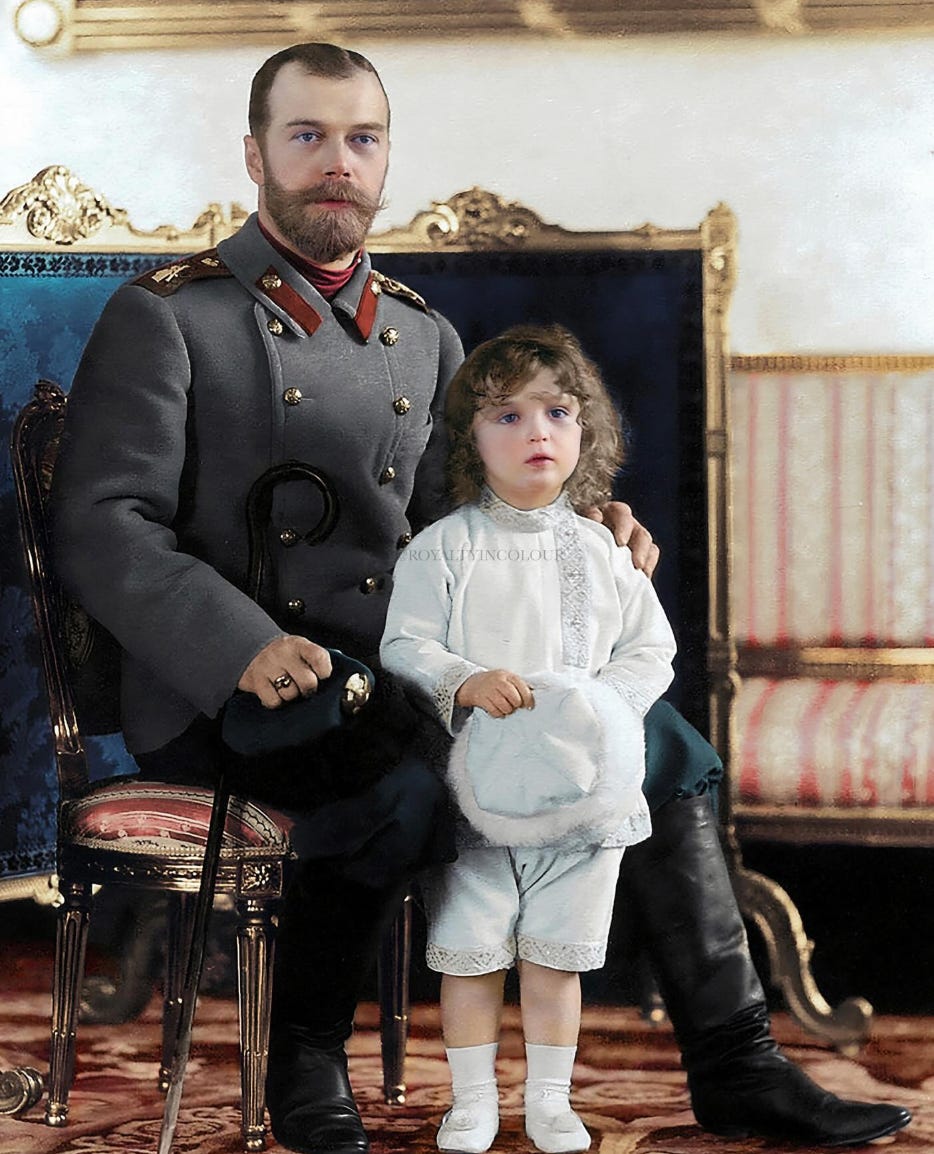
Beginning around 1906–1908, and most importantly during a near-fatal hemorrhage in 1912, Rasputin was summoned to the boy’s bedside. Though Alexei’s doctors reckoned the boy was for sure a goner, Rasputin’s presence somehow seemed to result in Alexei pulling through.
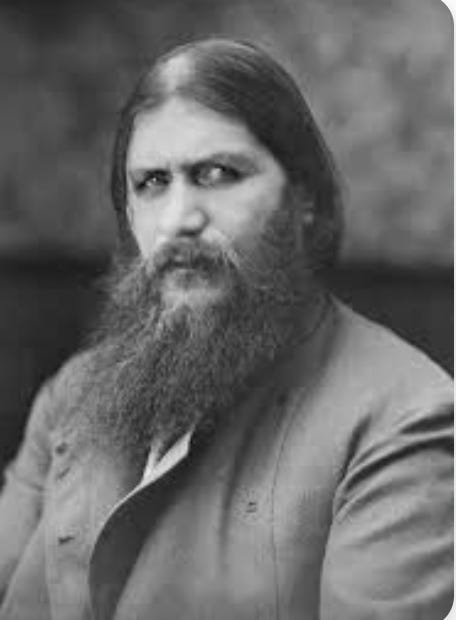
For a long time I figured that this must have been a fluke, but today I stumbled across the theory that the only miracle Rasputin worked was impeding the boy’s doctor from overdosing him with aspirin.
Turns out that overdosing aspirin was a common practice in Europe and the United States in the early 20th century, and that it may have not only aggravated Alexei’s hemophilia, but also contributed to mortality during 1918 Spanish Flu.
The story of aspirin overdosing lies at the intersection of the emergence of the modern pharmaceutical industry and the medical profession’s incomplete understanding of drug toxicity.
Aspirin, or acetylsalicylic acid, was introduced commercially by the German pharmaceutical company Bayer in 1899. It rapidly became one of the most successful medicines in the world.
Before aspirin, physicians commonly prescribed salicylates derived from willow bark to relieve fever, pain, and inflammation. Aspirin offered a relatively convenient, standardized pharmaceutical preparation. By the beginning of the twentieth century, it was widely regarded as a modern medical breakthrough, and historical records indicate that many doctors badly overprescribed it.
When the Spanish Flu struck in 1918, antibiotics did not exist, antiviral drugs were unknown, and influenza’s viral cause had not yet been established. Aspirin could relieve fever, headaches, and muscle pain, making it an attractive treatment for influenza.
The trouble was, physicians didn’t comprehend aspirin toxicity. Though adverse reactions to salicylates were recognized, the relationship between dosage, blood concentrations, and severe respiratory and metabolic disturbances weren’t understood.
This happened at the same time the medical profession fell in love with pharmaceutical treatments. Doctors in 1918 were under pressure to offer interventions. Aspirin was inexpensive, readily available, and apparently effective at relieving symptoms.
To be sure, some doctors warned against excessive salicylate use. Nevertheless, historical prescriptions demonstrate that toxic regimens were recommended in both America and Europe.
Today, the standard adult dose for aspirin is approximately four grams per 24 hours. In 1918, physicians commonly prescribed twice this dose, and there are records of some prescribing 31 grams per day, or nearly eight times the usual modern maximum daily dose. The US Surgeon General, US Navy, and Journal of the American Medical Association recommended aspirin at the time of the deadly autumn wave of 1918.
Bayer initially marketed aspirin through physicians and pharmacists. In 1915, the company began selling branded aspirin tablets directly to consumers in the United States. According to the Smithsonian’s National Museum of American History, this strategic change anticipated the expiration of Bayer’s American aspirin patent in 1917. The timing was significant.
In February 1917, Bayer’s American patent expired. Other manufacturers could compete in the market for acetylsalicylic acid. The resulting competition encouraged manufacturers to establish brand recognition and promote aspirin’s usefulness for common illnesses. The influenza pandemic of 1918 created enormous demand for fever-reducing medicines. Manufacturers therefore had a powerful incentives to advertise aspirin and expand sales.
In 2009, the American physician and researcher Karen M. Starko published an important paper in Clinical Infectious Diseases titled Salicylates and Pandemic Influenza Mortality, 1918–1919: Pharmacology, Pathology, and Historic Evidence
Starko proposed that excessive aspirin administration could have contributed to the extraordinary mortality of the 1918 pandemic, especially during its devastating autumn wave. Her hypothesis rested on the startling observation that aspirin poisoning can resemble severe influenza.
The most conspicuous feature of the 1918 pandemic was the frequency of severe pulmonary disease. Autopsies revealed lungs filled with fluid, blood, and inflammatory material. Salicylate poisoning can also produce serious respiratory abnormalities.
Starko observed that these overlapping manifestations could have complicated physicians’ ability to distinguish severe influenza from drug-induced deterioration. She also cited evidence that salicylates can increase pulmonary fluid accumulation and interfere with the respiratory tract’s normal mechanisms for clearing secretions.
Starko also made a striking observation about chronology.During September and October 1918, the United States experienced an explosive increase in influenza mortality. At approximately the same time, medical authorities were recommending aspirin for symptomatic treatment.
Starko suggested that the widespread administration of high doses could have aggravated pulmonary injury in patients already suffering from influenza. The Infectious Diseases Society of America summarized her interpretation in a 2009 announcement, noting that drug-industry promotion, physicians’ desire to offer treatment, and families’ desperation could all have encouraged excessive aspirin use.
A further hypothesis concerns secondary bacterial infection. Many victims of the 1918 pandemic died from bacterial pneumonia following influenza infection.
Starko proposed that aspirin toxicity might have worsened respiratory function and interfered with airway clearance, potentially increasing vulnerability to secondary infection. This is biologically plausible, but a direct causal relationship between aspirin administration and bacterial pneumonia mortality in 1918 has not been demonstrated.
Starko’s paper was met with criticism by Andrew Noymer et al., who pointed out that that the 1918 influenza pandemic also caused great mortality in countries in which aspirin wasn’t widely abused.
To be sure, the 1918 Spanish Flu was aggravated by many factors, including the conspicuous fact that World War I had herded millions of men together into army barracks and trenches and greatly disrupted agriculture and heating fuel supplies.
In Vienna in the autumn of 1918 and winter of 1919, the city’s coal supply from Bohemia was completely cut off, leaving most of the city’s inhabitants in freezing cold houses and apartments.
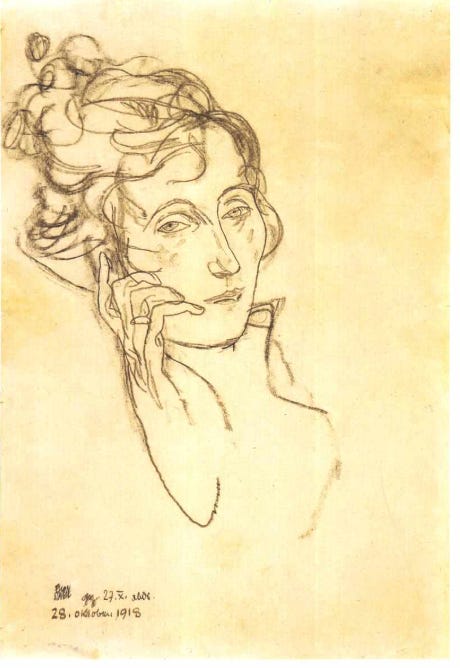
October 2026 marks the 108 anniversary of the death of the Austrian painter Egon Schiele. A few days before he succumbed to the flu at the age of 28, he drew of poignant and elegant picture of his 25-year-old wife Edith as she lay on her deathbed.
Further Reading
1. Karen M. Starko (2009). Salicylates and Pandemic Influenza Mortality, 1918–1919. Clinical Infectious Diseases, 49(9), 1405–1410. The foundational paper proposing the aspirin-toxicity hypothesis.
2. Noymer and colleagues (2010). Questioning the Salicylates and Influenza Pandemic Mortality Hypothesis in 1918–1919. Clinical Infectious Diseases, 50(8), 1203. An important critique of the hypothesis.
3. Karen M. Starko (2010). Reply to Noymer et al.. Clinical Infectious Diseases, 50(8), 1203–1204. Starko’s response, including additional evidence of international aspirin consumption.
4. Smithsonian National Museum of American History. Bayer Aspirin Tablets. Historical evidence of Bayer’s packaging, commercialization, and direct-to-consumer marketing strategy.
Very interesting!
Thanks John.
"Too much of a good thing..."
;-(