


During the reign of the Emperor Augustus (27 BC — 14 AD), Romans kept vital records in all of their provinces, including Judea. However, no birth certificates for commoners in the province at that time survived. The Gospels of Matthew and Luke mention a census around the time of Jesus's birth, but no Roman census records survived to confirm their literary references. Thus, it was up to the early Roman Catholic Church to calculate Christ’s probable date of birth.
It’s probably no coincidence that December 25 was also the festival day of Natalis Solis Invicti (Birthday of the Unconquered Sun). Church leaders likely chose this date to associate Christ with the sun reversing course to return to the northern hemisphere after the winter solstice.
Early Christians calculated Jesus’s conception date as March 25 (the traditional date for the Annunciation). Nine months later is December 25.
For most of human history in most of the northern hemisphere, winter was naturally associated with hard times, scarcity, and uncertainty. Pieter Bruegel the Elder captured the leanness of winter with his famous painting, Hunters in the Snow, dated 1565. Note that the hunters have little to show for their effort.
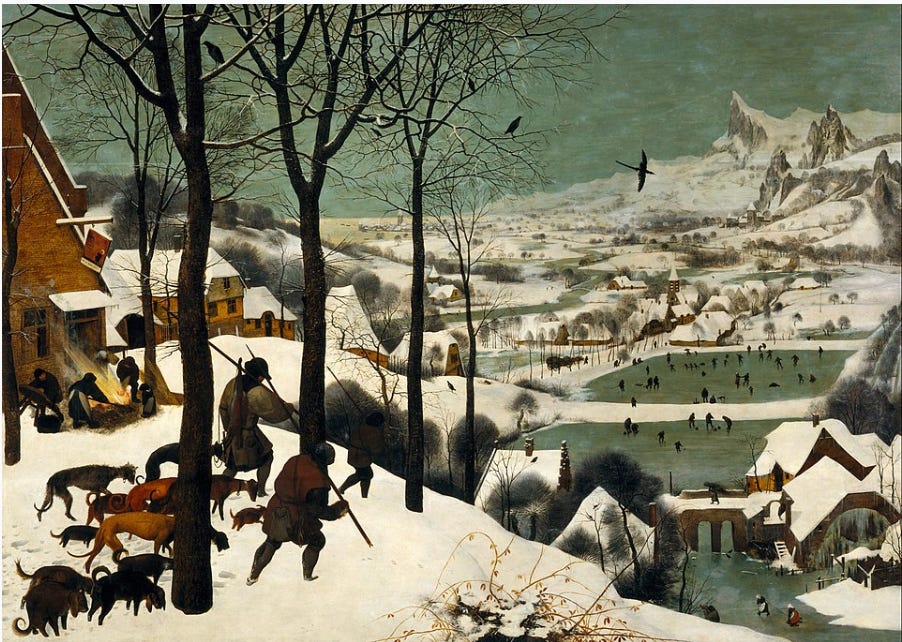
And yet, an element of cheerfulness is visible in the distance in the image of people dancing and skating on the frozen pond.
Shakespeare memorably captured the idea rejuvenation in the midst of winter with the opening lines of Richard III.
Now is the winter of our discontent
Made glorious summer by this sun of York.
Long before the Christmas tree became a decorative tradition, the fir (Tanne in German) had been associated with eternal life and fidelity because it remains vividly green even during the coldest of winters. The idea is expressed in the German folk song.
O Tannenbaum, o Tannenbaum,
wie treu sind deine Blätter!
Du grünst nicht nur zur Sommerzeit,
Nein auch im Winter, wenn es schneit.
O Christmas tree, o Christmas tree
How faithful are your leaves!
You’re green not only in the summertime,
No, also in winter when it snows.
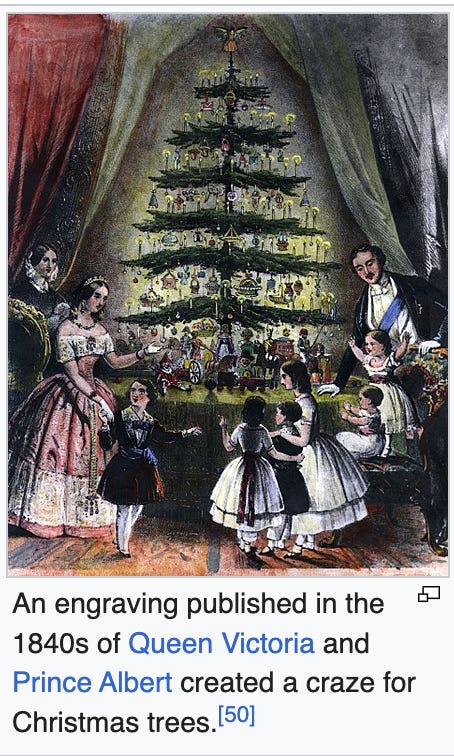
Queen Victoria and her German husband, Prince Albert, are credited with widely introducing the Christmas tree tradition to the English speaking world in the 1840s.
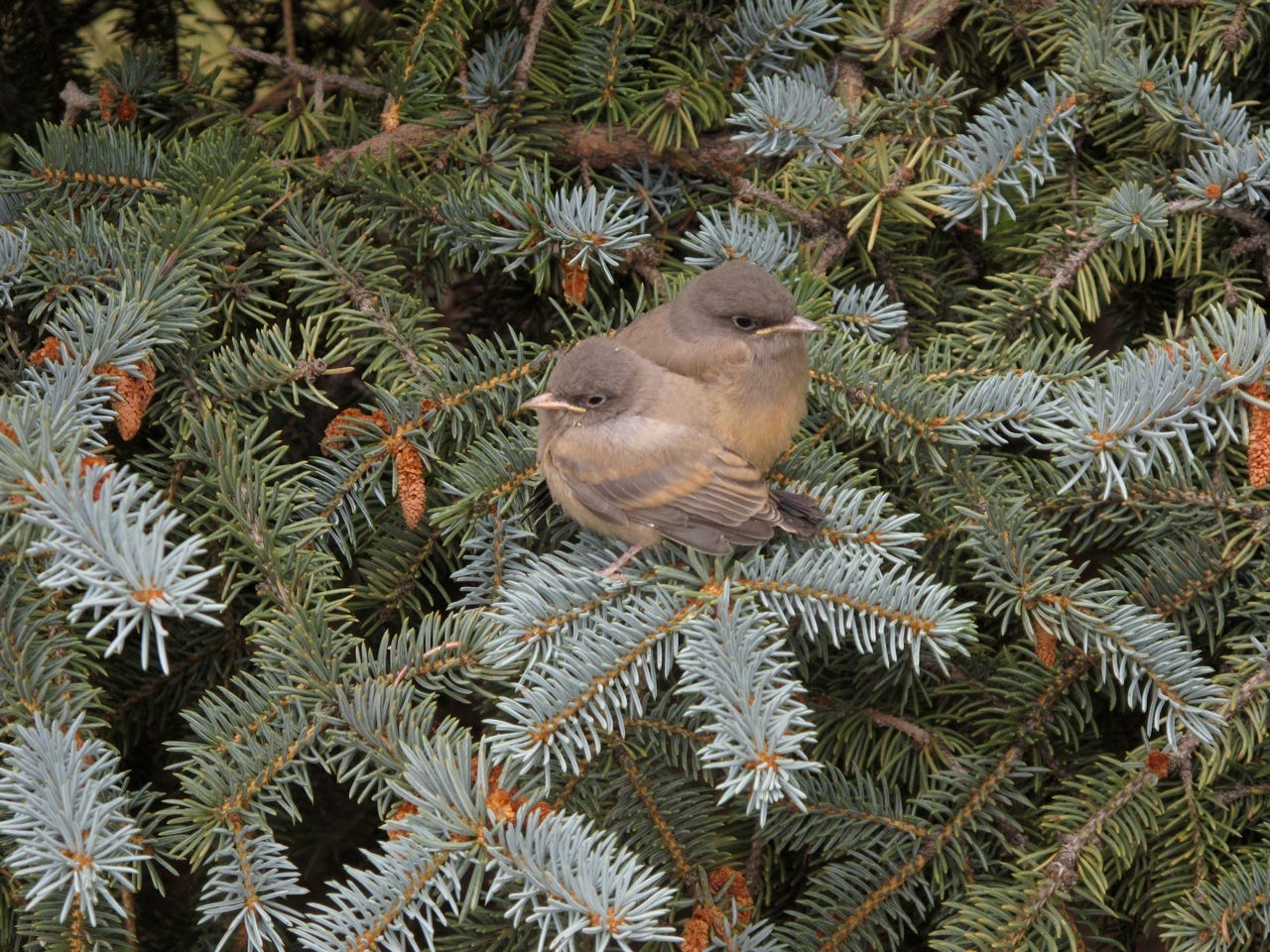
The fir remains the ultimate Christmas tree, but the spruce is a close second. Just before Christmas in 2011, my father sent me the following photo he took (that summer) of two fledgling wrens perched on a Colorado Blue Spruce. I still look at it every year at this time. Like spruce or fir tree, the image never loses its freshness.
Dr. McCullough and I hope this message reaches you surrounded by friends and family and feeling a rejuvenated sense of hope and optimism.
Merry Christmas!
Merry Christmas, John (and Dr. McCullough)!
Thank you for being such a polymath that you are able to bring broader perspective to just about any major topic of interest.
Wishing you and Dr McCullough and your families a Merry Christmas and much good to look forward to in 2026. Thank you for the year long gifts of your substacks, books, podcasts, media appearances and much more. They are grounding for many of us and much appreciated! Cheers!