


I've looked at life from both sides now
From win and lose and still somehow
It's life's illusions, I recall
I really don't know life at all.-Joni Mitchell
As I noted in “Chapter 10: Shooting the Message” of my book (with Dr. Peter McCullough) The Courage to Face COVID-19:
Long before Covid arrived, I’d joked with friends that if the ever boasting and self-promoting President Trump discovered the cure for cancer, his detractors would rather forgo the treatment than acknowledge he’d done something of value for humanity. It’s probably an inevitable outcome of America’s two-party system that any president may become the object of hyperbolic loathing. In the nineties, Republicans obsessed about President Clinton’s faults, real and perceived. In 2003, the columnist and psychiatrist Charles Krauthammer coined the expression Bush Derangement Syndrome as “the acute onset of paranoia in otherwise normal people in reaction to the policies, the presidency—nay—the very existence of George W. Bush.”
During the [first] presidency of Donald J. Trump this syndrome became so virulent that it created a strangely binary posture in public affairs. If Trump expressed even mild enthusiasm for a policy, person, or thing, his opposition automatically rejected it. To be sure, Trump often threw gasoline on the fire with his vices, his bombastic personal style, and occasional buffoonery. The qualities that had once been viewed as showman’s schtick were widely deemed unacceptable in a US President. The court jester had become king, and it drove the lords and ladies at court mad.
As anthropologists and psychologists have long understood, humans are hyper-social and tribal. Stanford Professor Rene Girard has pointed out that during times of stress and rivalry, we are inclined to ascribe blame not to a complex state of affairs, but to a particular person or group. Persistent problems and misfortunes build up negative psychic energy, which generates a collective yearning to destroy the person or persons on whom the blame is heaped. This process of scapegoating is amplified by what Professor Girard called mimesis—that is, imitation—the tendency to embrace an opinion or sentiment because everyone in a preferred group is embracing it. In trying to make sense of the world, we often look to those around us for cues to guide us in our perceptions and opinions.
So, it was when President Trump declared the old malaria drug hydroxychloroquine to be a potential game changer. Soon stories appeared under headlines such as “Trump’s Covid Cure” or “Trump touts hydroxychloroquine,” proclaiming the drug lacked efficacy and safety, and caused “irreversible retinal damage” and “dangerous heart arrhythmias.”
As any ophthalmologist could tell you, the claim of “irreversible retinal damage” from a five-day course of hydroxychloroquine was a whopper of a deception. Less than 1% of lupus and rheumatoid arthritis patients who take hydroxychloroquine every day for 5 to 7 years start to develop retinal toxicity.59 At ten years of daily use, 1% of regular users develop retinal toxicity. Likewise, the claim of “dangerous heart arrhythmias” was a massive distortion.
Back then, Trump Derangement Syndrome struck me as the most dangerous form of distorted thinking that affected the public forum. Now I wonder if the opposite—that is, Trump Dimwit Syndrome—is the chief antagonist of clear perception and thinking.
Trump Dimwit Syndrome is an expression of Trump’s weird Cult of Personality—an all too human phenomenon that lies far outside the spirit of our Constitutional Republic.
Throughout history, political leaders have been put on a pedestal high above ordinary mortals and conceived as figures of transcendent wisdom, courage, and moral authority. Loyalty to such individuals has supplanted loyalty to institutions, constitutional principles, and even basic facts and common sense. During the pandemic, Anthony Fauci acquired a potent cult of personality, at one point proclaiming that “attacks on me are quite frankly an attack on science, because I represent science.”
Although the phenomenon is as old as recorded history, the modern expression “cult of personality” became prominent following Soviet leader Nikita Khrushchev’s 1956 denunciation of Joseph Stalin.
Stalin erected one of history’s most virulent personality cults, championing himself as the father of the Soviet people, the supreme architect of socialism, and a military genius. His portraits adorned public buildings, cities were named after him, and official histories were rewritten to magnify his achievements and erase his rivals. Criticism of Stalin could result in imprisonment or execution, as Alexander Solzhenitsyn discovered when he was sentenced to eight years in a Gulag for criticizing Stalin in a private letter that was opened and read by military censors.
Other twentieth-century dictators enjoyed similar cults of personality. Benito Mussolini was known as Il Duce—the modern reincarnation of a Roman Emperor. Adolf Hitler’s regime developed the Führerprinzip, which posited that ultimate authority resided in Hitler, whose supposed historical mission justified unquestioning obedience. Mao Zedong’s cult of personality may have been the most over-the-top in history, elevating his every pronouncement to the level of sacred and infallible utterances.
An especially silly expression of Trump Dimwit Syndrome is the assertion that one cannot judge his conduct without reference to the fact that we would be far worse off with Kamala Harris. This is like telling a man being attacked by a Tiger Shark that he would be far worse off if the shark were a Great White.
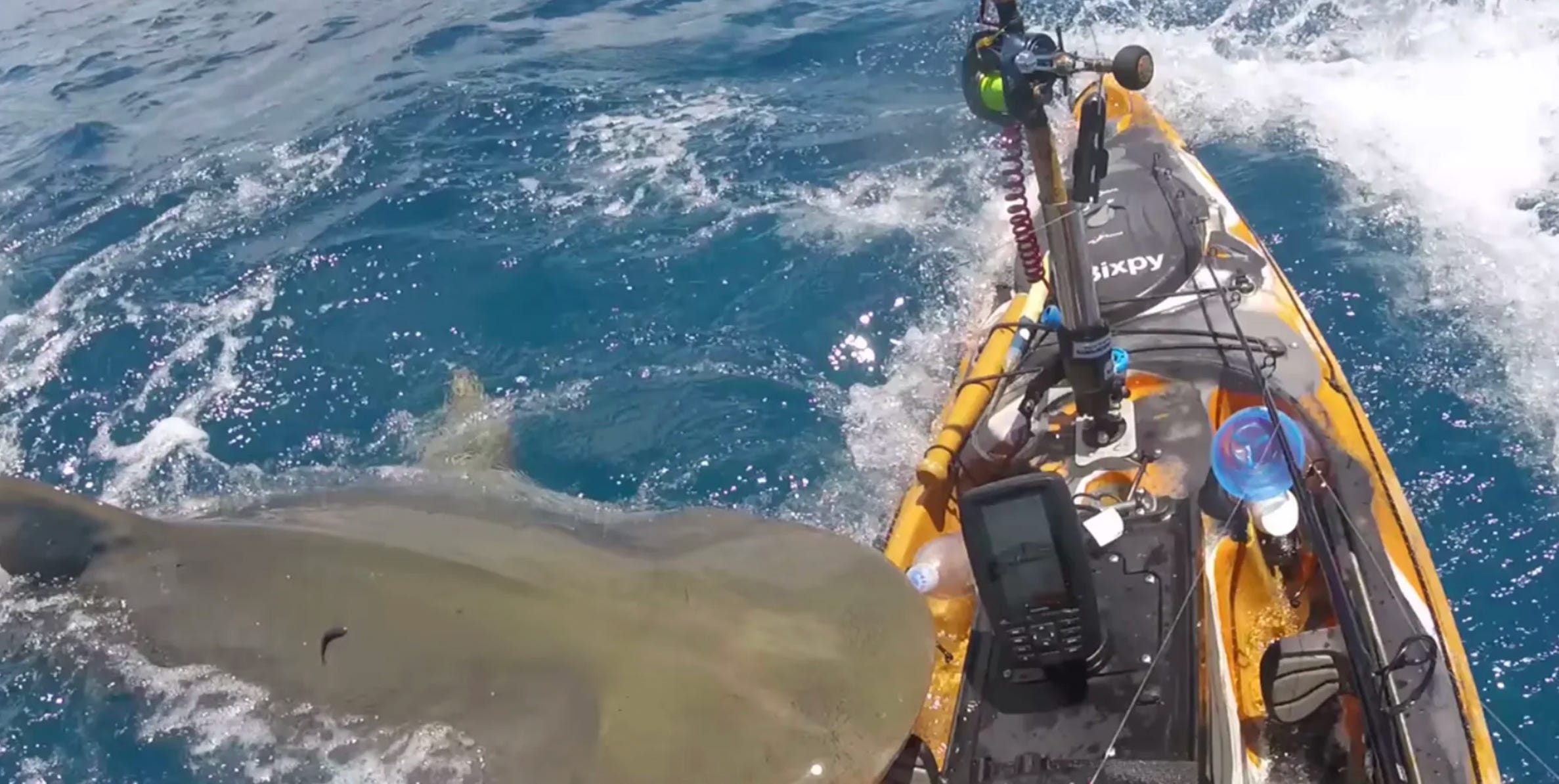
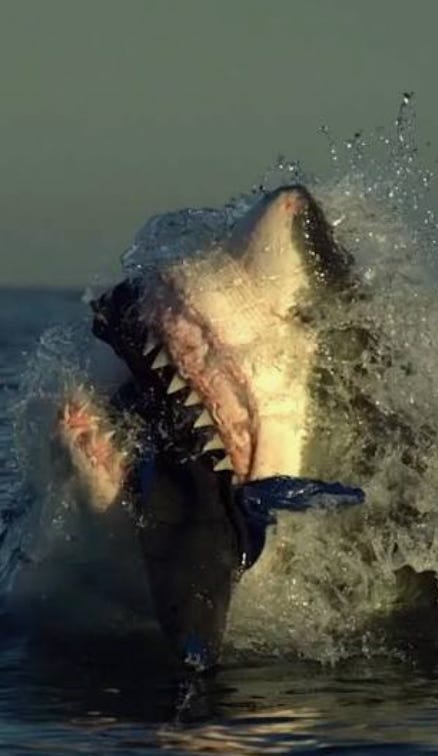
So now you are calling Trump supporters "dimwits"? You have sunk to a new low and aligned yourself with Hillary and her "deplorables" comment. Note where that got her. Also, the comparison of getting attacked by tiger shark or a great white is illogical because either way you end up dead, whereas with the Kamala/Trump comparison you lose with Kamala and win with Trump. Not a good comparison...do better John.
sorry John, but some of us (probably many, and even more probably most) actually vote POLICY not personality. and Trump's policies win YUGELY over anything the Dems have presented.