


A new study analyzing data from the CDC’s V-safe surveillance system has identified 185,285 people who reported that their health remained worse three months or longer after COVID-19 vaccination and who attributed that deterioration to the vaccine.
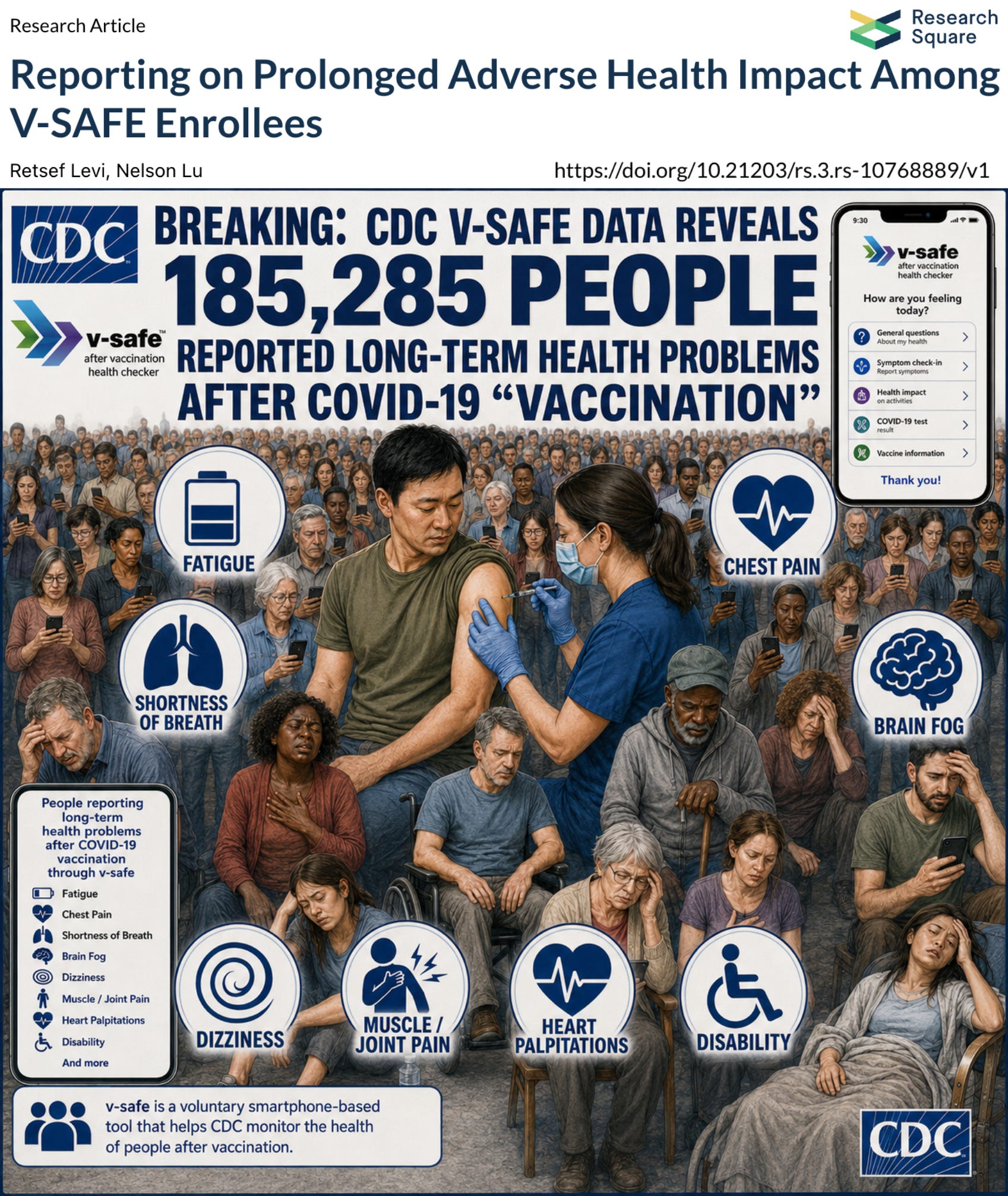
The findings come from an analysis by MIT researchers Retsef Levi and Nelson Lu of one of the largest active COVID-19 vaccine surveillance datasets ever assembled.
V-safe enrolled more than 10 million COVID-19 vaccine recipients and repeatedly contacted participants after vaccination to ask about symptoms, daily functioning, healthcare utilization, and changes in their health. Unlike VAERS, which relies primarily on spontaneous adverse-event reports, V-safe actively prompted enrolled vaccine recipients to provide follow-up information over time, including at 3, 6, and 12 months.
Among 9,904,924 V-safe enrollees aged 16 or older included in the analysis, 185,285 (1.87%) reported prolonged worsening of their health that they believed was related to COVID-19 vaccination. Women reported the problem at an even higher rate: 137,430 of 6,141,800 women, or 2.24%.
Nearly Half Reported Disability, Hospitalization, or Severe Adverse Events
At the qualifying V-safe assessment, conducted at least three months after vaccination, approximately half of those reporting prolonged vaccine-attributed health deterioration also reported at least one major health impact.
19.98%–22.70% reported being unable to work or attend school.
39.88%–41.70% reported being unable to perform normal daily activities.
3.61%–4.05% reported hospitalization.
16.74%–20.27% were classified as reporting severe adverse events.
Overall, 49.52%–50.87% reported at least one of these outcomes.
The authors estimate that this corresponds to approximately 1% of all V-safe enrollees reporting both prolonged vaccine-attributed health deterioration and a serious health impact. Extrapolating this estimate nationally could correspond to several million people with chronic COVID-19 vaccine injuries.
Neurological, Cardiovascular, and Multi-System Problems
The most frequently reported symptoms included:
Fatigue: 27%
Headache: 23%
Joint pain: ~15%
Dizziness: ~13%
Shortness of breath: 9.8%
Muscle pain: 7.1%
Chest pain: 5.5%
Palpitations: 4.6%
Tinnitus: 3.7%
The prolonged-AE cohort also had higher reporting rates of neurological, musculoskeletal, cardiac, vascular, ear, eye, and reproductive disorders.
Cardiac disorders were reported by 10.29% of the prolonged-AE cohort compared with 0.67% of controls. Reported terms included palpitations, atrial fibrillation, tachycardia, cardiac disorders, and arrhythmias.
Cancer and Neoplasm Reports Were Elevated
The prolonged-AE cohort contained 2,708 reports classified under “neoplasms benign, malignant and unspecified,” or 1.46%, compared with 15,474 reports, or 0.16%, in the control cohort—roughly a nine-fold difference in reporting prevalence.
Reported terms included:
Breast cancer: 0.24%
Malignant neoplasm: 0.15%
Lymphoma: 0.05%
Skin cancer: 0.04%
Conclusion
More than 185,000 people told the CDC’s own surveillance system that their health remained worse months after vaccination and that they believed the vaccine was responsible, and roughly half reported disability, hospitalization, or severe adverse events. This means that millions of Americans likely suffered the same fate.
The CDC failed to do its job and never adequately investigated this enormous chronic health burden. Unfortunately, this new study indicates that America’s chronic disease epidemic will rage for years to come thanks to the mass-mandated genetic injections.
Epidemiologist and Foundation Administrator, McCullough Foundation
Support our mission: mcculloughfnd.org
Please consider following both the McCullough Foundation and my personal account on X (formerly Twitter) for further content.
And just remember anyone who died swiftly after the vax is missing from these 3 month statistics, and not included in the percent harmed.
'CDC' + 'DATA' = LIARS!!
It's WAY more than that EXTREMELY LOW number!