


Pre-prescribed emergency medication kits have grown in popularity in recent years, yet no real-world utilization data on this product category had ever been published. To address this evidence gap, we conducted the first real-world study evaluating how pre-prescribed emergency medication kits are actually used, for what conditions, with what outcomes, and with what safety profile.
The study, "Real-World Utilization, Outcomes, and Safety of Pre-Prescribed Emergency Medication Kits," is now available on the preprint server Zenodo and is currently undergoing peer review.
We surveyed 506 verified purchasers of The Wellness Company’s Medical Emergency Kit and analyzed 367 real-world illness episodes reported by respondents. Our objective was to characterize utilization patterns, self-reported outcomes, healthcare utilization, and safety in real-world settings.
What Were People Using the Kits For?
Among the 367 reported illness episodes:
• Respiratory illnesses: 59.4% (218 episodes)
• Urinary symptoms: 15.0% (55 episodes)
• Gastrointestinal illnesses: 6.3% (23 episodes)
• Dental issues: 5.7% (21 episodes)
• Skin or soft tissue concerns: 4.1% (15 episodes)
• Injuries or wounds: 1.6% (6 episodes)
• Allergic reaction symptoms: 0.5% (2 episodes)
• Other: 7.4% (27 episodes)
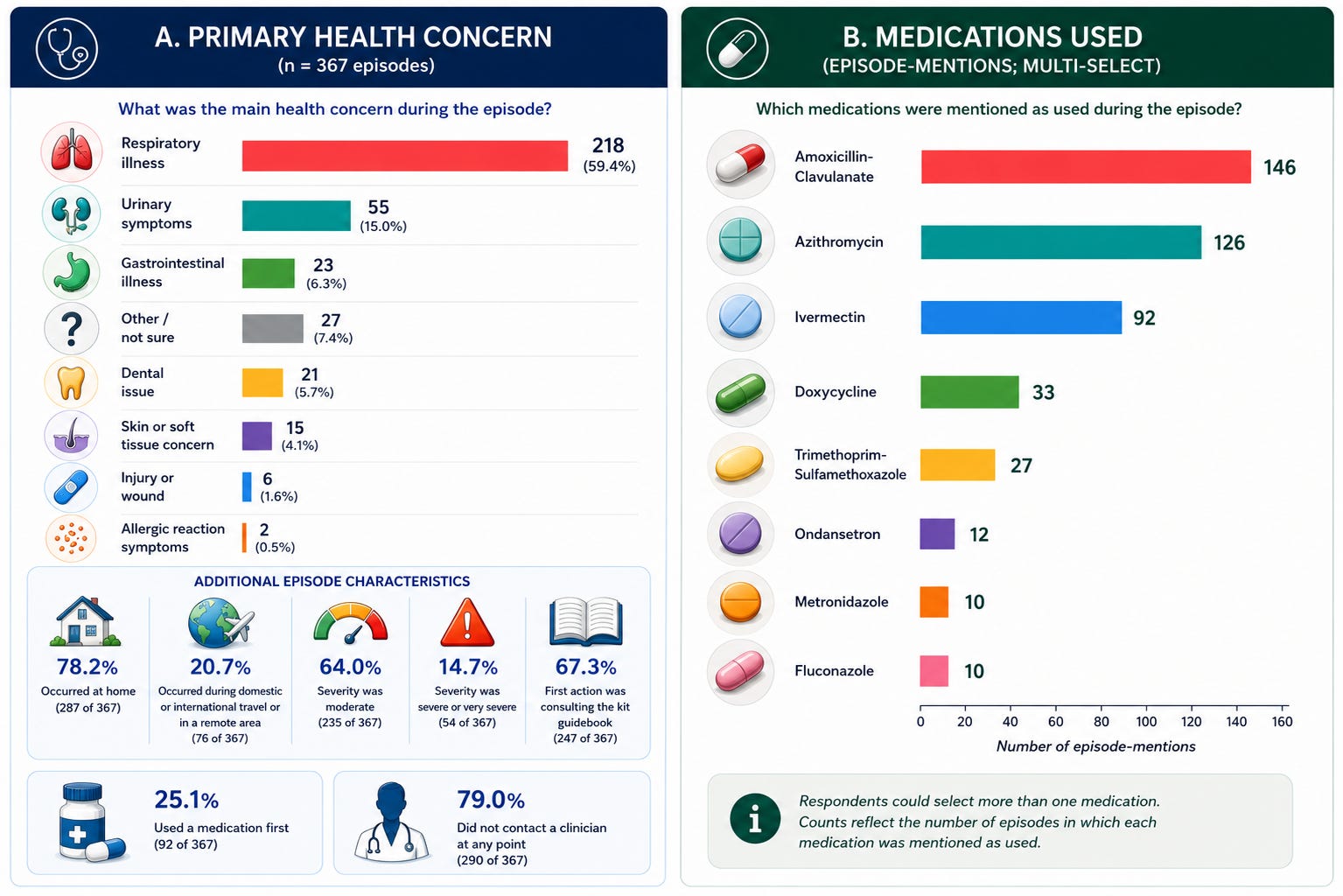
Most episodes occurred at home (78.2%), while 20.7% occurred during domestic or international travel or in remote settings. Overall, 31.1% of users reported using their kit at least once while traveling or away from conventional healthcare access.
Outcomes
Among 333 intended-use illness episodes:
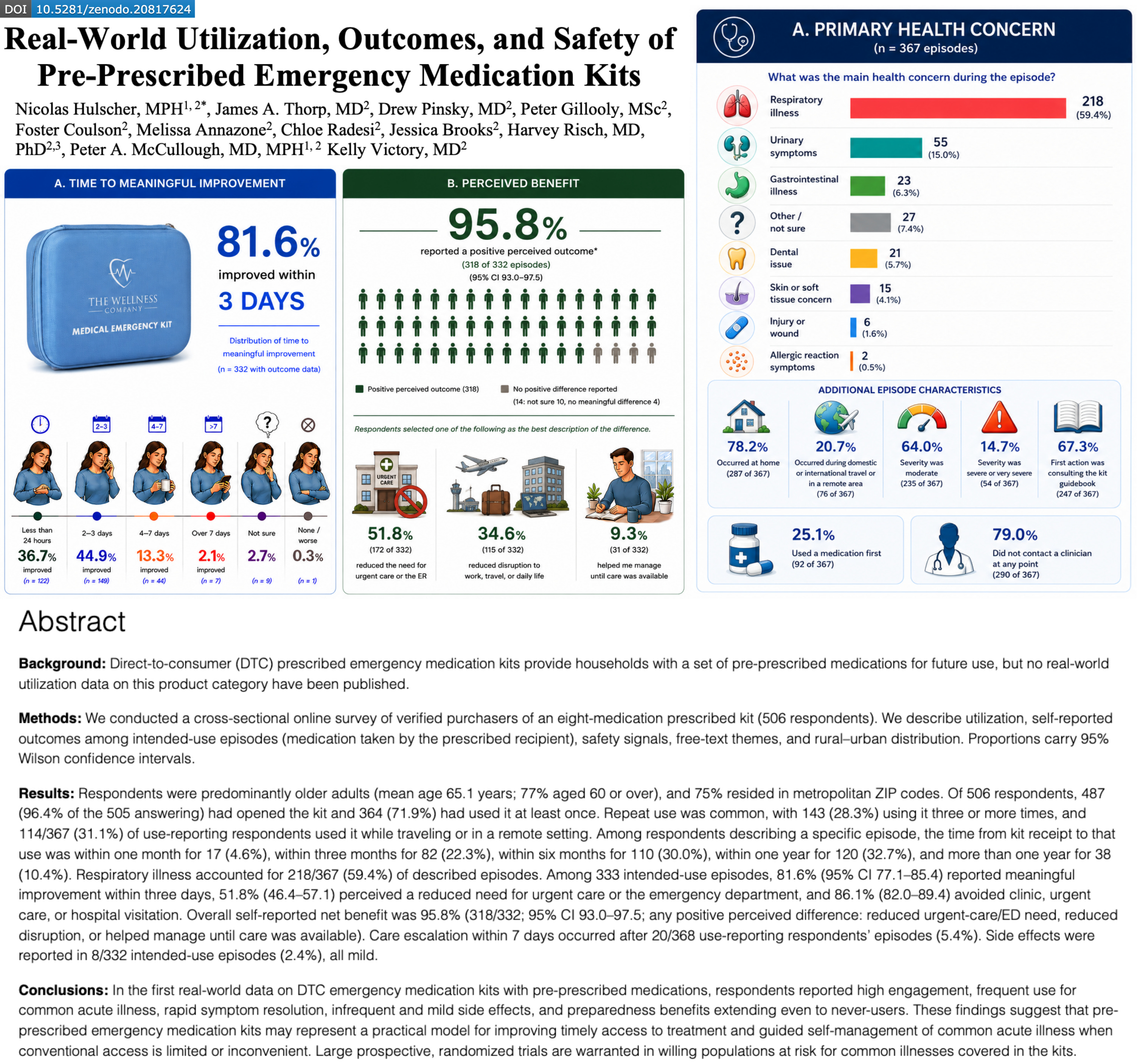
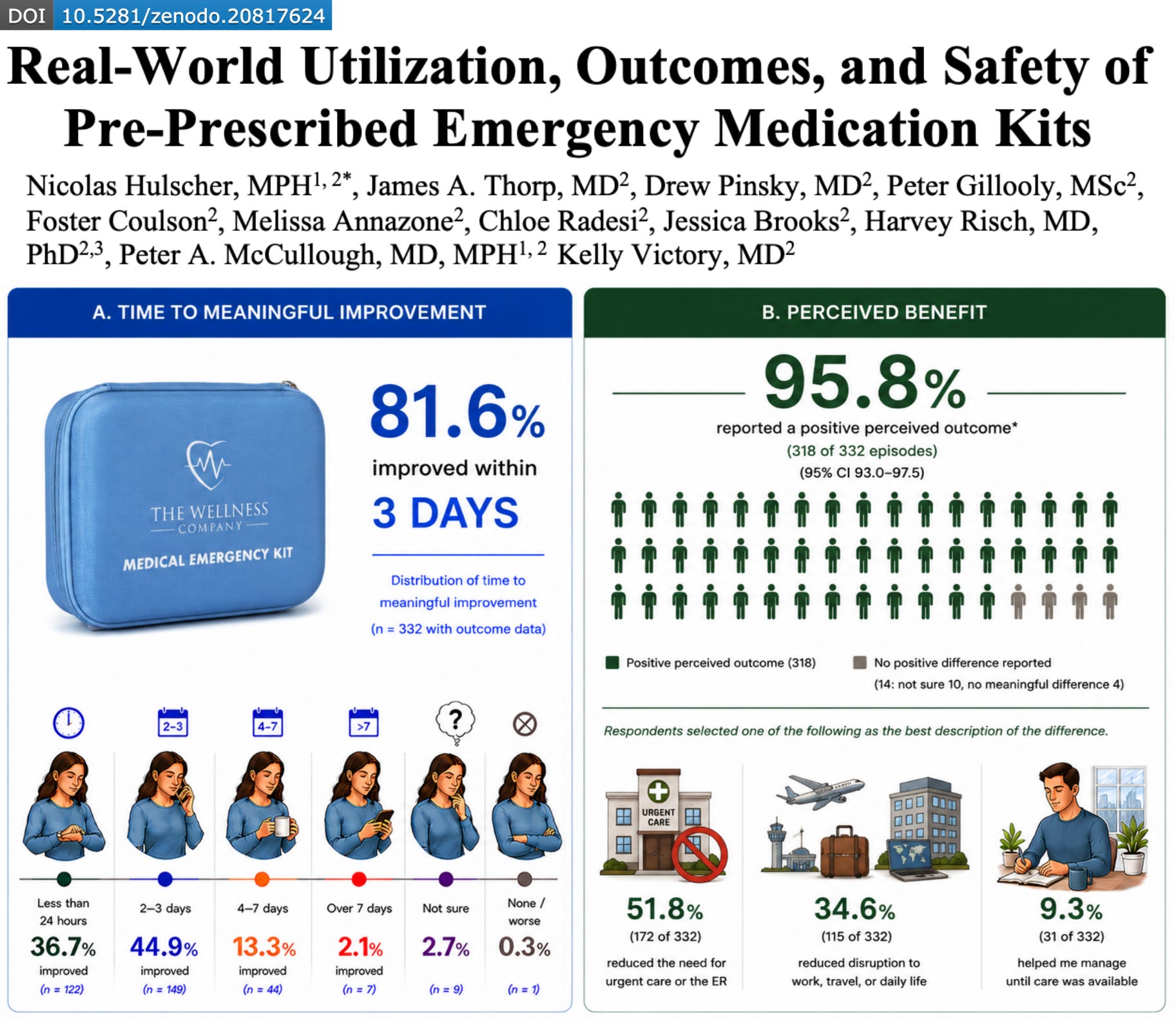
• 81.6% (95% CI, 77.1–85.4) reported meaningful improvement within 3 days
• 36.7% (95% CI, 31.7–42.1) reported meaningful improvement within 24 hours
• 86.1% (95% CI, 82.0–89.4) avoided hospital, urgent care, or clinic visitation
• 51.8% (95% CI, 46.4–57.1) reported a reduced need for urgent care or the ER
• 95.8% (95% CI, 93.0–97.5) reported overall benefit
• Side effects occurred in just 2.4% (95% CI, 1.2–4.7) of cases and were all mild
Notably, 79.0% of respondents did not contact a clinician at any point during their illness episode, and only 5.4% (95% CI, 3.5–8.2) reported any urgent care visit, emergency department visit, or hospitalization within 7 days of kit use.
Conclusion
To our knowledge, this study provides the first real-world evidence on how direct-to-consumer emergency medication kits are actually used. The results suggest that they are frequently utilized, commonly used for respiratory, urinary, gastrointestinal, dental, and skin-related conditions, associated with rapid symptom improvement, and accompanied by a low rate of mild side effects.
These findings indicate that pre-prescribed emergency medication kits represent a practical model for improving timely access to treatment and guided self-management of common acute illnesses when conventional healthcare access is limited, delayed, or inconvenient. Large prospective trials are now warranted.
Thank you but Not surprised .. my personal philosophy has been to minimize any use of allopathic medicine.. for the last 50 years.. if we stay fit and keep an organic diet.. you really have very little use for the American medical industrial complex
How does your study differ in medical ethics from Pfizer conducting their own trials on covid injections?