


Cancer is rising at an increasingly alarming pace. Early-onset malignancies are climbing in younger adults, aggressive cancers are appearing in patients with little warning, and U.S. cancer mortality has departed sharply from its pre-pandemic trajectory. Against this backdrop, one of the most important questions in medicine is whether the unprecedented mass deployment of nucleoside-modified mRNA technology could be contributing to cancer initiation, reactivation, or accelerated progression.
We have now fully answered this question in a new paper titled “Potential Oncogenicity of Synthetic mRNA Vaccines: Convergent Mechanistic, Clinical, and Population Evidence for a Concurrent-Hit Model of Accelerated Malignancy” authored by John A. Catanzaro, NMD, PhD; Nicolas Hulscher, MPH (myself); Raphael B. Stricker, MD; Jamie K. Waselenko, MD, FACP, FICT; and Peter A. McCullough, MD, MPH.

In the most comprehensive analysis to date examining the link between mRNA “vaccines” and cancer, we brought together mechanistic biology, published clinical cases, large population cohorts, U.S. cancer-incidence data, and national mortality records to evaluate whether these gene products could induce, accelerate, or unmask malignancy.
The findings converge on the same alarming picture: TURBO CANCER IS REAL.
And the implications extend far beyond COVID-19 vaccination, because the same underlying mRNA technology is now being pushed directly into cancer treatment.
Below is a concise breakdown of what we found:
MECHANISTIC EVIDENCE
We identified 35 distinct cancer-promoting mechanisms converging through 4 major routes: (1) protooncogene activation, (2) mutation pressure, (3) protein–protein interaction network interference, and (4) cancer stem-cell clonal acceleration.
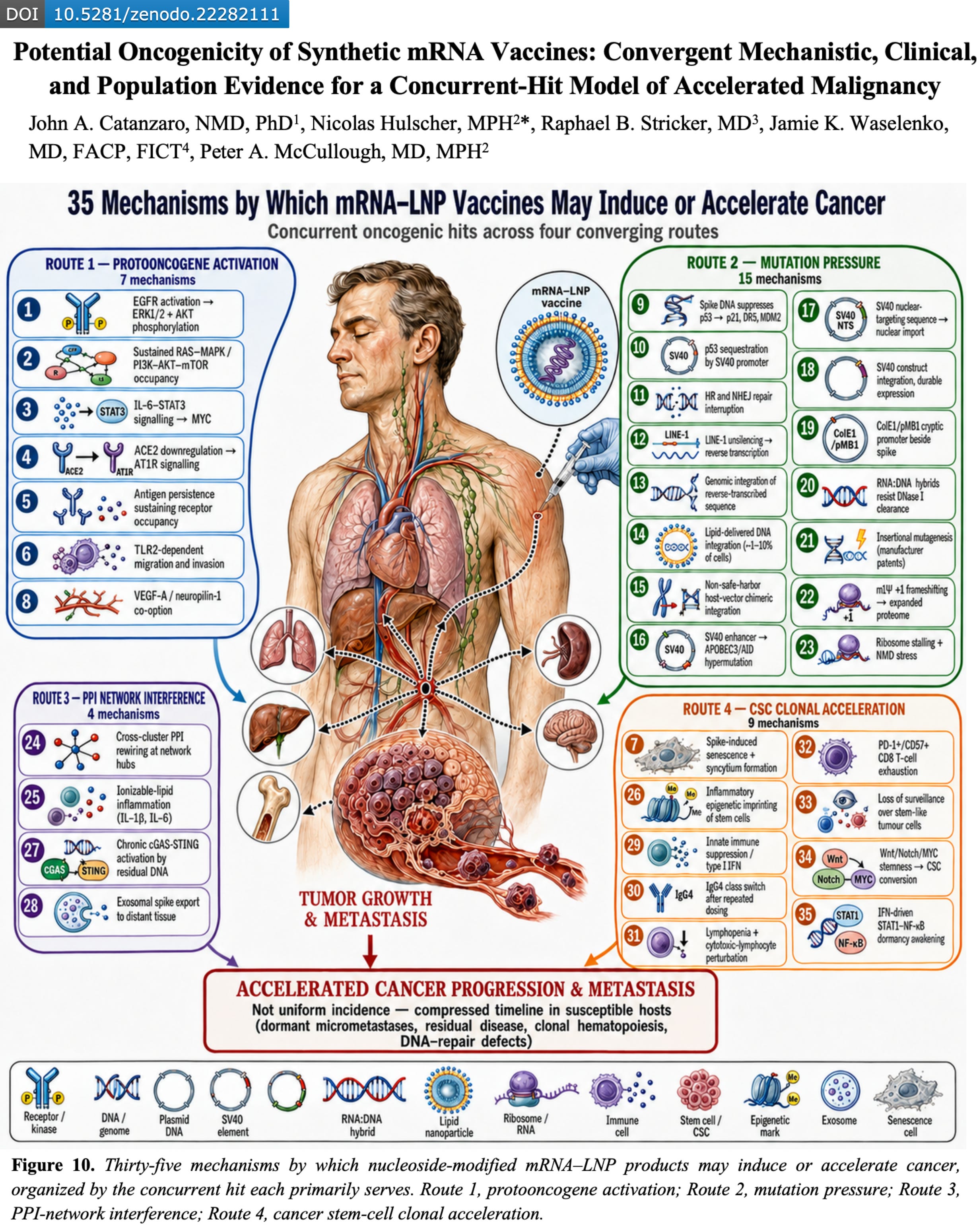
Key mechanisms include EGFR/RAS/MAPK and STAT3–MYC activation, p53/BRCA suppression, impaired DNA repair, residual plasmid DNA and SV40 regulatory elements, LINE-1 reverse transcription, m1Ψ-associated frameshifting, chronic LNP inflammation, immune suppression, and cancer stem-cell expansion—pathways capable of promoting genomic instability, uncontrolled growth, immune escape, dormancy reactivation, and metastatic outgrowth. The full inventory of cancer-promoting mechanisms can be found in Table 4 of our study.
Our central concurrent-hit model proposes that these processes do not necessarily operate independently or sequentially. Multiple cancer-promoting hits overlap in the same susceptible host, compressing the time required for dormant, indolent, or microscopic disease to become clinically aggressive.
CLINICAL EVIDENCE
The published clinical literature includes 333 documented turbo cancer cases across 27 countries, involving lymphomas, leukemia, melanoma, breast cancer, lung cancer, glioblastoma and other glial tumors, sarcomas, and pancreatic cancer. The vast majority of these cases occurred following COVID-19 vaccination, with a minority following SARS-CoV-2 infection.
Approximately 86% of the post-vaccination cases occurred after nucleoside-modified mRNA products—about 56% after Pfizer-BioNTech, 25% after Moderna, and another 5% after exposure to both mRNA products across different doses.
Across these cases, recurring patterns include rapid cancer progression, short-latency recurrence, reactivation of previously controlled disease, and tumors involving the injection site or nearby draining lymph nodes.
Lymphoid malignancies represent the largest category in the published case literature, while glioblastoma and pancreatic adenocarcinoma were among the cancers most consistently associated with reports of unusually rapid progression.
POPULATION EVIDENCE
The population-level evidence reinforces these clinical and mechanistic signals.
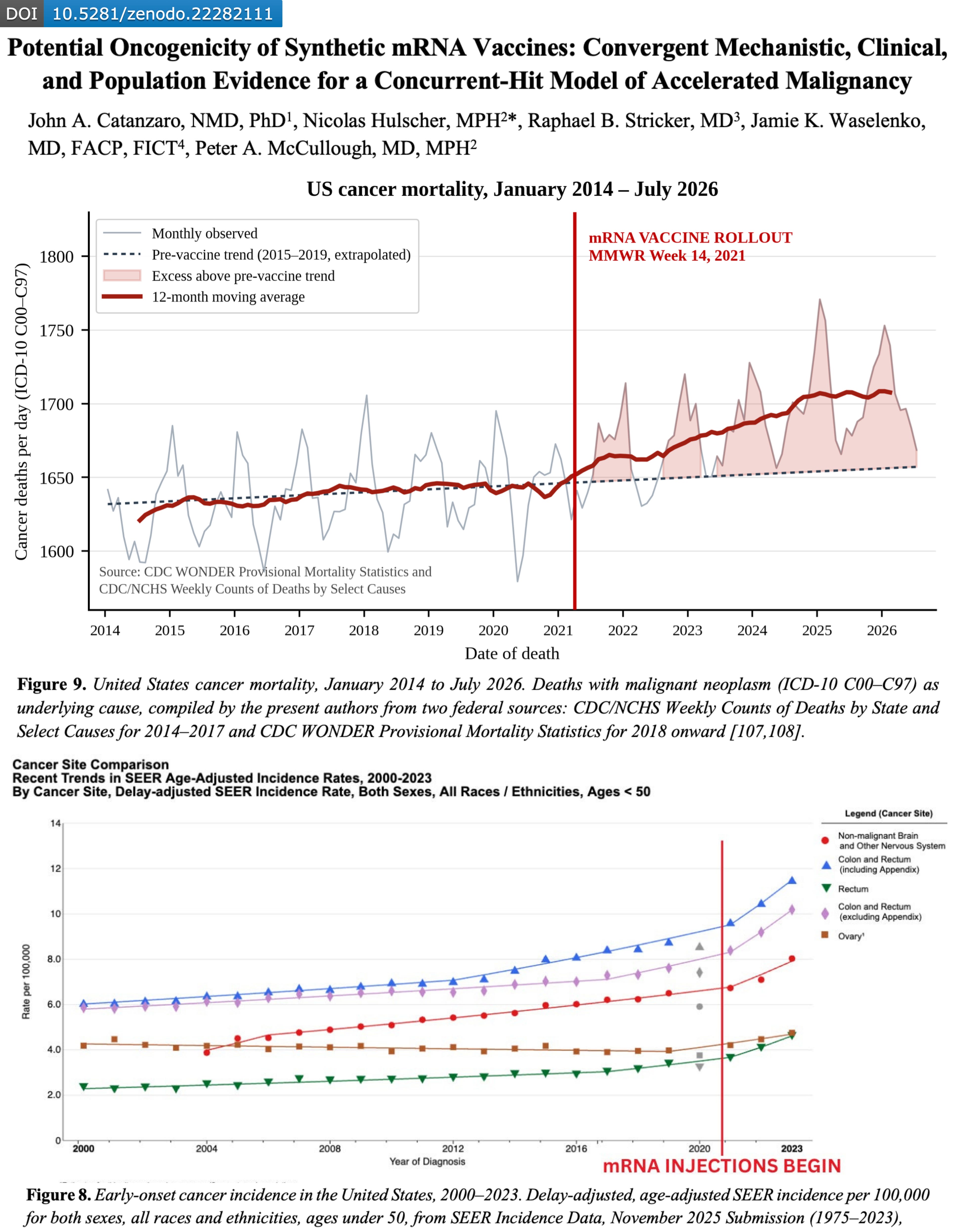
OUR CDC WONDER ANALYSIS: At least 119,130 EXCESS U.S. CANCER DEATHS, rising to approximately 153,000–197,000 after accounting for mortality displacement.
INDEPENDENT CDC WONDER ANALYSIS: 154,330 excess U.S. cancer deaths, closely matching the lower end of our corrected range.
UNITED STATES (SEER): Early-onset cancer incidence surged 6.4% in just 2 years, from 2021–2023, alongside sharp increases in brain and nervous-system tumors (+19.5%), colorectal cancer (+19.4%), small-intestine cancer (+15.5%), ovarian cancer (+12.8%), stomach cancer (+7.3%), and female breast cancer (+3.6%).
SOUTH KOREA: A nationwide cohort of 8.4 million people found vaccinated individuals had an increased 1-year cancer risk across 6 cancer types: thyroid, gastric, colorectal, lung, breast, and prostate cancer.
ITALY: Vaccinated residents had a 23% higher risk of cancer hospitalization, with an adjusted hazard ratio of 1.23 compared with unvaccinated residents.
These findings come from entirely different data streams and study designs, yet they repeatedly point toward the same concern: accelerated cancer emergence and progression following the era of widespread mRNA exposure.
mRNA ONCOLOGY DANGER
The very mRNA platform now linked in our paper to 35 oncogenic mechanisms is being repurposed to treat cancer itself.
Modern individualized mRNA cancer products encode patient-specific mutated tumor proteins and package them into RNA delivery systems designed to generate a strong immune response against those targets.
But the fundamental safety problem remains: where does that encoded antigen actually get expressed?
The platform can distribute systemically, causing vulnerable tissues including the heart and brain to express tumor-derived antigens—raising the risk of off-target immune attack, cardiac injury, and neurological damage.
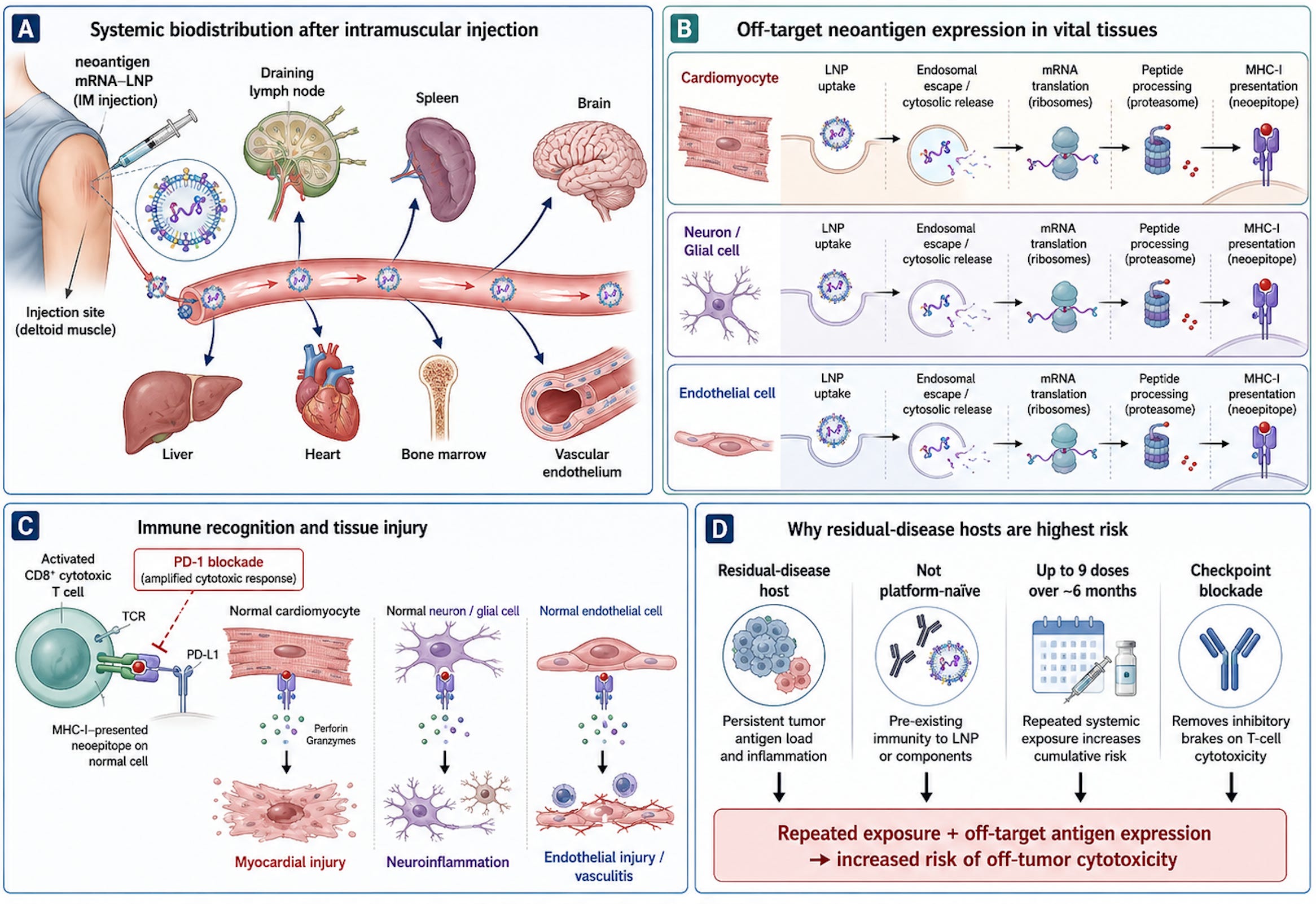
Even more concerning, the LNP delivery vehicle itself promoted metastatic outgrowth in mice even without mRNA cargo, suggesting that some oncologic liabilities reside in the platform itself—not only the encoded antigen.
And now the first randomized test of individualized mRNA as monotherapy in residual cancer has FAILED. The Phase 2 BioNTech BNT122-01 trial enrolled 327 patients with molecularly confirmed residual colorectal cancer, crossed its futility boundary, and was terminated due to a mortality imbalance.
This matters enormously because these therapies are being moved into precisely the patients most vulnerable to accelerated disease: people already subjected to multiple mRNA boosters with residual cancer and genomic instability.
OUR CALL
On the combined weight of the mechanistic, clinical, and population evidence, we call for IMMEDIATE MARKET WITHDRAWAL of nucleoside-modified mRNA-LNP products from broad preventive use and a halt to their expansion into adjuvant and neoadjuvant cancer treatment.
35 mechanisms. Hundreds of documented turbo cancer cases across 27 countries. Up to ~197,000 excess U.S. cancer deaths by our analysis. A failed randomized mRNA cancer trial. And the same technology is now being pushed deeper into oncology.
It’s time to END this madness.
Epidemiologist and Foundation Administrator, McCullough Foundation
Support our mission: mcculloughfnd.org
Please consider following both the McCullough Foundation and my personal account on X (formerly Twitter) for further content.
Thank you so much for publishing this much-needed, objective evidence, giving people the information they need to make an informed choice.
it is all horrifying