


Last fall, Dr. McCullough and I made a pilgrimage to Silicon Valley to meet one of the titans of tech. The ostensible purpose of the meeting was so that he could hear Dr. McCullough’s assessment of the COVID-19 mRNA shots. However, about thirty minutes into the meeting, I remarked that his belief in the efficacy and safety of the vaccines was so firm if not unshakable that it wasn’t clear why we’d flown out from Dallas to speak with him.
I mention this meeting because, despite our difference of opinion and worldview, I was extremely grateful for the opportunity to meet the man, whose work I have admired for decades. He has been a key developer of the internet over the last twenty years, and therefore a major contributor to the power and wealth of the United States. However, despite the immense intelligence and creativity of Silicon Valley, it’s clear that by any standard apart from technical prowess, American civilization is in a state of rapid decline.
Why has this decline occurred? Pondering the question took me back to the thesis of a book that I was assigned to read in one of my college history classes—that is, Arnold Toynbee’s A Study of History, in which he set forth his theory of civilizational decline.
As he famously put it, “Civilizations die from suicide, not by murder.”
As he saw it, a civilization collapses not from external conquest, but from internal rot. This “suicide” is not a sudden act but a process of self-disintegration.
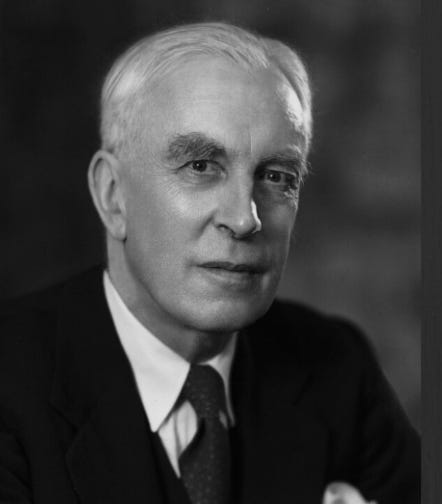
Toynbee reached this conclusion through a comparative analysis of multiple civilizations, including the Hellenic (Greco-Roman), Egyptian, and Chinese.
In his view, civilizations grow strong when a “creative minority”—an elite group of leaders—meets environmental, military, or social challenges. The majority follows not by coercion but through willing imitation. Growth continues so long as the minority retains its creative vitality and inspires collective effort.
Decline begins when this creative minority degenerates into a “dominant minority.”
Proud and complacent about its past successes, the erstwhile creative minority idolizes its own power and prestige, loses moral authority, and begins to rule by force rather than from genuine care, responsibility, and desire to build and create.
Hubris, nationalism, militarism, and the pursuit of material comfort replace creative innovation. Society fractures into a “schism” between the alienated “internal proletariat” (the masses who remain geographically inside the civilization but withdraw their trust and faith in the elite, and the elite that is increasingly detached from the material reality of the people it rules.
A “time of troubles” ensues—marked by internal conflict, class warfare, and futile attempts to freeze the status quo through imperial expansion and domination of other tribes. These actions are symptoms of decline. The civilization has already committed suicide by failing to respond in a creative and productive way to the challenges it faces.
Toynbee illustrated the pattern repeatedly. In the Hellenic case, Rome’s imperial machinery could not compensate for the spiritual exhaustion and social alienation that rotted the republic. Pressure from the barbarians on the frontier merely accelerated the collapse that had occurred internally in the way a storm knocks down an old tree whose core was already dying.
It’s consoling to note that Toynbee did not regard decline as inevitable. He believed that human agency matters, and that it may be possible for a new creative minority to slow or even stop the decline. Civilizations die because they choose—through undue pride, complacency, hubris, greed, and a disconnection from reality—to stop maintaining and building.
Toynbee died in 1975. Were he alive today, he would certainly see in the West a perfect illustration of this thesis.
"Growth continues so long as the minority retains its creative vitality and inspires collective effort."
True. Yet may we define 'growth' as neither economic nor technological dominance but rather conscious human evolution toward wellness, sovereignty and peace?
We can also think of the decline as growing old and dying, like any living system. Stanley Salthe writes about this. As a complex system grows old, it calcifies and becomes reactive trying to preserve its state rather than to adapt.
So, are we all in agreement that the US government can't be reformed and needs to be rebooted to the Constitution?