


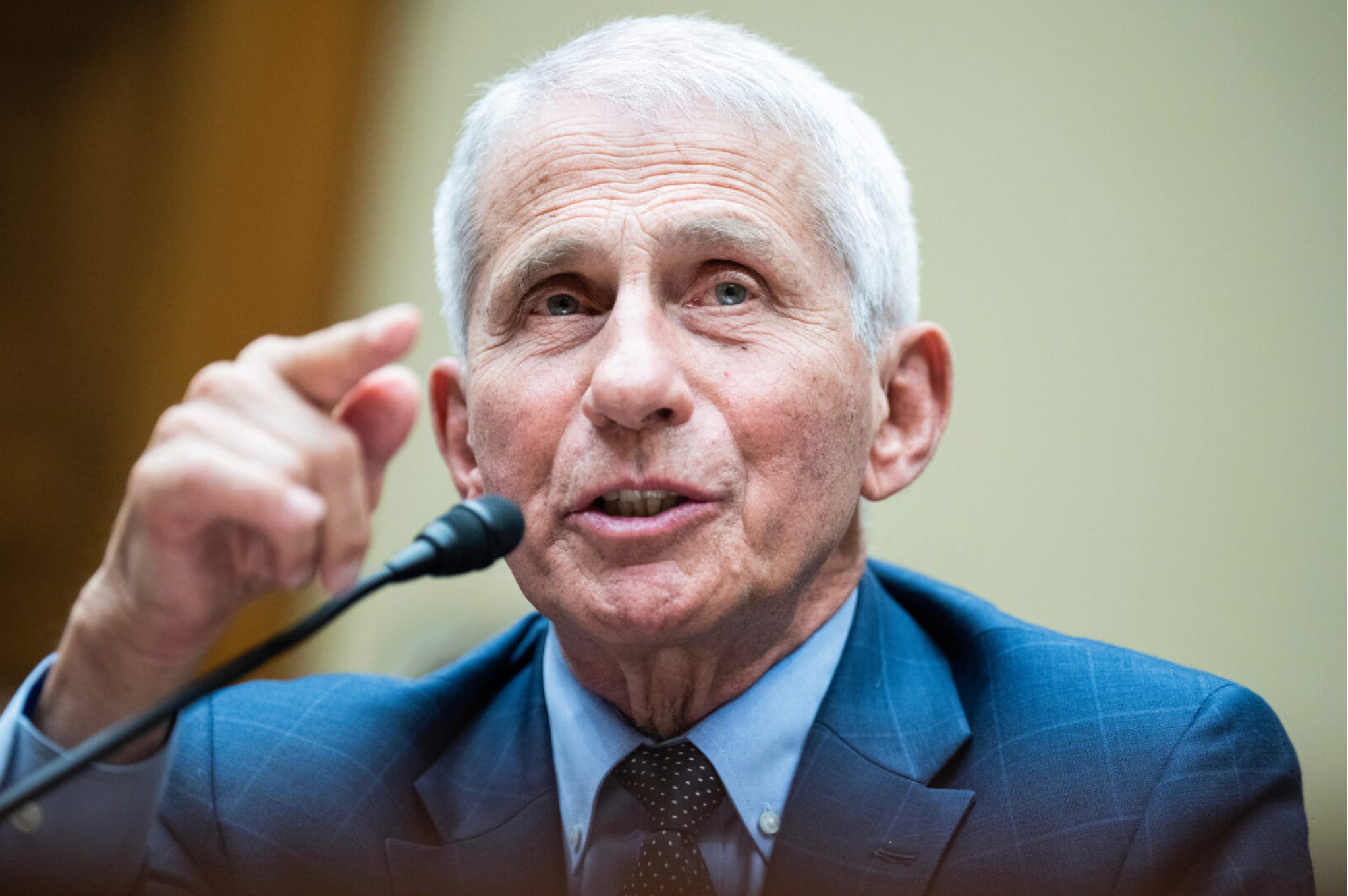
Senator Rand Paul just released more than a thousand pages of personal diary entries recorded by Dr. Anthony Fauci, the longtime director of the National Institute of Allergy and Infectious Diseases, during the period from December 2019 through December 2022.
The diary presents an unfiltered private record of the pandemic’s early months and beyond. What emerges is a portrait of a so-called “expert” acutely conscious of his growing celebrity while playing the mendacious game of Washington DC politics and dealing with President Trump, who lacked the confidence to fire the tricky, smart-ass gnome.
The most striking theme is Fauci’s preoccupation with his growing fame, with multiple entries recording his adulatory media coverage. In May 2020 he noted a “very flattering” front-page *Washington Post* profile and declared it “not hyperbole to say that today I am the most famous and talked about person in the country and one of the most recognizable person in the world.” He tracked profiles on Nightline, editorials in major newspapers, and the production of Fauci-themed merchandise—socks, doughnuts, and a prayer necklace casting him as the “Patron Saint of Public Health.”
He proudly records celebrity contacts such as a “great call” with Barbra Streisand in which he advised her on the mRNA vaccine. Also noted are his interactions with Julia Roberts, Steph Curry, and others. The diary concludes in December 2022 with an embrace of Hunter Biden at the Kennedy Center Honors and a note about the online reaction a photograph would provoke.
Especially remarkable are the early entries on the virus’s origin. On January 26, 2020, Fauci wrote that epidemiological and genomic data showed the first infection occurred in early December and was unconnected to the Wuhan market: “Now we know the market was not the source, it was the amplifier.”
Days later he recorded his infamous conference call with his virology buddies in which only two favored a natural origin while the rest thought “deliberate insertion was possible,” including a discussion of the furin cleavage site and the possibility of accidental or intentional laboratory release. These private remarks contradict his public assertions about a natural spillover and dismissal of the lab-leak hypothesis.
Other notable passages document his initially amicable relationship with President Trump—who called him “the smartest person in the world” and said “We are counting on you.”
Fauci also recorded continued private contact with senior adviser David Morens, whom he later disavowed under oath, and expressed frustration with congressional critics he viewed as intent on “bring[ing] me down.”
The diary presents Fauci’s experience of the pandemic as a public-health emergency that catapulted him to international fame among his legions of dimwitted and adoring fans.
I find it fun to compare and contrast Fauci’s diaries to those of Samuel Pepys (1633–1703) , whose diaries offer a fascinating and colorful portrait of England in the momentous 1660s that featured the Great Plague, the Great Fire of London, and the Second Anglo-Dutch War.
Pepys was a high-ranking naval administrator and Member of Parliament. Between January 1, 1660 and May 31, 1669 he kept a private diary in a personal shorthand system that mixed English tachygraphy with French, Spanish, Latin, and other languages for sensitive passages.
His eyewitness account of the Great Plague remains the best in recorded history, because unlike most people of his social class, he continued spending much of his time in London. The plague reached the City by early summer 1665. He sent his wife Elisabeth (and household) to Woolwich for safety in July, and the Navy Office later moved to Greenwich in the late summer. Pepys overnighted in Greenwich but regularly commuted by river back to his London home and other parts of the capital for work and pleasure.
He stayed through much of the epidemic’s peak, and continued his official duties and social life. He recorded his observations (including seeing red-crossed doors, empty streets, and burial pits), took the precautions of the time such as chewing tobacco, and noted that he “never lived so merrily” or prospered as much as during that plague year.
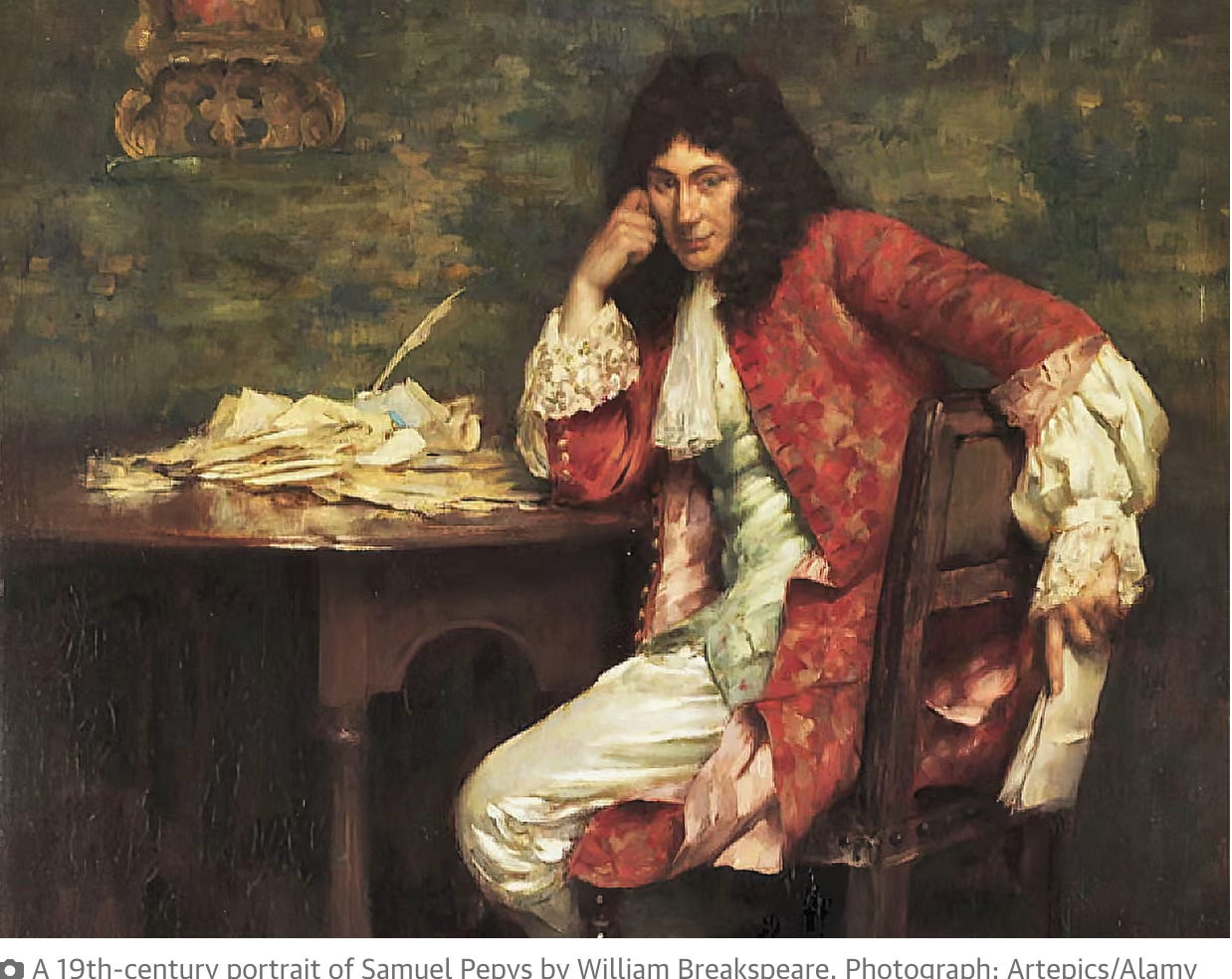
Early published editions of his diary redacted or obscured its extensive sexual material. Victorian and later editors cut, paraphrased, or left untranslated the passages in which Pepys recorded his frequent extramarital encounters, many of them with servants, subordinates’ wives, and young women in positions of dependence.
The most complete modern transcription, the eleven-volume Latham and Matthews edition (1970–1983), restored the full text and supplied translations of the coded sections. What emerges is a man of boundless curiosity, energy, cultural and sexual appetite. He recorded his sexual acts and his subsequent shame, prayers for forgiveness, and his relapse to the same kind of behavior.
Whereas Fauci is fascinated by himself, Pepys is fascinated by everything and everyone around him, and his portrait of life in London during the reign of Charles II is extremely entertaining.
He got away with it during the HIV pandemic and then again with the Covid pandemic, his ego has gotten really enormous: https://unorthodoxy.substack.com/p/why-it-does-matter
Yes, Fauci is a criminal participant in some of the greatest crimes against humanity in this century however, he was just a puppet. He is not the architect of the manufactured Covid crisis.
Some of Fauci’s handlers are:
CDC Director:
Rochelle Walensky
Pfizer CEO:
Albert Bourla
Vanguard CEO
(owner of Fox & CNN, J&J):
Mortimer J. Buckley
CDC Deputy Director:
Anne Schuchat
AstraZenica CEO:
Pascal Soriot
BlackRock CEO
(owner of Fox & CNN, J&J):
Larry Fink
CDC Director
Washington Office:
Jeff Reczek
BlackRock President
(owner of Fox & CNN, J&J):
Robert Kapito
Covid Czar:
Jeff Zients
Secretary of State:
Antony Blinken
Health & Human Services:
Xavier Becerra
Assistant Secretary for Health:
Rachel Levine
CDC Chief of Staff:
Sherri Berger
CDC Chief Medical Officer:
Mitchell Wolfe
Deputy Secretary of State:
Wendy Sherman
Moderna Chief
Scientist:
Tal Zaks
Johnson & Johnson
CEO:
Alex Gorsky
Pfizer Chief Scientist:
Mikael Dolsten
Senior Pandemic
Advisor:
Andy Slavitt
White House
Chief of Staff:
Robert Klain
Administrator of Small Business Administration:
Isabel Guzman
Attorney General:
Merrick Garland
Secretary of Treasury:
Janet Yellen
Secretary of Homeland Security:
Alejandro Mayorkas
Former Director of CIA:
David Cohen
AL INTEL
Deputy National Security
Advisor for Cyber and Emerging Technology:
Anne Neuberger
Director of National Intelligence:
Avril Haines
And no one will be charged, the ruling “establishment” will NEVER allow one of their puppets to take the fall because then it would be very difficult for them to find willing puppets, whether through Epstein blackmail or bribery, to follow them in the future.