


Students of British imperial history are intimately familiar with the Suez Crisis of October–November 1956. The crisis began when Egyptian President Gamal Nasser nationalized the Suez Canal on July 26, 1956, taking control of it from the British and French Suez Canal Company.
Britain and France then secretly coordinated with Israel, which sought to end Egyptian blockade of Israeli shipping. On October 29, Israel invaded the Sinai; Britain and France issued an ultimatum and then launched air and naval attacks to seize the canal under the pretext of serving as “peacekeepers.”
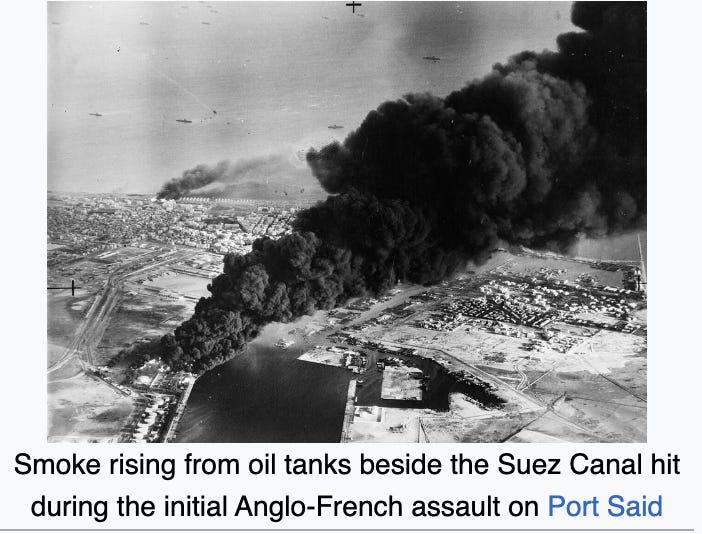

The United States and the Soviet Union pressured Britain, France, and Israel to cease hostilities, and the invading forces withdrew in early 1957. The crisis marked a sharp decline in British and French global influence.
In retrospect, it seems that British Prime Minster, Anthony Eden made a number of miscalculations. President Eisenhower was very unhappy when he discovered that Britain had secretly plotted with Israel and France. The perception of Britain as a covert schemer wrecked its moral standing and caused many observers to regard the British and French military actions NOT as “a peace keeping operation” but as an unprovoked invasion.
British leadership characterized Nasser as a “Hitler-like” dictator who could be easily toppled, failing to recognize that the experience of being attacked would produce a feeling of solidarity in Egypt for their leader, as flawed as he was.
British leaders also failed to recognize Britain’s economic vulnerability arising from its dependence on the the United States, which could use its financial leverage to force the British to retreat.
Is the United States now facing a Suez Crisis moment? Every imperial power ultimately discovered the limits of its power, to the surprise many who believed that their empire was inherently different from the empires of the past.
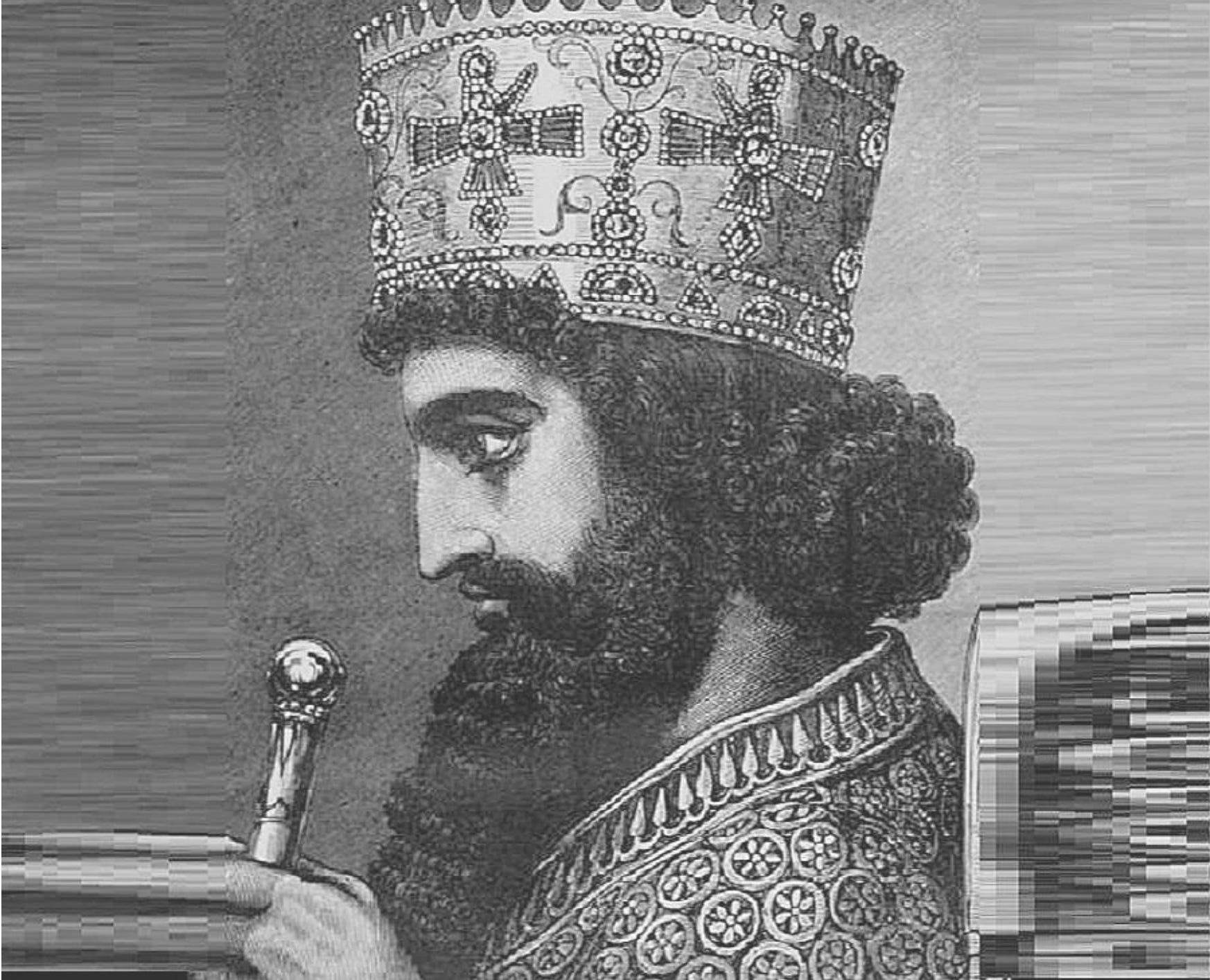
In recent weeks I have often been reminded of the Persian King Xerxes I. After years of expanding the Persian Empire to the West from its ancient seat in present day Iran, Xerxes invaded mainland Greece in 480 BC. The Greek historian Herodotus wrote a vivid and detailed account of the battles that followed. Many historians consider Herodotus’s The Histories the first great work of history in western literature.
Herodotus characterized Xerxes I as an arrogant, emotionally volatile, and hubristic commander who allowed his ambitions to cloud his reason. With no clear strategy or even serious appraisal of the Greek resistance he would face, he was inclined to petulant bouts of rage and a tendency to be swayed by advisors who told him what he wanted to hear.
His failure to respect his enemy resulted in a memorably embarrassing moment when he laughed at the King Leonidas when it became clear that the Spartan commander was going to try to hold his ground at the Thermopylae pass instead of ceding it to the vastly larger Persian army.
Above all, Xerxes failed to appreciate that—despite their own fractiousness—the Greeks would be motivated to defend their homeland and would make good tactical use of their mountainous terrain and narrow waterways.
Keep posting John. You are a wealth of information.
No. It’s not.
You’re trying too hard. This is sad.
I do hope when Trump wraps this up that you thank the good Dr. McCullogh for lending his platform to you, and return from whence you came.