


With the hantavirus outbreak aboard the MV Hondius cruise ship now standing at 7 cases and 3 deaths, many people are curious if any promising research exists on combatting it.
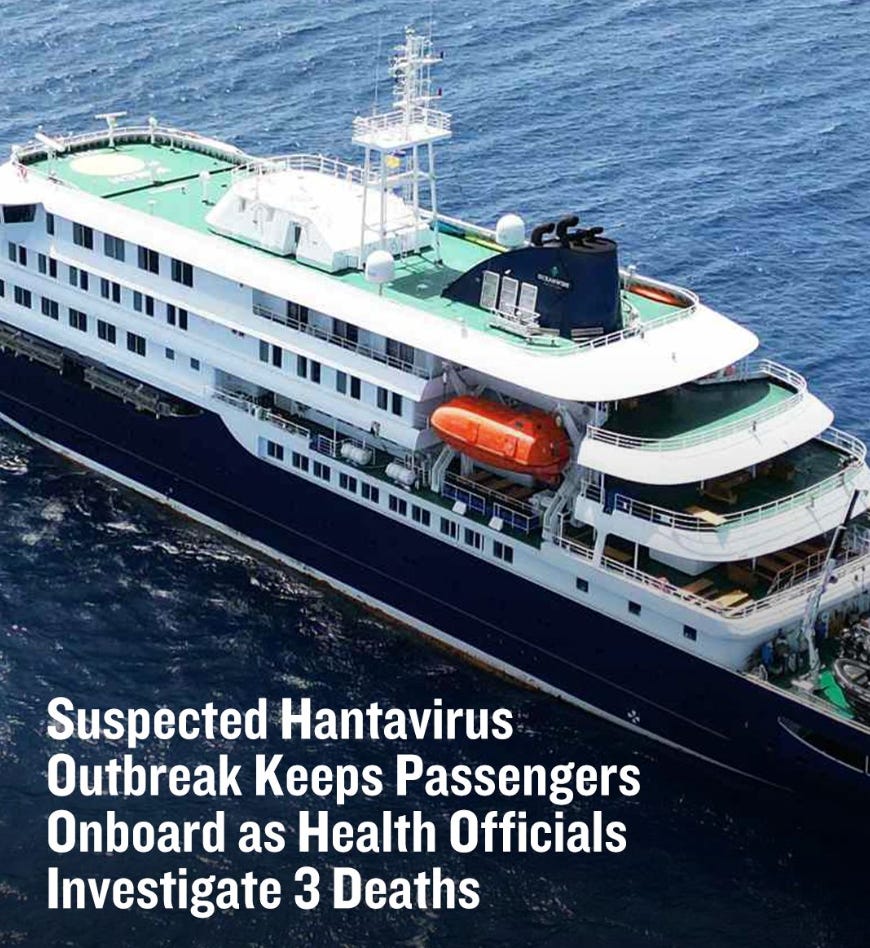
While hantavirus is typically spread by rodents, the World Health Organization recently claimed human-to-human transmission “can’t be ruled out” on the cruise ship — particularly among very close contacts. The ship operator and health authorities have said there were no rodents on board the vessel, suggesting the initial exposure likely occurred before boarding in South America.
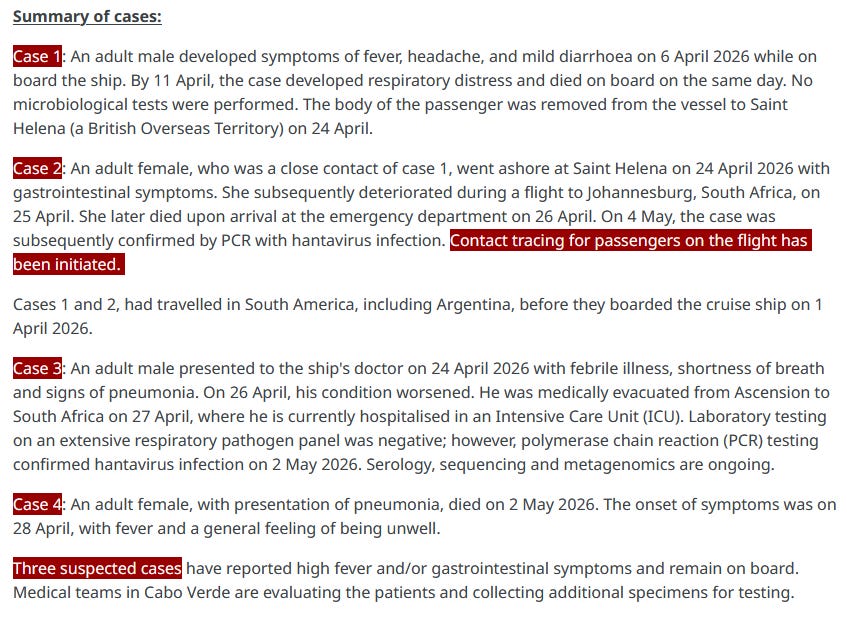
The outbreak is expected to fizzle out fairly quickly once the remaining passengers and crew (~147 total people) are medically cleared and disembarked from the ship.
While there are currently no approved treatments specifically for hantavirus, some early-stage scientific work has turned up an intriguing natural candidate that deserves attention.
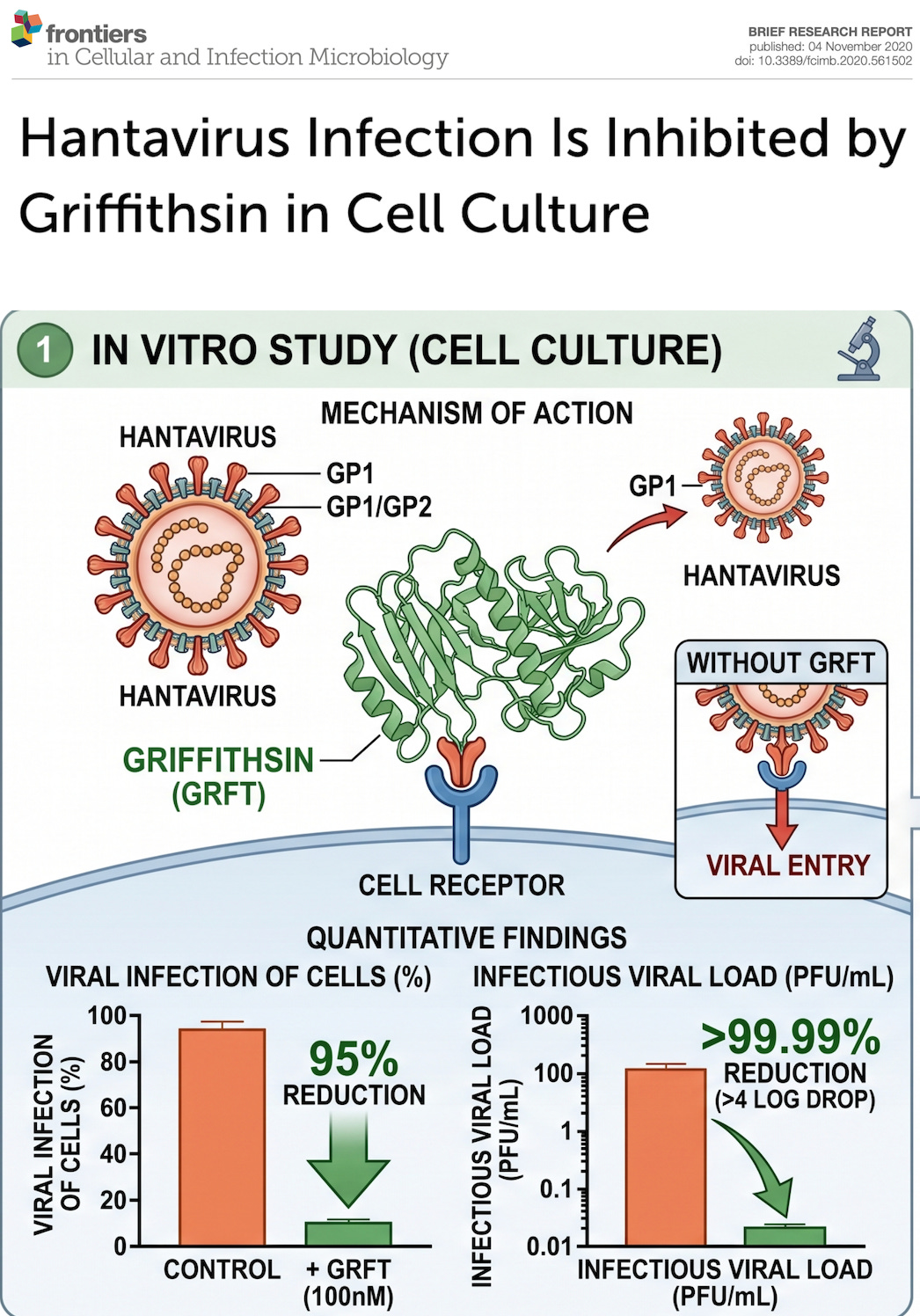
One such compound is Griffithsin (GRFT), a non-toxic, natural protein originally isolated from a species of red marine algae. In a 2020 laboratory study, researchers at the CDC showed that Griffithsin was remarkably effective in cell culture against two of the most important New World hantaviruses (Andes virus and Sin Nombre virus).
It reduced hantavirus infection of cells by up to 95% and slashed infectious viral load by more than 99.99% — a greater than 4-log (10,000-fold) drop — by physically blocking the virus from entering human cells through its binding to specific sugar molecules on the viral surface glycoproteins.
Building directly on that work, a 2022 follow-up study published in the same journal took the research into animals. Using a lethal mouse model of hantavirus infection, Griffithsin protected 80% of the treated mice from death, while every untreated animal succumbed. Once again, the primary mechanism was preventing viral entry right at the start of infection.
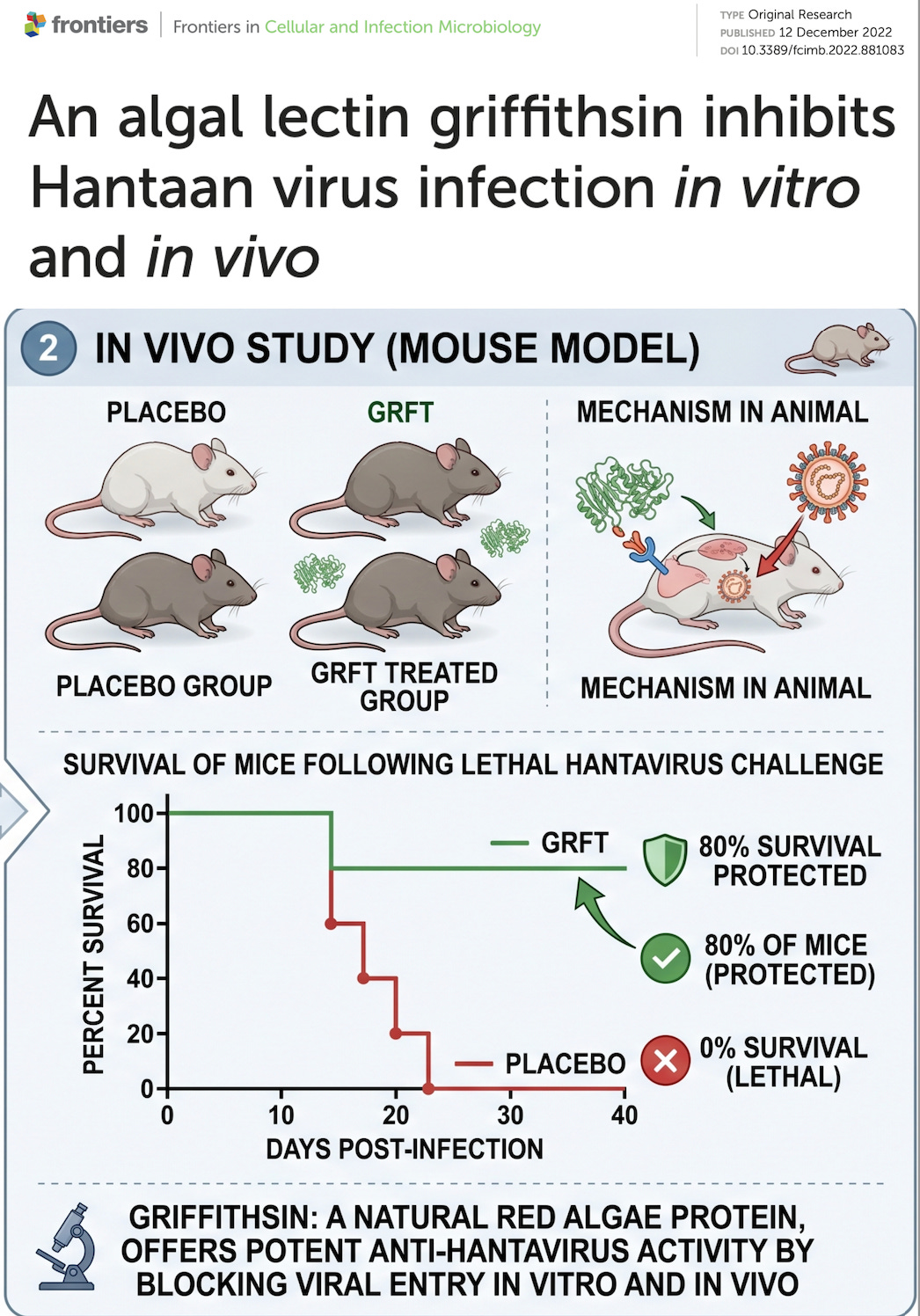
These results are still preclinical — meaning much more work would be needed before any real-world application — but they represent perhaps the most promising data currently available for hantavirus countermeasures.
Given that Moderna is already collaborating with Korea University on an mRNA-based hantavirus injection, Griffithsin — a safe, natural protein with impressive preclinical data — would almost certainly be ignored in the very unlikely event of a widespread outbreak (gain-of-function/lab release).
Regulators would rush to fast-track Moderna’s proprietary mRNA candidate under emergency use authorization, while a promising natural option from red algae gets left on the shelf.
Epidemiologist and Foundation Administrator, McCullough Foundation
Support our mission: mcculloughfnd.org
Please consider following both the McCullough Foundation and my personal account on X (formerly Twitter) for further content.
I love you Nicholas! Like a son. You are AMAZING. Thank you for your hard work and perserverence and more than anything, your courage. I also love the way you speak. Keep up the good work - these are very dark times. God Bless you!
wonder if this is a create- a- vaccine-need opportunity