


In one of the first published scientific editorials to directly confront the PubPeer Mob, Dr. Peter McCullough sounds the alarm on how anonymous accusations on PubPeer can escalate into journal investigations, retraction proceedings, and permanent reputational damage, even WITHOUT proven scientific misconduct.
Published in the International Journal of Cardiovascular Research & Innovation, the editorial is titled “Post-publication retraction and the erosion of editorial integrity: A call for adherence to COPE standards.”
Researchers can spend YEARS conducting studies, navigating peer review, and publishing their findings—only to face demands for new references, additional data, or manuscript alterations following weaponized anonymous complaints years later.
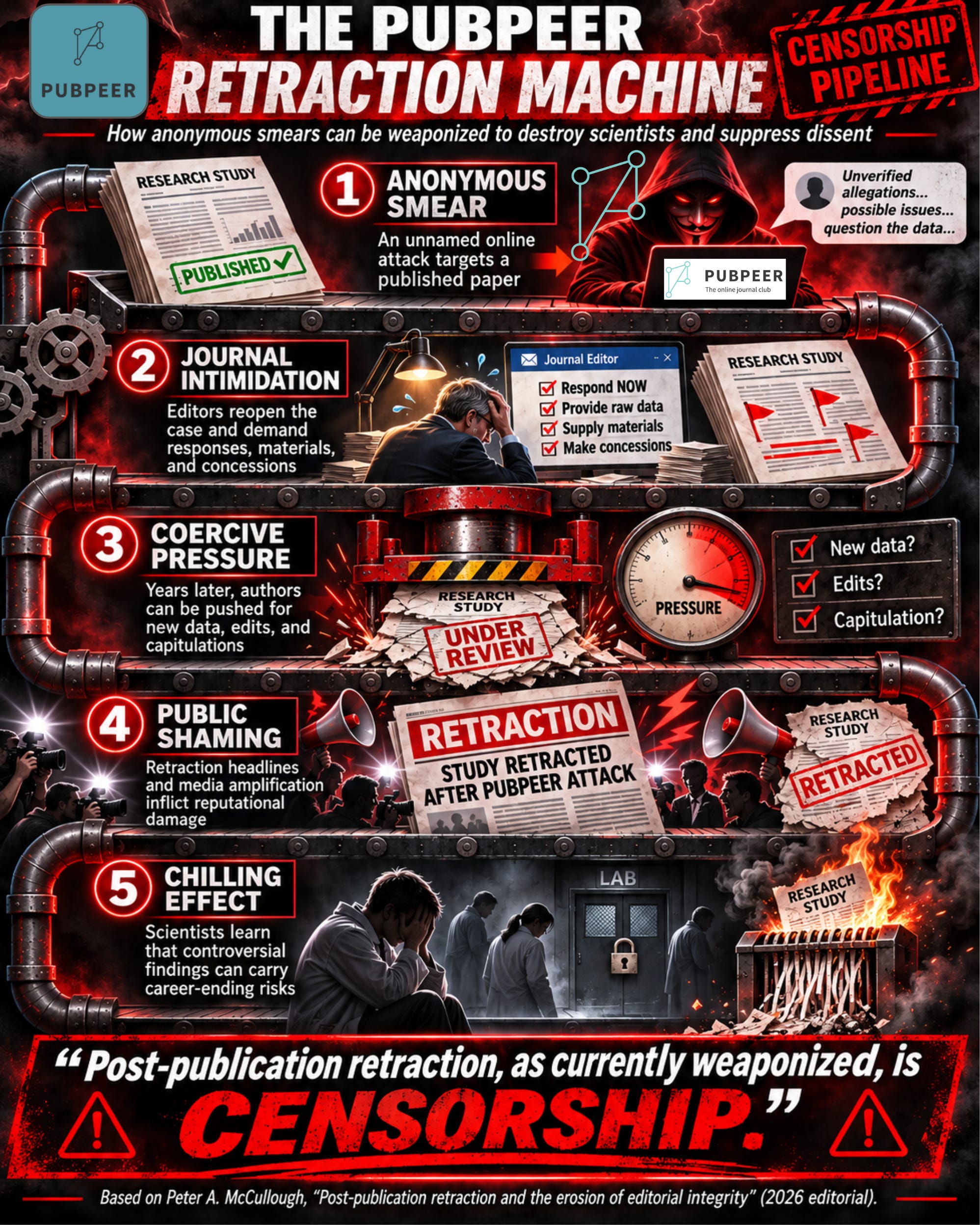
THE SCIENTIFIC CENSORSHIP PIPELINE
1. ANONYMOUS SMEAR — PUBPEER
An anonymous agent targets a published scientific paper, triggering formal scrutiny without having to establish scientific misconduct.
2. JOURNAL INTIMIDATION
Editors reopen previously published research, demanding responses, supporting materials, additional references, and manuscript alterations.
3. COERCIVE PRESSURE
Years after publication, scientists face escalating demands for new data, revisions, or concessions—even when the underlying scientific findings have not been demonstrated to be invalid.
4. PUBLIC SHAMING — RETRACTION WATCH
Retraction announcements and subsequent media coverage amplify allegations, inflicting severe reputational damage even without a formal finding of research misconduct.
5. CHILLING EFFECT — SCIENTIFIC CENSORSHIP
Researchers become reluctant to investigate controversial topics, fearing that publishing findings challenging established narratives could jeopardize their reputations, careers, and future research.
Research challenging powerful institutional or commercial interests—including investigations of vaccine safety and repurposed generic drugs—are subjected to disproportionate attacks by the anonymous agents.
Scientific disagreement is NOT scientific misconduct. Questions about references, interpretations, or competing conclusions should generally be resolved through transparent scientific debate, letters to the editor, and appropriate corrections—NOT weaponized retractions.
The editorial calls for enforcement of publication-ethics standards, independent appeals, author protections, and transparency surrounding the funding relationships of organizations involved in the retraction ecosystem.
As Dr. McCullough concludes:
“Post-publication retraction, as currently weaponized, is censorship.”
Scientists should not have to fear that publishing controversial findings will expose them to years of anonymous accusations, reputational attacks, and potentially career-ending proceedings.
Here, you will see real examples of how PubPeer and the Journal Cartel have attempted to erase our previous studies:
New Peer-Reviewed Paper Exposes Journal Cartel as Targeted Retractions Mount

by Nicolas Hulscher, MPH
Scientific debate must remain OPEN. Anonymous accusations must not substitute for EVIDENCE. And retractions must NEVER become instruments for suppressing inconvenient scientific findings.
The Journal Cartel and their PubPeer enforcement apparatus need to be dealt with by proper authorities as targeted retractions continue to mount, erasing years of scientific progress.
Epidemiologist and Foundation Administrator, McCullough Foundation
www.mcculloughfnd.org
Please consider following both the McCullough Foundation and my personal account on X (formerly Twitter) for further content.
Color me unsurprised.