


A concerning new human study found that girls exposed to Tylenol during pregnancy had 41% smaller ovaries, 23% fewer ovarian follicles, and 13% smaller uteruses.
The study, “Fetal exposure to paracetamol is associated with altered markers of ovarian development and reduced uterine volume in girls: the COPANA study,” was just published in Human Reproduction Open. The authors describe it as the first human cohort specifically designed to study prenatal acetaminophen exposure and ovarian development.
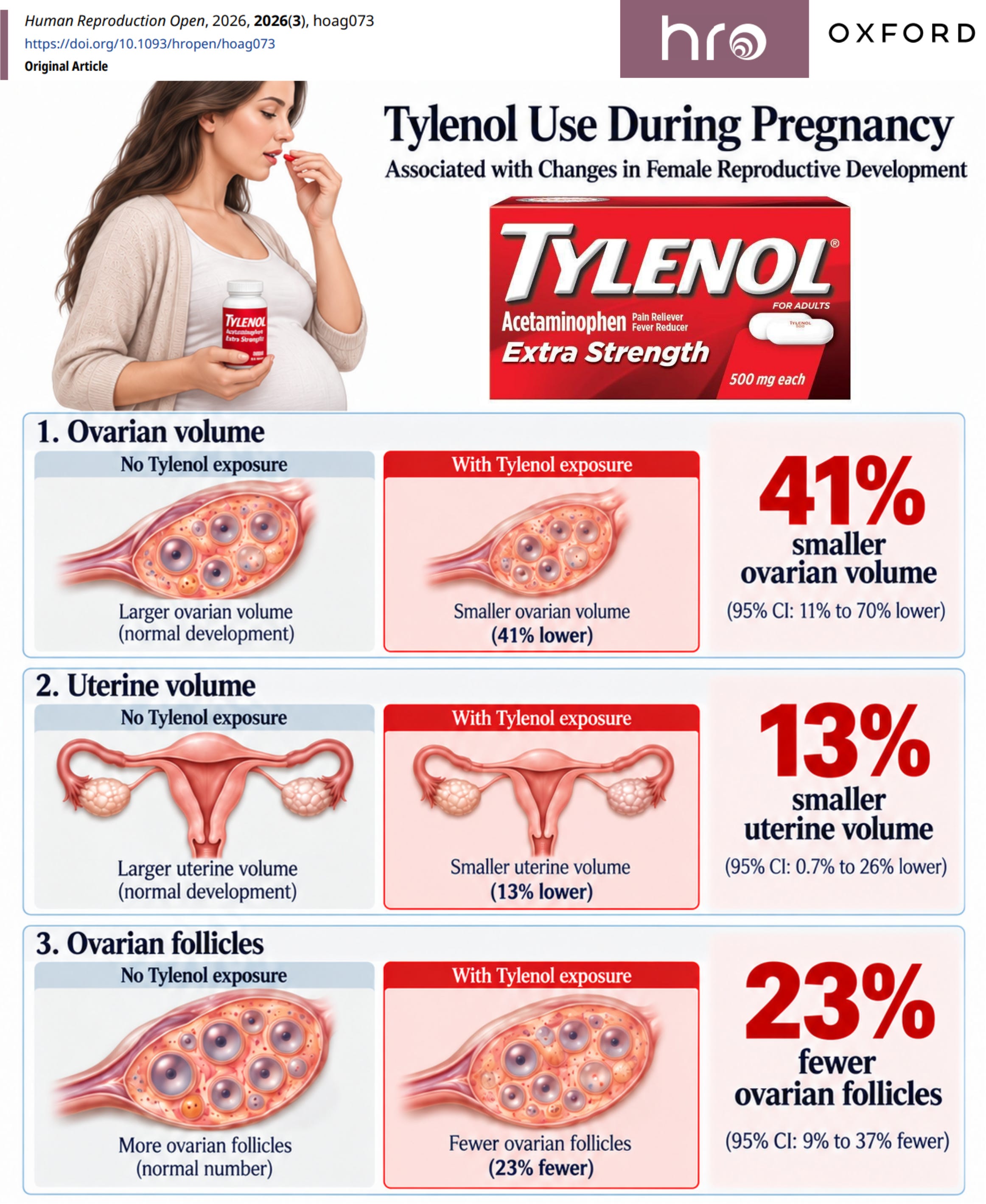
The researchers followed 302 infant girls, while their mothers reported Tylenol/acetaminophen use every 2 weeks starting early in pregnancy, including what they took and how much. The researchers also measured acetaminophen directly in maternal urine using LC-MS/MS, then used ultrasound to examine the girls’ ovaries and uterus and measured reproductive hormones. They also checked the findings in a separate cohort of 1,210 girls followed into adolescence.
The doses were not extreme. In the main cohort, the median cumulative reported dose was about 2 grams in both the early- and later-exposure groups, while the median total reported dose across pregnancy among exposed women was 3 grams. In other words, this was not 2 grams every day, it was the total amount reported over the relevant pregnancy period.
Among girls whose mothers reported Tylenol/acetaminophen use during pregnancy:
Early fetal exposure (<17 weeks): 41% smaller ovarian volume
Mid-to-late fetal exposure (≥17 weeks): 23% fewer ovarian follicles
Early fetal exposure (<17 weeks): 13% smaller uterine volume
There also was a dose-response pattern: the more acetaminophen exposure mothers reported—and the higher the drug levels measured in urine—the smaller the ovarian and uterine volumes tended to be.
The signal also extended beyond infancy. In the independent cohort, prenatal acetaminophen and/or NSAID exposure was associated with:
4.11 cm³ lower uterine volume at puberty
2.76 cm³ lower ovarian volume during adolescence
That second cohort used a less precise exposure measure and grouped acetaminophen together with NSAIDs, so it is best viewed as supportive rather than identical confirmation.
They adjusted for several potential confounders, including maternal BMI, PCOS, alcohol and nicotine use, IVF conception, aspirin/NSAID use, and infant acetaminophen treatment. They also specifically tested for confounding by indication by excluding mothers who took acetaminophen for fever, and the main associations remained. However, they did not account for maternal vaccination status, which leaves open the possibility that vaccination-related factors could have contributed to some of the observed associations.
These findings are concerning given that more than 50% of pregnant women use acetaminophen and the drug crosses the placenta. The paper also notes that animal studies have found reductions in ovarian follicle reserve of up to 40% after fetal exposure.
This was an observational study, so it cannot prove that Tylenol caused the changes. But 41% smaller ovaries, 23% fewer follicles, measurable dose-response trends, and similar changes later in life make this a reproductive-safety signal that deserves serious attention.
Epidemiologist and Foundation Administrator, McCullough Foundation
Support our mission: mcculloughfnd.org
Please consider following both the McCullough Foundation and my personal account on X (formerly Twitter) for further content.
Depopulation by design. My goodness people need to wake up to what is taking place on a 🌎 scale. The globalist are and have been working towards agenda 2030 for well over 200 years. The pharmaceutical companies collecting billions of dollars for the suffering and hurt towards innocent, unsuspecting masses. We’ve been lied to duped, misled for many generations. It’s time now for things to turn around people, to unify and take back what is rightfully belonging to all humanity on earth. 😇
Thank You, Nicholas. This will go in the news aggregation blog post I'm putting togather.