


A new prospective cohort study published in Cancers followed 748 women with breast cancer for an average of 20.2 months and found that two natural-derived therapies were independently associated with substantially improved survival:
MISTLETOE: 54% lower mortality risk (HR 0.463; p = 0.030).
IV VITAMIN C: 44% lower mortality risk (HR 0.561; p = 0.045).
Both associations remained statistically significant after adjustment for major clinical factors, including metastasis, chemotherapy, surgery, radiotherapy, and other complementary treatments.
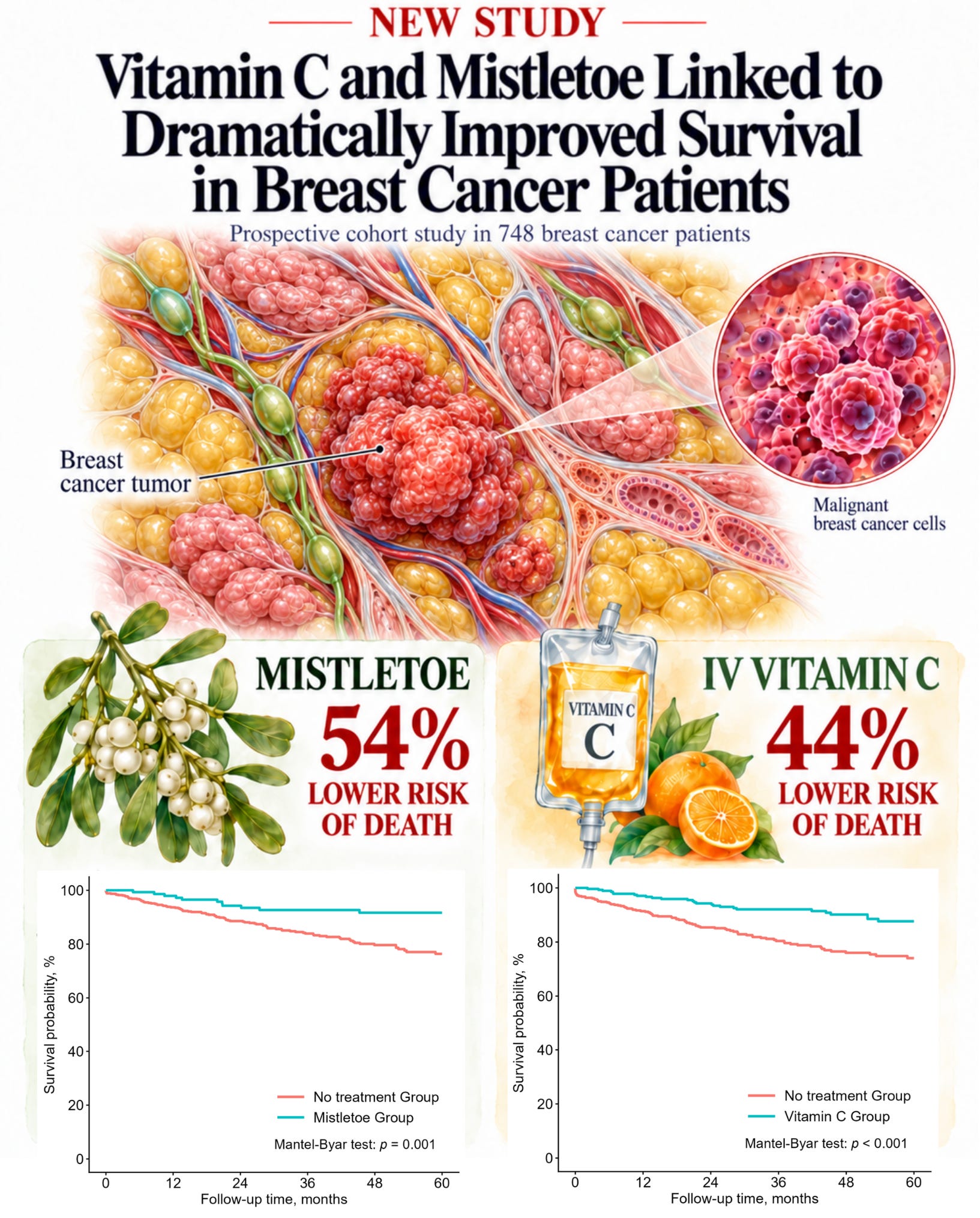
Researchers analyzed clinical data from 748 female breast cancer patients treated at Yeom Chang Hwan Hospital, a specialized integrative cancer and palliative care center in Seoul, South Korea, between April 2011 and May 2024. Data were collected from electronic medical records, including patient characteristics, laboratory measurements, cancer history, treatment exposure, and mortality outcomes. Deaths were verified through clinical records, death certificates, and institutional follow-up logs.
High-dose intravenous vitamin C was administered at 10–100 grams once or twice weekly, while mistletoe extract was administered through subcutaneous injections of 0.02–20 mg once or twice weekly. Treatment protocols required at least three months of therapy and more than 10 sessions.
According to the study, high-dose intravenous vitamin C can achieve pharmacological concentrations that act as a pro-oxidant, generating hydrogen peroxide and inducing oxidative stress that may preferentially damage malignant cells. Vitamin C may also influence mitochondrial function, inflammatory signaling, and epigenetic regulation through DNA demethylation.
Mistletoe extract (Viscum album) contains biologically active compounds, including mistletoe lectins and viscotoxins, that may stimulate natural killer cells and T-lymphocytes, activate cancer-cell apoptosis (programmed cell death), and suppress VEGF signaling involved in tumor blood-vessel formation.
These therapies were administered alongside conventional cancer treatments. Although the survival associations were statistically significant, the study was observational and cannot establish causality. Nevertheless, these findings warrant further investigation through randomized controlled trials to confirm these promising clinical findings.
Epidemiologist and Foundation Administrator, McCullough Foundation
Support our mission: mcculloughfnd.org
Please consider following both the McCullough Foundation and my personal account on X (formerly Twitter) for further content.
Why did they ignore the role of Vitamin D? Study after study shows higher the D the lower the risk of Breast cancer!
Vaccine manufacturers, most “doctors(technicians)”, and public “health” administrators are diabolical genocidal totalitarians, without any regard for human life. The MIC is something to be avoided, because they are the plague.