


I was very touched yesterday by reader responses to my post about my misadventure with a centipede bite and ensuing cellulitis (My Mysterious Case of Cellulitis). I also received many personal messages and emails to wish me well.
As unpleasant as the experience was, I believe it’s a very valuable thing to be occasionally reminded—in a stark way—of one’s vulnerability and mortality. The ancient Stoics had a habit of contemplating their mortality every day—not to be morbid, but to keep their minds focused on what is meaningful and to avoid wasting time on trivialities, needless conflicts, and needless drama. Many possessed artistic symbols of death such as figurines of skulls. One of the mosaics that was excavated at Pompeii is an elaborate Memento Mori.
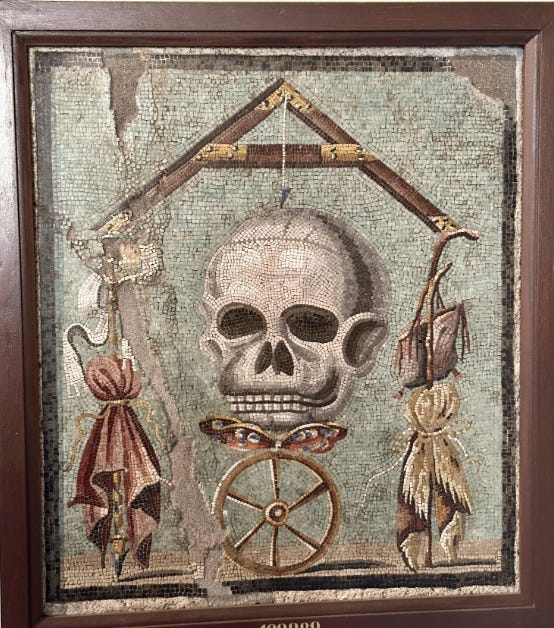
The skull symbolizes death, the butterfly is the soul. The wheel of fortune and the tools symbolize death as the great equalizer, reminding viewers of life's transience and the futility of wealth.
My paternal grandfather—Sam Aurelius Leake—occasionally expressed an attitude that derived from the Meditations of the Roman Emperor and stoic philosopher, Marcus Aurelius. When observing some noisy and needless squabble about something, he would ask, “Will anyone in the near future remember or care about the cause of this fuss?”
Marcus Aurelius posed the question, “What would you do with your day today if you knew it was your last?” and he proposed that one might as well live each day as though it were.
Some scholars have pointed out that Marcus was too heavy and melancholy and that he should have lightened up a bit. He wrote his Meditations at the Roman camp of Vindabona (now Vienna) and I often thought about him when I lived in Vienna, near the site of the old camp, especially on cold and grey winter days when it was easy to become melancholy.
He would have been appalled at how we moderns waste our days, filling our minds and souls with ugly images, sensations, and emotions instead of pursuing knowledge, excellence, and meaningful relationships.
My trip to the ER was a stark reminder of my mortality, and it gave me resolve to ascertain what is important and meaningful, and to stay focused on it. As we head into 2026, I encourage everyone to ponder their mortality deeply and to resolve to do the following:
Mend the relationships and make the apologies that you feel you should before you hear the news that someone with whom you’ve had a falling out is on his deathbed.
Stop watching trash television, including the news.
Stop aimlessly scrolling through social media sites.
If there is a place you want to visit or a new hobby you’d like to try, get on with it. For example, if you are a retired person with some means and you have always dreamed about living in Paris for a month, go ahead and book and Air BnB apartment.
Avoid needless squabbling about politics with people whose identity is invested in holding the opposite views. You will never persuade them, which means that such conversations are mere power struggles with no constructive end.
If you have a vice that you want to overcome, get cracking today (see my post On New Year’s Resolutions).
If you are in a toxic relationship, critically examine how you may be contributing to it. If you can—after being brutally honest with yourself—conclude that you are not the problem, then get out of the relationship.
Spend some quiet time every morning to contemplate your blessings and try to feel grateful for them.
A key focus of this newsletter is health and how we can preserve and promote it. This brings me to the greatest blessing of all. “Health is wealth,” as the old saying goes. A rich man who is desperately ill would trade his entire fortune for getting his health back.
In this respect, I have been a terrible hypocrite, as I have never really taken care of myself. Because I have always been blessed with robust health, I have taken it for granted. Taking care of oneself means:
Being disciplined about keeping a regular sleeping schedule
Maintaining one’s ideal body weight
Drinking little or no alcohol
Getting lots of fresh air, sunshine, and exercise every day
Eating wholesome foods, strictly avoiding junk food and sugary drinks
Practicing daily mindfulness exercises to reduce stress
Avoiding toxic people and situations
Avoid needless drama.
Thanks again to my readers for their well wishes. I am very grateful for your readership and support.
Thank you, John - great advice! Stay well and happy New Year!
I'm glad you are alive and reflective, John.
;-)