


Initially, President Lincoln and many Northerners believed the conflict would be a short, swift victory, leading him to call for only 75,000 militia for 90 days after Fort Sumter. The war proved a bit tougher than President Lincoln believed. He wasn't as accustomed to conflict as President Trump seems to be, and the war's unexpected difficulty and destruction were very hard on him, as the before and after photos reveal.
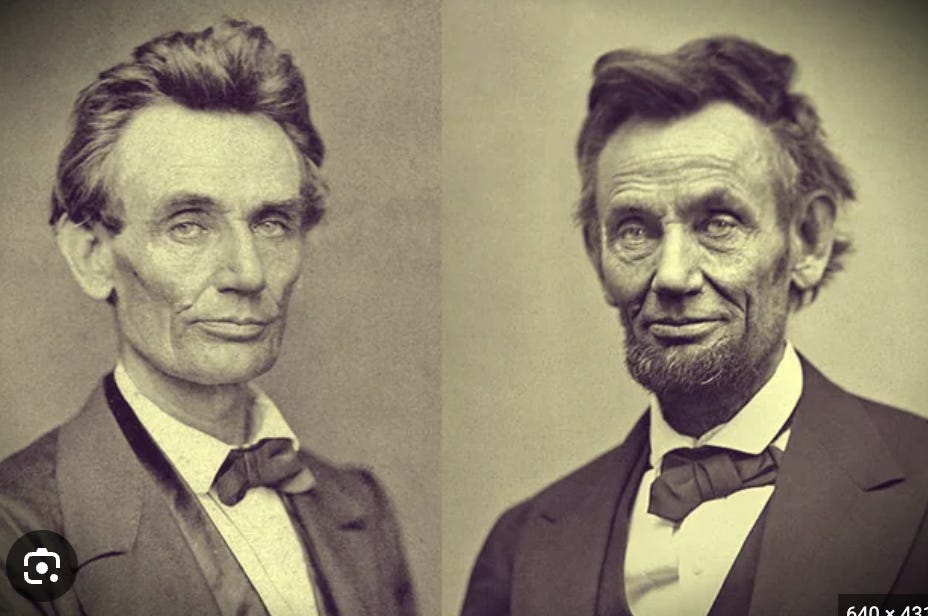
I hope that President Trump will enjoy the swift victory he seeks, but I doubt he will. One the biggest problems he faces is that the Iranians understand his reluctance to commit ground troops. It's hard to win a war by aerial bombardment alone.
In a 1988 interview with Air Force historians, Air Force General Curtis LeMay stated that the U.S. "burned down every town in North Korea anyway" and that over the three-year war, "we killed off, what, 20 percent of the population." To put that into perspective, 20 percent of the U.S. population now comes to 68 million people. Even then, the North Koreans didn't capitulate. Is the U.S. prepared to destroy every city in Iran and kill 20 percent of its people?
The list of wars in which things didn't go according to plan is so long it would test the attention spans of most readers. General Sherman understood that the Union victory probably wouldn’t be swift, but he was an exceptionally intelligent man. One of the most self-aware military planners in history was Count Alfred von Schlieffen, who drew up plans for a possible German invasion of France in the event it came to blows again after the Franco-Prussian War. Shortly before he died in 1913, he emphasized that it would only work if executed with extreme swiftness, resulting in a quick French capitulation, and he expressed doubt that this could be done.
Throughout history, military planners have often gambled on swift victories, failing to acknowledge the unpredictable nature of events after hostilities commence, as well as the resolve of the enemy under siege. Napoleon was stunned beyond belief when he entered Moscow in 1812 to behold that Count Fyodor Rostopchin had chosen to burn down the city instead of ceding its useful resources to the French commander. What kind of a man burns down his own city instead of ceding it to the enemy?
It may come as a surprise to many Americans that, even when a people doesn’t like their ruling class—just as we are not especially fond of ours—they still resent being bombed. The experience of being bombed tends to evoke very archaic emotions that aren’t entirely rational.
I fear that President Trump should have stuck with his America First campaign promises, just as President George W. Bush should have stuck with his campaign promise to avoid nation building.
Trump has done almost everything totally different than those before him. He has done so many things that 'couldn't be done.' I'm gonna reserve judgement. I think he may surprise us all.
Certainly, if he follows the playbooks of past administrations and past military leadership, it will fail miserably. I don't think he will....I could be wrong....
I do not support the war on Iran. I did not vote for this. I voted for no new wars, America First, and releasing the Epstein files. I voted for Trump three times; he has lost my support because in this term, he’s proving to be no different than the swamp he campaigned against. He has betrayed his supporters. IMO, the people still supporting him are the same people that believe Tyler Robinson was a lone gunman on a roof with a .30-06. MAGA has become a cult. No critical thinking is taking place.