


A key moment in England’s rise to global power occurred in 1588, when it defeated Spain’s Grand Armada, dispatched by King Philip II to invade England to depose Queen Elizabeth.
I’ve long been familiar with the lore of Vice Admiral Sir Francis Drake’s wily and skilled naval tactics, but only recently have I wondered why Philip II believed he could pull off the invasion, and if he had to contend with any resistance within the Spanish state to launching the enormously expensive and risky enterprise.
For readers unfamiliar with this episode: In 1588, King Philip II of Spain dispatched the “Grande y Felicísima Armada” (Great and Most Fortunate Navy)—a fleet of roughly 130 ships, 27,000 men, and about 1,000 guns—to invade Protestant England under Queen Elizabeth I. Known as “the Enterprise of England,” the Spanish expedition was the culmination of escalating Anglo-Spanish tensions. Philip’s decision was motivated by his desire to achieve religious, strategic, and economic objectives.
His primary motive was to restore Catholicism to England and to stop the spread of Protestantism. A devout Catholic who regarded himself as Christendom’s chief defender, he had been married to Elizabeth’s half-sister Mary I and had proposed marriage to Elizabeth after Mary’s death in 1558.
The Reformation in England, the execution of the Catholic Mary Queen of Scots in 1587 (whom Philip saw as a legitimate claimant), and Elizabeth’s excommunication by the Pope all gave the invasion the character of a crusade.
Pope Sixtus V endorsed the effort, granting indulgences and promising financial support. Philip also sought to neutralize England’s aid to the Dutch rebels in the Netherlands, whose Eighty Years’ War drained Spanish resources and threatened Habsburg control in the Low Countries.
English privateers, notably Francis Drake’s raids on Spanish shipping and the 1587 Cádiz expedition (which destroyed supplies and delayed preparations by a year), further impaired Spain’s vital transatlantic trade. Philip hoped a successful invasion—coordinated with the Duke of Parma’s army in Flanders—would overthrow Elizabeth, install a Catholic regime, and extract indemnities. Even partial success could force peace terms guaranteeing Catholic worship in England and the return of Spanish territories.
Funding the enormous expedition strained Spain’s finances. Initial 1586 estimates by the Marquis of Santa Cruz projected 556 ships, 94,000 men, and a price tag exceeding 1.5 billion maravedís—far greater than Spain’s revenues. Philip extracted all the silver and gold wealth he could from his new New World to fund it.
The Pope’s crusade subsidy (up to one million ducats upon landing) and the right to collect crusade taxes provided additional support. Expected contributions from English Catholics were also anticipated. Yet Spain’s sparse population, farmed-out tax collection, and prior bankruptcies meant the Armada relied heavily on exploiting colonial income and emergency levies, contributing to long-term fiscal strain.
Philip had to contend with some internal dissent. The Marquis of Santa Cruz, Spain’s top naval commander and early advocate of the invasion, repeatedly delayed preparations and expressed practical concerns over timing, supplies, and costs. He died in February 1588 before the fleet sailed.
His successor, the Duke of Medina Sidonia, wrote Philip a frank letter protesting both his own appointment and the campaign’s feasibility, warning that “only a miracle” could ensure success.
Courtiers suppressed the message, insisting God would guarantee victory. The Duke of Parma, commanding Spanish forces in the Netherlands, had earlier outlined strict preconditions (absolute secrecy, secure Dutch bases, and French neutrality) that were never fully met. Philip, however, overruled these reservations, relying on written orders from the Escorial and a belief in divine favor.
Sixteenth-century Spain possessed no formal constitution in the modern sense, nor any mechanism capable of checking Philip’s royal prerogative in matters of foreign policy and war. Philip’s authority over strategic decisions remained effectively absolute.
He consulted the Council of State and Council of War, yet final authority rested with him. No institution had the power to veto a royal military enterprise framed as a Catholic crusade. Philip’s decision to launch the Armada thus faced no constitutional constraints.
The expedition was a disaster that resulted in the loss of 50 to 60 ships (roughly half the fleet) and over 13,500 men.
It strikes me as an astonishing fact that, in the practice of embarking on a fantastically expensive and risky military adventure abroad, President Trump is apparently no more constrained than the absolute monarch, Philip II of Spain was in the 16th century. The US Constitution—expressly framed to constrain the power of the executive branch by checks and balances imposed by Congress, apparently has no effect.
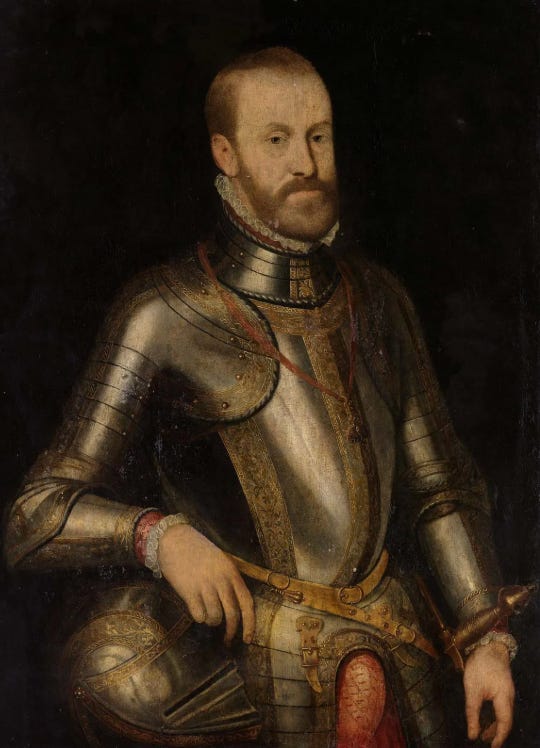

Practically speaking, President Trump apparently possesses executive power indistinguishable from Philip’s royal prerogative. Equally astonishing is the fact that tens of millions of American seem happy for their president to possess unconstrained executive power.
“A Republic, if you can keep it,” as Benjamin Franklin famously told a Philadelphia society lady when she asked him what form the new American government would take.
Tell Dr. McCallaugh he should find staff who covers health care opinions only
Does anyone look a little closer to what is really going on? Donald Trump is his own man. Nobody tells him what to do.
He is trying to create a world of sovereign nations, not have us all end up, renting everything and supposedly being happy
like the globalists want. Iran is a terrorist nation funding proxy wars, creating, unrest in the Middle East for years. A lot of presidents talked about doing something about Iran, but the only one who did is Donald Trump. Could we have kicked the can to another administration? I don’t think so. All these people did was chant death to America for years and they were close to having a nuclear weapon. Thank you Obama for giving them over a $billion, what the hell did he think that was gonna do?
If you wanna understand what’s really going on, I would suggest you go to prometheanaction.com and stop listening to mainstream media.