


Of all the materials that man has used over the centuries, silver may have the most fascinating and romantic history. I first became enamored with the metal around the year 1980, when I first read Robert Louis Stevenson’s Treasure Island, which features multiple references to "Pieces of Eight"—that is, the popular name for the Spanish silver dollar (the 8 reales coin or real de a ocho in Spanish). For example, Long John Silver’s pet parrot, Captain Flint, frequently shrieks “pieces of eight” when he’s excited.
In the summer of 1985 I was reminded of Stevenson’s romantic tale when I saw the news that Mel Fischer had found the Nuestra Señora de Atocha — a Spanish treasure galleon that sank the Florida Keys on September 6, 1622. Ultimately, 1000 silver bars and over 200,000 silver coins were recovered from the wreck.
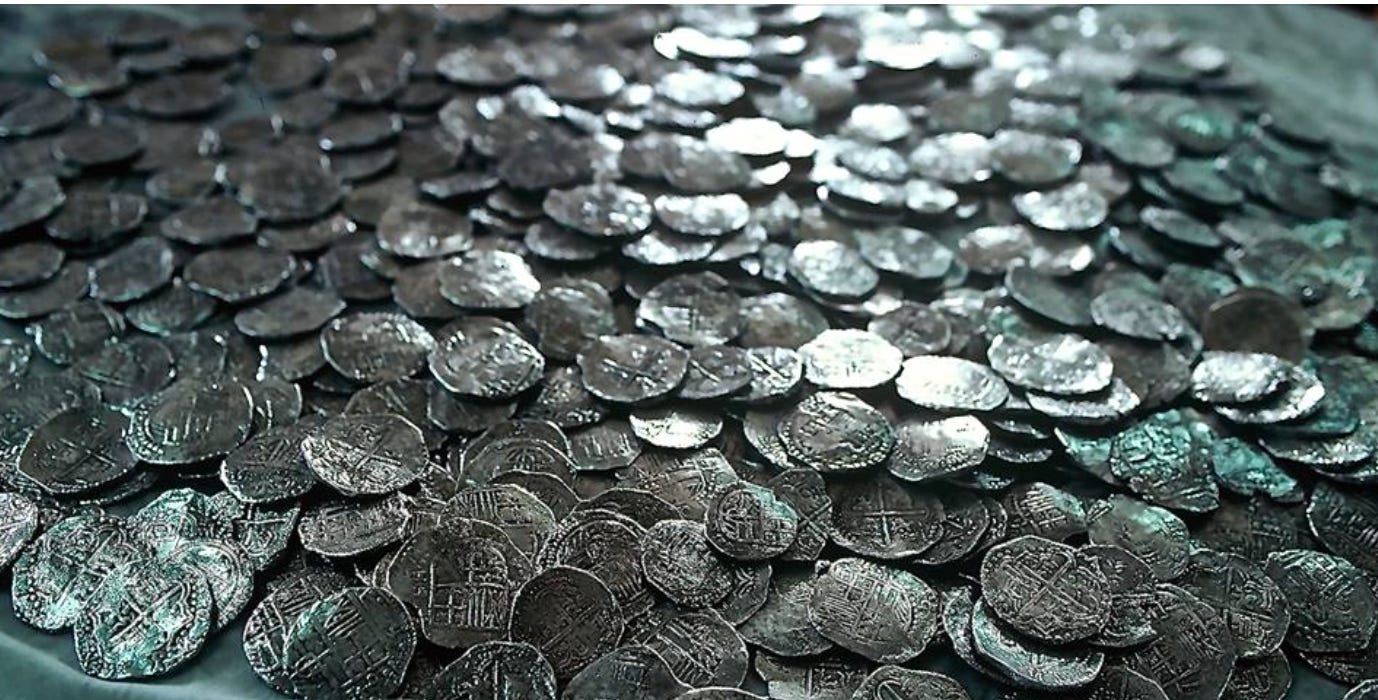
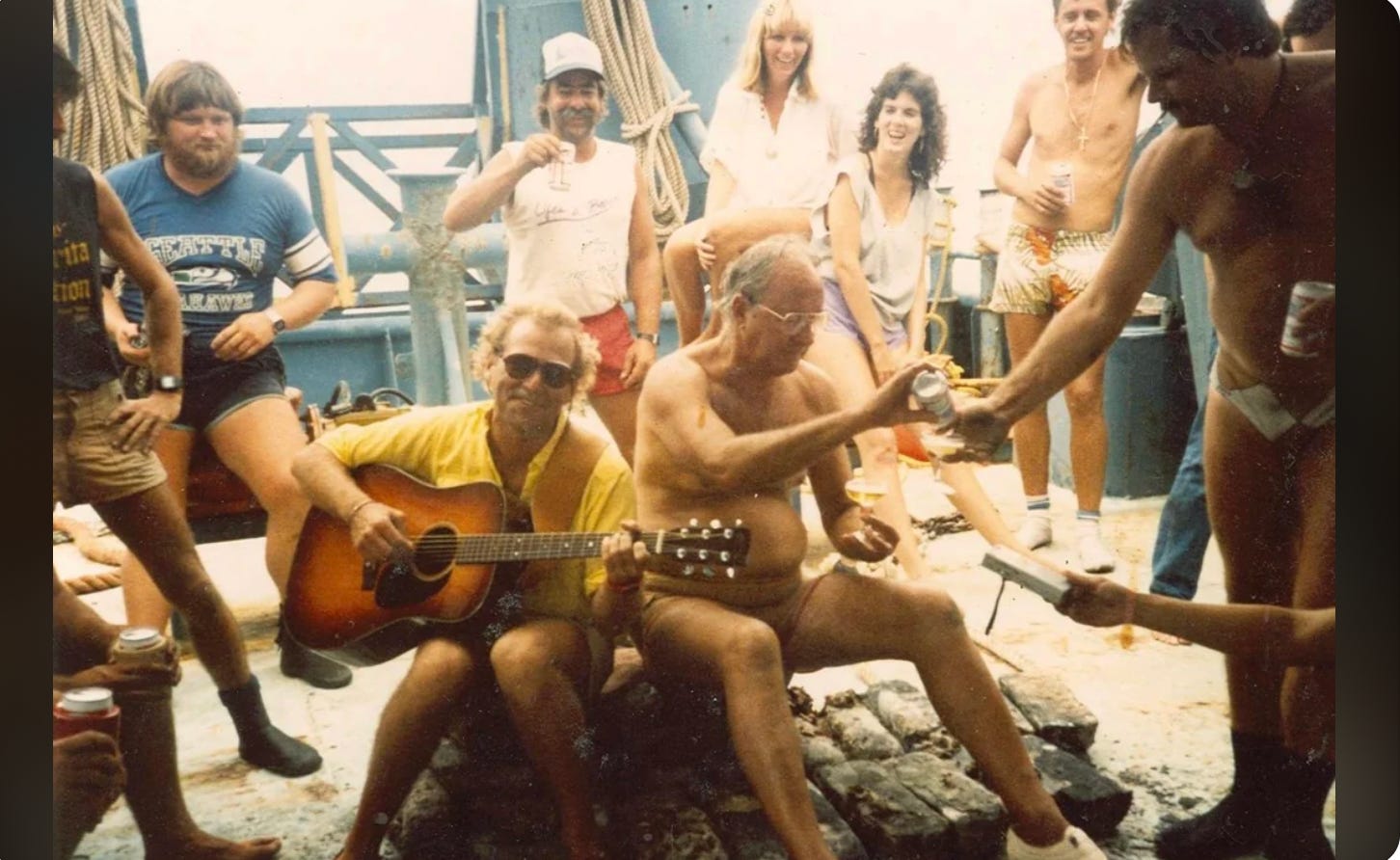
Jimmy Buffet was in Key West when the treasure was found, and he performed an impromptu little concert to celebrate the find. No doubt he played “A Pirate Looks at Forty,” which he wrote in 1974, with the memorable lines:
Mother, mother ocean, I have heard you call
Wanted to sail upon your waters since I was three feet tall
You've seen it all, you've seen it allWatched the men who rode you, switch from sails to steam
And in your belly you hold the treasures few have ever seen
Most of 'em dream, most of 'em dream
The Spanish dollar was the world’s reserve currency for about three hundred years between the 16th and 19th centuries. The U.S. silver dollar was a key medium of exchange from 1794 till 1873, when Congress passed the Coinage Act, ending minting new coins out of silver. The Nixon administration officially removed all silver backing for the currency in 1971.
In in the late 1970s, the Hunt brothers of my native Dallas started aggressively buying silver, thinking it was a hedge against inflation. By the year 1980, they had accumulated about 200 million ounces. Their buying spree climaxed on Silver Thursday, March 27, 1980, when COMEX changed rules to restrict margin buying and limit contract sizes, making it harder for the Hunts to keep buying the metal. Unable to meet margin calls, they were forced to sell much of their holdings, and the price plummeted from $50 to under $10 an ounce.
Note that $50 in 1980 is the equivalent to about $200 in today’s dollars. The spike in silver prompted a rash of burglaries and attempted burglaries, such a one of my family home in early 1980. Dad heard someone trying to break into our living room and went down the stairs with his 1911 .45 ACP, thereby prompting the would-be burglar to run away (though I think the encounter scared my dad more than the burglar).
I was reminded of the magic of highly polished silver in September 2013, when my brother and I were able to attend a friends and family breakfast for Oracle Team USA at the 2013 America’s Cup yacht race on San Francisco Bay. On that historic morning, Team USA was down 8-1 against the challenger, Emirates Team New Zealand, and was about to lose the Cup.
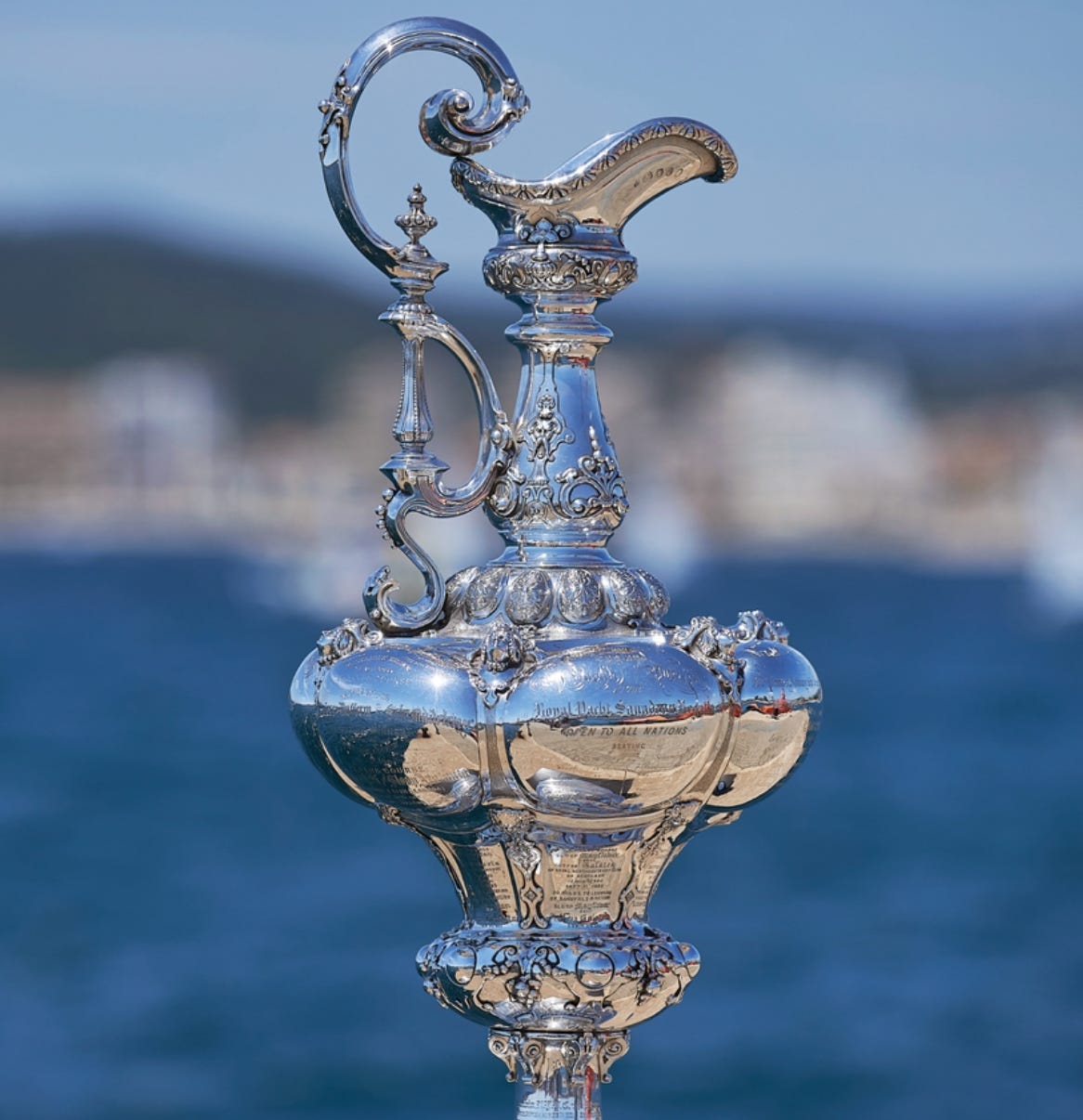
I’ll never forget when the taxi dropped us off outside of the Team USA facility near the Piers. We were directed to walk alongside a large warehouse down to the waterfront. The sun was still low over the eastern horizon, and when we turned to enter the area where the breakfast was held, I was blinded by it reflecting off the Cup, which Larry Ellison had apparently set at the head of the table as a forceful reminder of what his team was about to lose.
Polished silver is the most reflective material on earth, and the “Auld Mug” — originally the "100 Guinea Cup,” first won in 1851 won by the schooner America—was the most dazzling thing I’d ever looked at. No photograph can do it justice.
The price of silver is now spiking, doubtless as a result of the U.S. government’s array of moronic policies that are imperiling the U.S. dollar’s reserve currency status. While most of the world’s Central Banks are said to have long ago liquidated most of their silver stockpiles, it seems that millions of private individuals have been accumulating the metal as a hedge against the dollar’s demise.

Adjusted for inflation, silver is still worth far less than it was in 1980, shortly before the Silver Thursday crash. Nevertheless, the nice price run must be very satisfying for those who own physical silver and related securities. Mexico and Peru still have the largest proven reserves, so I imagine that someone is getting rich in those countries.
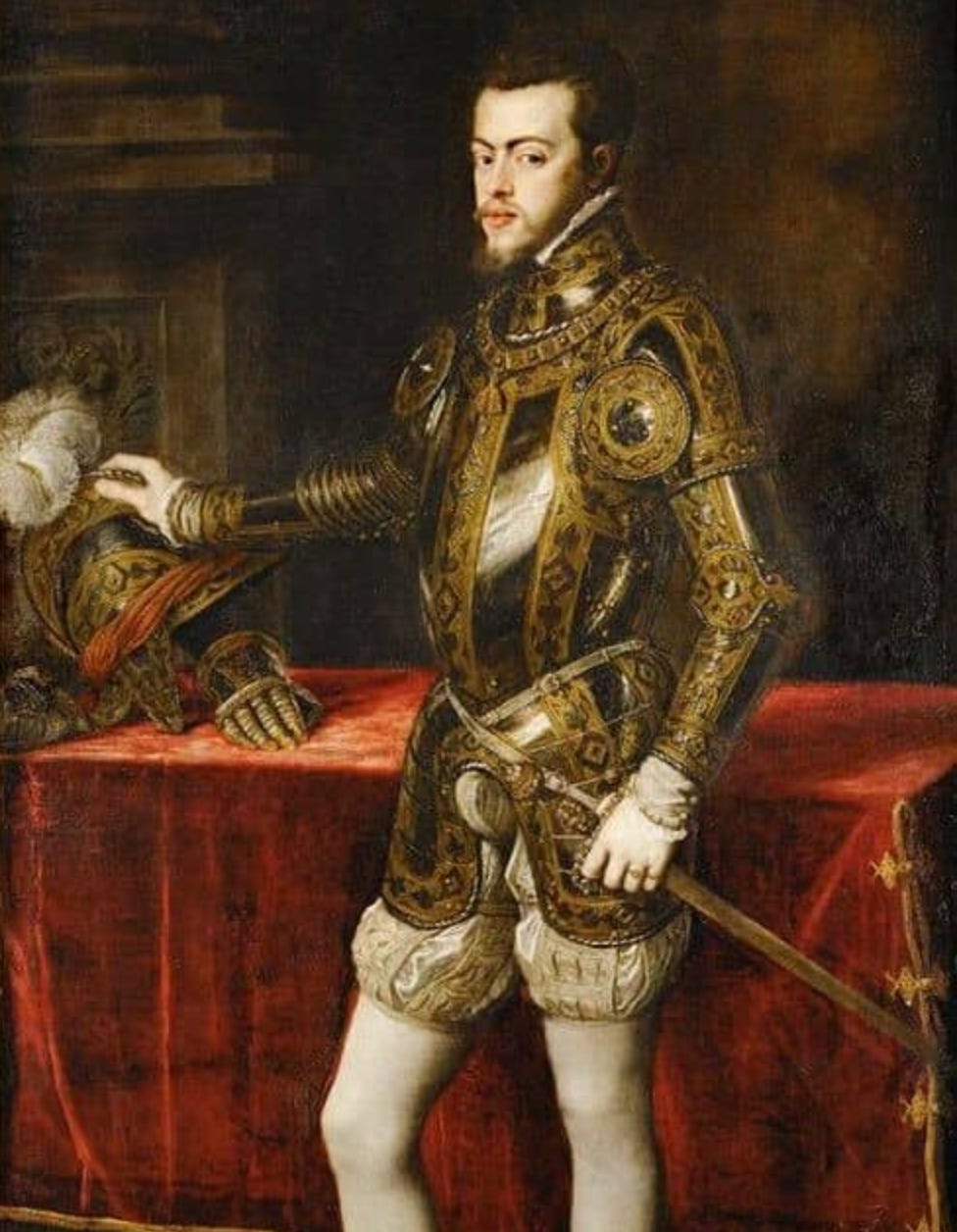
An old friend in Texas has been accumulating silver for decades. He may now be on the verge of becoming a veritable Philip II—the Spanish Habsburg Emperor who possessed a vast treasury of silver from the Potosi mines in Peru.
Could silver some day once again be used as a common medium of exchange—that is, could we go back to “Silver Certificates,” redeemable for physical silver, being issued instead of our increasingly worthless dollar?
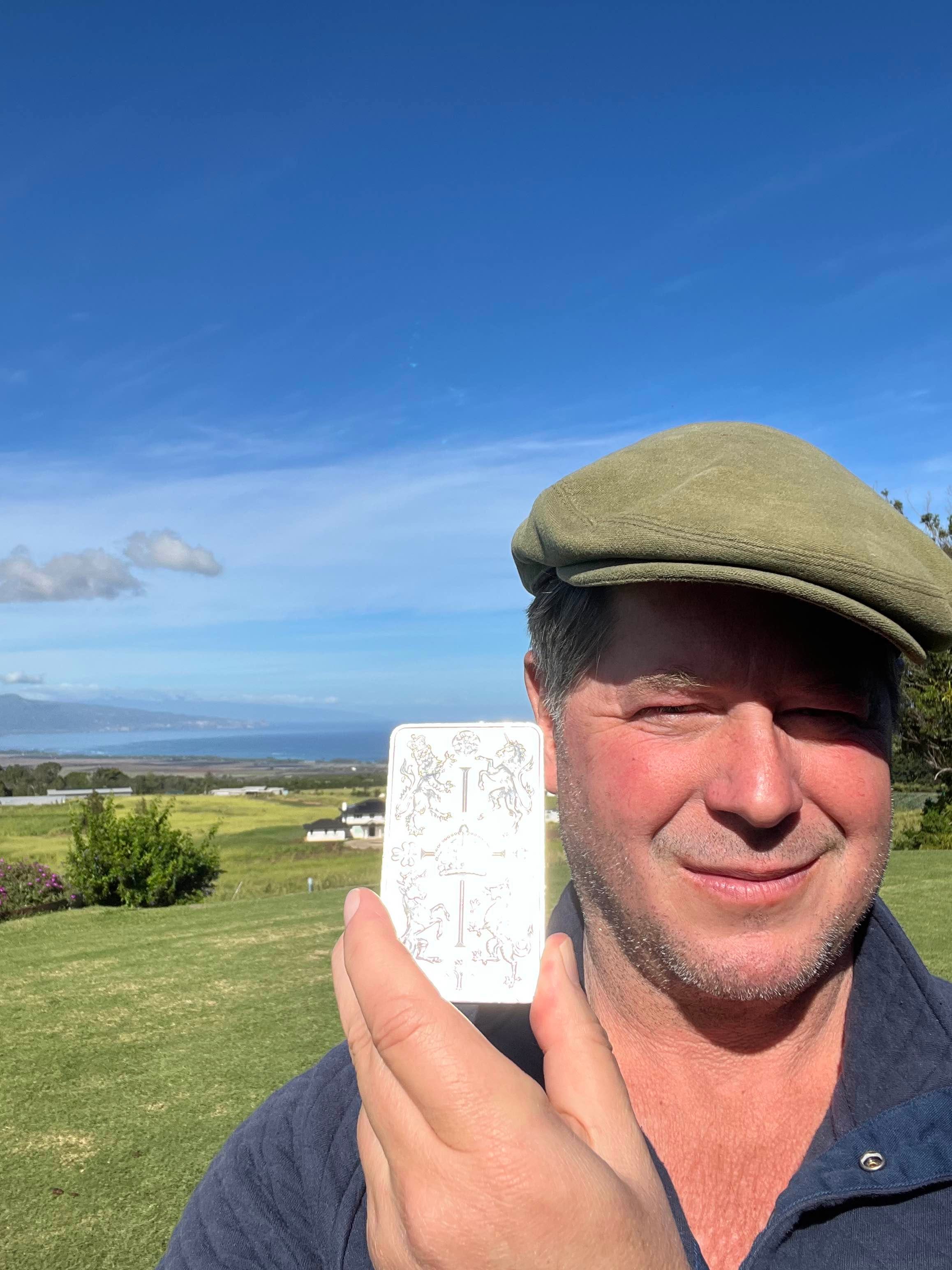
Or could we even go back to using silver coins like the fabled Piece of Eight? Or how about using 10-ounce silver bars, issued by the Royal Mint, to buy dinner at a fancy restaurant in London? I imagine tossing the bar onto the table with a thud and saying to the waiter, “There you are, guv'nor, this ought to cover the cost of dinner and that vintage claret.”
Hard assets become popular when confidence in government declines. However, having a large amount of hard assets does not necessarily mean a country is the most economically powerful. For instance, Russia has the largest reserves of hard assets, approximately 75 trillion. Yet Russian currency is not considered a reserve. Countries with little hard asset reserves do become reserve currencies. Japan, Germany, and others had little gold, but their currencies experienced significant growth after World War 2. It's the people, the production, and the consumer who create a powerful currency, not a hard asset. Otherwise, Russia would have the top reserve currency.
As you mentioned, silver has deep roots in economic history. Silver, at one time, was more valuable than gold. Silver has been used throughout every century. Silver is critical for industry. However, we currently face severe geopolitical issues, and the most significant factor affecting confidence in the currency is war. War destroys economics. Ignore all the talk of peace, it's not going to happen. Silver is not telling us that the US dollar is collapsing, but rather that we will see wars on an international scale starting in 2026.
Coincidentally, John Leake, my wife enjoyed receiving silver for a Christmas gift... especially since the price went up suddenly again after she received it.