


I recently had a conversation with a friend about what has become an extremely polarizing question within the medical freedom movement — namely, should HHS Secretary Kennedy hang in there to try to do as much good as he can in the matter of various public health issues, or should he resign in protest of the unsafe and ineffective mRNA COVID-19 vaccines remaining on the market—that is, still poisoning people, and still enriching Pfizer-BioNTech and Moderna executives?
Before reflecting on the question of “To resign or not to resign,” I should point out that the Secretary of Health and Human Services (HHS) does NOT have discretionary power to unilaterally remove an approved pharmaceutical product from the market. Under the Federal Food, Drug, and Cosmetic Act (FD&C Act), drug safety, approval, and market removal authorities are delegated to the Food and Drug Administration (FDA) and must follow strict administrative and scientific procedures.
Thus, it’s important to understand that this is NOT a question of Mr. Kennedy failing to take action that lies within his executive power. If Mr. Kennedy were to resign in protest of the COVID-19 vaccines remaining on the market, it would be a purely symbolic act of protest.
As I told my friend, I understand that politics is never an entirely clear and clean business, but is always fraught with compromise. As Count Eduard von Taaffee—Prime Minister of Austria from 1868 to 1870 and again from 1879 to 1893—put it, “Politics is the art of keeping all interested parties in a state of equal dissatisfaction.”
I also conceded there is merit in the argument that if Mr. Kennedy resigns, he will likely be replaced by a someone who will keep the faith in the ostensible “triumph” of Operation of Warp Speed without sharing Mr. Kennedy’s interest in doing good in all other areas of public health policy.
If Mr. Kennedy were to resign, the mainstream media (captured as it is by pharmaceutical industry interests) would proclaim good riddance because of his history of questioning vaccine safety.
On the other hand, it seems to me that the trouble with hanging in there is that it’s hard to do without seeming—at least implicitly—to endorse the ongoing administration of COVID-19 vaccines and the enrichment of its purveyors with taxpayer money.
Because the COVID-19 vaccine is NOT a mandatory part of the childhood schedule for attending grades K-12 in any state, the ongoing enterprise seems to be fairly limited to Darwin Award winners who apparently can’t be helped. This, it seems to me, isn’t the main trouble.
The much bigger problem is that, by allowing the mRNA COVID-19 vaccines remain on the market, the Trump administration continues to validate the entire criminal enterprise, and to reject the mountain of evidence that the vaccines are neither safe nor effective. In other words, that the shots are still on the market legitimizes an organized crime racket that has injured and killed people and continues to do so.
When it comes to passing judgement about a highly complex decision, I believe that historical precedent should serve as our guide, so I did a review of notable public figures in history who resigned from their offices.
Throughout history, resignation has been an act of statecraft as well as an act of conscience. The formal step of leaving an office one still holds has been used to symbolize the limits of power, to warn that a course of action is reckless, and to refuse complicity in a policy judged immoral.
During his military and political career, George Washington resigned on two occasions. On December 23, 1783, after the Treaty of Paris, he appeared before the Congress of the Confederation in Annapolis and surrendered the commission he had held since 1775. “Having now finished the work assigned me,” he said, “I retire from the great theatre of action… and take my leave of all the employments of public life.”
Keenly aware of how Octavian ended the Roman Republic by using his unrivaled command of the military to intimidate the Senate, Washington chose to highlight civilian supremacy in the new American Republic. Thus, the victorious commander bowed to the legislature and went home to Mount Vernon.
Thirteen years later he declined a third term as president. The Farewell Address of 1796 turned that private choice into a public precedent. Washington was weary, and he wanted a settled succession more than a legal cap on the presidency, but the effect was the same. In a world of kings and lifelong rulers, walking away from command twice was the symbolic point.
German General Ludwig Beck’s resignation in 1938 was a failed attempt to stop a war. As chief of the Army General Staff, Beck had helped rebuild the army after 1933, but then turned against Hitler’s timetable. Through the spring and summer of 1938 he wrote several memoranda arguing that an attack on Czechoslovakia would drawn in France and Britain, and that Germany was not ready for a general war. He tried to organize the resignation of senior officers, and he stated that the high command had a duty to prepare not only for foreign war but, if necessary, for “an internal conflict which need only take place in Berlin.”
The other generals would not follow. Beck resigned on August 18, 1938. Hitler accepted at once, kept his departure quiet, and put him on the retired list. Beck spent the following years as the quiet leader of the conservative opposition and was the designated head of state in the July 20, 1944 plot. After the coup failed, he was executed.
Joseph Rotblat’s resignation from the Manhattan Project was one of the most remarkable moral protests in history. The Polish-born physicist joined the British team at Los Alamos because he feared a German atomic bomb and wanted a deterrent in Allied hands. However, by late 1944, his original rationale had collapsed. Intelligence indicated that Germany had abandoned its pursuit of the bomb, and the European war was likely to end before the US atomic bomb was ready for action.
Rotblat later recalled a dinner at which General Leslie Groves spoke of the bomb’s real purpose for vanquishing the Soviet Union, as well as his conversations with Niels Bohr that convinced him an arms race would follow. He asked to leave and returned to Britain before Christmas 1944—the only scientist on the Manhattan Project to withdraw on grounds of conscience before the bombs were used.
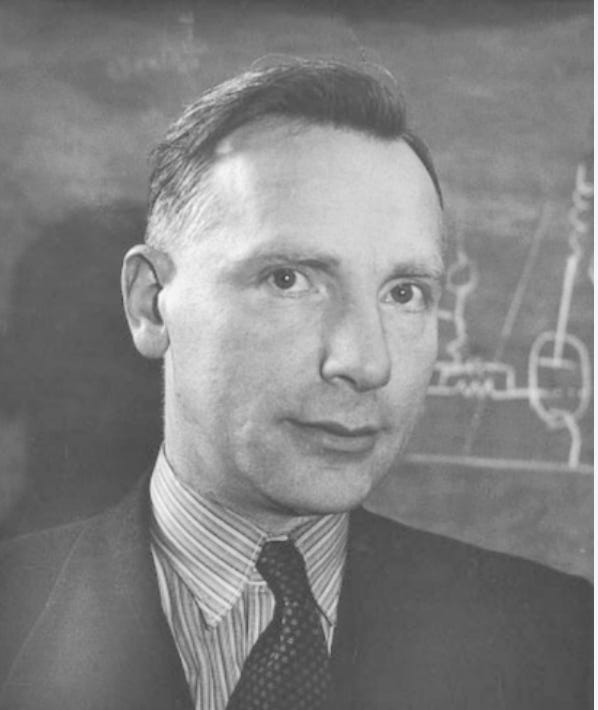
US Army intelligence responded with a dossier implying he was a Soviet spy. After Hiroshima, he spent the rest of his life working on nuclear disarmament, co-founding the Pugwash Conference. His resignation did not stop the bomb, but it was a remarkable example in history of a man declaring that he refused to be part developing a terrible weapon that would likely be used to kill hundreds of thousands of civilians and eventually endanger all of humanity.
During the Vietnam War, multiple officials resigned from the Johnson Administration.
Under Secretary of State George Ball argued for years against escalation and left quietly in 1966.
James C. Thomson Jr. resigned from the National Security Council and State Department staff the same year and later described in an essay titled “How Could Vietnam Happen?” how bureaucratic loyalty smothered dissent.
Robert McNamara, who had managed the buildup, privately concluded the war could not be won on the terms being offered; Johnson moved him to the World Bank in early 1968, a removal veiled as a resignation.
Townsend Hoopes, under secretary of the Air Force, and other second-tier officials pressed for de-escalation from inside and wrote against the war after they were out.
These were quiet resignations, NOT conspicuous acts of protest of the ongoing senseless war. Ball and John McNaughton, McNamara’s closest civilian adviser, judged that a high-profile exit would be interpreted as disloyalty to troops in the field and would change little.
On March 31, 1968, President Johnson announced a partial bombing halt and that he would not run again.
On March 17, 2026, Joe Kent resigned as director of the National Counterterrorism Center in protest of the U.S.–Israeli war in Iran. In a letter he posted publicly and addressed to the president, he framed the decision as a matter of conscience and as a defense of the foreign-policy promises he had made when he went to work in the administration.
On May 22, 2026, Tulsi Gabbard resigned as director of national intelligence, effective June 30. In the letter she sent to President Trump and then released, she stated that her husband, Abraham Williams, had recently been diagnosed with an extremely rare form of bone cancer and faced “major challenges in the coming weeks and months.” Some wondered if Gabbard was also unhappy about the way President Trump had dismissed her testimony that Iran was not actively building a nuclear weapon.
When it comes to central power, I believe it is useful to consider Schopenhauer’s concept of the will (der Wille). As he saw it, the will is a blind, restless striving that has no ultimate aim. We sense it in our own bodies when we feel desire, hunger, fear, and sexual urge—not as intelligible ideas about ourselves as individuals, but as the activity of a general natural force acting through us.
Politics, it seems to me, is largely a game played by ambitious, atavistic men who want things—money, power, recognition, status, glory, etc.—without understanding exactly why they want them. Whether any particular policy is reasonable or truly serves “We the People” is beside the point. Monied special interests want it, and so the policy remains in effect.
Historians tells us that, toward the end of the Roman Republic, when politics got really turbulent and dangerous, Cicero frequently contemplated permanent or semi-permanent retirement at his beloved villa in Tusculum (located in the Alban Hills near modern Frascati). He understood the reality that Schopenhauer articulated almost 2000 years later, and it often disgusted him.
However, in the end, Cicero concluded that, as long a the state exists, some good men have to get their hands dirty in it. If all rational and moral men abandoned the game, power would be wielded exclusively by bad men.
Ultimately, his decision to stay in the game and to challenge Marcus Antonius cost him his life. As Mark Antony’s soldiers closed in on him, he reputedly said to their leader,
I go no further. Approach, veteran soldier, and, if you can at least do so much properly, sever this neck.
The soldier cut off his head and his hands—that is, the hands that wrote the Philippics against Antony. The severed parts were taken back to Rome, where Antony ordered them nailed to the Rostra (the public speaking platform in the Roman Forum) as a warning to anyone else who dared speak out against the Triumvirate.
Antony's wife, Fulvia, is said to have pulled out Cicero's tongue and pierced it repeatedly with her golden hairpin to take final revenge on his legendary eloquence.
This is simply ridiculous. Why would he leave? We would never get someone as qualified or as personally invested in that position again! Enough of the purity spirals, let the man do his work. He is doing his best, and I’m sure he gets death threats regularly.
It’s one of the most absurd things I’ve ever heard. Grown men do not resign when they don’t get 100% agreement they stay in the fight until they can finish it.