


A recent randomized, double-blind, placebo-controlled trial found that magnesium L-threonate significantly improved several measures of cognitive performance in healthy adults experiencing dissatisfied sleep.
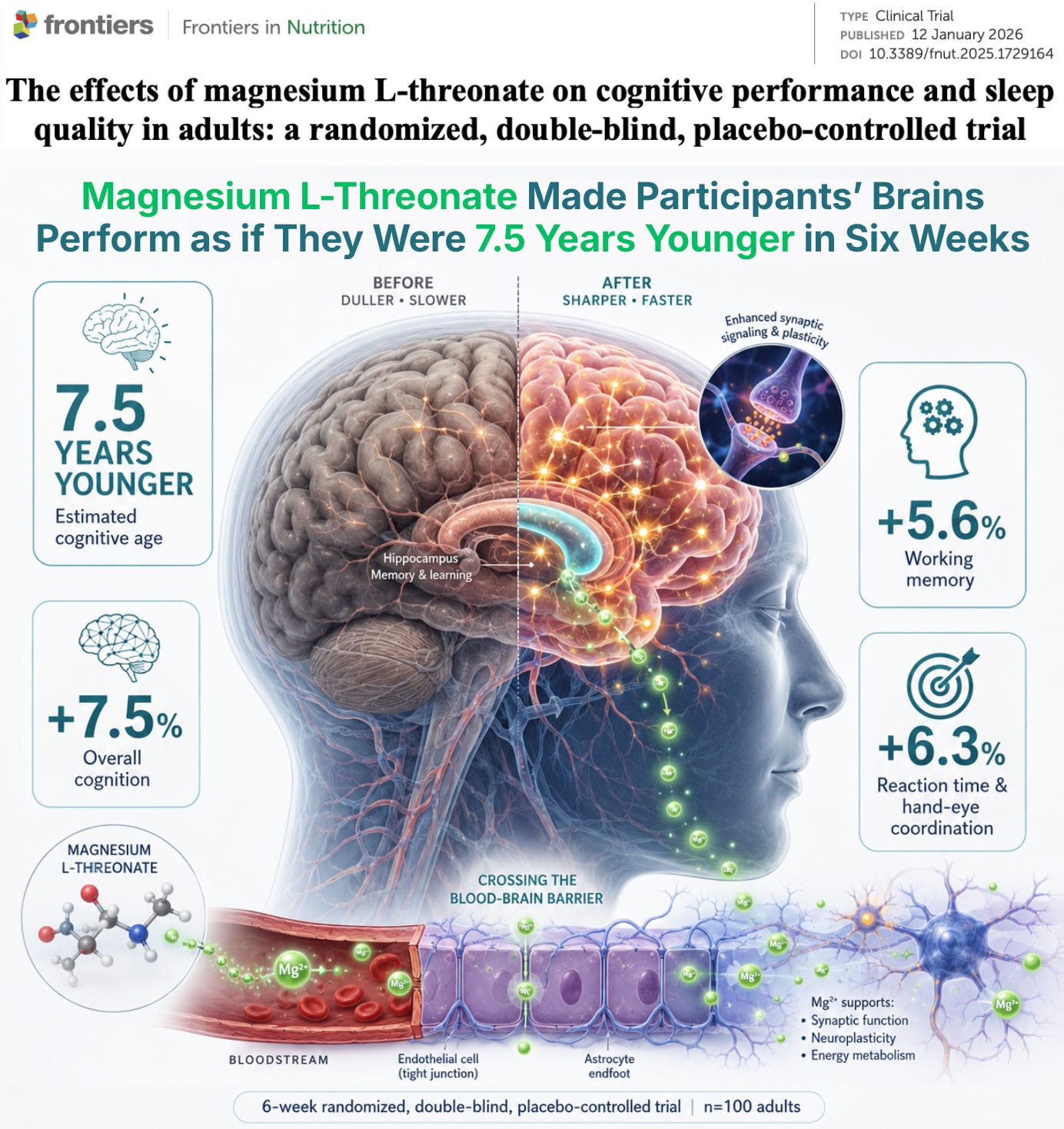
Researchers randomized 100 adults between the ages of 18 and 45 to receive either magnesium L-threonate or placebo for six weeks. The daily dose contained 2 grams of magnesium L-threonate, providing 145 milligrams of elemental magnesium.
Cognitive performance was measured using the NIH Toolbox Cognition Battery, alongside tests of working memory, reaction time, fluid intelligence, sleep quality, heart rate, and heart-rate variability.
Brains Performed as if They Were 7.5 Years Younger
After six weeks, the magnesium group demonstrated a statistically significant improvement in overall cognition compared with placebo.
The researchers then compared participants’ cognitive scores with age-based NIH normative data. Because total cognition scores normally decline by approximately 0.3 points per year after early adulthood, the observed treatment advantage corresponded to an estimated 7.5-year reduction in cognitive age.
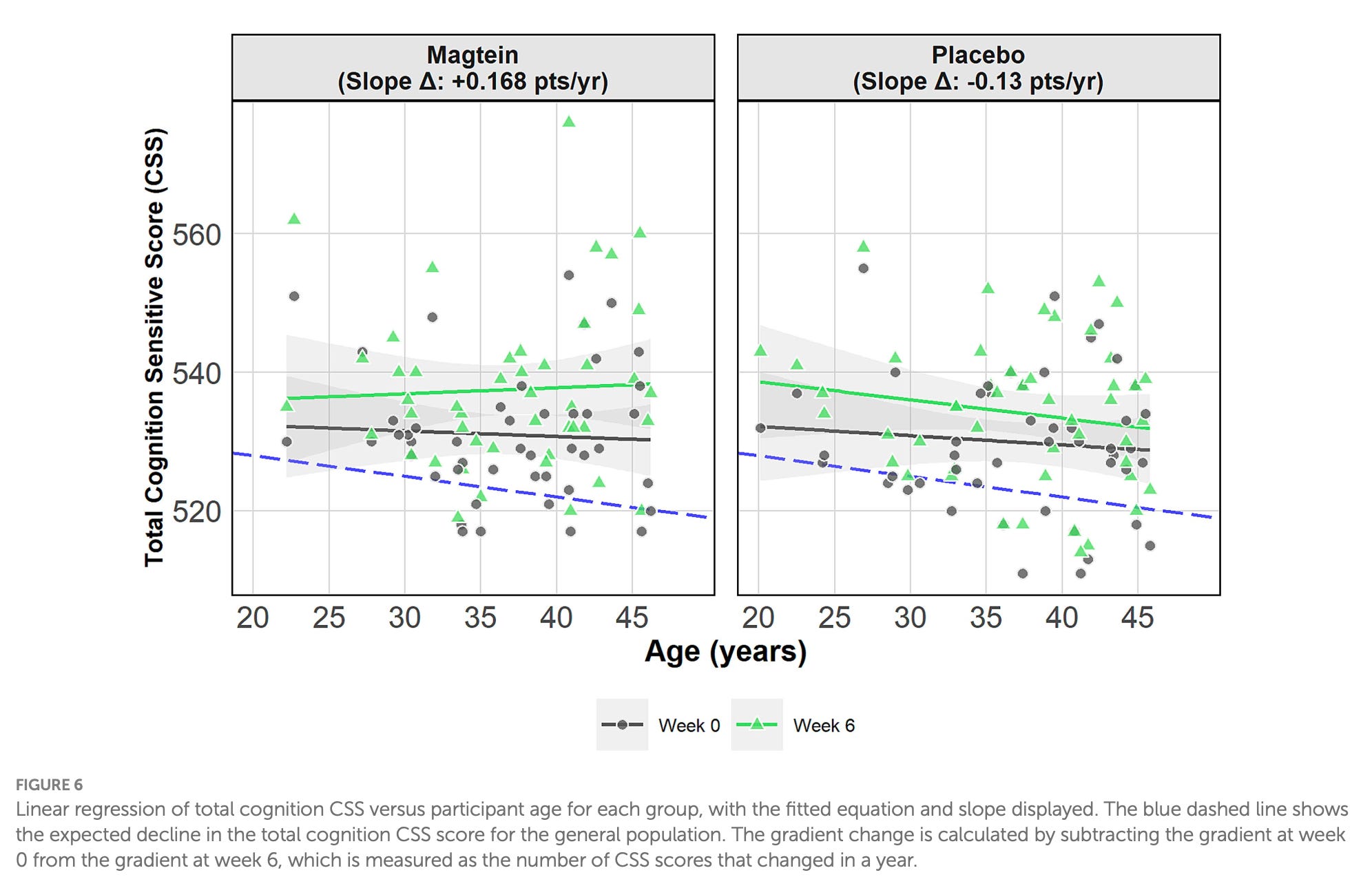
This does not mean the supplement literally reversed biological brain aging. Rather, participants performed on cognitive tests at a level expected from people approximately 7.5 years younger.
Significant Cognitive Improvements
Compared with their baseline scores, participants receiving magnesium L-threonate experienced:
7.5% improvement in overall cognition
5.6% improvement in working memory
6.3% improvement in reaction time and hand-eye coordination
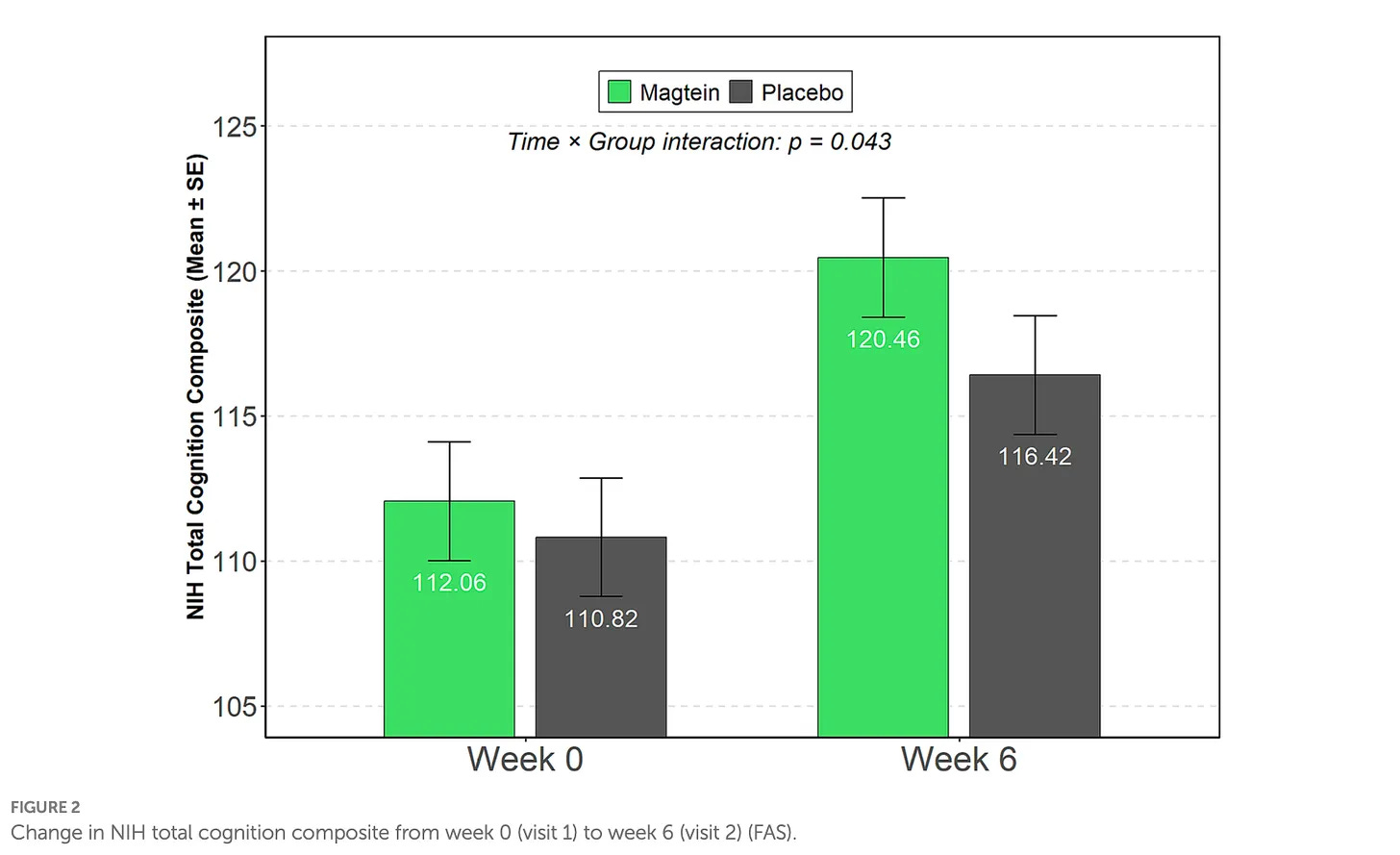
Overall cognition increased by 8.4 points in the magnesium group compared with 5.6 points in the placebo group, representing a 50% greater improvement. Working-memory gains were more than four times larger than those observed with placebo.
The per-protocol analysis produced similarly strong results. Overall cognition increased by 9.08 points, while working-memory scores rose by 7.25 points compared with only 1.10 points in the placebo group.
The magnesium group also experienced improved sleep-related daytime impairment, a lower resting heart rate during sleep, and increased heart-rate variability—an indicator associated with improved autonomic balance.
However, the supplement did not significantly outperform placebo for fluid intelligence, several other cognitive tasks, or objective sleep duration and sleep-stage measurements recorded by an Oura Ring. This suggests that its clearest benefits were concentrated in overall cognition, working memory, reaction time, and selected physiological measures rather than every outcome tested.
Possible Mechanisms
Magnesium is essential for normal neuronal function and serves as a cofactor in more than 300 enzymatic reactions throughout the body. In the brain, it supports cellular energy production, neurotransmission, synaptic plasticity, and the electrical stability of neurons—all processes required for learning, memory, and healthy cognitive performance. Lower magnesium concentrations have also been observed in people with reduced cognition, mild cognitive impairment, and Alzheimer’s disease.
One reason magnesium L-threonate may produce cognitive effects is its ability to raise magnesium concentrations in the brain. The L-threonate component appears to interact with glucose transport pathways, helping transport magnesium into the brain and increasing neuronal magnesium availability.
Higher brain magnesium may strengthen synaptic connections, support communication between neurons, and enhance the plasticity required to form and retrieve memories. It may also help regulate NMDA receptors, which play a central role in learning and memory.
Conclusion
This randomized, double-blind, placebo-controlled trial of 100 adults found significant gains across multiple measures of cognitive performance after six weeks of supplementation with 2 grams of magnesium L-threonate daily, providing 145 mg of elemental magnesium. Larger and longer independent trials are needed to confirm how durable these benefits are.
Epidemiologist and Foundation Administrator, McCullough Foundation
Support our mission: mcculloughfnd.org
Please consider following both the McCullough Foundation and my personal account on X (formerly Twitter) for further content.
Why was it not measured against glycinate form?
I have been taking Mg threonate for about 10 years now. 2 caps with evening meal. Good improvement in sleep quality.