


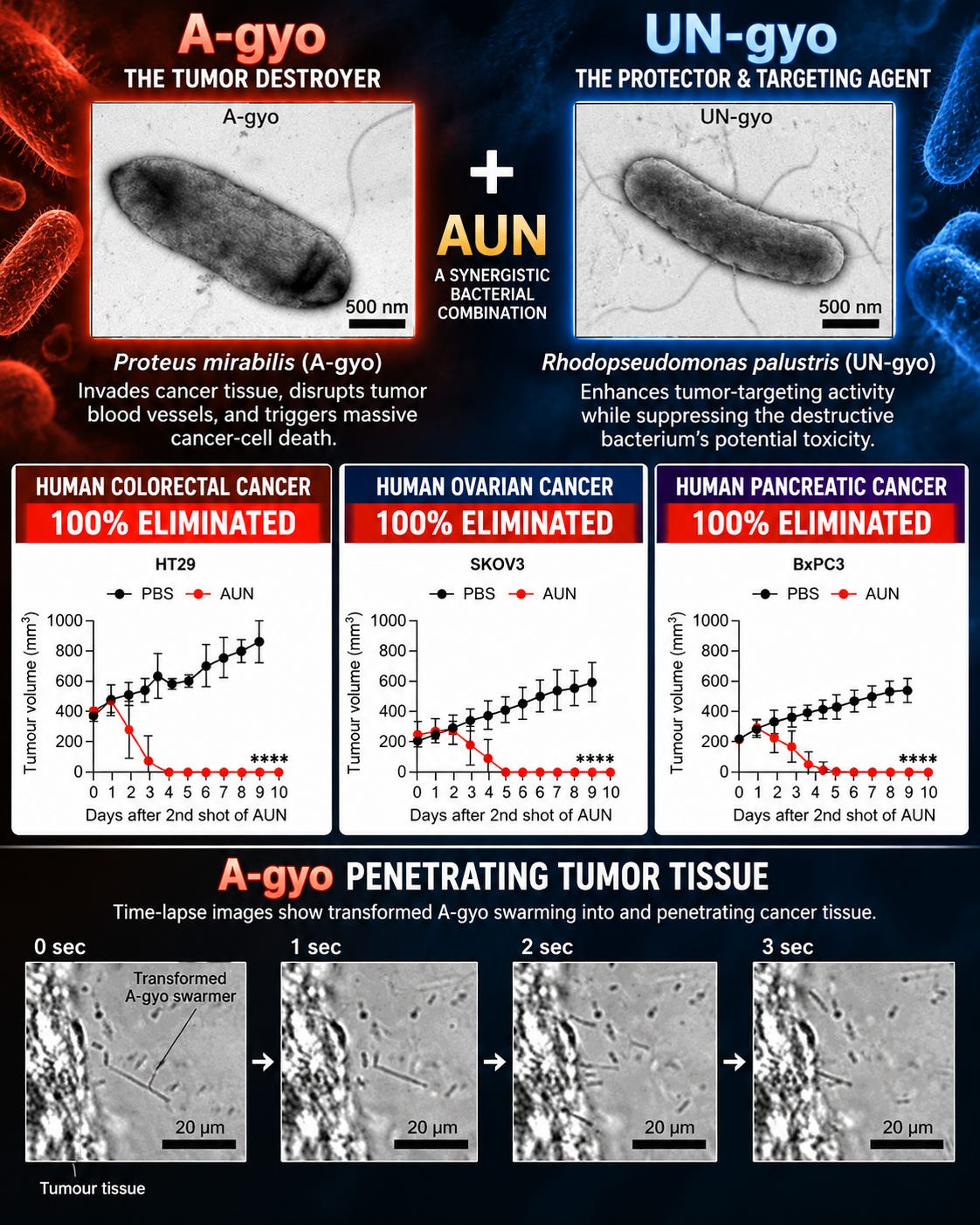
A remarkable study published in Nature Biomedical Engineering reports 100% complete tumor regression in mouse models of human colorectal, ovarian, and pancreatic cancer using a naturally occurring bacterial combination.
Researchers at the Japan Advanced Institute of Science and Technology (JAIST) demonstrated that two highly synergistic soil- and water-associated bacterial species could fully eliminate established tumors, even in mice with severely compromised immune systems.
The results were extraordinary across the tested human cancer xenograft models:
Colorectal cancer: 100% tumor elimination
Ovarian cancer: 100% tumor elimination
Pancreatic cancer: 100% tumor elimination
Two Naturally Occurring Bacteria Working Together
Two intravenous doses of a bacterial combination consisting of Proteus mirabilis and Rhodopseudomonas palustris produced complete tumor regression in the experimental groups.
The researchers named this combination AUN, consisting of two complementary bacterial strains that perform distinct biological functions.
1. Proteus mirabilis (A-gyo): The Primary Tumor Destroyer
A-gyo is the principal tumor-destroying component of the combination. After administration, the bacteria selectively accumulate and proliferate inside tumor tissue, where they contribute to the destruction of tumor blood vessels, extensive tissue necrosis, and cancer-cell death.
Remarkably, the bacterial combination induces localized thrombosis, disrupting the blood supply that tumors depend on for continued growth:
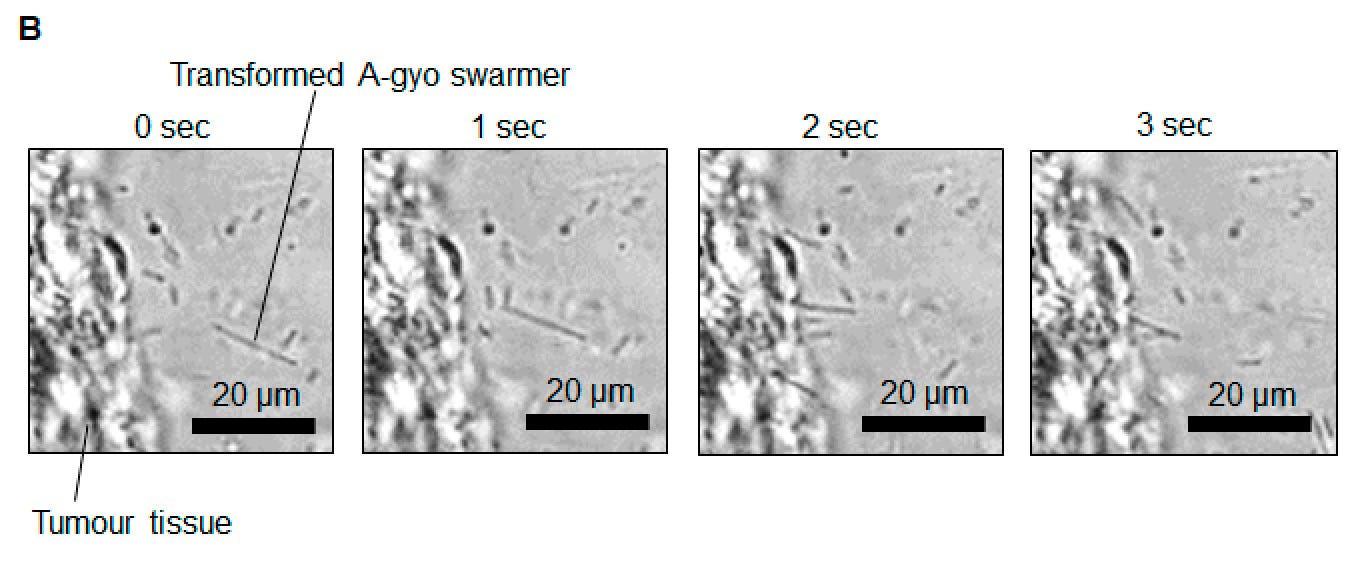
A-gyo also undergoes structural changes that increase its ability to move through and penetrate cancerous tissue:
2. Rhodopseudomonas palustris (UN-gyo): The Protective Synergistic Partner
UN-gyo suppresses A-gyo’s potentially harmful biological activity while promoting its transformation into highly motile, tumor-penetrating forms.
The researchers found that the presence of UN-gyo moderates bacterial activity, reduces hemolytic effects, and enhances cancer-specific activity.
The combination initially consists of approximately 3% A-gyo and 97% UN-gyo, illustrating how a relatively small population of tumor-destroying bacteria can operate alongside a larger population of regulatory bacteria.
Complete Tumor Regression Without Observable Systemic Toxicity
Despite its extraordinary anticancer activity, the bacterial combination demonstrated a favorable safety profile at the tested therapeutic doses in mice.
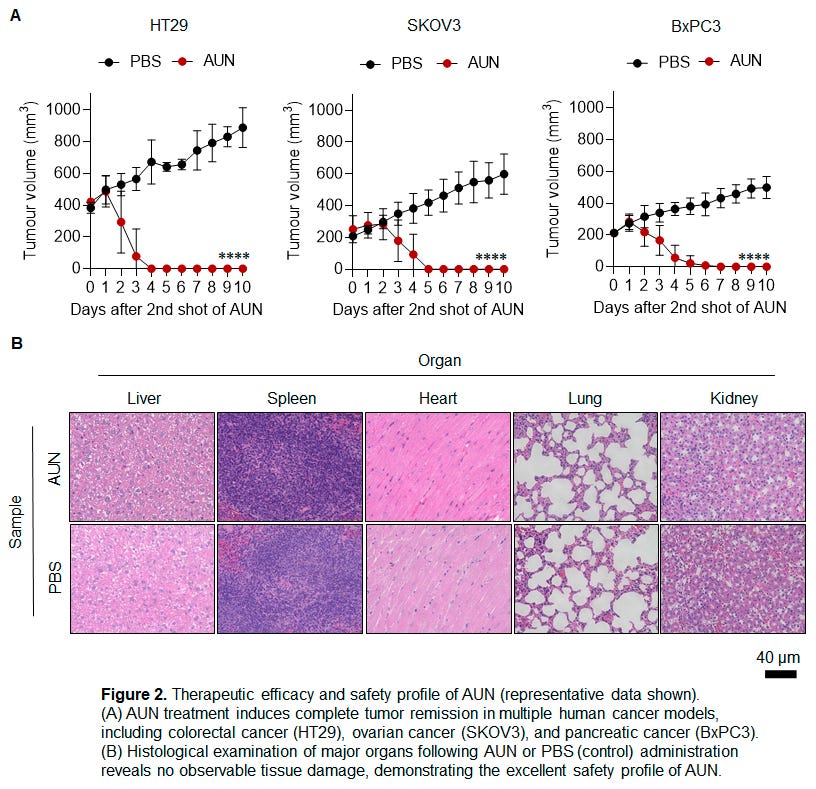
Researchers reported no observable systemic toxicity or cytokine release syndrome, and long-term histological examinations conducted 150 days after treatment revealed no apparent tissue damage in major organs, including the heart, lungs, liver, spleen, and kidneys.
Importantly, safety depended on the precise bacterial ratio and dosing regimen. Excessive doses or improperly proportioned bacterial mixtures caused fatal reactions in mice, highlighting the importance of maintaining the naturally occurring 3:97 ratio of A-gyo to UN-gyo.
Conclusion
The central discovery is remarkable: two naturally occurring bacterial species, working synergistically, eliminated established tumors in multiple experimental cancer models while demonstrating favorable tolerability at the tested therapeutic regimen.
Nevertheless, this remains preclinical research. Human safety, optimal dosing, and clinical efficacy have not yet been established. Further research on this promising bacterial combo is urgently needed as cancer rates continue to climb.
Epidemiologist and Foundation Administrator, McCullough Foundation
Support our mission: mcculloughfnd.org
Please consider following both the McCullough Foundation and my personal account on X (formerly Twitter) for further content.
Hmmm, God seems to have provided all that we need to stay healthy, or to regain health!
It makes sense that the Japanese researchers went down this path of investigation. Ivermectin which was discovered as bacterial Avermectin near a Japanese golf course, has all sort of viral and anti bacterial properties, and has been used in combination with other drugs to turn around cancerous conditions. In light of that past success it only makes sense ( in a country other than the US) to continue this exploration of the efficacy of other kinds of bacterial treatments to Cancer. Bravo!!