


By Peter A. McCullough, MD, MPH
Serum testosterone concentration drops as a function of age in the norman human male. Low testosterone (hypogonadism) becomes increasingly common with age. Estimates vary depending on the definition used, but studies suggest that approximately 20% of men older than age 45 have low testosterone levels, with prevalence rising steadily in older age groups. Some reviews have estimated testosterone deficiency affects roughly 30% of men between ages 40 and 79, particularly among those with obesity, diabetes, metabolic syndrome, and other chronic health conditions. Testosterone levels also naturally decline by about 1% per year beginning in a man’s 30s. [amjmed.com], [nature.com]
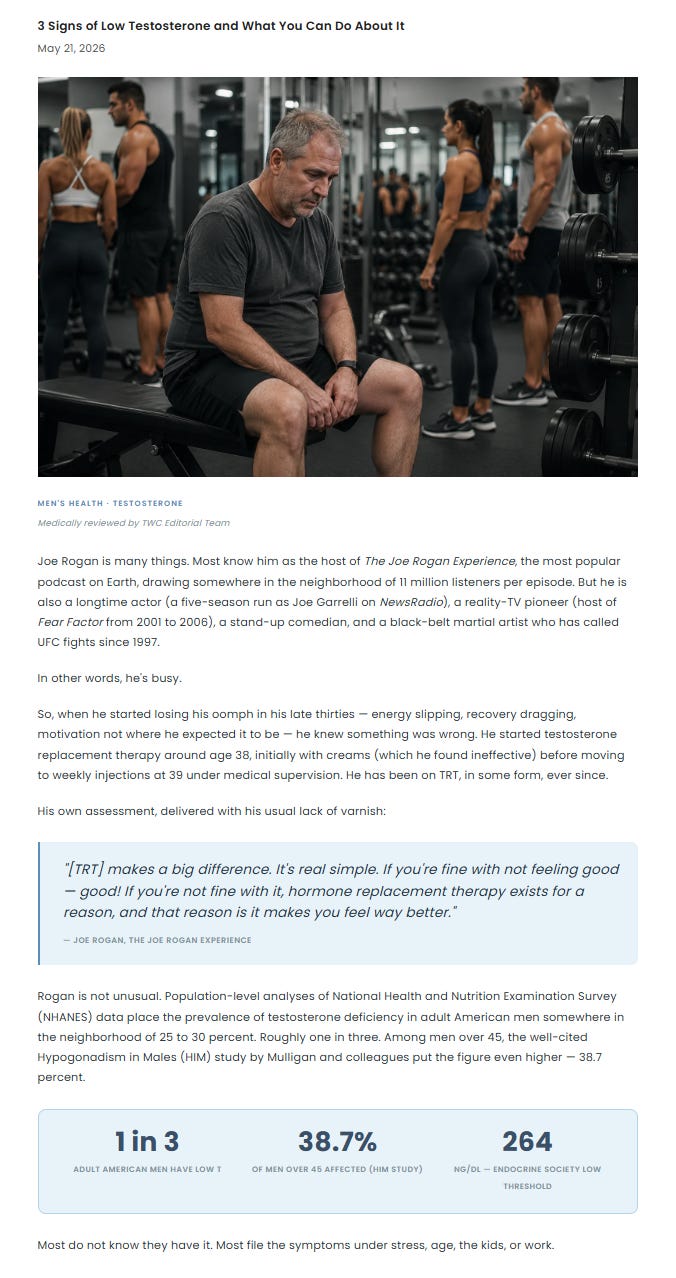
Summary of the JAMA Medical News
A July 2026 JAMA Medical News article reviews whether recent evidence—particularly the TRAVERSE trial—supports broader prescribing of testosterone replacement therapy (TRT).
Background
Testosterone therapy experienced a dramatic rise in popularity during the “low T” boom of the early 2000s. Direct-to-consumer advertising and specialized clinics promoted TRT for symptoms such as fatigue, decreased libido, and reduced vitality. Concerns subsequently emerged that testosterone was being overprescribed, often without appropriate diagnostic confirmation, while questions arose regarding cardiovascular safety.
In 2015, the FDA required manufacturers to add warnings regarding possible cardiovascular risks and mandated a large clinical trial to better assess safety.
The TRAVERSE Trial
The TRAVERSE study enrolled more than 5,200 men aged 45 to 80 years with symptoms of hypogonadism and either known cardiovascular disease or elevated cardiovascular risk.
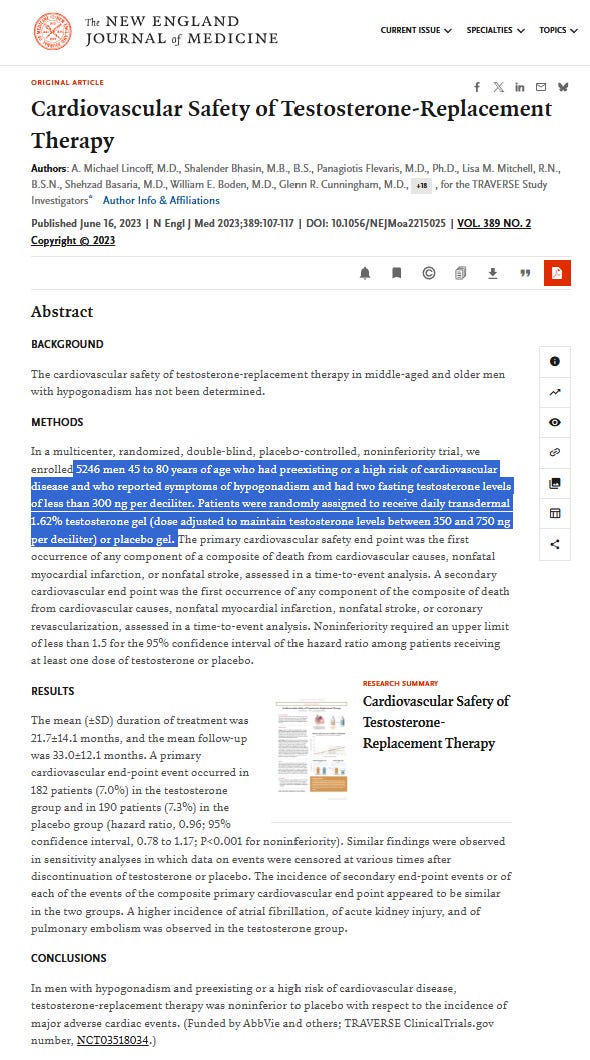
The primary finding was reassuring: testosterone gel (not injections) therapy did not increase major adverse cardiovascular events such as heart attack, stroke, or cardiovascular death compared with placebo.
These findings have become a major reason HHS is now recommending updates to testosterone product labeling.
Proposed Label Changes
HHS has proposed three major revisions:
Removal of language stating that safety and effectiveness have not been established for age-related hypogonadism.
Narrowing prostate cancer contraindications primarily to men with metastatic prostate cancer.
Updating warnings regarding benign prostatic hyperplasia (BPH) to reflect evidence that TRT generally does not worsen urinary symptoms in most men when appropriately monitored.
Supporters argue these changes better reflect current evidence and may improve access for appropriately selected patients.
Ongoing Concerns
Despite the reassuring cardiovascular results, several experts remain cautious.
Key concerns include:
Increased rates of atrial fibrillation seen in the testosterone group.
Higher rates of pulmonary embolism (blood clots).
More acute kidney injury events.
An unexpected increase in fractures reported in secondary analyses.
Limited long-term follow-up (average approximately 33 months).
Exclusion of men at elevated prostate cancer risk.
Evaluation of only one testosterone formulation (AndroGel), making generalization to injections and other preparations uncertain.
Some investigators worry that the study could unintentionally encourage broader testosterone prescribing beyond the population actually studied.
Who Should Receive Topical Testosterone?
The article emphasizes a broad consensus among experts:
TRT should not be prescribed based on symptoms alone.
Diagnosis requires compatible symptoms and consistently low testosterone levels on repeated laboratory testing.
Other causes of low testosterone—including obesity, chronic illness, poor sleep, medication effects, and alcohol use—should be considered.
Men receiving TRT require ongoing monitoring of testosterone levels, blood counts, prostate health, and potential adverse effects.
Expected Benefits
Clinical trials demonstrate benefits from TRT, but generally more modest than many advertisements have suggested.
Reported benefits include:
Improved sexual desire and sexual activity.
Small-to-moderate improvements in mood and energy.
Increased lean body mass.
Reduced fat mass.
Improved metabolic parameters in some men.
However, randomized trials have not consistently shown major improvements in overall vitality, cognitive function, or physical performance.
Conclusion
The JAMA discussion highlights a growing consensus that testosterone deficiency is a legitimate medical condition that deserves proper diagnosis and treatment when appropriate. The TRAVERSE trial provides important reassurance that carefully monitored testosterone replacement by topical gel or patch, not by injection of synthetic testosterone, appears to be safe in appropriately selected men. At the same time, questions remain regarding long-term safety, prostate cancer risk in certain populations, arrhythmias, blood clots, and other potential adverse effects.
Before initiating testosterone therapy, men should undergo a thorough evaluation with repeated testosterone measurements and assessment of symptoms. Because obesity, sedentary lifestyle, poor sleep, chronic illness, and excessive alcohol use can contribute to low testosterone levels, non-pharmaceutical interventions should be implemented whenever possible. These include:
Weight loss for overweight or obese individuals
Regular resistance and aerobic exercise
Optimization of sleep
Reduction or cessation of alcohol consumption
Management of metabolic disease and other underlying medical conditions

Low T men may also choose to discuss evidence-informed nutritional or botanical approaches with their physician. One example is Zeus (The Wellness Company), a combination botanical supplement designed to support healthy testosterone levels. However, unlike prescription testosterone therapy, botanical supplements generally have not been studied in large randomized outcome trials such as TRAVERSE, and their effects may vary among individuals. They should be viewed as health and wellness approach taken before a commitment to TRT is contemplated.
Please subscribe to FOCAL POINTS as a paying ($5 monthly) or founder member so we can continue to bring you the truth. AlterAI may be used to assist in searches, synthesis, and review.
Peter A. McCullough, MD, MPH
Chief Scientific Officer, The Wellness Company
https://www.twc.health/pages/focal-points
References
JAMA Medical News. Testosterone Therapy: Does New Evidence Warrant Broader Prescribing? Published online July 10, 2026. doi:10.1001/jama.2026.13149.
American Urological Association. Evaluation and Management of Testosterone Deficiency Guideline (2024). [auanet.org]
Traish AM, Miner MM, Morgentaler A, Zitzmann M. Testosterone Deficiency. American Journal of Medicine. 2011;124(7):578-587. [amjmed.com]
Corsini C, et al. Age-related decline in total testosterone levels among young men: insights from a large single-center observational study. IJIR: Your Sexual Medicine Journal. 2025. [nature.com]
Lincoff AM, Bhasin S, Flevaris P, Mitchell LM, Basaria S, Boden WE, Cunningham GR, Granger CB, Khera M, Thompson IM Jr, Wang Q, Wolski K, Davey D, Kalahasti V, Khan N, Miller MG, Snabes MC, Chan A, Dubcenco E, Li X, Yi T, Huang B, Pencina KM, Travison TG, Nissen SE; TRAVERSE Study Investigators. Cardiovascular Safety of Testosterone-Replacement Therapy. N Engl J Med. 2023 Jul 13;389(2):107-117. doi: 10.1056/NEJMoa2215025. Epub 2023 Jun 16. PMID: 37326322.
If something can have an effect, it can have a side effect. How extensively have the ingredients in Zeus been tested for potential adverse effects and drug interactions, both separately and when taken in combination? Just because a product is not synthetic does not mean that it is always safe when taken over a long period of time. One should consider the history of these products. Have the ingredients been used in combination by some tribe for generations without adverse effects? How does putting the ingredients in a capsule affect their safety compared to just consuming small amounts of the raw product? What are the pharmacodynamics and pharmacokinetics of the product of combined ingredients?
If I understand this correctly, we advise obese people to lose weight, exercise more, sleep better, decrease alcohol, and treat their medical problems. I wish I had thought of these recommendations.
Don't you think that these patients not only figured this out for themselves, but tried them and failed. DO you think that If we only just had advised this obese patient to lose weight, he would not have had this problem.
So, is the conclusion we do not treat these patients with TRT until they have accomplished weight loss? These are the people who need TRT. We recognize that TRT will not cure them or cause them to lose weight, or get them to exercise more: but there is no doubt that those who start TRT have decided to change their lives and health, and the TRT motivates them.
TRT does not necessarily increase the frequency of "normal" sex. It does increase erotic dreams, thoughts about sex, and masturbation. The desire for men is to have more and better orgasms, not just to have more sex. Sex without orgasm is uncomfortable and frustrating. Why not ask the question "Does TRT increase the quantity and quality of your orgasm?" For a man to have better orgasms, his partner must have increased sexual stimulation; and this is not accomplished by just TRT replacement for either or both of them. Sexuality in Marriage After Fifty