


Happy Independence Day! I hope that all of our readers enjoy a fun and relaxing Saturday with friends and family, celebrating the many blessings that “We the People” still enjoy, despite our garbage government in Washington.
The second Trump administration has revealed the vanity of placing our hope in a “better” federal government. If “We the People” are going to retain what remains of our liberty, we must focus on ways to reduce the power of the federal government to harm us.
Federal power should be regarded as something akin to sewage — it cannot be improved, only contained and prevented from spilling into the healthy political ecosystems of states whose residents are allowed to flourish with minimal government interference in their lives.
Prudent adults don’t want a “better” government; we want government to leave us alone and quit stealing our money and giving it to its creepy friends at home and abroad.
In other words, the second Trump administration confirms the veracity of Thomas Jefferson’s famous assertion: “That government is best which governs least.”
In 1775, the British MP Edmund Burke understood that there was no sense in quarreling with the North American colonies, and that the relationship could be repaired if the Crown and Parliament would go back to leaving the colonies alone.
In his March 22, 1775, speech “On Conciliation with the Colonies,” he introduced the term “salutary neglect” to characterize Britain’s earlier policy. He recommended this policy marked by lax enforcement of trade laws and minimal interference. In his view, the colonies were able to achieve remarkable growth and prosperity precisely because they were left alone.
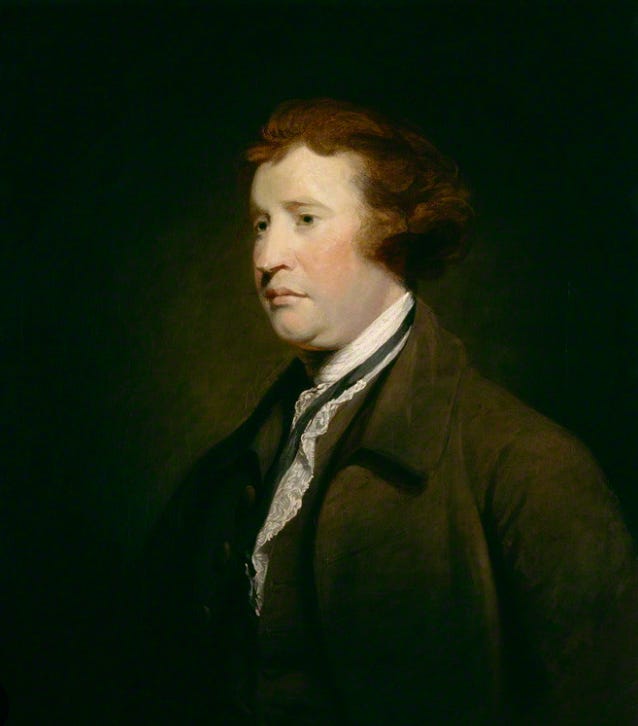
Burke pointed out that the colonies had expanded commerce with Britain twelve-fold since 1700, driven by the “spirit of liberty” among their inhabitants rather than by “the constraints of watchful and suspicious government.” The colonies “owe little or nothing to any care of ours,” he argued.
As he put it (in his elegant, 18th century style) “through a wise and salutary neglect, a generous nature has been suffered to take her own way to perfection.” At the same time the colonies flourished, they supplied raw materials and markets that enriched the empire. The lesson was clear — leave the colonists alone and they will look after themselves and make a valuable contribution to British prosperity.
Facing the Coercive Acts and the drift toward war, Burke urged Parliament to repeal punitive measures, restore the “former unsuspecting confidence,” and return to indulgence instead of coercion.
Exceptionally wise man that he was, he advocated preserving what experience had shown to work. He saw no empirical grounds for believing that exerting force on the colonies would yield a constructive outcome. A policy of coercion would cause the colonists to resent the government in London and form a “jealous” — that is, hyper vigilant—attachment to liberty.
Burke’s idea of salutary neglect resembled Thomas Jefferson’s famous proposition that “that government is best which governs least” —a sentiment he expressed in his First Inaugural Address emphasizing a “wise and frugal Government” that leaves people “free to regulate their own pursuits.”
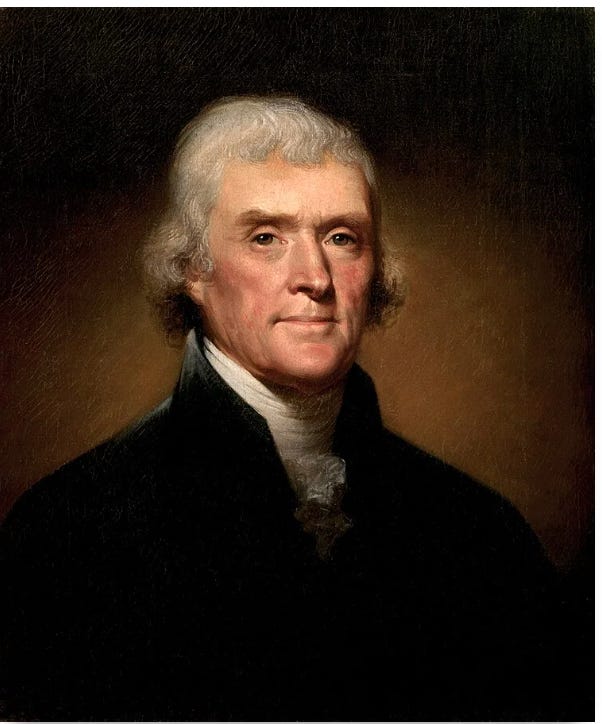
Both Burke and Jefferson recognized that state overreach often backfires, while wise restraint fosters productive and creative enterprise. Burke applied this insight to try to avert crisis in 1775; Jefferson offered it as a foundational American creed.
And so, while you are burning burgers and “hoisting ice-cold lagers to your laughing tackle” (as an old Zimbabwe friend describes drinking beer) spare a thought for Edmund Burke and Thomas Jefferson. The wisdom they bequeathed to us in their political writings is as applicable as ever.
Yes, less government. But remember what John Adams said, “Our Constitution was made only for a moral and religious people. It is wholly inadequate to the government of any other.” For a long time the majority of Americans fit the bill, including most immigrants. But two things have changed this. First, Roosevelt's New Deal led the way to big government that gave too many people the idea that the government should take care of them. And second, we have admitted hordes of people who didn't come here for freedom. They don't think the way we do and don't want to learn our ways. They are not suited to self-government (which means less government), to say the least. A considerable number think the government is their sugar daddy who owes them a lot of money. What to do except send them back to where they won't have self-government, of course.
Thank you, Patriot John Leake~!
This is an absolutely perfect article for today~!
Happy 4th of July~!
Sincerely, Mike