


In an essay titled “The New Architecture,” published in the Baltimore Evening Sun in the late 1940s, HL Mencken described modernist architecture as "harsh masses, hideous outlines, and bald metallic surfaces.” Modernist furniture he described as “ghastly imitations of the electric chair.” He contrasted modernism with the civilized and humane architecture of the 18th century Georgian period. In the US, this is often referred to as the Federal Style because it coincided with the Constitutional Convention.
In Boston, the foremost architect of the Federal Style was Charles Bullfinch, who designed many of the most beautiful townhouses on Beacon Hill, as well as the Massachusetts State House.
Bullfinch was influenced by the Scottish architect Robert Adam, who visited the Croatian, seaside town of Split in 1757 to study the remains of the Roman Emperor Diocletian’s palace. Commissioned as the emperor’s retirement residence, construction began around 295 AD and was completed by the time of his abdication in 305.
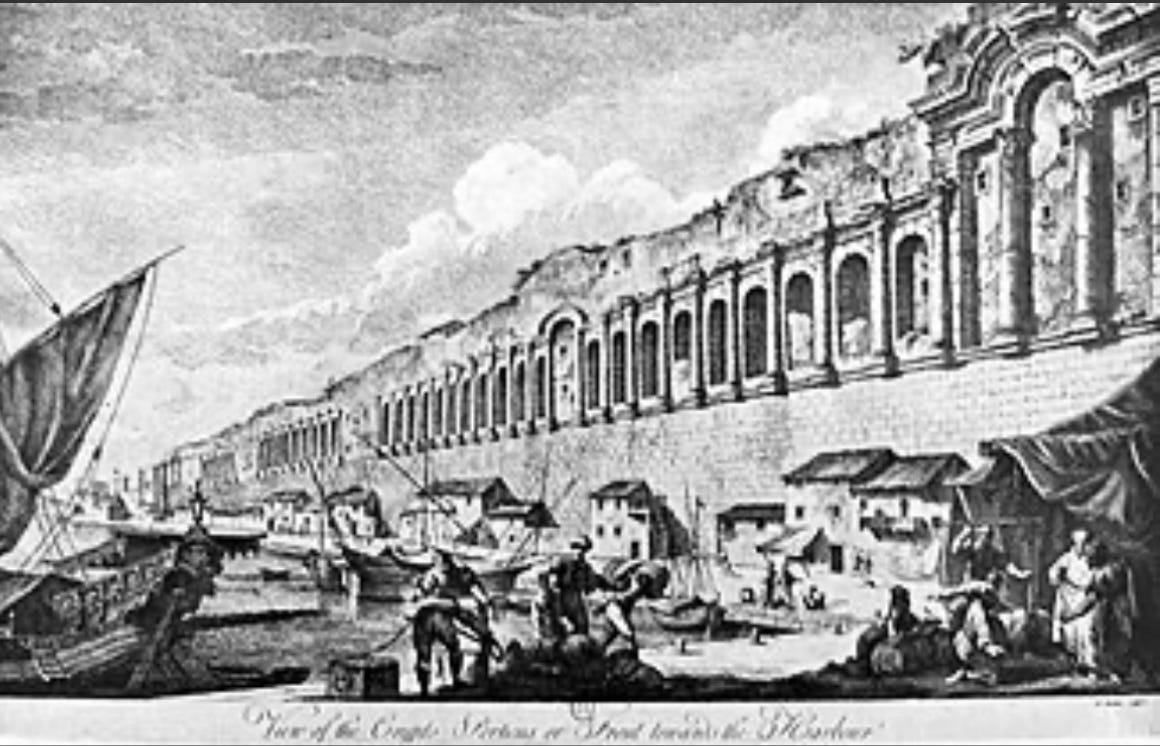
During Adam’s Grand Tour in 1757—accompanied by French architect and artist Charles-Louis Clérisseau—he visited Split (then Spalatro) to draw the ruins. His team performed detailed measurements, drawings, and surveys of the palace’s architecture, ornamentation, and spatial organization.
The result was Adam’s influential 1764 publication, Ruins of the Palace of the Emperor Diocletian at Spalatro in Dalmatia, a rich folio with engravings that showed the site to a wide European audience.
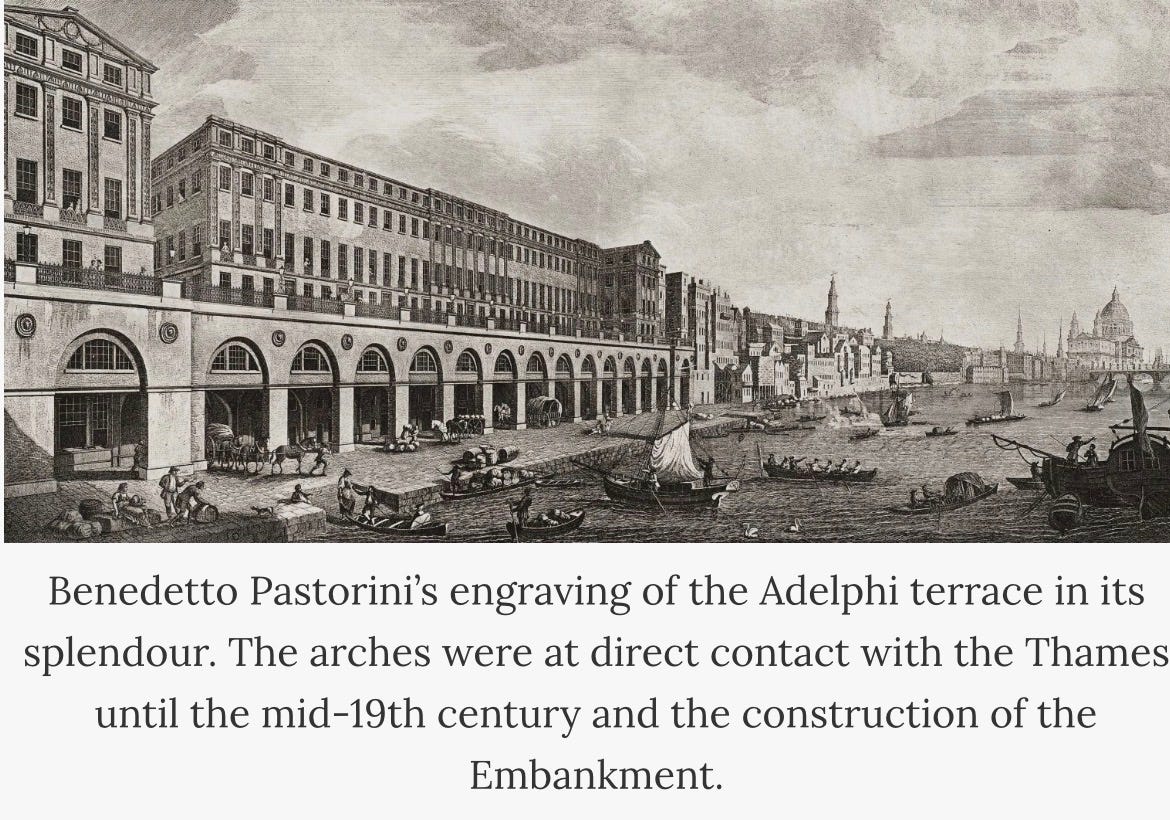
Adam’s visit influenced his designs for Syon House, Kedleston Hall, and the Adelphi development in London, where the palace’s grand gallery and courtyard principles informed his terrace designs and riverfront planning.
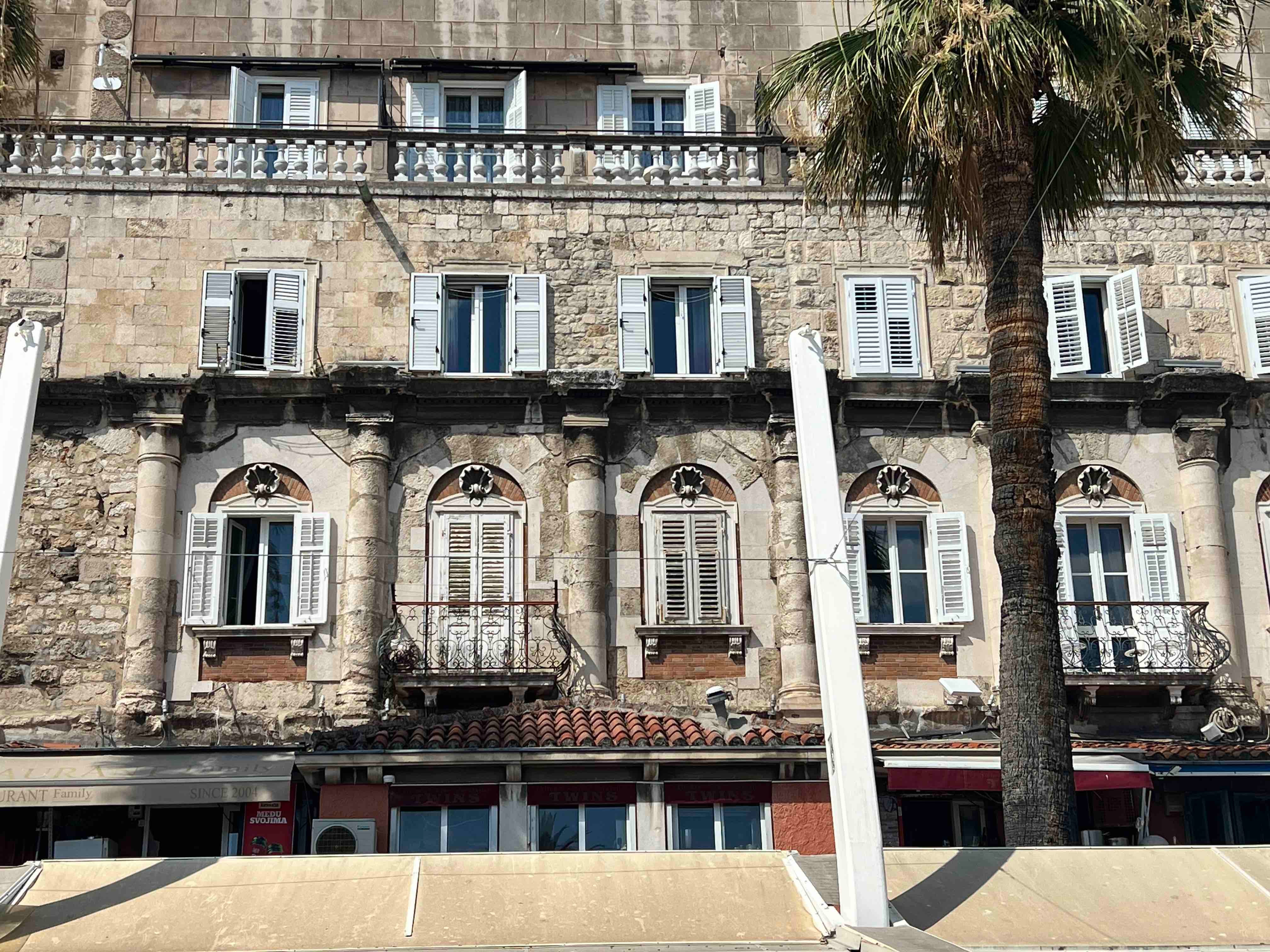
I thought of Adam’s 1764 book yesterday while strolling along the seaside of the old palace in Split. Note that much of the ancient Roman tower and colonnade are still intact and have been incorporated into the current dwellings.

The following image is a reproduction of one of Adam’s drawings of the palace.
The palace was the inspiration of his Adelphi Terrace in London.
The Massachusetts State House by Charles Bullfinch displays the same influence.

The old Roman and Venetian towns along the Dalmatian coast of Croatia—as well as the great cities of Italy, France, and Spain—are all overrun with tourists because everyone is naturally drawn to Roman architecture and city planning. Compare Bullfinch’s State House to the Boston City Hall—a masterpiece of brutalist horror designed by Kallmann McKinnell & Knowles.
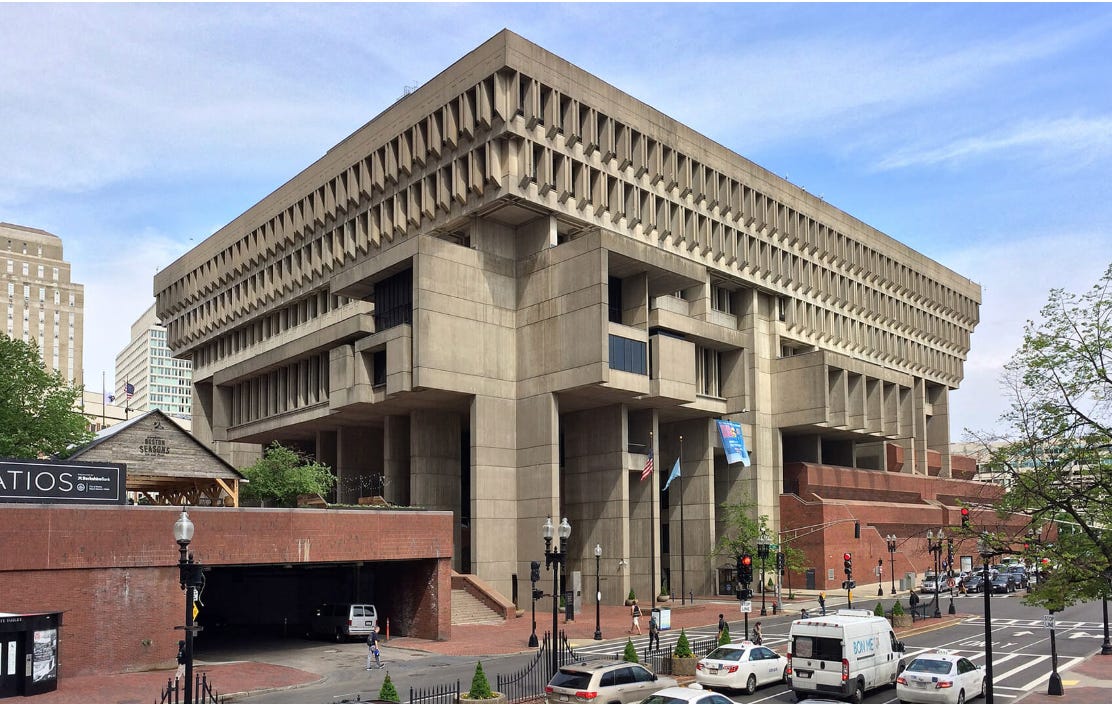
When I lived in Boston I always felt well when I walked past Bullfinch’s State House. Conversely, whenever I walked past Boston City Hall, I felt a dull sense of dread and impending doom. The architects of this atrocity were prominent members of a generation that waged war on beauty and the sense of wellbeing that the sight of it instills in the viewer.
Every year, Boston attracts about 20 million tourists who take delight in visiting the Public Garden and Beacon Hill. No one is delighted to visit the Boston City Hall and its ghastly Government Center wasteland that replaced the charming Scollay Square, featured in the image below.
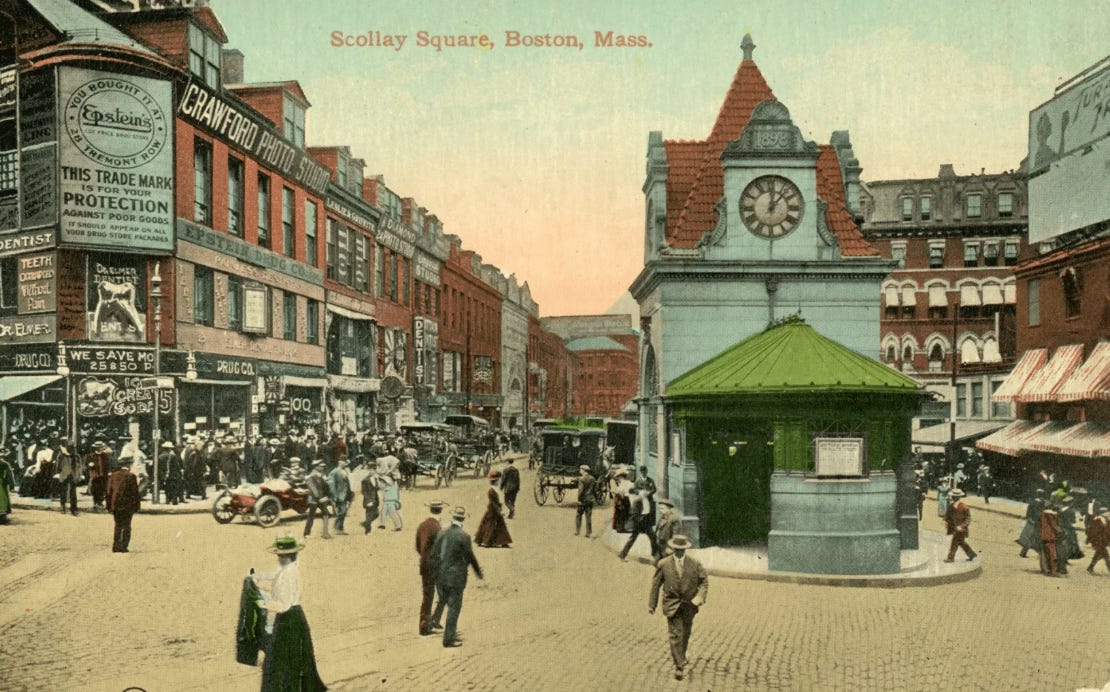
The people responsible for demolishing Scollay Square and erecting Government Center should have been put in the stocks and pelted with rotten eggs and tomatoes.
Case in point…Obama’s library. A starwars-esque monstrosity in what could have been a beautiful addition to the park.
Most all new building, like Obama's structure, is Stalinist. Ugly, brutal, cold, degrading, inhuman.