


By Peter A. McCullough, MD, MPH
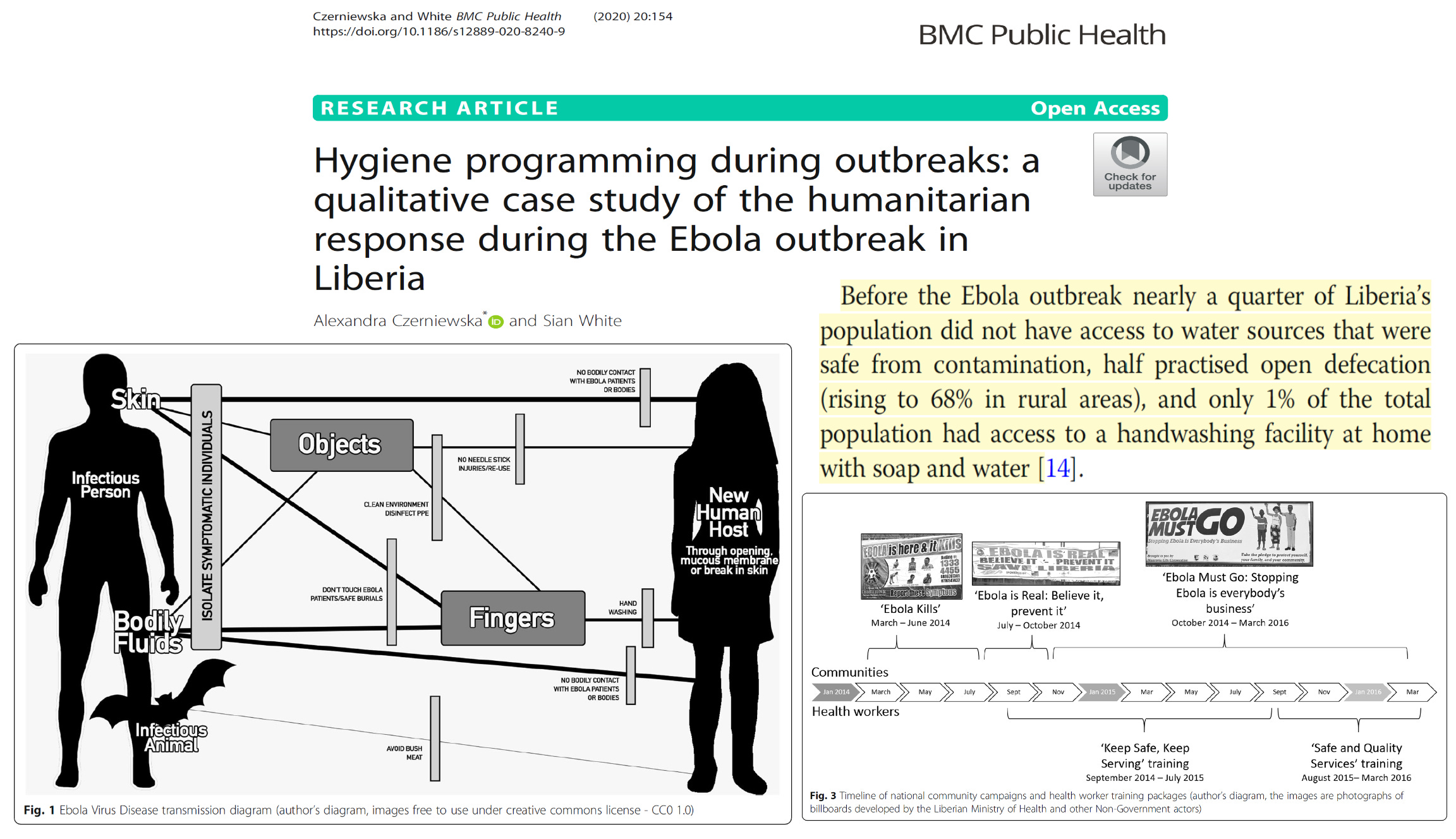
The news is filled with grim stories about Ebola in Africa. Why do none of the images show clean houses, neighborhoods, or sanitary hospitals? A case study by Czerniewska and White (2020) offers a sobering examination of the humanitarian response to the 2014–2016 Ebola outbreak in Liberia. The study focuses on the foundational necessity of effective sanitation and strict physical barrier management in controlling Ebola outbreaks.
The Primacy of Sanitation and Barrier Control
The paper highlights that despite the complexity of managing an outbreak, the core mechanisms of Ebola transmission remain persistent and manageable through fundamental hygiene practices. Ebola is an infectious dysentery and is not airborne; it is transmitted primarily through direct contact with the bodily fluids of moribund or deceased patients. Consequently, the most effective “interventions” are the same ones for cholera and dysentery including rigorous implementation of basic sanitation: handwashing with soap, the safe handling and burial of the deceased, and the meticulous cleaning of contaminated surfaces.
