


A few nights ago, I had dinner with a local Dallas restaurateur named Javier Gutierrez, the owner of Javier’s, which has been a legendary local institution since I was a boy. Javier has long struck me as embodying the virtues described in Baldassare Castiglione’s Book of the Courtier, published in 1528.
Polite but not too formal; always elegantly dressed in a jacket and tie but never flashy; calm, soft spoken and restrained but always open and friendly, he has a natural authority that instantly commands the respect of employees and customers alike. In our current sloppy, ill-dressed, hirsute, and tattooed era, it’s amazing how much respect a man can get just from being physically fit, well-dressed, and clean-shaven.
Like the ideal courtier described by Castiglione, Javier seems extraordinarily capable (of running an extremely busy restaurant) without having to exert himself.
I say this out of hard experience. I once tried running a restaurant and was astonished at how many things could go wrong in a single day. I had the misfortune of opening it just before COVID lockdowns in March 2020, and the double misfortune of reopening it right before the BLM riots of May 2020, which resulted in the big front windows getting shot out.
Shortly after the riots, I got a call at 4:00 am from the alarm company. The alarm was going off.
“Can the Dallas police respond to it,” I asked naively.
“The police will only respond after the owner has confirmed it’s not a false alarm.”
“What if it’s not?” I asked incredulously. “What if armed gunmen are looting the joint?”
“It’s the Dallas police policy, not ours.”
I hung up, pondering all of the regulatory crap we endured from the County, and all the taxes we paid. The County was very avid to meddle in my affairs, but it couldn’t keep the hobos out of my parking lot, nor maintain the road in front of my restaurant, which was so potholed it looked like it had been hit by a B-17 squadron. Now the police couldn’t be bothered to pass by to make sure the place wasn’t being robbed.
As I drove across town—a loaded .44 magnum on my passenger seat—I was completely at the end of my tether. Five months of frustration seemed to culminate in this fateful moment. I thought of Detective Harry Callahan in the 1971 film Dirty Harry. I imagined getting out the car in the parking lot and yelling at the burglars to stop plundering my place. In my dark fantasy, there were six burglars, and all of them simultaneously drew on me. After first ducking behind my car, I then methodically mopped them up, just like Dirty Harry mopped up the bank robbers in one of the film’s most iconic scenes.
In my dark, cinematic fantasy, I then tossed an impossibly large hand grenade into the place, blowing it to smithereens in a spectacular blaze of nihilistic capitulation glory.
Thoughts of Dirty Harry interspersed with the famous couplet in Byron’s poem, “She Walks in Beauty.”
And all that’s best of dark and bright
Meet in her aspect and her eyes;
Thinking about my restaurant, I thought of the following variation.
And all that’s worst of dark and shite,
Meet in its dumpster fire.
I arrived at the restaurant to discover that someone had smashed the glass pane on the back kitchen door—apparently in an effort to gain access to the interior door knob—but had cut himself and apparently run off when the alarm sounded. Shining a flashlight on the hole in the window, I saw blood droplets on a jagged piece of glass.
Javier has had the exact opposite of my terrible experience. He opened his restaurant in 1977—serving Mexico City-Continental cuisine in an elegant, Spanish colonial atmosphere. By restaurant standards (making allowances for initial bumps at the start) it was an almost instant success, and it consistently provides a very nice living to his large and fiercely loyal staff.
“Have you ever had any trouble with employees behaving badly?” I asked.
“No, I treat them well, and they have always treated me well,” he replied.
“What about customers behaving badly—like getting drunk and brawling?”
“No,” he said. “We’ve never had any problems with customers, though we do reserve the right to stop serving someone if he’s had too much to drink.”
He mentioned that he has been approached by investors wanting to buy the restaurant. He owns the building, located on a very valuable parcel of land, and zoning would permit a high rise building on the footprint of his one-story restaurant.
“The real estate is worth more than the restaurant, but I could never sell it because I have way too many guys who work for me, many since the beginning.”
I mention Javier because his restaurant is an exemplar of what makes a civil society function. The whole community loves his restaurant, he employs dozens of people who use their excellent pay to take care of their families, and he makes a large annual contribution to the Dallas County coffers.
Javier grew up in Mexico City, and one of our topics of conversation was why Mexico had always struggled to develop its vast human and natural resources.
“It’s sort of mysterious, isn’t it?” he said. “There’s so much potential. I suppose a lot of it is because the Mexican state has always been dysfunctional and corrupt.”
This brings me to the main subject of this post—namely, the state.
We have grown accustomed to looking to the state to solve a vast array of problems, not realizing that it’s the state the causes most of them.
In most of its activities, the state is a muted version of John Leonard Orr, a fire captain and arson investigator in Glendale, California who was himself a serial arsonist. John started the fires and then heroically presented himself as the brave fire fighter who combatted them.
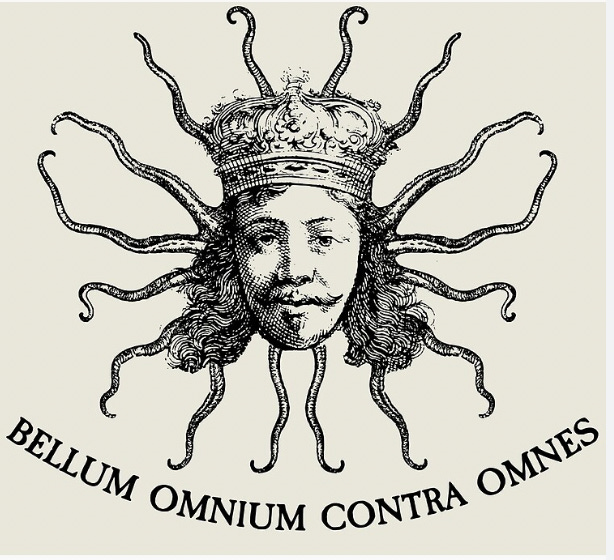
Thomas Hobbes claimed that a powerful state was necessary to tame the chaos of man’s natural state—”the war of all against all”—but this ignored what I believe to be, in a civilized society, the much more important role of civil institutions, customs, manners, habits, and moral education.
The men and women who run the state are always looking for any pretext to expand their power. As we saw during the pandemic, the “opportunity” to have a "Churchhillian moment” was seized by every lightweight knucklehead politician in the country—with precious few exceptions (Thomas Massie being the most notable).
These men and women proclaimed they were at war with the virus that threatened all of us. With their valiant advisor, Dr. Anthony Fauci, they said they would protect us from the dread virus. All we had to do to receive their beneficent protection was to obey them. God forbid we question the authority of our protectors.
Never mind that the creation of SARS COV-2 was funded by U.S. government agencies and developed with cutting edge U.S. biotechnology from UNC Chapel Hill. We were initially told the gigantic lie that it emerged in nature. After that lie became no longer tenable, we were told (and are still being told) it was the perfidious Chinese who created the virus.
The framers of the U.S. Constitution understood how this game works. They knew history better than anyone alive in America today (with the possible exception of yours truly). They knew that—unless the power of the state is limited and checked—the rulers will always seek to overstep and start meddling in the business of prudent, competent grownups like Javier Gutierrez.
In the realm of foreign affairs, the state will always seek to get the nation involved in the business and conflicts of foreign countries, because doing so can always (seemingly) be justified on the grounds that evil foreign tribes aspire to hurt us. This drama appeals to the most archaic programming of the human mind.
As Madison repeatedly observed, throughout history, the military has always been the chief instrument of the state for expanding its discretionary power and levying greater taxes.
Why does the state always seek to expand and overstep? The answer lies in the eternal delusions of the ruling class (and the human ego itself) which always grossly overestimates its ability to control, manage, change, and improve things.
In reality, most of the men and women who hold state positions couldn’t manage a small business such as a restaurant. I’m certain that former President Joe Biden couldn’t administer a lemonade stand even if you gave him detailed written instructions for setting it up, mixing the lemon concentrate with water, and serving customers. He would somehow manage to screw it up.
The only thing the men and women of the state are truly competent at doing is enriching themselves and further enriching their donors.
In his Farewell Address of 1796, George Washington pointed out “our detached and distant situation" and “our peculiar situation,” referring to the vast oceans on either side of us. Our unique geographical and historical circumstances enable us to become a nation of people who could focus on cultivating themselves and their resources, and to stay out of the depraved and dysfunctional affairs of the rest of the world.
It seems to me that the state has four primary duties.
1). Keep bad guys off the street—i.e., respond to burglar alarms
2). Maintain the security of our national borders
3). Maintain critical infrastructure or strictly enforce regulations for maintaining it properly
4). Impartially adjudicate conflicts between citizens.
That’s it.
All of the other BS that we hear coming out of Washington—the constant need to manage and take care of everything and everyone and to act as the world’s policeman—is all a pretext for expanding state power.
I’ll conclude with a final reflection on my dinner with Javier. Everything about the man signals that he takes care of himself and his employees. If the American people want to remain free, they must fervently embrace the ethos of taking care of themselves and their families.
Whenever people fail to assume responsibility for taking care of themselves, tyrants will inevitably rush in to take care of things for them.
This is why, in recent decades, state and federal governments have expressed great sympathy for weak and dysfunctional people. Dependency on the state is synonymous with ceding power to the state.
A dependent people can never be a free people.
There is so much wisdom in this article! Thank you for all you do, John Leake.
This is an exceptionally well-written article. When one can feel the frustration, the beauty, the mind of the writer, then one knows that one's thoughts are in the hands of a great penman.