


By Peter A. McCullough, MD, MPH
Skin rashes with viral illnesses are common in children and adolescents. However to ascertain a case of measles in the modern day, a positive PCR test must be returned from the lab.
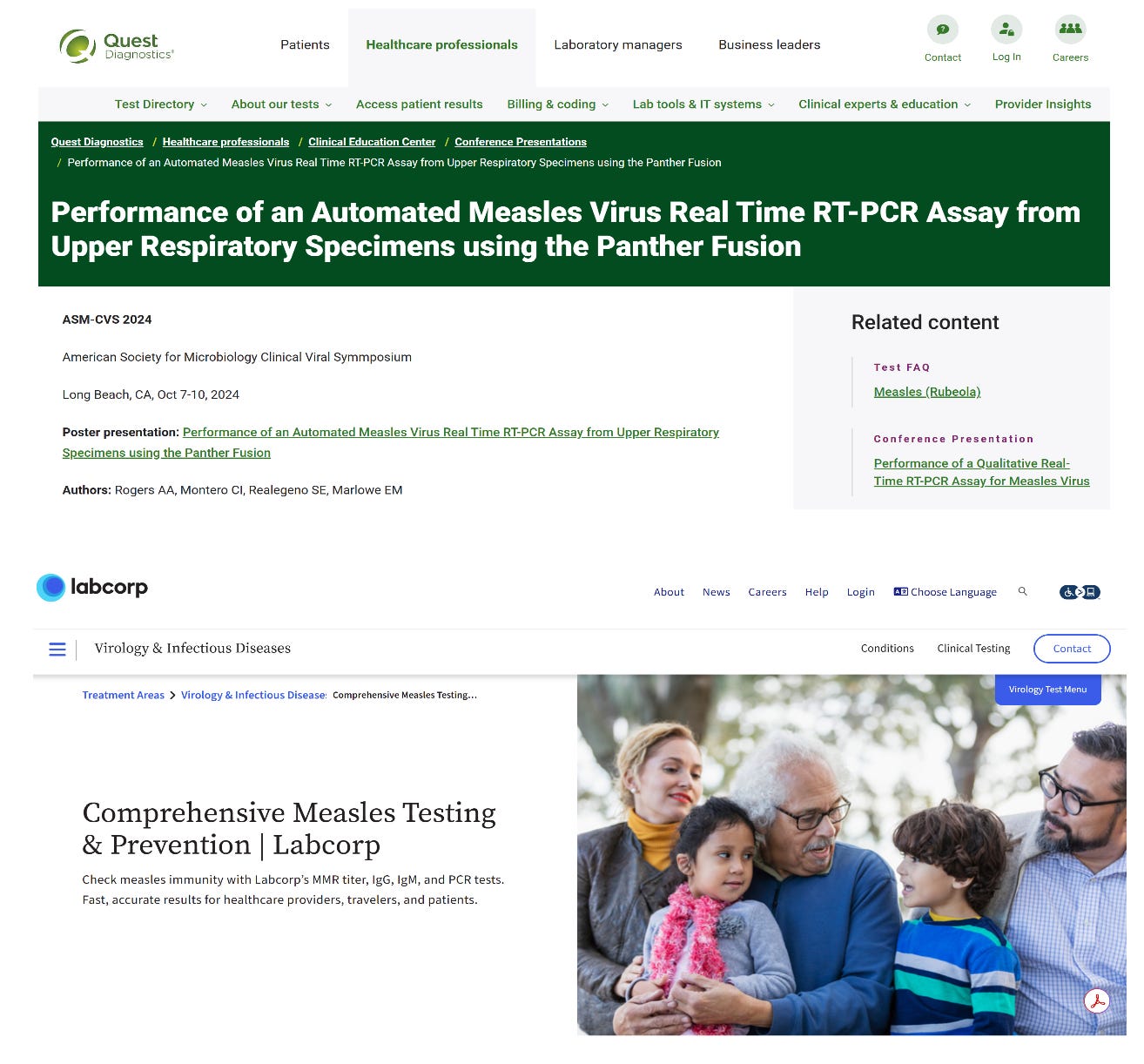
🦠 The Testing Cascade: How Expanded Measles Surveillance Manufactures Outbreaks
The United States is in the midst of what public health authorities describe as a dramatic measles resurgence. As of July 30, 2026, 2,371 confirmed cases have been reported across 45 jurisdictions, with 37 new outbreaks and 94% of cases outbreak-associated. This follows 2,289 cases in 2025 across another 45 jurisdictions. For context, 2024 saw just 285 cases and 16 outbreaks.
The official narrative is straightforward: declining vaccination rates are causing measles to return. And there’s some truth to that — outbreaks cluster and measles is genuinely contagious.
But there’s a second, largely undiscussed driver: the extraordinary expansion of testing itself. When you dramatically increase the number of tests performed in a low-prevalence population, you generate cases by statistical inevitability. The question isn’t whether testing expansion explains all of the increase — it doesn’t. The question is how much of the “surge” reflects actual disease transmission versus the predictable mathematics of casting a wider net. In the Table below it’s important to point out that CDC officers do not call parents or patients to verify vaccination status, so if it is not readily available from state labs or other sources, the agency uses invokes the category “unvaccinated or unknown.” This practice conceals the number of fully or partially vaccinated cases (1st MMR dose at 15 months and 2nd dose at age 4 before kindergarten).

