


There’s an old saying that “All Wars are Bankers’ Wars,” and it applies to former BlackRock executive and now German Chancellor, Friedrich Merz. Since he entered office last May, he has accelerated Germany’s collision course with Russia. He claims that Germany’s preparations for war are purely defensive, but the Russians—who lost tens of millions of soldiers and civilians following the German invasion of Russia (via Ukraine) in 1941—don’t believe him.
Like the United States and Great Britain, Germany is already waging war against Russia by providing sophisticated weapons and targeting systems to Ukraine. Were it not for the assistance rendered by these NATO countries, the war would have concluded in a negotiated settlement shortly after it began in 2022.
Germany has delivered multiple IRIS-T SLM (medium-range) and SLS (short-range) missile defense systems totaling around 12 SLM fire units and additional SLS launchers by 2026, along with hundreds of missiles. Germany has also supplied Patriot air defense batteries (multiple systems and large numbers of interceptors, including PAC-2/PAC-3 variants) and supported further acquisitions.
Complementing these are Gepard self-propelled anti-aircraft guns, MANPADS (shoulder-fired systems), and AIM-9 Sidewinder missiles. German companies like HENSOLDT have supplied critical TRML-4D AESA radars (part of IRIS-T integration, capable of tracking up to 1,500 targets at long ranges) and SPEXER short-range radars under major contracts (over €340 million), enhancing detection, tracking, and targeting for air defense networks.
Germany has also provided significant heavy armor, including Leopard 2 main battle tanks (notably A6/A7 variants) and dozens of Leopard 1A5 tanks, along with Marder infantry fighting vehicles. These have bolstered Ukraine’s mechanized capabilities for offensive and defensive operations.
Germany supplied Panzerhaubitze 2000 (PzH 2000) self-propelled howitzers and other systems, alongside hundreds of thousands of 155mm rounds and other ammunition. Recent packages include additional howitzers (e.g., support for Zuzana systems) and precision-guided munitions.
Offensive Systems
Most bellicose has been Germany’s delivery of thousands of reconnaissance and strike drones, as well as recently announced joint production initiatives for long-range unmanned systems in Ukraine. Merz has advocated delivery of drones, long-range weapons, and ammunition, including financing components for Ukrainian manufacturing of advanced strike capabilities.
German communications and targeting systems are vital enablers. Aid packages include secure communication devices, tactical radios, and related equipment to improve command-and-control and interoperability. Radar systems (such as TRML-4D) provide essential targeting data for air defense and artillery integration. Germany also contributes to broader efforts in electronic warfare (EW) capabilities through NATO coalitions.
Merz’s government has lifted range restrictions on donated weapons and pursued “strategic ambiguity” by curtailing public reporting on deliveries. While debates continue over Taurus cruise missiles (which have purportedly not yet been delivered), the extent of weapons, communications, radars, and targeting support makes Germany a key provider of Ukraine’s war-making ability.
I suspect it will eventually come to another direct war between Germany and Russia. It will likely begin with Russia firing conventional missiles at German arms factories. If Germany returns fire with long range missiles armed with conventional warheads, Russia may resort to using tactical nuclear weapons on German targets.
The objective of the globalist banking cartel for whom Merz works is apparently to get rid of Vladimir Putin to install a Western puppet in Russia—a weak figure along the lines of Boris Yeltsin—so that Russian mineral assets can be looted and used to collateralize another round of Western credit expansion. Like all nations in the West, German debt has greatly increased since the COVID-19 pandemic, when it shut down the nation’s real economy and spent hundreds of billions on the corrupt and useless pandemic response.
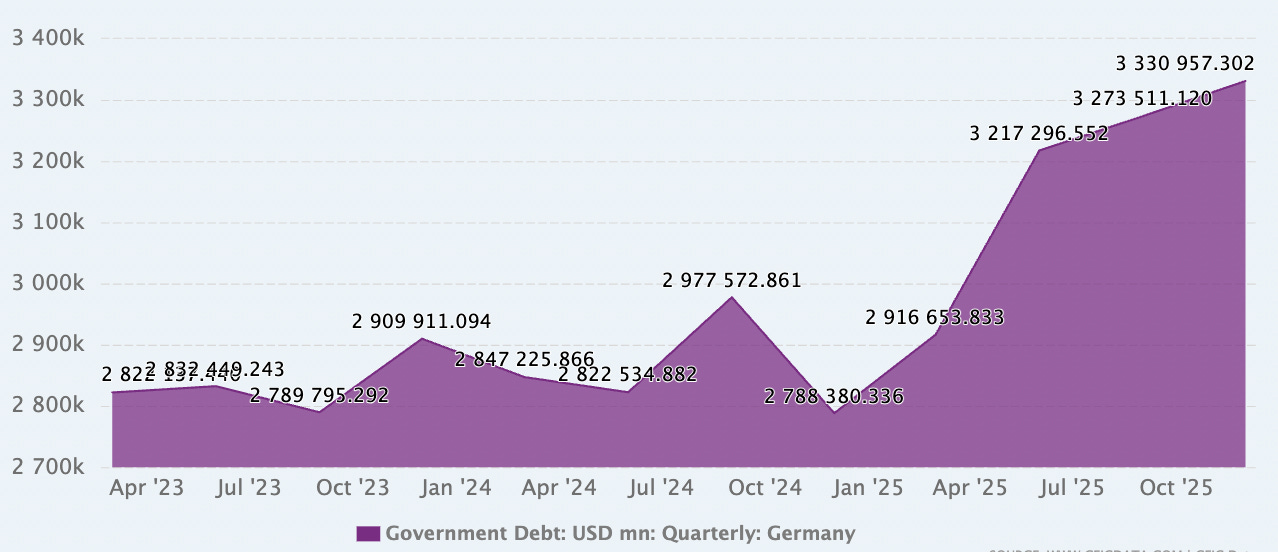
For Germany’s abominable ruling elite, war with Russia also serves the purpose of distracting the Germany citizenry from contemplating the ruinous consequences of its immigration and “Green Energy” policies. The latter has greatly increased the cost of living and caused many manufacturers to shutter their operations.
Like most wars in history, including the recent Iran war, the coming war with Russia will almost certainly NOT go according to plan. More likely, today’s German warlords will follow in the footsteps of Napoleon in 1812 and Hitler in 1941. If things do indeed go badly for Germany, its globalist elite will leave the country and retreat to its properties and yachts in places that are out of harm’s way, just as many Ukrainian oligarchs have done.
For a couple of centuries prior to World War II, Berlin was one of the most beautiful, interesting, and fun-loving capitals in Europe. However, during the final two years of World War II, large parts of the city were almost completely destroyed.
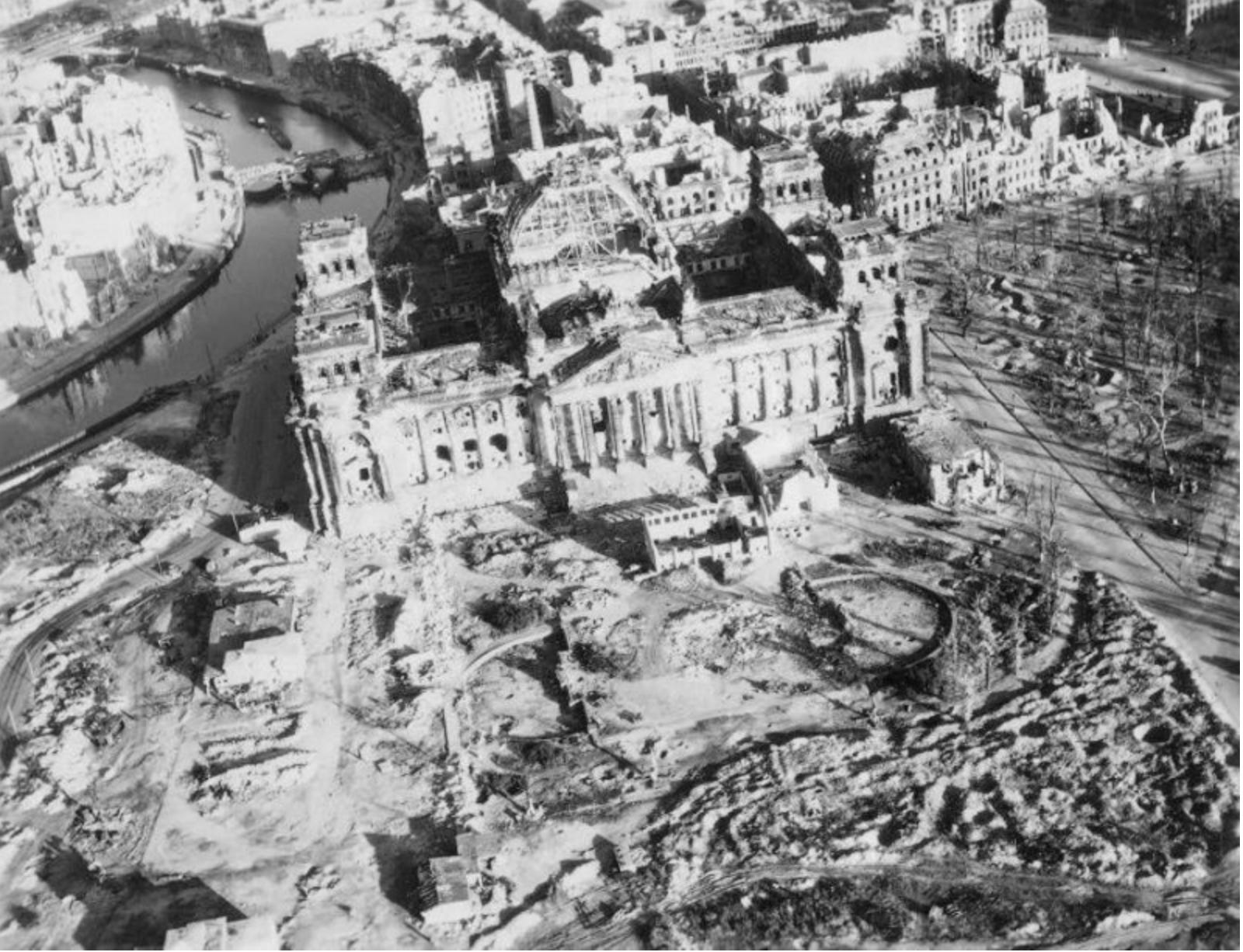
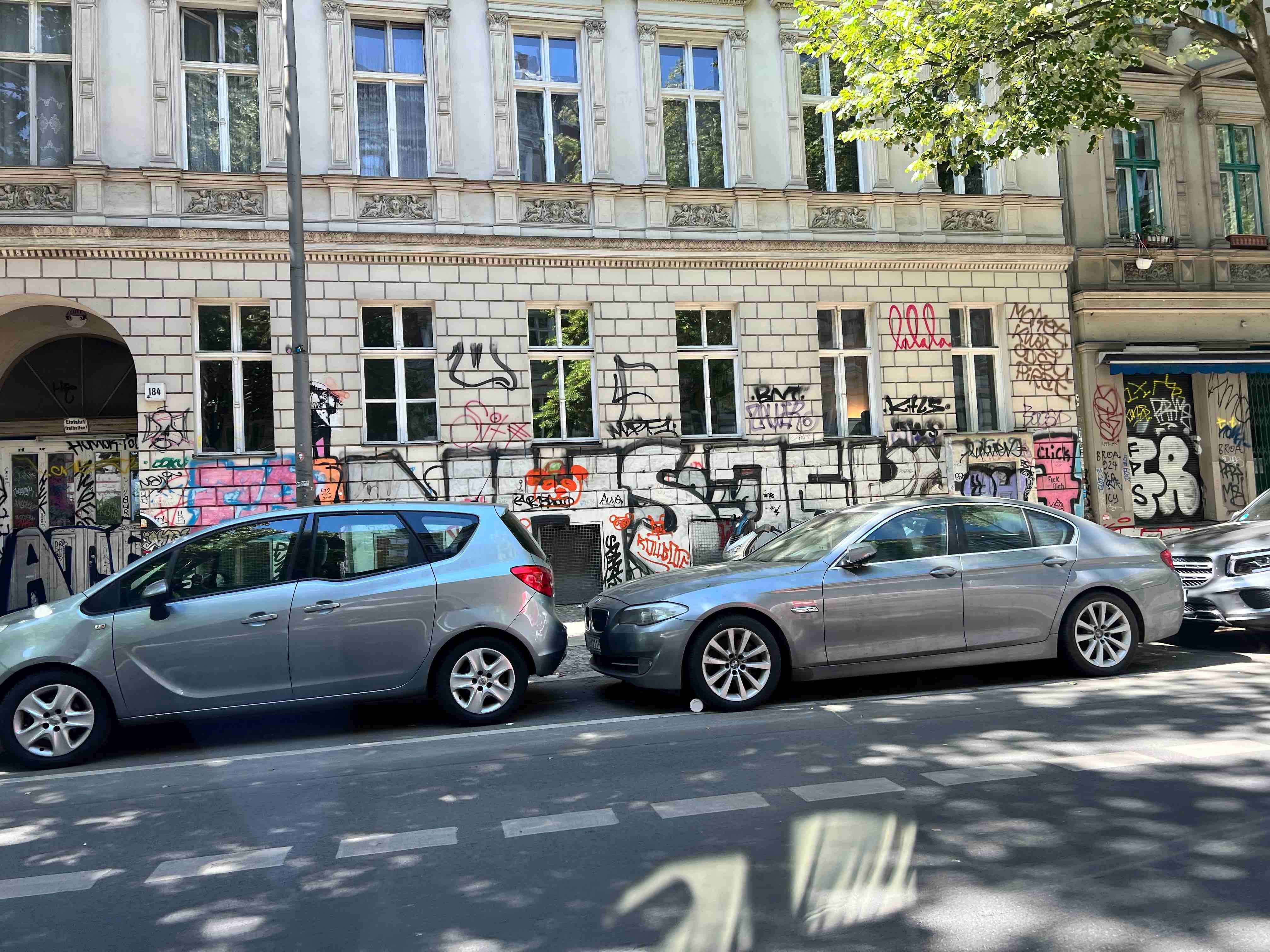
The last time I visited, many years ago, I found the sight of large swaths of ugly modernist buildings a constant reminder of man’s capacity for mindless destruction of the beautiful things that he himself builds. Returning to Berlin today, in a taxi from the airport, I was disheartened to see heavy graffiti on the facades of the historic buildings that survived the war in the bohemian Kreuzberg district.
I am attending a conference at the German Bundestag (Parliament)—organized by the Alternative für Deutschland—to discuss free speech and a free press. During the COVID-19 pandemic, media and social media were heavily censored in Germany. As war with Russia approaches, censorship in Germany will likely increase.
The conference invitation states:
Under the guiding themes of “Freedom of Expression — Media —Human Rights,” politicians, academics, journalists, and media representatives from Germany and abroad will discuss the state of freedom of expression in Germany and Europe.
The two-day congress will focus on current challenges to democracy and free speech – from the impact of the European Digital Services Act and the role of independent media to issues of parliamentary freedom and the protection of fundamental civil rights. In addition to high-caliber lectures and panel discussions, several workshops will provide opportunities for in-depth debate and exchange with experts.
Guests include Prof. Václav Klaus, former President of the Czech Republic; Holger Friedrich, publisher of the Berliner Zeitung and the Ostdeutsche Allgemeine; Roger Köppel, editor-in-chief of Weltwoche; and Dr. Susanne Fürst, the former President of the Federal Office for the Protection of the Constitution, Dr. Hans-Georg Maaßen, the media scholar Prof. Dr. Michael Meyen, the publicist Dr. Ulrike Guérot, the entrepreneur Alexander von Bismarck, and numerous representatives from politics, academia, and the media. Together, we want to develop viable concepts and strategies and work out practical solutions for protecting the fundamental right to freedom of expression.
At the McCullough Foundation, we are always looking to make contact with likeminded, reasonable adults of all nations who are working to safeguard our hard-won civil liberties—especially freedom of speech and bodily autonomy—and to prevent our civilization from relapsing into the atavistic madness of the past. If you are in Berlin and attending the conference, please keep an eye out for me.
Yes, Merz is a shocker, an archetypal "system of control" apparatchik. Let us not forget that this regime has incarcerated Dr Reiner Fuellmich, the brilliant attorney who called out Convid1984 and the deadly vax, after kidnapping him from Mexico and subjecting him to a uber-corrupt trial. He is languishing in Bremervoerde as a political prisoner of the cowardly German government.
C. J. Hopkins should be on the guest speaker list.