


Microplastics are synthetic polymer compounds that form when large plastic materials are fragmented and micronized to a size ≤5 mm. According to Osman et al, microplastics are classified as either primary or secondary. Primary microplastics are intentionally added to products. Secondary microplastics are unintended byproducts of the degradation of larger plastic materials:

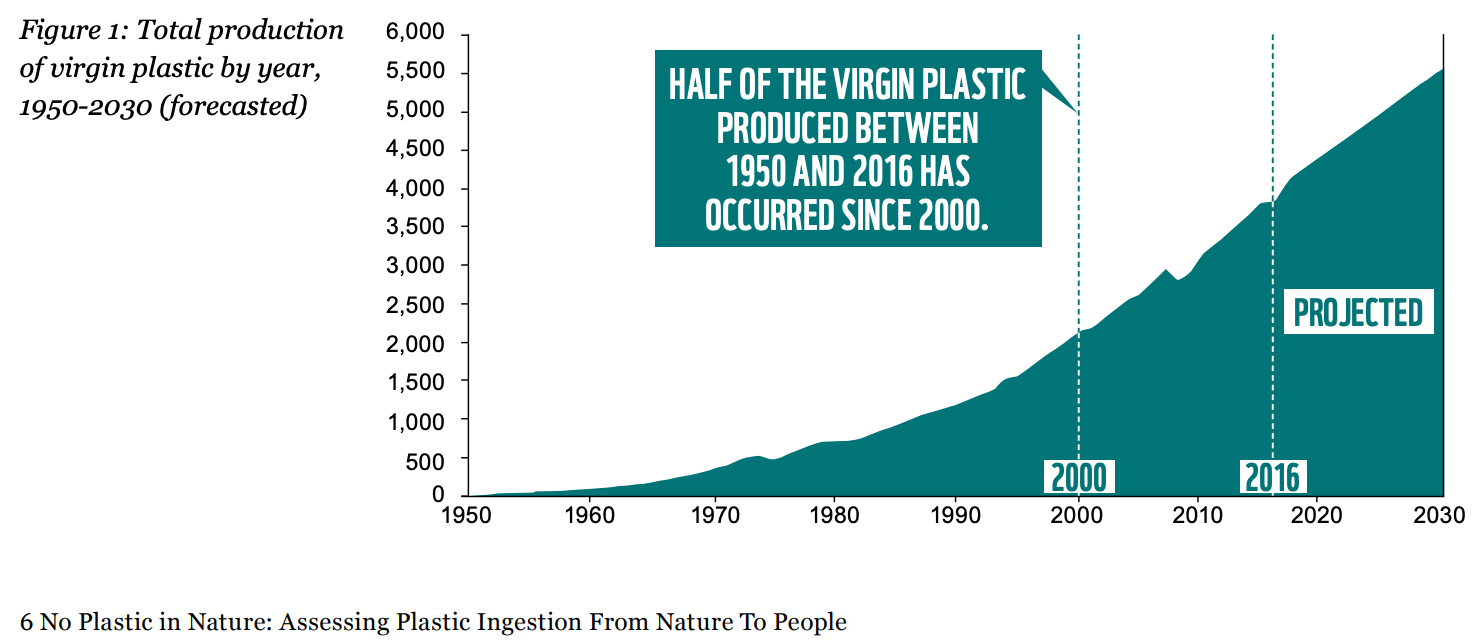
The World Wide Fund For Nature (WWF), assisted by the University of Newcastle, analyzed 52 studies and found that the average person may be ingesting approximately 5 grams of plastic every week. Plastic production has increased 200-fold since 1950 and has grown at a rate of 4% a year since 2000:
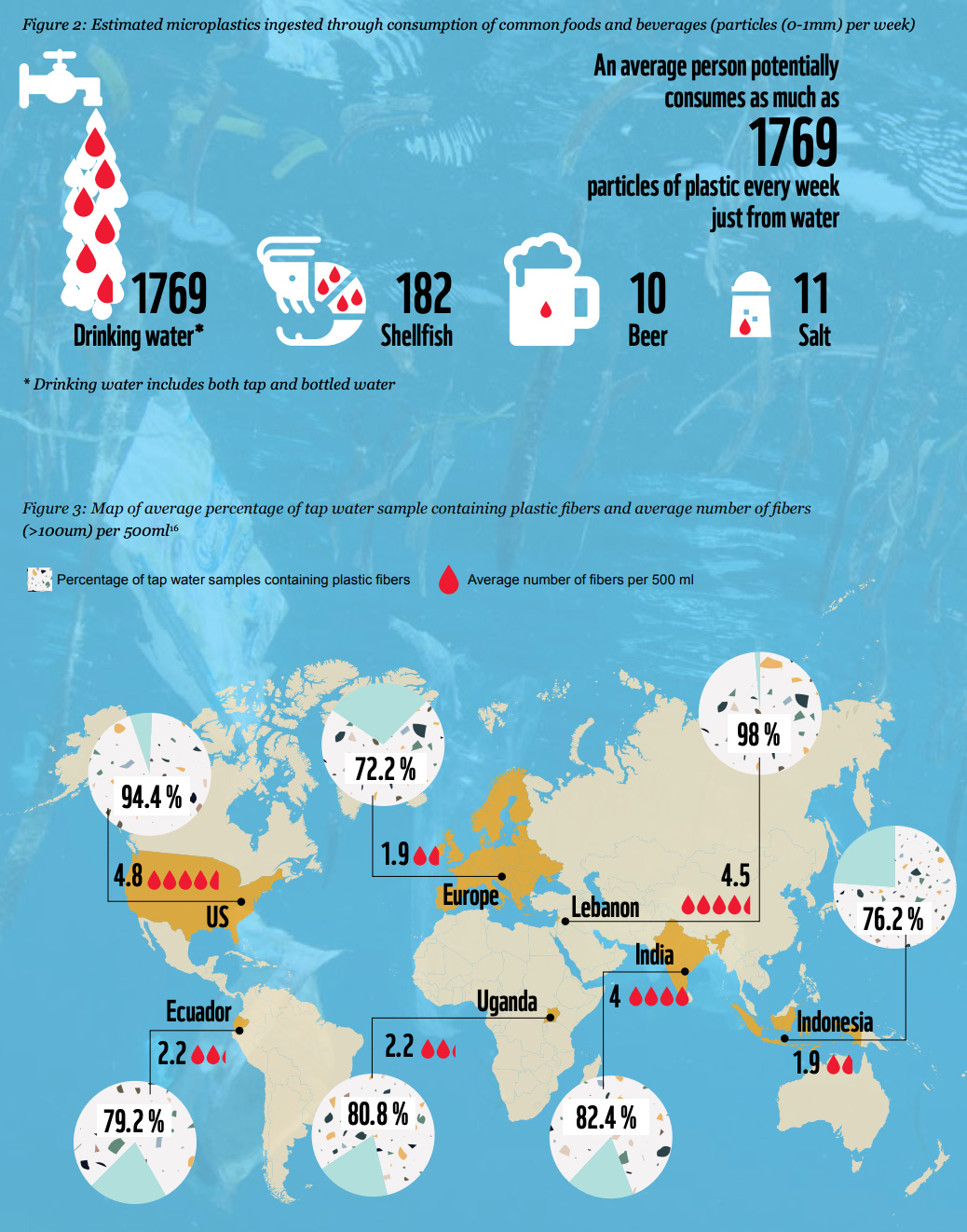
They also found that a significant portion of microplastic intake comes from both tap and bottled water. Concerningly, 94.4% of tap water in the US contains plastic fibers. Shellfish are another abundant source of plastic due to plastic polluted oceans. Inhalation of indoor air containing microplastics from synthetic textiles represent a another source of plastic intake.
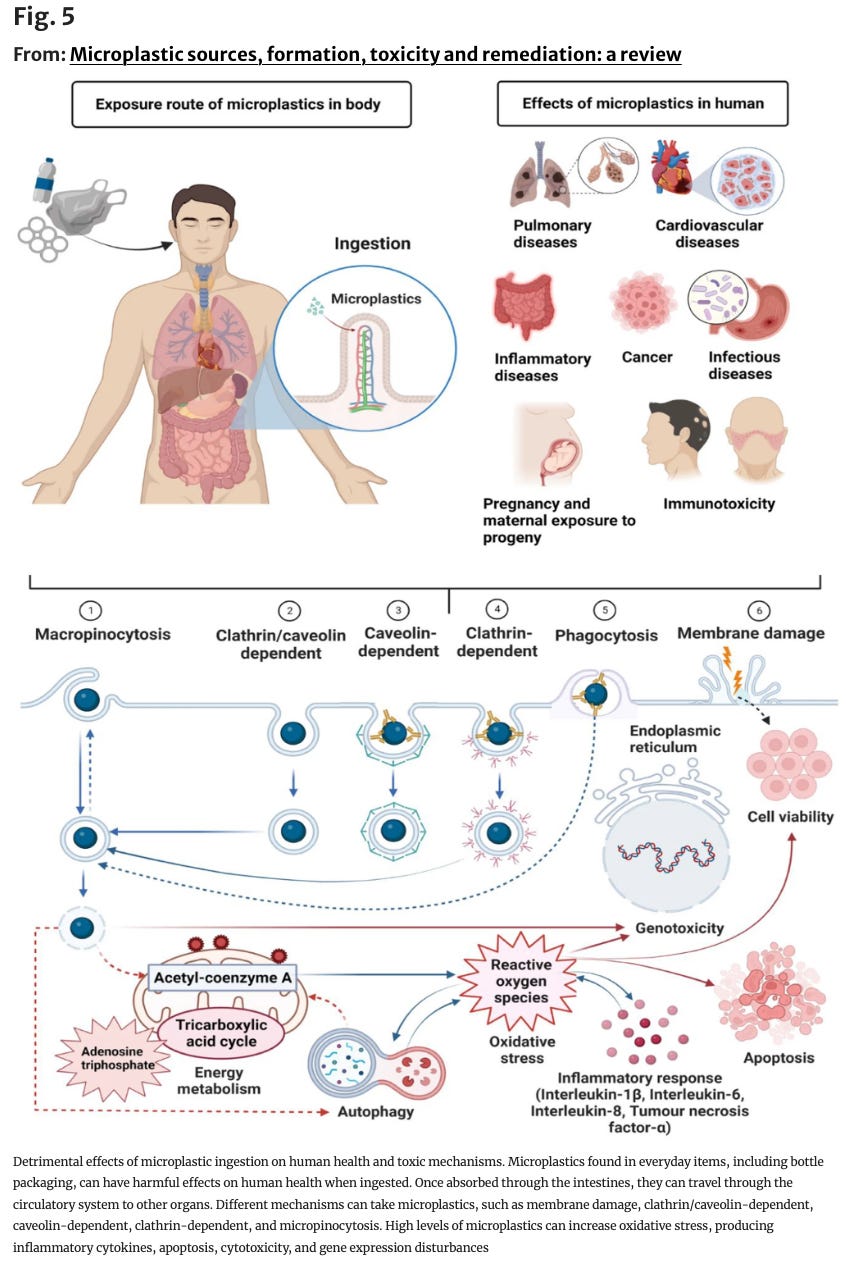
Microplastics may cause damage to various organ systems in the humans, including the digestive, respiratory, cardiovascular, endocrine, reproductive, and immune systems:
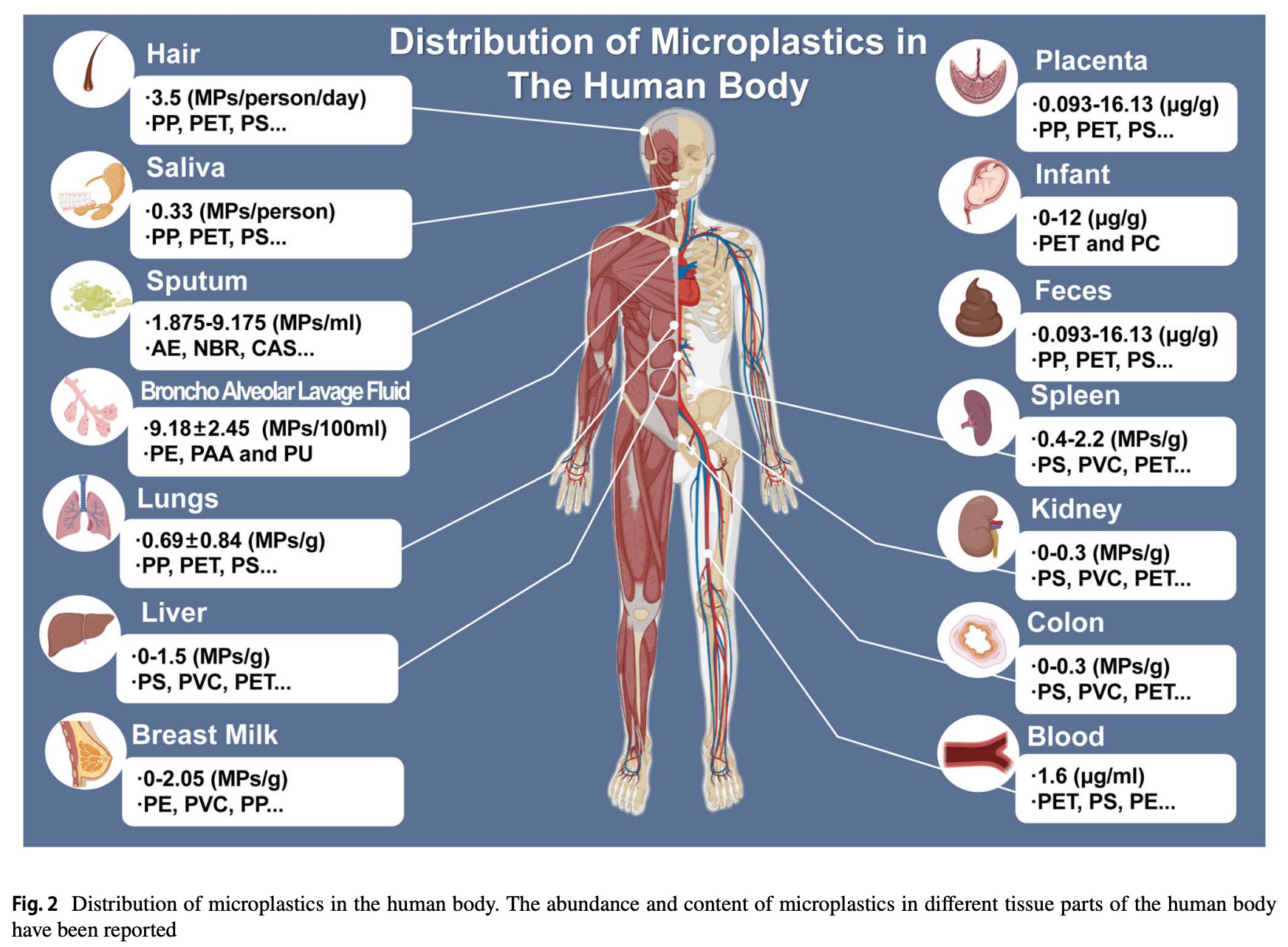
Microplastics have been found in nearly all organ systems in humans, including but not limited to blood, breast milk, the placenta, testicles, hearts, livers, kidneys, and brains. Hu et al found microplastics in 100% of human and canine study subject’s testicles (n = 47 canine testes, 23 human testes). Campen et al found that 24 human brain samples were 0.5% plastic by weight:

Marfella et al found microplastics in the carotid artery plague of 150 patients. Electron microscopy showed jagged-edged foreign particles among plaque macrophages. Radiographic examination showed that some of these particles included chlorine. The authors concluded that, “patients with carotid artery plaque in which microplastics were detected had a higher risk of a composite of myocardial infarction, stroke, or death from any cause at 34 months of follow-up than those in whom MNPs were not detected.”:

Yang et al summarized the biodistribution of microplastics in humans, and found that the humans ingest microplastics most through inhalation, followed by drinking water and diet (Note - this study was conducted before data on brain/heart biodistribution was published):
These data indicate that microplastics could pose a significant threat to human health. Their widespread distribution in the environment and inside humans, coupled with their toxicity, raises some concerns. There is an urgent need to accelerate the development of technologies and pharmaceutical interventions that can safely and effectively eliminate microplastics from both the environment and the human body.
Until then, we can boil and filter the water we consume, which has been shown to remove up to 80% of microplastics, offering a simple way to reduce exposure.
Nicolas Hulscher, MPH
Epidemiologist and Foundation Administrator, McCullough Foundation
www.mcculloughfnd.org
Please consider following the McCullough Foundation and Nicolas Hulscher on X (formerly Twitter) for further content.
Thank you for this heads up Nicholas...you are the first to raise the alarm to my knowledge...as far as the issue applies to me, no one else has bothered. This is really serious, and explains why so many people seem to be cheap plastic in their understanding over the last four Covid fraud years. The emotional state of the jabbed zombies seems to be styrene instead of serene. Just sayin'.
So if true, would this mean that corpses will not decay as quickly because they will be partially plastic?