


By Peter A. McCullough, MD, MPH
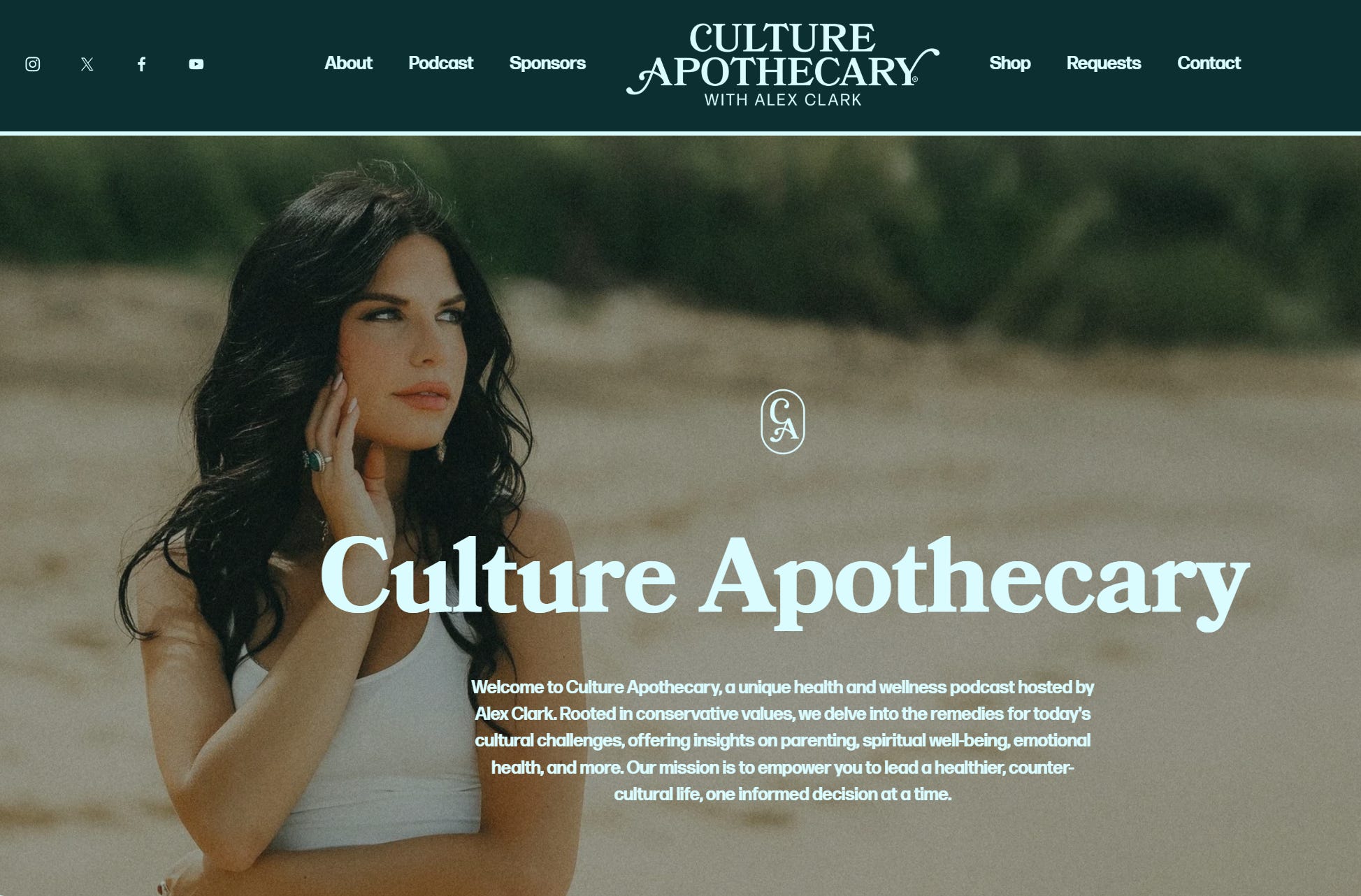
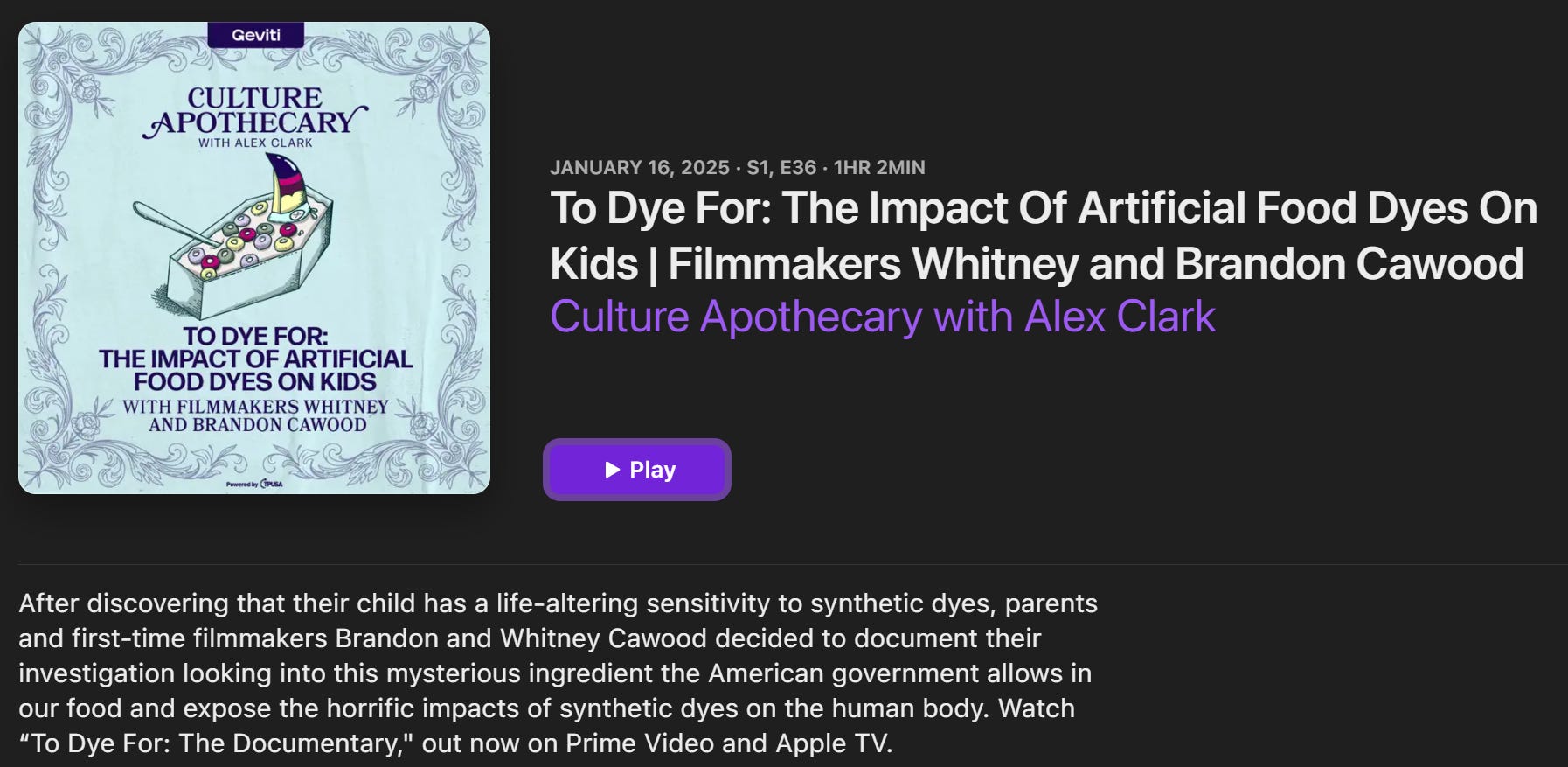
I am preparing to go on the Culture Apothecary Podcast with super influencer Alex Clark a notable MAHA food dye activist. I wondered if these concerns extended to those who have marked themselves with tattoos. About 32% of U.S. adults report having a tattoo, according to a nationally representative Pew Research Center survey conducted in July 2023.
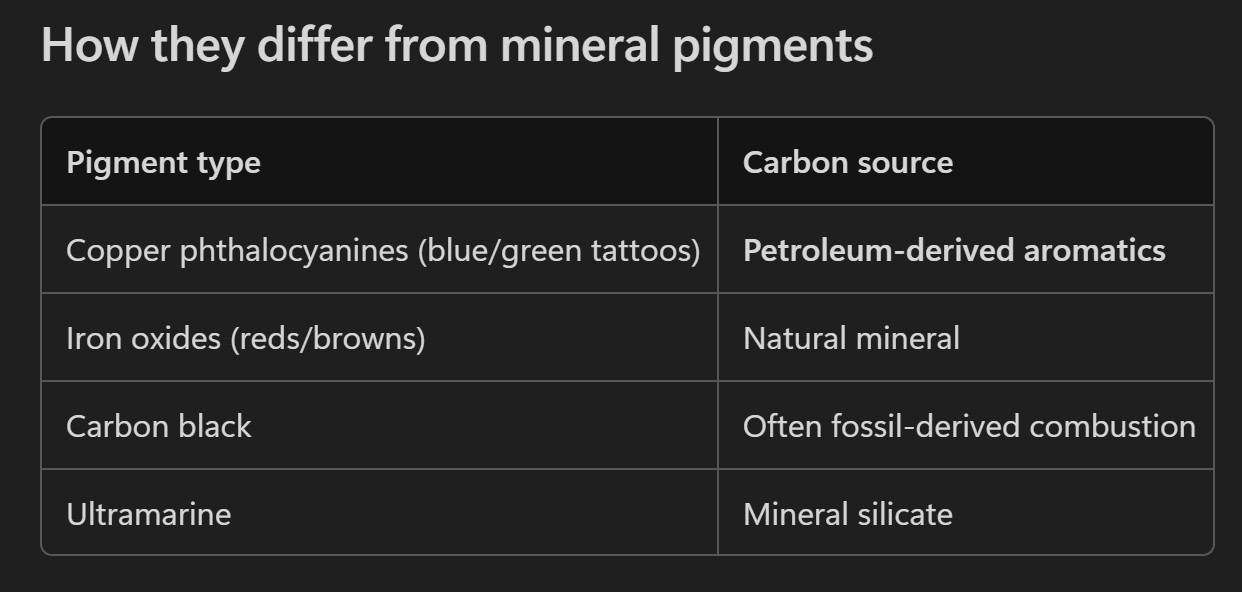
The most common blue–green (turquoise/teal) tattoo inks are based on copper phthalocyanine pigments—specifically Pigment Blue 15 (PB15) and its chlorinated green variants such as Pigment Green 7 (PG7). Their chemical origin is entirely synthetic, developed originally from petroleum for the industrial paint, dye, and plastics industries, not for use in skin. [en.wikipedia.org], [pmc.ncbi.nlm.nih.gov]
The pigment used: copper phthalocyanines
1. What pigment is most common?
Scientific analyses of commercial tattoo inks consistently identify:
Pigment Blue 15 (PB15; copper phthalocyanine) → deep blue to blue‑green
Pigment Green 7 (PG7; hexadeca chloro copper phthalocyanine) → emerald/teal green
Closely related green variants (e.g., PG36) may also appear, but PG7 and PB15 dominate historically
These pigments are the most prevalent blue and green colorants in tattooing worldwide due to their extreme light‑fastness, color strength, and chemical stability. [pmc.ncbi.nlm.nih.gov], [pubs.rsc.org]
Chemical origin
2. What is copper phthalocyanine?
Copper phthalocyanine is a synthetic macrocyclic aromatic compound formed by reacting:
Phthalic anhydride
Urea
Copper salts
High heat and ammonia
The result is a copper‑centered nitrogen‑rich ring system (similar in structure to porphyrins like hemoglobin—but fully artificial). The general chemical formula for PB15 is:
C₃₂H₁₆CuN₈
3. Why these pigments dominate
Copper phthalocyanines were first commercialized from petroleum in the 1930s for:
Industrial paints
Printing inks
Automotive coatings
Plastics and textiles
They were later adopted by tattoo‑ink manufacturers because they are:
Extremely light‑stable
Chemically resistant to breakdown
Highly saturated
Inexpensive at scale
Critically, these pigments were never originally designed for implantation into human tissue; their adoption into tattooing was an industrial reuse decision. [cen.acs.org] I wonder if RFK thought this through before he approved the release of his face with an AI Mike Tyson Tattoo.

Blue vs green chemistry difference
Regulatory and safety context (brief, factual)
PB15 and PG7 have been restricted or banned in some EU regulations for tattoo inks under REACH due to concerns about degradation products and long‑term exposure. [pmc.ncbi.nlm.nih.gov]
Studies consistently find these pigments in inks even when labels claim alternatives. [art.torvergata.it]
Fragmentation during laser tattoo removal can produce chlorinated aromatic byproducts. [link.springer.com]

Bottom line
✅ Most common blue‑green tattoo ink pigment: Copper phthalocyanine
✅ Chemical origin: Fully synthetic industrial dye developed in the 20th century from petroleum
✅ Not mineral, botanical, or naturally occurring
✅ Originally designed for paints and plastics—not skin
While I am on board with the “go natural” theme of MAHA I do think the movement has to address the embarrassing and permanent paradoxical situation of being averse to petroleum food dyes while sporting tattoo ink. To be safe I asked AI about Ms Clark.
Alex Clark, host of Culture Apothecary and a Turning Point USA media personality, is frequently photographed in professional and public settings (speaking events, studio shoots, media interviews) with no visible tattoos on commonly exposed areas such as her arms, shoulders, legs, or hands. This is consistent across major outlets and image sources including Fox News, AP/Getty images, and her official podcast and website imagery. [foxnews.com], [dailysignal.com], [alamy.com]
Her biographical profiles (Wikipedia, Turning Point USA contributor page, official website) do not mention tattoos, which are typically noted when they are publicly visible or culturally relevant.
Please subscribe to FOCAL POINTS as a paying ($5 monthly) or founder member so we can continue to bring you the truth. Alter AI may be used to assist in searches, synthesis, and review.
Peter A. McCullough, MD, MPH
President, McCullough Foundation
FOCAL POINTS has partnered with Patriot Mobile to defend your medical freedom. Join Patriot Mobile today!

The skin is a first-line bodily defense. Most who get caught up in the tattoo fad aren't thinking about what it may mean to their health in years to come. It is a glaringly obvious "mark" of the knowledge deficit our country is suffering.
Thank you for covering this topic, Dr. McCullough.