For decades, scientists have debated what drives the relentless rise in autism. Some have claimed it’s simply due to “increased screening” while others insist vaccines play no role whatsoever. Thousands of studies have explored genetic, environmental, and perinatal factors—but very few have ever evaluated vaccine and non-vaccine determinants together within a unified analytical framework.
Now, our peer-reviewed study titled Determinants of Autism Spectrum Disorder, officially published in the Journal of Independent Medicine, provides one of the most comprehensive syntheses on the possible causes of autism to date.
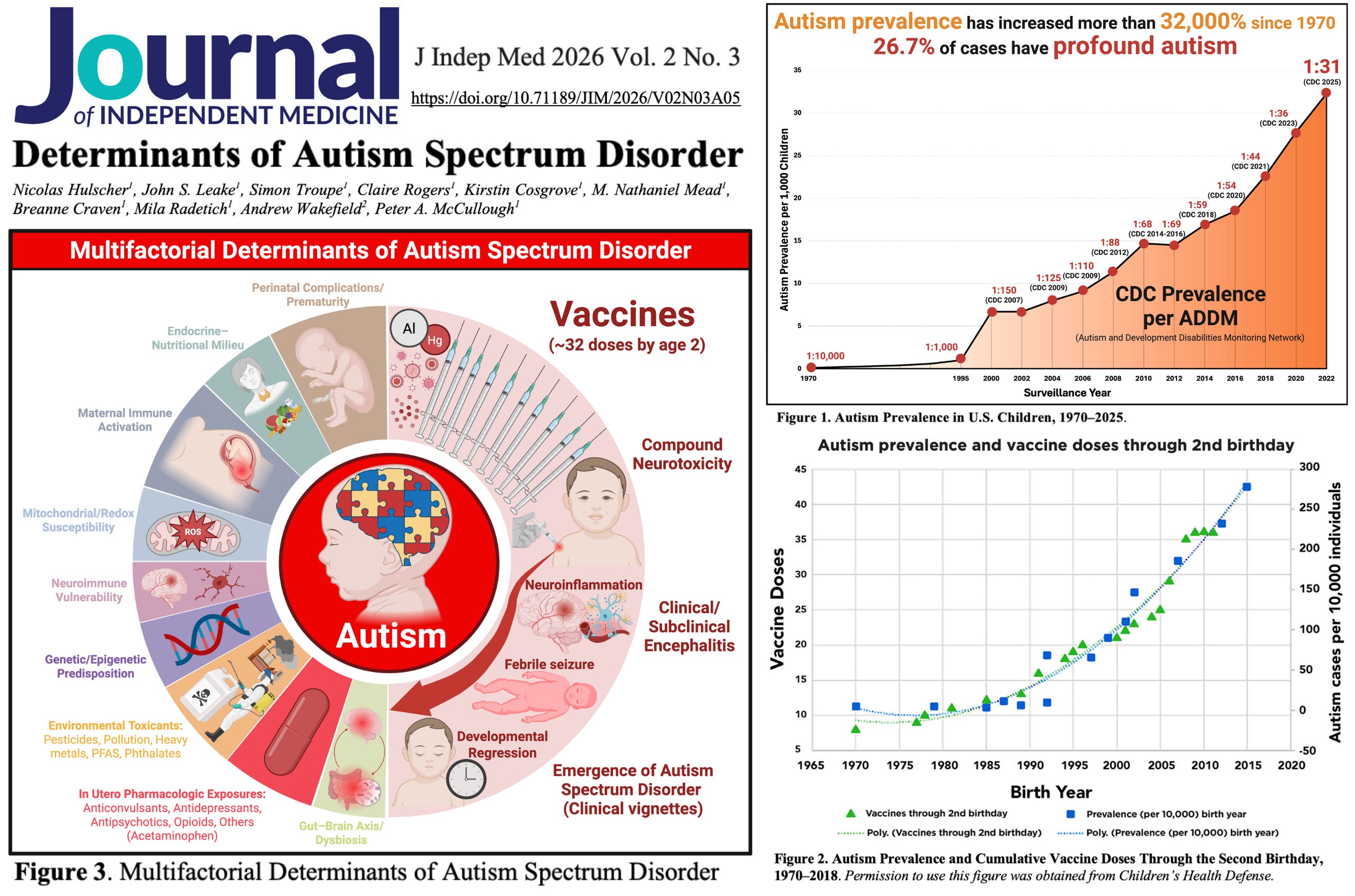
Most importantly, by systematically evaluating all known autism risk factors side by side, we found that combination and early-timed routine childhood vaccination represents a significant modifiable risk factor for autism within a broader multifactorial framework. We found 79% of studies evaluating vaccines or their components (107 of 136) reported evidence consistent with a vaccine–autism link. The evidence converged across epidemiologic, clinical, mechanistic, toxicologic, and neuropathologic domains.
This publication represents a major breakthrough through the longstanding censorship imposed by the Bio-Pharmaceutical Complex on the issue of vaccination and autism. It also marks Dr. Andrew Wakefield’s major return to the peer-reviewed scientific literature after enduring decades of coordinated attacks from the vaccine cartel.
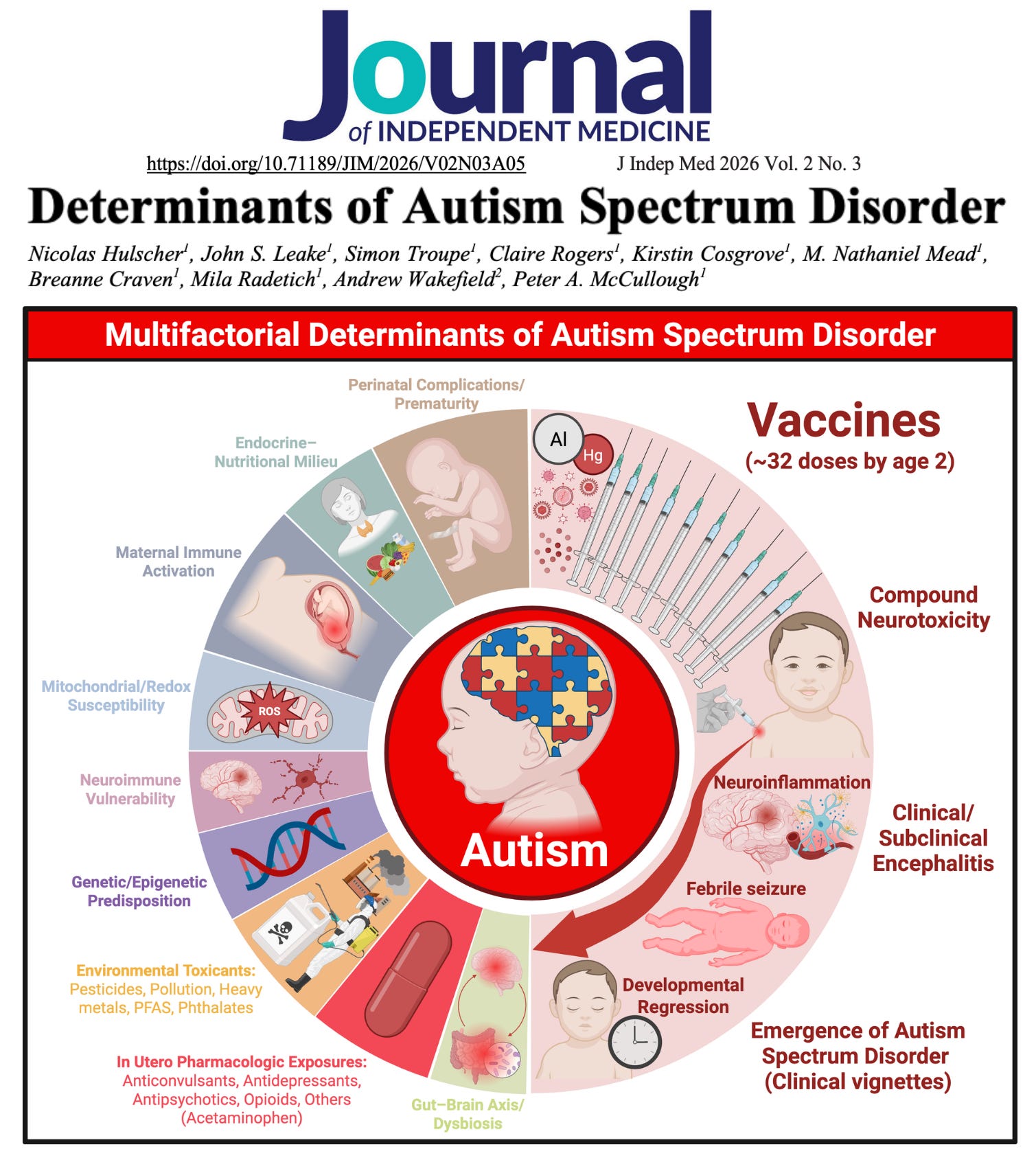
By systematically integrating more than 300 studies across epidemiologic, clinical, mechanistic, toxicologic, molecular, and neurodevelopmental domains, our analysis identified a broad range of interacting ASD risk factors beyond vaccination, including advanced parental age, premature delivery, genetic susceptibility, sibling recurrence, maternal immune activation, in utero drug exposure, environmental toxicants, metabolic dysfunction, pesticide exposure, gut-brain axis disruption, and mitochondrial abnormalities. However, no single non-vaccine factor sufficiently explains the unprecedented rise in autism prevalence observed over recent decades.
Here’s what we found as described in the Abstract:
Background: Autism spectrum disorder (ASD) now affects more than one in 31 children in the United States, with prevalence rising sharply over recent decades. ASD is recognized as a complex neurodevelopmental disorder shaped by genetic, environmental, and iatrogenic influences. Clarifying the contribution of these determinants is critical to addressing the escalating public health burden.
Methods: We comprehensively examined epidemiologic, clinical, and mechanistic studies evaluating potential ASD risk factors, assessing outcomes, exposure quantification, strength and independence of associations, temporal relationships, internal and external validity, overall cohesiveness, and biological plausibility.
Results: Key determinants of new-onset ASD before age nine include advanced parental age, premature delivery, genetic variants, sibling recurrence, maternal immune activation, in utero drug exposure, environmental toxicants, gut–brain axis disruption, and cumulative routine childhood vaccination. These factors may converge through pathways such as immune dysregulation, mitochondrial dysfunction, and neuroinflammation, which may contribute to neurodevelopmental injury in susceptible children. Of 136 studies examining childhood vaccines or their excipients, 29 found neutral risks or no association, while 107 inferred a possible link between immunization or vaccine components and ASD or other neurodevelopmental disorders (NDDs), based on findings spanning epidemiologic, clinical, mechanistic, neuropathologic, and case-report evidence of developmental regression. 12 studies comparing fully vaccinated and completely unvaccinated populations consistently showed superior overall health outcomes among the unvaccinated, including significantly lower risks of chronic disease and neuropsychiatric disorders such as ASD. The neutral association papers were undermined by absence of a genuinely unvaccinated control group, registry misclassification, ecological confounding, and averaged estimates that obscure effects within vulnerable subgroups. We observed strong, consistent increases in cumulative vaccine exposure during early childhood and the reported prevalence of autism across successive birth cohorts. To date, no study has evaluated the safety of the entire cumulative pediatric vaccine schedule for neurodevelopmental outcomes through age 9 or 18 years.
Conclusion: The totality of evidence supports a multifactorial model of ASD in which genetic predisposition, neuroimmune biology, environmental toxicants, perinatal stressors, and iatrogenic exposures converge to produce the phenotype of a post-encephalitic state. Combination and early-timed routine childhood vaccination represents a significant modifiable risk factor for ASD within a broader multifactorial framework, supported by convergent mechanistic, clinical, and epidemiologic findings, and characterized by intensified use, the clustering of multiple doses during critical neurodevelopmental windows, and the lack of research on the cumulative safety of the full pediatric schedule. As ASD prevalence continues to rise at an unprecedented pace, clarifying the risks associated with cumulative vaccine dosing and timing remains an urgent public health priority.
As autism prevalence continues to rise at an unprecedented pace, clarifying the full neurodevelopmental impact of the modern pediatric vaccine schedule is no longer optional—it is a scientific and moral imperative.
If you would like to help us expand this vital work, please consider supporting future studies through the McCullough Foundation. Our next step is to assemble a large case series of children who developmentally regressed into autism shortly following vaccination. Such a study could provide some of the strongest clinical evidence to date to help clarify biological plausibility and potential causality in real-world patients.
Revamping prenatal care protocols is a priority. Second, mother's milk should be dominate for the new born and will not happen if Mom is deficient in vitamin D! 50 ng's or better. Third, early and frequent vaccine injections create the increased risk for autism. Eliminating toxic mercury and aluminum is essential. Get to it NIH! DO YOUR JOB! Vote out the congressman that work for the vaccine industry and not their constituents!




Revamping prenatal care protocols is a priority. Second, mother's milk should be dominate for the new born and will not happen if Mom is deficient in vitamin D! 50 ng's or better. Third, early and frequent vaccine injections create the increased risk for autism. Eliminating toxic mercury and aluminum is essential. Get to it NIH! DO YOUR JOB! Vote out the congressman that work for the vaccine industry and not their constituents!
All vaccines are toxic poisons and a major risk factor for illness and disease and even death.