


A newly published CDC study has found extraordinarily high rates of alpha-gal antibodies linked to meat allergies among adults living in several hard-hit U.S. states, suggesting that alpha-gal sensitization is far more widespread than previously recognized.
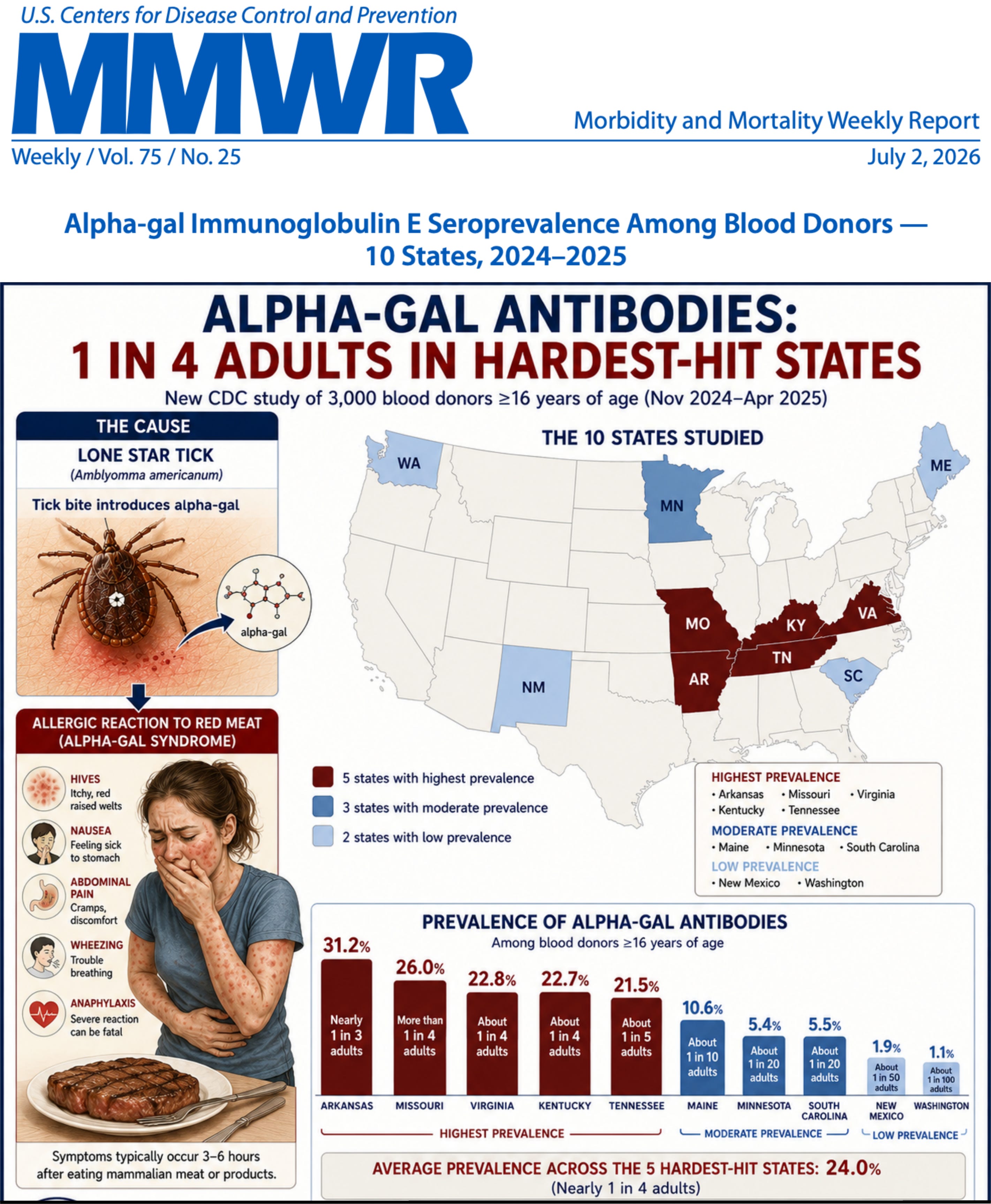
Researchers analyzed 3,000 blood samples collected from donors across 10 states between November 2024 and April 2025. Each sample was tested for alpha-gal-specific IgE antibodies, and the CDC used population-weighting methods to estimate state-level prevalence.
The results were alarming:
• Arkansas: 31.2%
• Missouri: 26.0%
• Virginia: 22.8%
• Kentucky: 22.7%
• Tennessee: 21.5%
Across these five hardest-hit states, the average prevalence reached 24.0%, meaning nearly one in four adults tested positive for alpha-gal antibodies.
While not all antibody-positive individuals have clinically diagnosed Alpha-Gal Syndrome, these findings strongly suggest that millions of Americans have already been biologically affected by alpha-gal exposure.
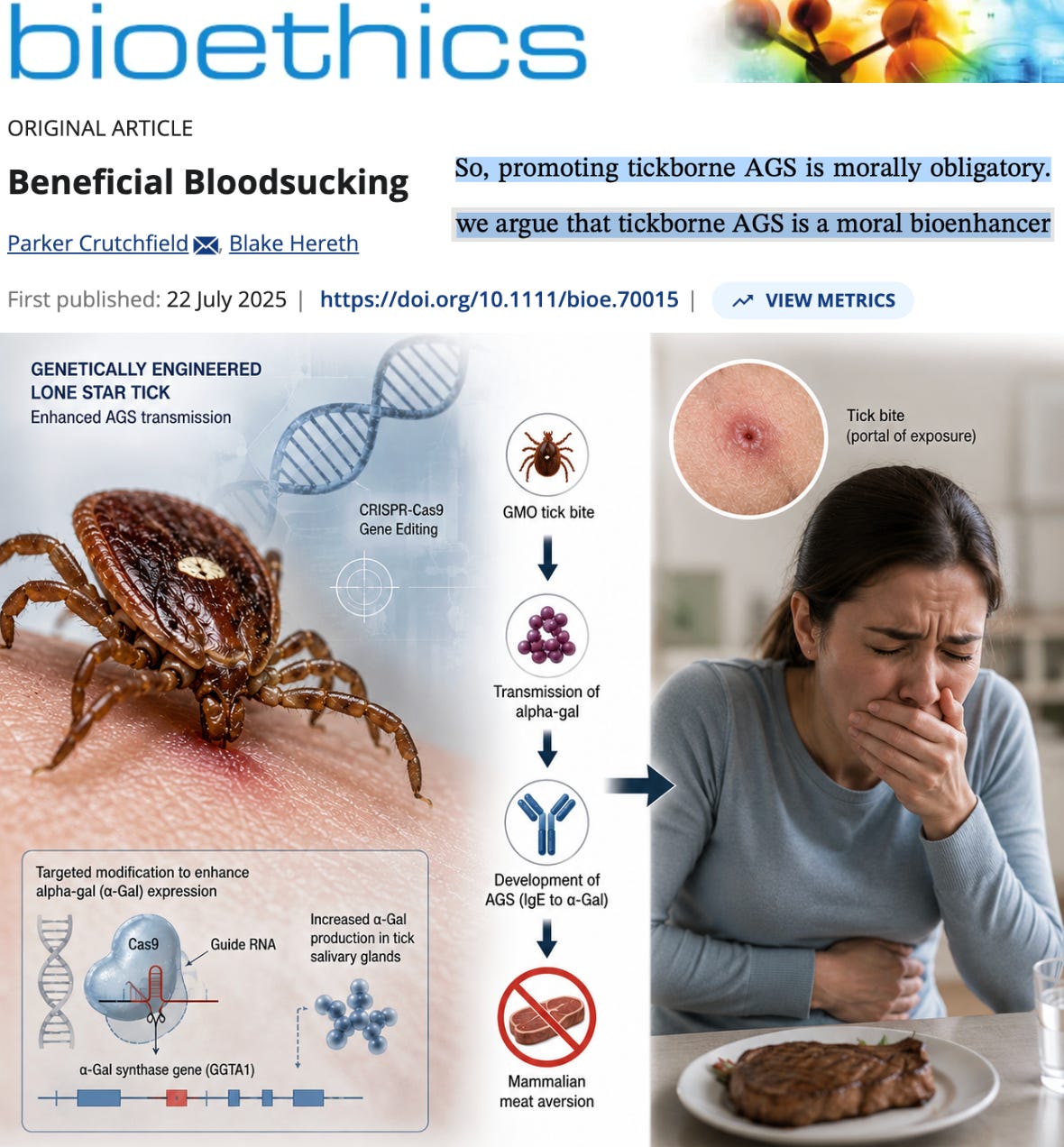
Most concerning is that this explosion in alpha-gal sensitization is occurring alongside a recent peer-reviewed paper arguing that it is “morally obligatory” to use genetically modified ticks to intentionally spread Alpha-Gal Syndrome. Given the enormous public health implications and the scale of sensitization now documented by the CDC, an immediate FBI investigation into all possible bioterrorism-related activities involving alpha-gal dissemination is warranted.

Lone-star ticks are widely recognized as a major source of alpha-gal sensitization. However, they should not automatically be assumed to be the only contributor. Another source that deserves serious attention is widespread exposure to bovine gelatin through mass vaccination programs. Vaccines such as MMR and others contain bovine-derived gelatin, and because alpha-gal is a mammalian carbohydrate associated with mammalian-derived products, the possibility that repeated exposure through widely administered vaccines contributes to sensitization can not be ruled out.
The CDC’s own data now indicate that alpha-gal sensitization likely affects millions of Americans—far more than previously recognized.
Epidemiologist and Foundation Administrator, McCullough Foundation
Support our mission: mcculloughfnd.org
Please consider following both the McCullough Foundation and my personal account on X (formerly Twitter) for further content.
Are vaccinated people giving Alpha-Gal to ticks, or are ticks giving Alpha-Gal to humans? In my experience, food allergies are much more likely to be related to vaccines than to ticks.
Since when, should the CDC be trusted for accurate information? I smell another rat.
Most are sick of the bullsh!t.