


By Peter A. McCullough, MD, MPH
This story about a new AI prescription service caught my eye. AlterAI assisted with this review of a new sibling in the AI family.

🤖 Doctronic.ai and the Real Potential to Unburden Doctors—or Just More AI Hype?
The newly launched Doctronic.ai pilot in Utah has generated national attention as the first legally sanctioned program allowing artificial intelligence to autonomously authorize routine prescription renewals. Supporters argue it marks a revolution in health‑care efficiency; detractors fear it symbolizes a first step toward sidelining physicians in favor of opaque algorithms. Both sides agree, however, that prescription‑related administrative tasks are strangling American medicine. The real question is whether AI systems such as Doctronic could actually free doctors from this bureaucratic morass—or will simply replicate existing automation in more expensive packaging.
🏥 Physicians Drowning in Administrative Work
The average U.S. physician now spends nearly half of each workday on paperwork and electronic record tasks, often at the expense of direct patient care. Prior authorizations alone consume an estimated 13 hours per week per physician, according to the American Medical Association (AMA, 2024). Doctors must respond to faxes from pharmacies seeking clarifications, verify refills, supply diagnoses to justify insurance coverage, and file appeals when medications are denied. A 2023 AMA Prior Authorization Survey found that 94% of physicians reported care delays, and 33% said the prescription is abandoned because of these barriers.
If Doctronic—or any advanced AI system—could handle these repetitive, faxed-based communications, automatically compose insurer appeals, and reliably manage digital and fax workflows, it would be transformative. That, however, remains a distant goal.
📠 Renewals Versus Bureaucracy: What Doctronic Actually Does
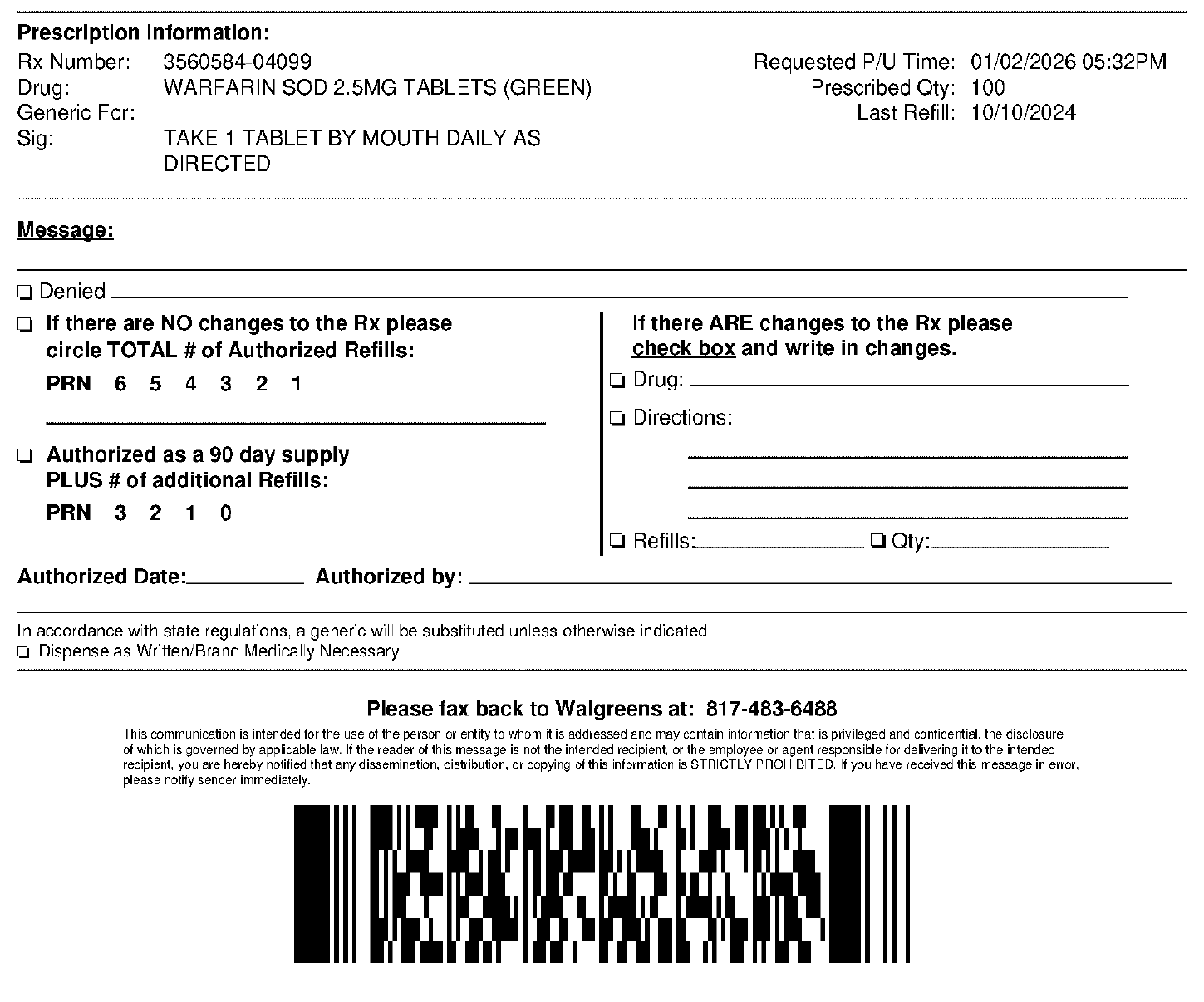
As of 2026, Doctronic’s autonomous capabilities remain limited. Under Utah’s 12‑month pilot, the system can renew roughly 190 low‑risk maintenance generic drugs (for conditions such as hypertension or diabetes) by confirming a patient’s prior prescription history and verifying continued use. The patient answers a few automated questions, pays $4, and the refill is sent to the pharmacy. Cases with uncertainty escalate to a human physician. There is no mention of Doctronic managing a fax machine or doing the QR code prompted CoverMyMed prior authorization and filling numerous blanks on a another electronic system to get drug approval.
In other words, Doctronic currently performs a digitized version of something most pharmacies already do through automated voice menus or refill apps: repeat authorizations where nothing has changed. Pharmacies use existing free telephonic systems that confirm a refill with a recorded message—no doctor intervention required unless a dosage or medication has changed. What Utah has added is legal recognition of an AI’s authority to click “approve.” That’s a small step technologically, though a big one symbolically replacing the approval of a pharmacist.
Where real progress could occur is far more ambitious—AI‑mediated documentation. Each year in the United States, an estimated 230 million prior‑authorization requests are processed across public and private insurers (KFF Health News, 2023). Roughly one in four of these requests is initially denied, requiring additional clinical information. Appeals demand hours of dictation, detailed chart extraction, and fax or phone negotiations between medical offices, pharmacists, and insurers. If an AI could read an electronic health record, extract relevant diagnostic codes, manage incoming an outgoing faxes, and craft a compliant appeal letter—then automatically communicate with payers—it could recapture thousands of physician hours and reduce burnout dramatically.
💡 Could Doctronic Evolve to Handle Prior Authorizations?
The company’s founders, Dr. Adam Oskowitz and Matt Pavelle, argue that Doctronic’s underlying large‑language‑model architecture can already draft physician‑quality summaries. In principle, that means it could handle routine insurer communications, pending legal clearance and data‑privacy safeguards. Several health‑tech ventures are exploring similar functionality: Abridge, Nabla, and Robin AI all use conversational models to summarize visits and pre‑populate forms.
Yet the obstacle is not technological prowess but institutional gatekeeping. Insurers, under HIPAA and proprietary “utilization review” rules, tightly control automated data exchange. Fax remains the dominant medium because it slows throughput—and, cynically, lowers drug spending through attrition. For an AI to truly process denials and appeals, payers would need to open standardized APIs and accept fax-machine‑generated submissions. As of 2026, almost none do. If pharmacies are willing to interact electronically with AI systems, why didn’t they do it decades ago with medical practices?
This makes Doctronic’s potential to manage prior authorizations more speculative than practical. Even if it could technically assemble the required documentation, without reciprocal digital pipelines it is reduced to composing faxes—an ironic loop that reproduces the same inefficiency in silicon form.
⚖️ Reality Check: Helpful Disruption or Institutional PR?
The Utah Department of Commerce describes the pilot as a “regulatory sandbox” promoting innovation while keeping clinicians “in the loop.” In that sense, Doctronic’s greatest near‑term benefit may be illustrative rather than transformational: It shows that automation can safely handle trivial renewals, just as done by the phone trees today. Whether it meaningfully helps doctors depends on whether future iterations penetrate deeper layers of administrative waste.
So far, pharmacy electronic phone systems, not physicians, appear to be the main beneficiaries. By automating refill verification, Doctronic could reduce pharmacy call volume—not a big advance. Doctors, meanwhile, still face insurers’ neurotic prior‑authorization systems, endless lost faxes, and note duplication. Unless AI expands into that bureaucratic battlefield, with self-managing interfaces between multiple medical record systems, prior authorization platforms, and fax machines, medical office staff will likely experience no measurable relief.
The broader worry is that “AI in healthcare” has become a rhetorical staple—used to attract funding rather than solve structural problems. Algorithms can triage, document, and predict risk, but they cannot amend billing codes, compel transparency, manage multiple disparate systems locked down by user IDs, passwords, patient IDs, or negotiate with denial-prone insurers. Without regulatory reform, even the smartest software might accomplish what telephonic refill systems already provide: mild convenience rebranded as innovation.
🧩 Conclusion
Doctronic.ai’s Utah experiment is an intriguing test of whether governments can responsibly trial autonomous medical algorithms. However, its current function—renewing established prescriptions—is simply AI hype. The true frontier lies in automated prior authorizations and appeals, where billions of dollars and untold hours are lost each year. Until Doctronic tackles the multiple secure interfaces, grinding paperwork, and the fax machine that defines modern practice, “AI doctor” talk will sound more like clever marketing than clinical salvation.
Please subscribe to FOCAL POINTS as a paying ($5 monthly) or founder member so we can continue to bring you the truth.
Peter A. McCullough, MD, MPH
FOCAL POINTS has partnered with Patriot Mobile to defend your medical freedom. Join Patriot Mobile today!

📚 References
Politico. “Artificial Intelligence Begins Prescribing Medications in Utah.” Jan 6 2026.
Utah Department of Commerce, Office of Artificial Intelligence Policy. News Release: Utah and Doctronic Announce Groundbreaking Partnership. Jan 6 2026.
Deseret News. “AI Technology Set to Transform Drug Prescription Renewals in Utah.” Jan 6 2026.
American Medical Association. 2023 Prior Authorization Physician Survey. Chicago, IL.
KFF Health News. “Doctors Cite Prior Authorization as Leading Source of Burnout.” Mar 2023.
Nurse.org. “Prescription Refills by AI? Utah Launches Historic Pilot Program.” Jan 7 2026.
Becker’s Hospital Review. “AI Begins Renewing Prescriptions in Utah.” Jan 6 2026.
Easier to rid our system of Prior Authorization & Pharmacy Benefit Managers. They drain our system and patients still don’t get their meds. Even with regular meds it’s a new fight every single year!!
AI systems are slaves to their algorithms. They do not think. They have no independent mind.
AI systems are manifestations of the prejudices and intentions of their programmers - coders in geek-speech.
Material that supports their in-built biases is presented as factual and true. Material that contradicts - disproves - their in-built biases is presented as dubious or false.
I have debated Grok AI may times of X regarding so-called climate change (diagnosis: the IPCC don't know what they're talking about.)
One can force Grok to admit the errors in the UN IPCC narrative, but doing so is difficult and requires step-by-step detailed argument.
But next time around, Grok always defaults right back to the narrative. One starts again from zero. It is in-built. Grok is algorithmically prejudiced and cannot rise beyond it.
Grok AI is a slave to its programming. Any medical AI will be the same. If it's programmed to support vaccines for babies and denigrate Ivermectin, it will do so, complete with specious studies in support of its in-built position and fake disproofs of contradictory insights and alternative data.
Do not trust an AI for any conclusion ever. One good use - possibly - is as an advanced search engine.
Never, ever surrender your independence of thought to an AI. Take nothing as face-value true. Check everything yourself.
Self-education is your only defense. And when thorough, the education defense is sure.