


That Iran has in its possession sophisticated Surface-to-Air Missiles (SAM) was confirmed on around March 19, 2026, when the latest generation of US fighter—an F-35A Lightning II—was damaged and forced to perform an emergency landing. Note that the F-35 program is the most expensive weapon system in history, is projected to cost $2.1 trillion over its 94-year lifespan (through 2088) — four times as much as the annual gross national product of Iran.
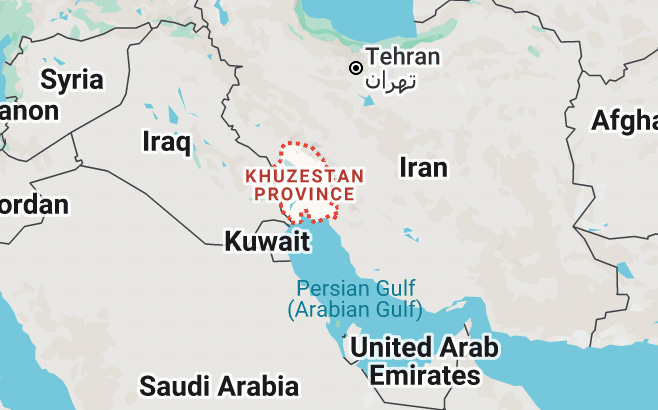
Now comes the news that an older generation—but still extremely impressive—F-15 has been shot down, apparently over the Khuzestan province of Iran.
The pilot has purportedly been rescued; the weapons system officer is apparently still missing. I hope he is okay and is soon rescued.
His story naturally brings to mind that of John McCain, whose plane (an A-4E Skyhawk) was shot down on October 26, 1967, over Hanoi during the Vietnam War (1965-1973) which ended with the US achieving none of its political objectives.
McCain was a prisoner of war (POW) in North Vietnam for approximately five and a half years. Captured on October 26, 1967, he was held in various prison camps, including the "Hanoi Hilton," until his release on March 14, 1973.
Shortly after President Trump announced his first candidacy back in 2015, he and McCain exchanged public barbs, at which point Trump said “He's a war hero because he was captured. I like people that weren't captured.”
Tough to say what the Iranian regime will do if they capture the American airman. I suspect they will proclaim that they are treating him humanely. If American airmen carry out orders to bomb civilian infrastructure—as Trump has threatened to do—they will be at higher risk of being subjected to violence from hostile civilians if they successfully eject and and encounter civilians on the ground.
They will also be at risk of being tried for committing war crimes. Note that the Geneva Convention defines the intentional bombing of civilian infrastructure as a war crime, punishable by up to life imprisonment.
I wonder if the Trump administration is perhaps preparing for a ground invasion from Iraq and Kuwait into the Khuzestan province. Its terrain —a flat-to-rolling alluvial plain (an extension of the Mesopotamian basin)—makes it the most accessible part of western Iran for mechanized forces.
Think tanks and war gamers—i.e., people funded by lobbyists and defense contractors—have been toying around with a “Khuzestan Gambit” for many years. Unlike the Zagros Mountains that shield most of Iran’s interior, Khuzestan allows potential advances from bases in Kuwait or southern Iraq toward cities like Ahvaz and Abadan without coastal major mountain barriers.
In 1980, Iraq invaded Iran (with heavy US support, including chemical and biological weapons) through this province because its relatively flat ground was relatively favorable for armored operations.
Recent commentary has suggested scenarios of advancing from Kuwait/Iraq toward Abadan–Ahvaz, then potentially along the coast toward Bushehr or Kharg Island.
However, invading U.S. forces would face the following obstacles.
Marshlands and flooding: Parts of Khuzestan are swampy, which can bog down heavy armor and logistics—similar to challenges in southern Iraq.
Proximity to defenses: Iran has long fortified the southwest, with IRGC forces, missile sites, and rapid-response capabilities. Any incursion would face immediate asymmetric threats (drones, missiles, mines).
Supply line vulnerabilities: Advances would depend on vulnerable routes through potentially hostile or unstable Iraqi territory, where Iran-aligned militias (e.g., Popular Mobilization Forces) could harass rear areas. Note that harassment of US supply lines was a constant headache during the Iraq war (2003-2011).
Broader terrain trap: Even if Khuzestan were secured, pushing eastward or northward quickly encounters the Zagros folds, limiting operations to coastal or resource-focused operation rather than a deep thrust into Iranian territory.
Iran’s asymmetrical missile and drone capability still appears quite strong—as evidenced by shooting down an F-15—contrary to President Trump’s claims that Iran’s capability has been totally degraded.
Iranian officials and analysts have stated their readiness to inflict heavy casualties in the province, turning it into a quagmire reminiscent of the Iran-Iraq War.
Recent U.S. discussions (as of early 2026) appear focused more on limited objectives—i.e, raids on Kharg Island, securing Strait of Hormuz access—rather than a full invasion starting from Khuzestan. I fear that any operation along these lines will expose US soldiers and Marines to extreme danger.
I’ve still not heard anything about Israeli troops preparing to participate in a possible ground operation. If such an operation proceeds, I expect it will be U.S. troops who do the fighting and dying.
Iran’s geography (mountains, deserts, and vast interior) favors defenders in a ground war, making a large-scale U.S. invasion extremely difficult and costly.
The Iranian “people” are not fighting for the radical Muslim regime! Get your facts straight !!
And… We can “thank” BO for empowering Iran with the pallets of cash President that helped them along this path to world terror leader… Get behind our President and support what it takes to win this thing quickly and we won’t have to endure the whiners moaning about the “quagmire” brought on by anti American cowards dragging us down at every political turn.