


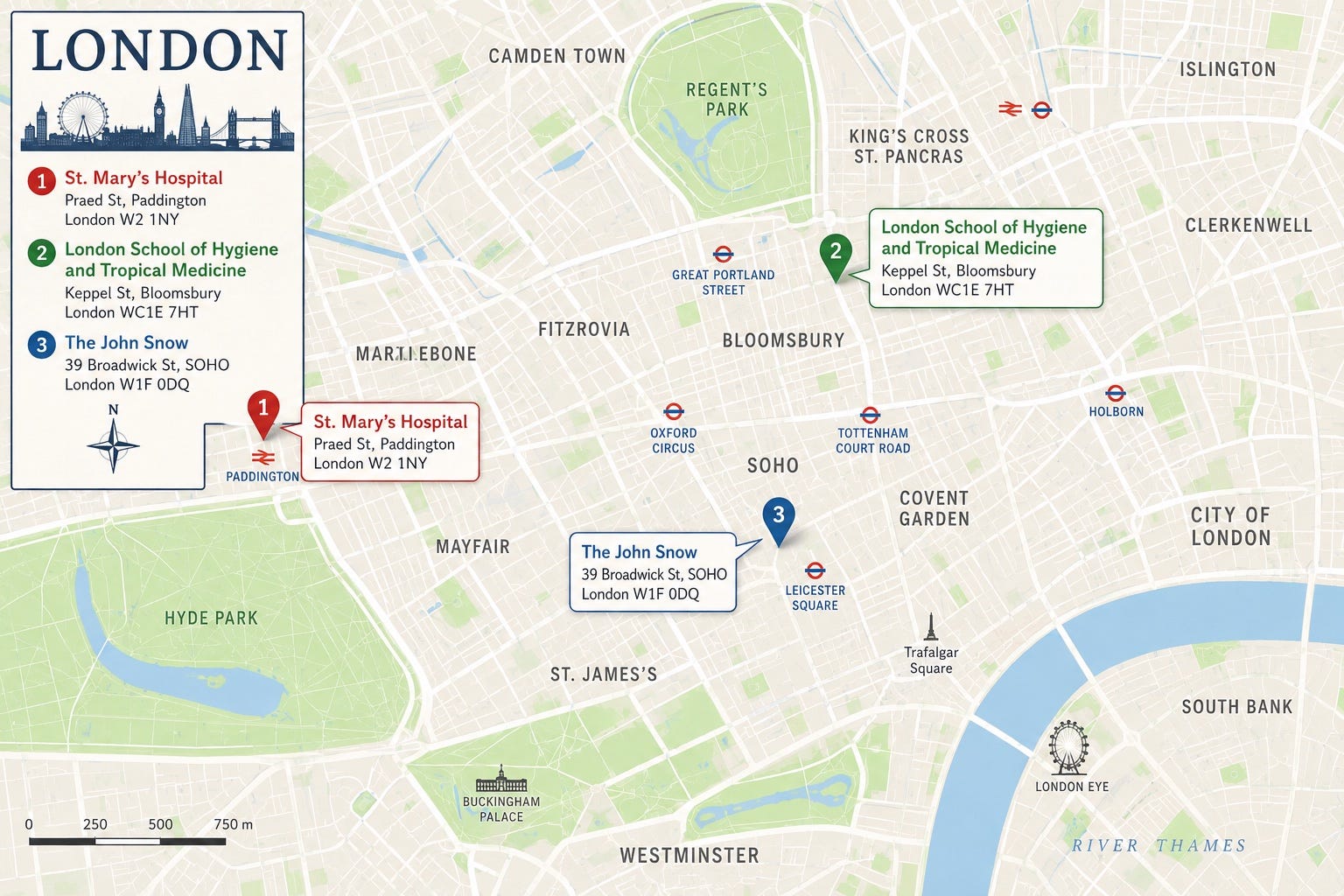
I just went for a long walk in London to visit a few key places in the advancement of medical knowledge. Chat GPT drew the following map for me.
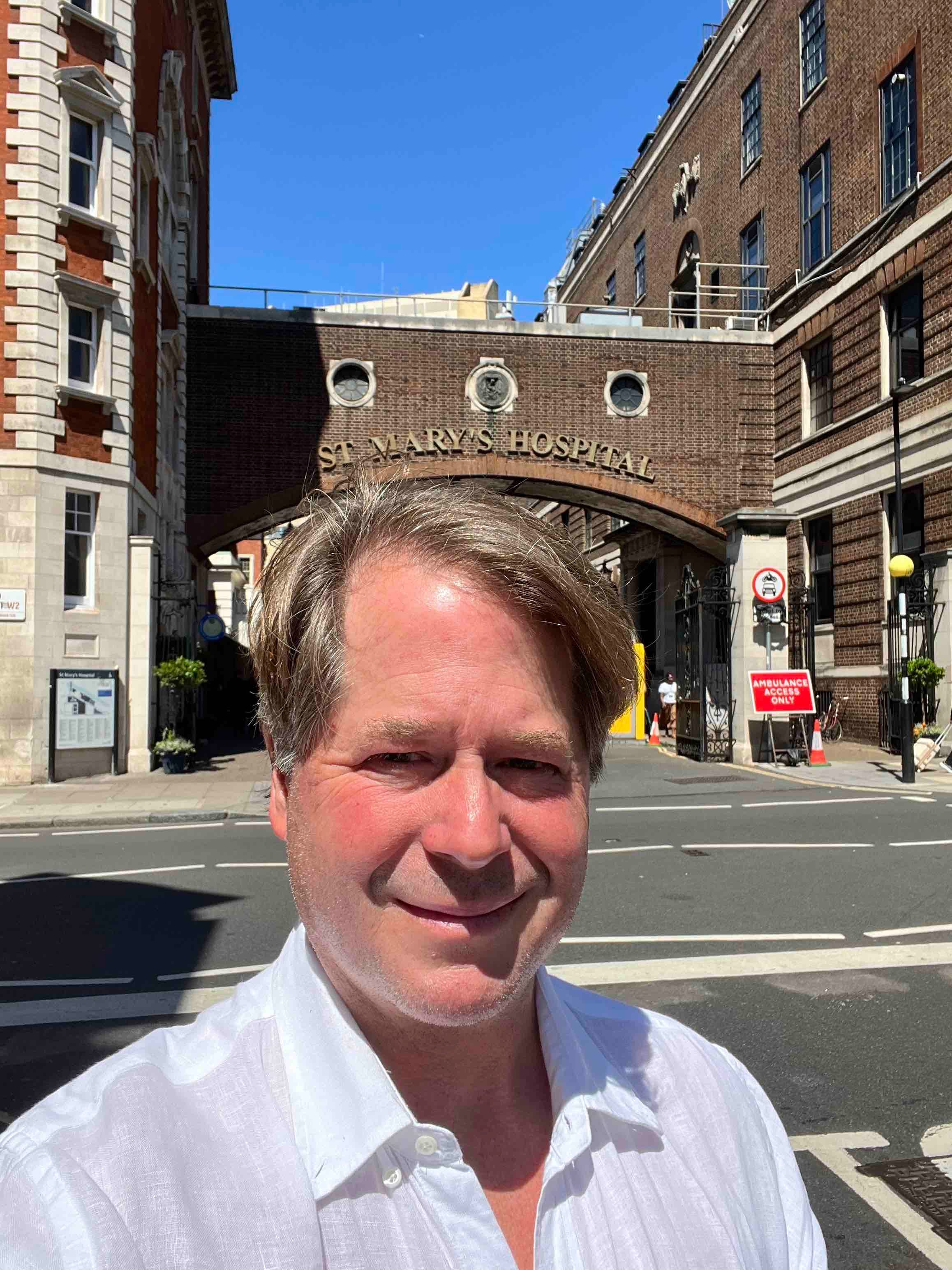
I started at St. Mary’s Hospital. On Sept. 3, 1928, a hospital bacteriologist named Alexander Fleming returned from vacation to his second floor laboratory (to my left in the photo below) and examined a petri dish on which Staphylococcus bacteria was growing. Quickly Fleming observed that the dish had been contaminated with Penicillium notatum mold—probably from the first floor laboratory, just below his lab — in which Penicillium notatum was being studied to determine if it caused asthma.
Fleming observed that, while much of the dish was colonized with Staphylococcus, none grew in a conspicuously wide margin around the mold. He deduced that the mold must be secreting a substance that killed the bacteria. He called this substance “penicillin,” but he was unable to isolate it in a stable extract.
Fleming was nevertheless confident that his observation had enormous potential. The following year he published a paper about it in the British Journal of Experimental Pathology. Within the medical community, the paper was largely received with indifference and skepticism. Many perceived his “penicillin” to be a laboratory curiosity of little practical use.
It was only about a decade later that an Oxford research team, led by Howard Florey, Norman Heatley and Ernst Boris Chain developed a method to isolate and concentrate it. They then conducted animal and early human trials that demonstrated its ability to treat severe infections with relatively low toxicity.
From St. Mary’s I wandered over to the London School of Hygiene and Tropical Medicine, where Sir Austin Bradford Hill was a professor when he and his colleague, Richard Doll, published their landmark 1950 case-control study in the British Medical Journal linking cigarette smoking to lung cancer. Their paper was met with widespread skepticism, and the UK Department of Health initially rejected its findings to prevent mass panic.
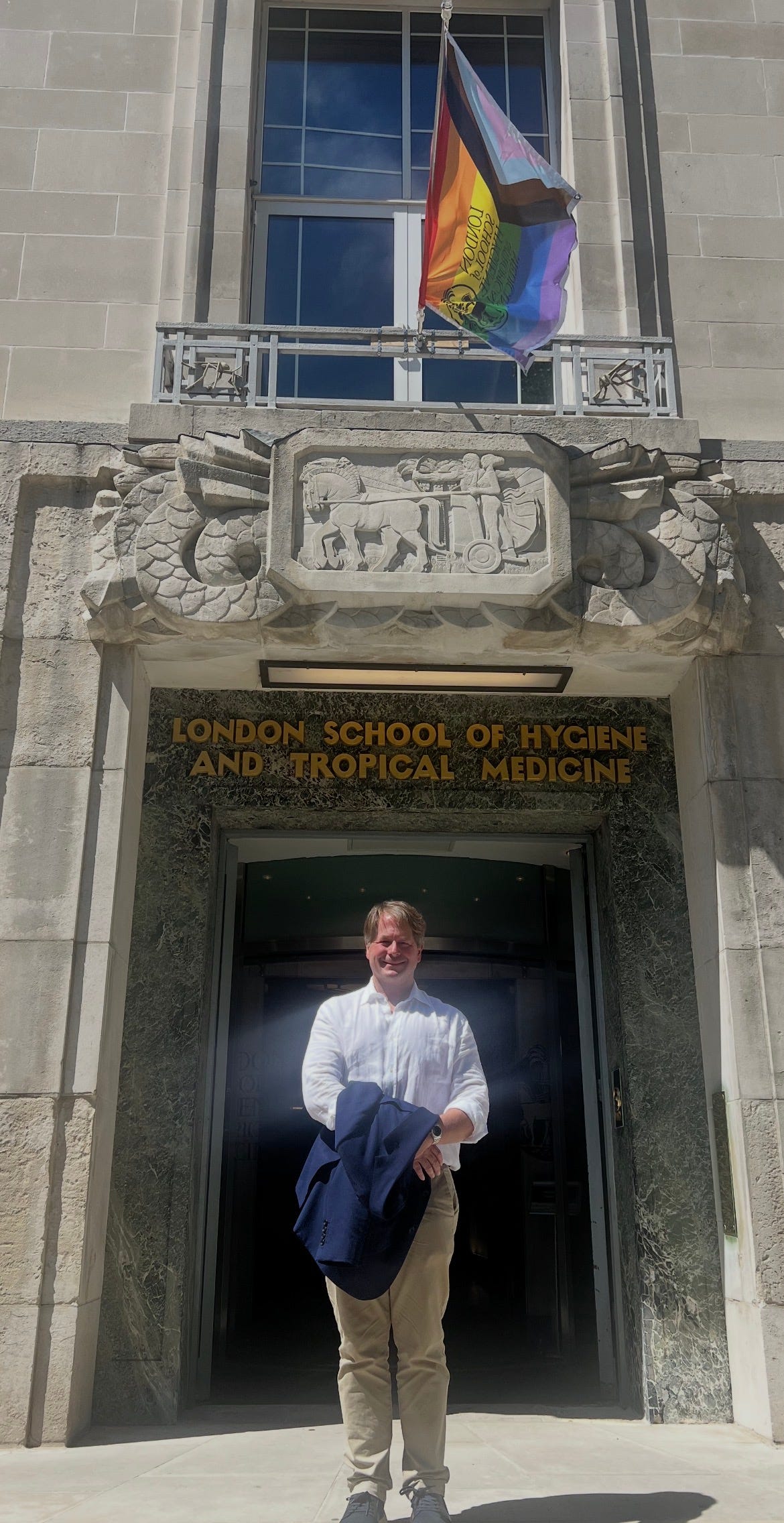
Alas, while St. Mary’s had made a little museum out of Alexander Fleming’s lab, the LSHTM displayed no memorial or plaque to commemorate Sir Austin.
Multiple students, a professor, and a librarian stared dumbly at me when I asked if I could visit the old boy’s office. The professor hastened to add that, “Of course, his work is still well-known here.”
“That’s good,” I replied.
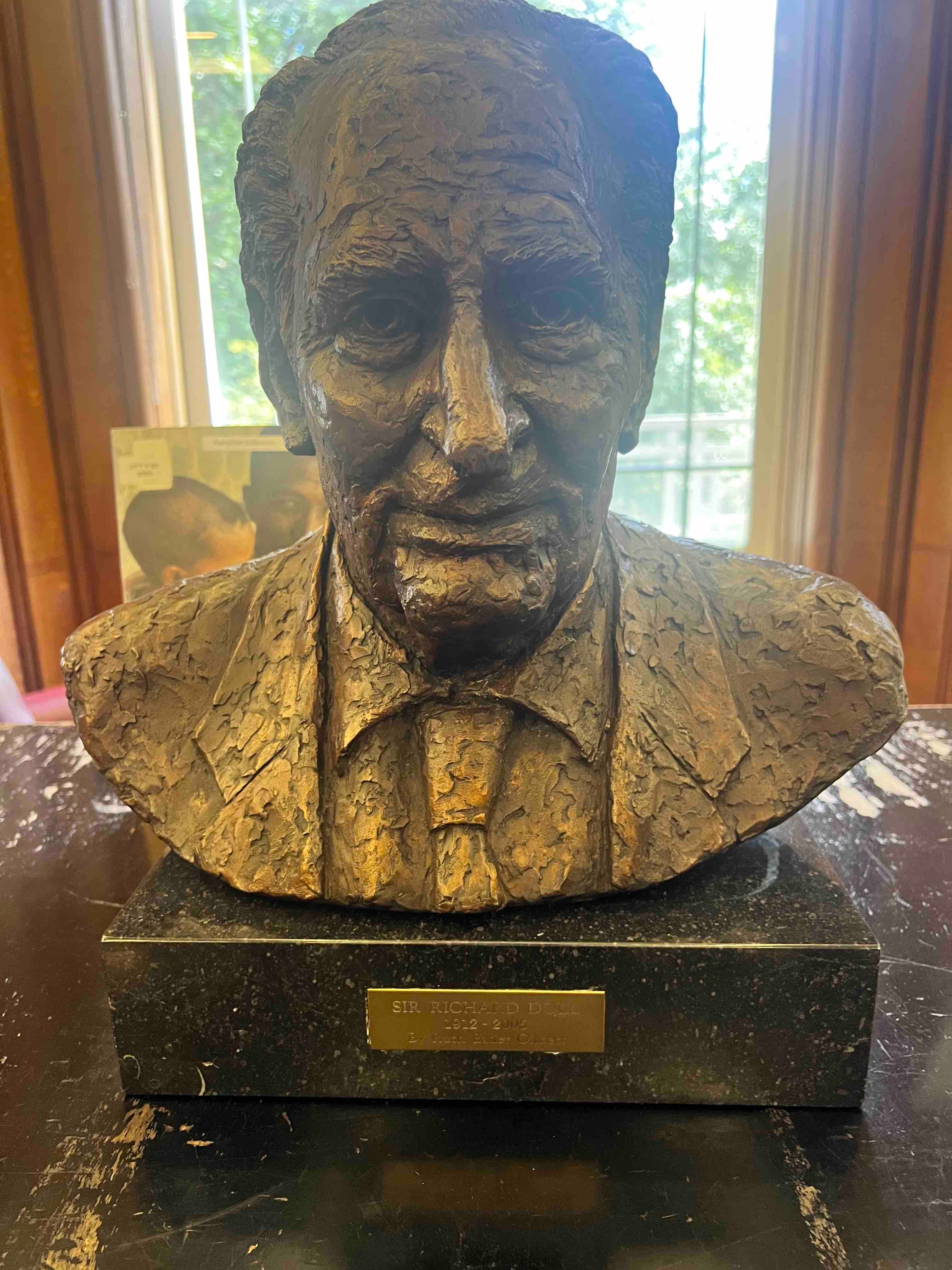
I was consoled to see a bust of Sir Richard Doll in the library.
From the LSHTM in Bloomsbury I wandered to Broadwick (formerly Broad) Street in Soho. During a major cholera outbreak in the neighborhood in 1854, an anesthesiologist named Dr. John Snow — who administered chloroform to Queen Victoria to ease the pain of two of her childbirths — conducted an investigation.
With remarkable thoroughness, he gathered evidence that the cholera outbreak was caused by a contaminated well in Soho. His proposition challenged the longstanding theory that cholera was caused by breathing a miasma of foul air. It took a great effort to persuade the Board of Health to remove the pump handle from the Broad Street well, and shortly thereafter the number of cholera cases precipitously dropped.
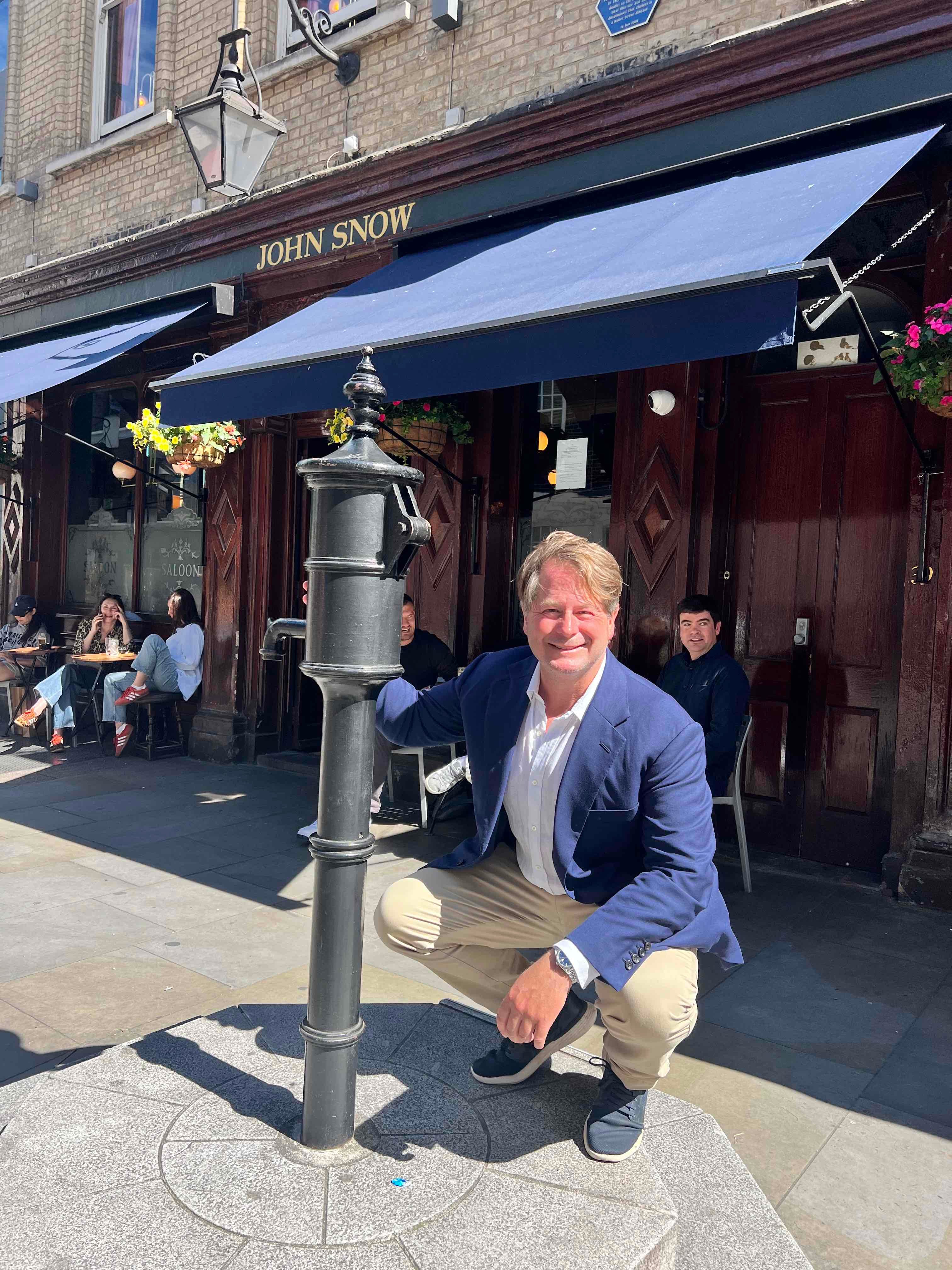
And yet, in spite of his obvious success, Dr. Snow still encountered massive resistance from innumerable skeptics in the local medical and religious establishments. His final vindication came almost thirty years later when Dr. Robert Koch isolated the bacterium that causes cholera. Koch again demonstrated that this bacterium was present in contaminated drinking water, and not in airborne “vapors” or “miasma.”
I emphasize the word again, because, though Koch (with his enormous prestige) vindicated Snow decades later, already in 1854, a relatively unknown Italian anatomist named Filippo Pacini discovered a comma-shaped bacillus during a cholera outbreak in Florence.
Pacini presented his findings in a paper titled, “Microscopical Observations and Pathological Deductions on Cholera” (published in the December 1854 issue of the Tuscan medical journal, Gazzetta Medica Italiana) in which he characterized the organism and called it “Vibrio” from the Latin word meaning “quiver.”
Pacini correctly hypothesized that the microorganism impaired intestinal mucosa reabsorption, thereby causing debilitating diarrhea, vomiting, severe dehydration, and death. Pacini’s paper also received little attention from the medical community — so little that Robert Koch was later credited with discovering the causative agent of cholera.
In the case of Dr. John Snow, a beautiful pub is named after him, where I raised a glass in his memory and honor.
During my walking tour, I frequently thought about Professor Angus Dalgleish, who recently testified before the US Senate about the link between COVID-19 mRNA vaccines and cancer. As was the case with Drs. Snow, Fleming, and Bradford-Hill, Dr. Dalgleish’s observations are not being embraced by the mainstream medical establishment. This inspired me all the more to make a pilgrimage to his place south of London, where we had lunch and spent the afternoon together.
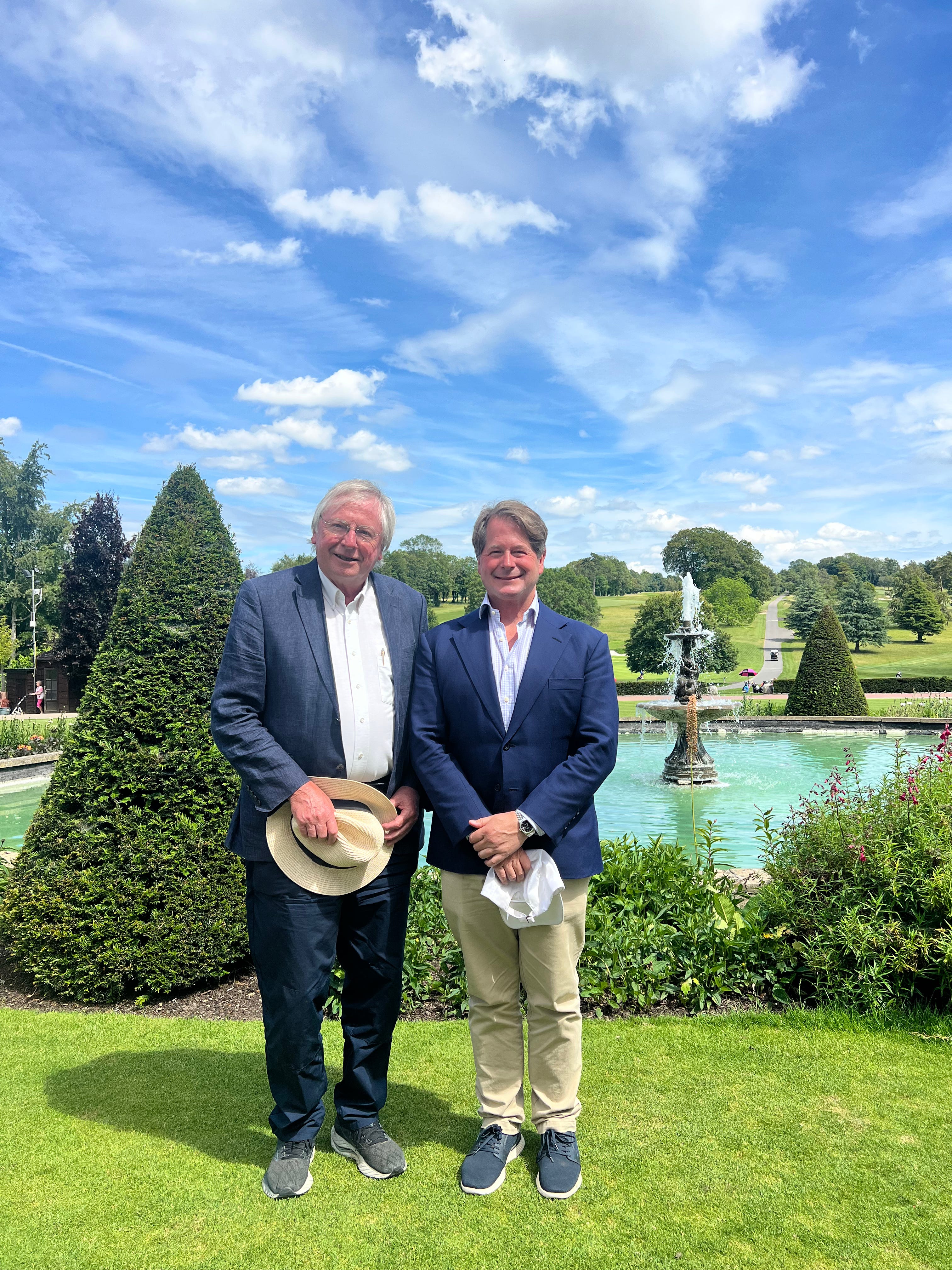
I am confident his that his observations and Senate testimony will ultimately be vindicated. As Schopenhauer famously observed:
All truth passes through three stages. First, it is ridiculed. Second, it is violently opposed. Third, it is accepted as being self-evident.
Dr. Dalgleish's testimony and research are not being embraced by the medical establishment for a very simple reason: along with the rest of "the authorities" (governments and government agencies, government officials and elected representatives, the media, and academia), nearly the entire medical establishment bought into and went along with the Covid fraud/scam/conspiracy, the biggest conspiracy in the history of mankind. Any admission of a connection between Covid or the fake "vaccines" and any kind of illness would open the door to an investigation that would lead right back to them.
Carl Sagan did a wonderful clip on how curiosity about a fairly obscure event led Eratosthenes, denigrated by peers as "second best in everything", to pretty accurately calculate the circumference of the earth in the 3rd century BC - https://www.youtube.com/watch?v=G8cbIWMv0rI