


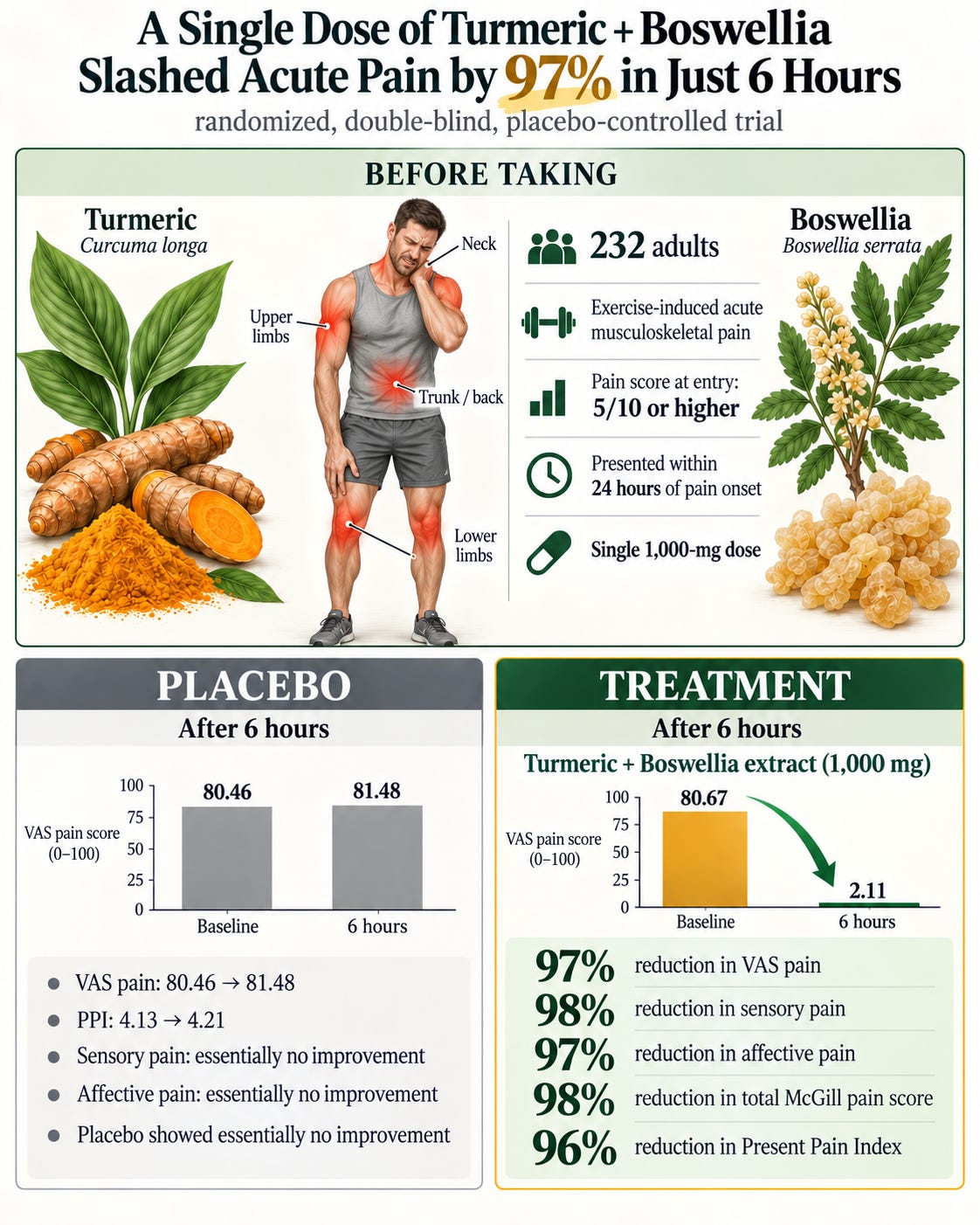
A single 1 gram dose of turmeric + Boswellia extract produced a striking result in a recent randomized, double-blind, placebo-controlled human trial: acute musculoskeletal pain fell by about 97% in just six hours.
The study enrolled 232 adults who were already experiencing significant exercise-induced pain. To qualify, participants had to present within 24 hours of the pain starting and report a pain score of at least 5 out of 10. The pain involved muscles and other musculoskeletal tissues in areas such as the back and trunk, lower limbs, upper limbs, and neck.
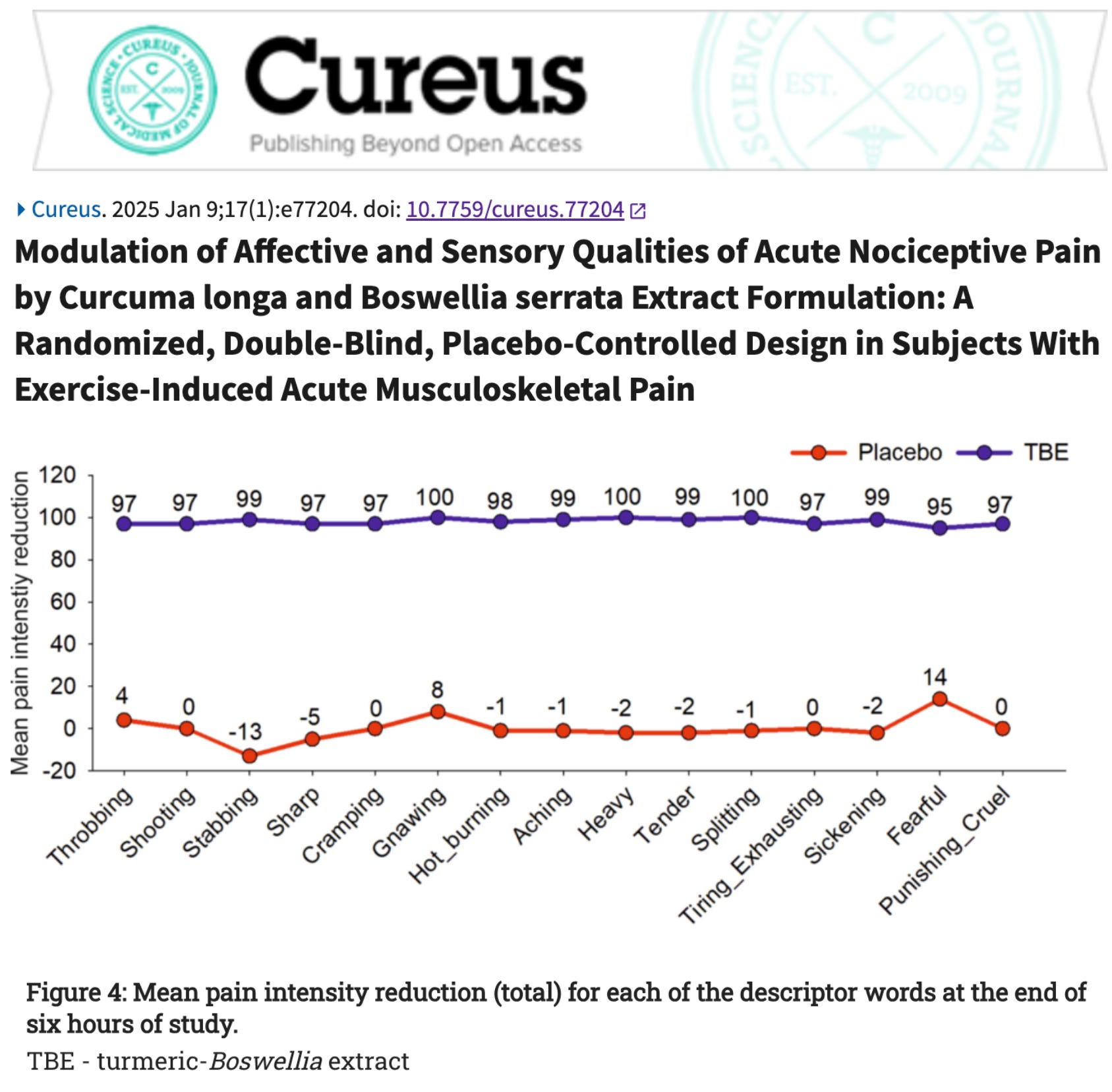
Half the participants received placebo, while the other half received a single 1,000-mg dose of a turmeric-Boswellia extract.
Six hours later, the difference was dramatic. On the Visual Analog Scale, a standard measure of pain intensity, pain in the treatment group fell by approximately 97%, while the placebo group showed essentially no improvement.
Other measures told the same story:
98% reduction in sensory pain
97% reduction in affective pain
98% reduction in total McGill pain score
97% reduction in VAS pain
96% reduction in Present Pain Index
How could it work?
The most obvious explanation is its broad anti-inflammatory and analgesic activity.
Curcumin can suppress several inflammatory pathways, including COX-2, lipoxygenase, iNOS, TNF-α, IL-1, IL-2, IL-6, IL-8, and IL-12. The authors also note that curcumin can interfere with TRPV1, a pain-sensing receptor involved in burning pain and pain hypersensitivity.
Boswellic acids work through overlapping but distinct pathways. In particular, they inhibit 5-lipoxygenase (5-LOX) and reduce leukotriene production while also modulating NF-κB, TNF-α, IL-6, IL-2, and IFN-γ. The authors propose that hitting several inflammatory and pain pathways simultaneously may help explain the rapid effect.
There is an important caveat, however. After strenuous exercise or tissue injury, the early inflammatory response helps clear damaged tissue and initiate repair and adaptation. In theory, aggressively suppressing that response could also blunt some of the normal recovery and remodeling process, particularly if strong anti-inflammatory agents are used repeatedly around training.
This study does not show that turmeric-Boswellia impaired healing—it only followed participants for six hours and was designed to measure pain relief, not long-term muscle repair or training adaptation. So the possibility is worth keeping in mind.
Nonetheless, a 97% reduction in acute pain after one dose of these natural compounds is a remarkable result that deserves serious attention.
Epidemiologist and Foundation Administrator, McCullough Foundation
Support our mission: mcculloughfnd.org
Please consider following both the McCullough Foundation and my personal account on X (formerly Twitter) for further content.
Hi Nicolas, do you think this would work for arthritis? I've just been told that my knee pain is due to arthritis and a torn meniscus. I've been advised to take paracetamol for pain relief but I'd rather not. Maybe I should try this. I'm not working out - just walking is painful but I've been told I must keep moving.
What about chronic pain from severe injury? Like competing with or reducing opioid intake?