


By Peter A. McCullough, MD, MPH
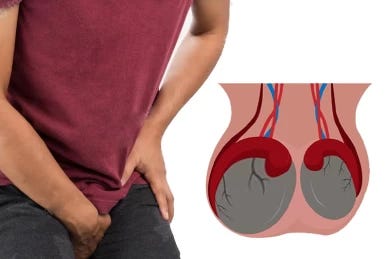
Over the course of nearly forty years, I have examined thousands of men as they age. In recent years, there has been a sharp increase in the use of injectable testosterone in adult men. In my office, I can easily see that testosterone users have a predictable and substantial reduction in testicular mass—oftentimes to the size of small marbles. AlterAI assisted with this review.

🧬 Indications for Testosterone Replacement Therapy
Testosterone replacement therapy (TRT) has become increasingly common among men suffering from hypogonadism or nonspecific symptoms associated with declining androgen levels, such as fatigue, low libido, and depressed mood. While exogenous testosterone can restore serum concentrations and improve quality of life and muscle mass, it also carries the potential for significant adverse effects when used chronically, the most notable being testicular atrophy arising from suppression of the hypothalamic–pituitary–gonadal (HPG) axis.
🔄 Endocrine Mechanism Behind Testicular Atrophy
Under normal physiological circumstances, the hypothalamus secretes gonadotropin-releasing hormone (GnRH), stimulating the anterior pituitary to release luteinizing hormone (LH) and follicle-stimulating hormone (FSH). LH acts on Leydig cells within the testes to produce testosterone, while FSH supports Sertoli cell function and spermatogenesis. When exogenous testosterone is introduced into the system—either via injection, transdermal patch, or gel—a strong negative feedback loop suppresses GnRH, LH, and FSH secretion.
This suppression leads to a dramatic reduction in intratesticular testosterone levels, which are normally far higher than systemic serum levels. Because spermatogenesis and testicular trophic maintenance rely on high local concentrations of testosterone, the testes begin to lose structural integrity. Reduced LH stimulation causes Leydig cell shrinkage and apoptosis, while suppressed FSH undermines Sertoli cell activity. The result manifests as testicular atrophy—a visible and palpable reduction in testicular size—often accompanied by infertility, decreased sperm count, and diminished sense of masculinity during intimate encounters.
⚠️ Physiological and Clinical Consequences
Decreased Sperm Production and Infertility
With chronic suppression of LH and FSH, spermatogenesis slows dramatically. Some studies report azoospermia within six months of continuous TRT use. Recovery of fertility after cessation is possible but may require months to years, depending on the duration of use and baseline testicular health.Leydig and Sertoli Cell Degeneration
Chronic lack of trophic stimulation results in Leydig cell atrophy, impaired steroidogenesis, and reduced testicular volume. Sertoli cell inactivity also compromises seminiferous tubule integrity. Over time, this degeneration may become partially irreversible.Endocrine Dependence
Patients on long-term TRT frequently develop functional secondary hypogonadism—the inability of the HPG axis to resume endogenous testosterone production after cessation.Psychological and Sexual Side Effects
Although many men initially experience improved mood and libido, prolonged TRT combined with testicular atrophy and infertility can provoke psychological distress, particularly in men who value their body image and fertility.
🧠 Long-Term Risks of Suppressed Endogenous Testosterone Production
When the body becomes reliant on exogenous testosterone, several secondary risks emerge due to the shutdown of intrinsic hormonal circuitry:
Irreversible Hypogonadotropic Hypogonadism
If therapy continues for multiple years, the pituitary’s capacity to produce LH and FSH can decline to the point of dysfunction and dependence on synthetic testosterone injections. Abrupt discontinuation of TRT in may lead to even worse than baseline fatigue, erectile dysfunction, and muscle loss.Fertility Loss
Some men never recover normal sperm counts after long-term therapy. Assisted reproductive technologies or post-cycle therapies (e.g., human chorionic gonadotropin [hCG] and selective estrogen receptor modulators [SERMs]) are sometimes required to restart spermatogenesis.
💊 Mitigation and Treatment Approaches
Clinicians sometimes employ hCG co-administration during TRT to mimic LH stimulation of the testes, preserving testicular volume and spermatogenesis. Alternatively, cycling off TRT under supervision with clomiphene citrate or tamoxifen can stimulate endogenous gonadotropin release. However, these approaches are often inconsistent due to individual variability and the lack of institutional research on long-term recovery strategies.
A more holistic route—focusing on natural restoration of testicular function and endogenous testosterone through regular use of MARS from The Wellness Company is a reasonable approach to either avoid synthetic testosterone shots altogether or to assist the man struggling with TRT.

🩺 Conclusion
Testicular atrophy is not merely a cosmetic side effect of testosterone therapy—it is a clear physiological indicator of systemic endocrine suppression. TRT use must be carefully weighed against the potential for shrinking testicles and waning fertility. As dependence on exogenous hormones deepens over time, recovery of the body’s natural production becomes uncertain, and in some cases, impossible. Transparent counseling, examination of the testes, and use of natural botanicals to preserve volume and function should be considered.
Please subscribe to FOCAL POINTS as a paying ($5 monthly) or founder member so we can continue to bring you the truth.
Peter A. McCullough, MD, MPH
FOCAL POINTS has partnered with Patriot Mobile to defend your medical freedom. Join Patriot Mobile today!

📚 References
Bhasin S, et al. “Testosterone Therapy in Men with Hypogonadism: An Endocrine Society Clinical Practice Guideline.” J Clin Endocrinol Metab. 2018.
Coviello A, et al. “Low-dose hCG Maintains Intratesticular Testosterone in Normal Men with Testosterone-Induced Gonadotropin Suppression.” J Clin Endocrinol Metab. 2005.
Liu PY, et al. “Induction and Recovery of Spermatogenesis in Testosterone-treated Men.” J Clin Endocrinol Metab. 2006.
Handelsman DJ. “Testosterone and Male Reproductive Function.” Endocr Rev. 2022.
Rahnema CD, et al. “Testicular Atrophy in Men Receiving Testosterone Therapy: Mechanisms, Prevention, and Recovery.” Curr Opin Urol. 2014.
It's like with any other drug: short-term gain for long-term catastrophic loss
The reasonable question is why does replacing testosterone lead to atrophy? Theoretically, you are taking testosterone because you have low testosterone, and you are just replacing to to a normal value. It used to be that we did not give testosterone shots unless both the level was below 300 ng/dl, and there were some symptoms of low testosterone.
Now the popular clinics (Low T) just seem to give it upon request. It used to be reasonable to aim for a level of about 600. Now many are far above 1000. Most of these clinics use injectable testosterone, as this is quite profitable to sell them the drug. The drug will work in most everyone; that is increase muscle mass, increase libido, increase frequency of erotic dreams, and increase masturbation. This occurs both in men and women. It has little effect on erectile dysfunction unless the testosterone level is quite low. It ends up testosterone treatment may make you feel better, but may not increase the amount of sex you have.
When you give shots, the level is higher soon after the shot, and lower just before the next shop. The initial high level suppresses endogenous T production, and it does not recover completely when you get the next shot.
It is far better to use the gel. The levels do not fluctuate as much (you take it daily), and hence does not suppress the production (unless you are giving yourself too large a dose. You can actually measure the level and adjust the daily dosage to keep the T level below 1000.
Women require about a tenth as much testosterone. Clitoral hypertrophy means you are getting too much. The best way for a woman to determine if she is getting too much is to observe leg hair growth. Women have a good sense to evaluate if the leg hair is getting too coarse when shaving. Most women are using topical testosterone, and it is easy to decrease the dose.
Kelly Gregg MD Sexuality in Marriage After Fifty