


Exactly eight years ago, in November 2018, I spent a few weeks in Cadiz, Spain to see what was once the most important port city during the Golden Age of Spanish sea power, between the 16th and 18th centuries.
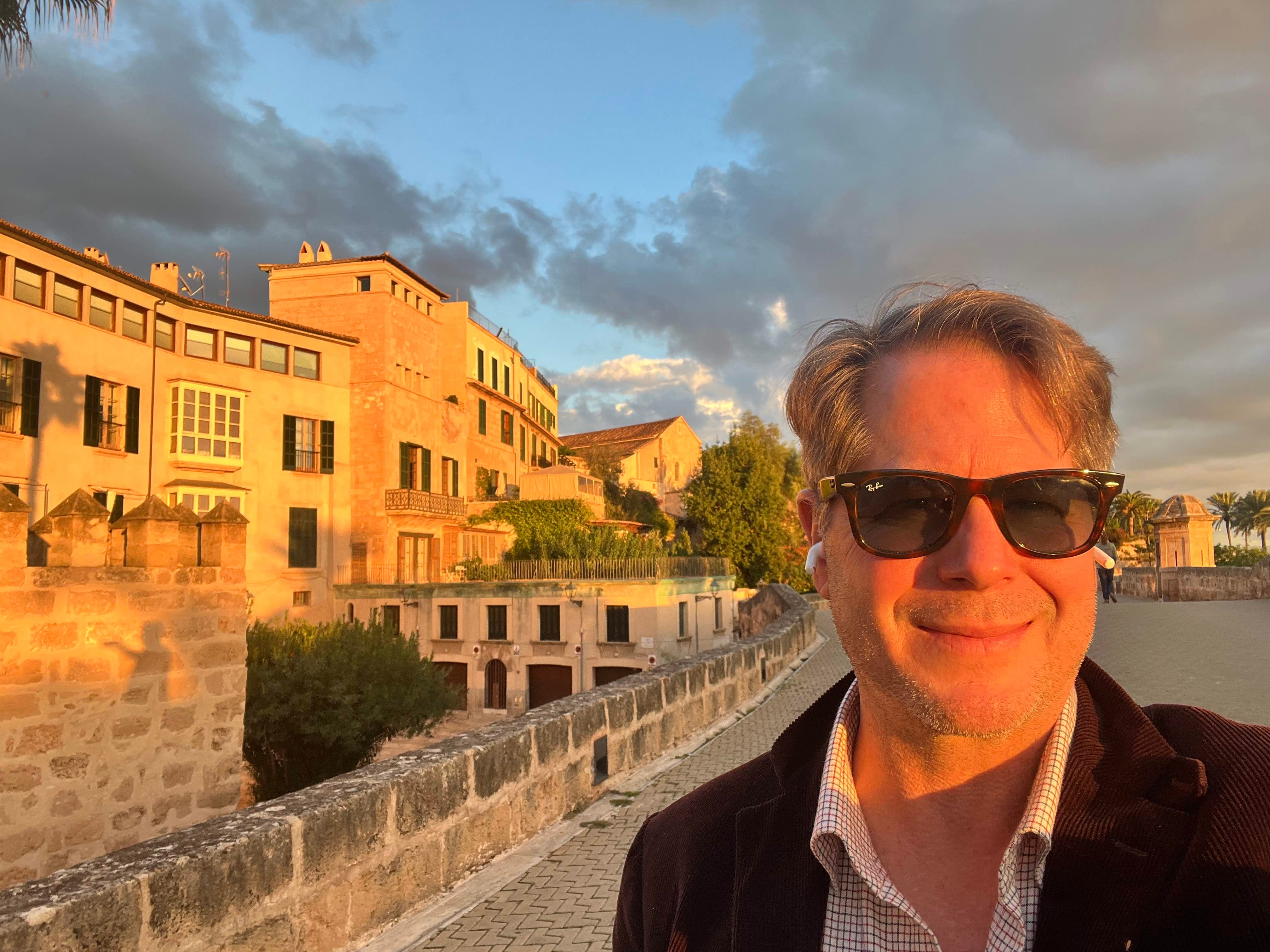
For days I wandered around the old city and its splendid architecture. Here I am on the Torre Tavira, an 18th century watchtower.

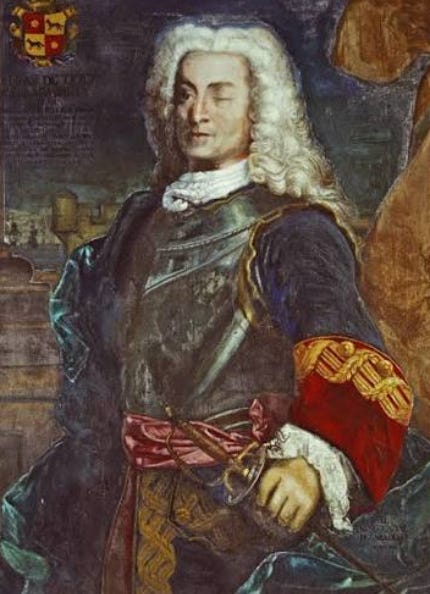
My favorite Spanish captain in history was Admiral Blas de Lezo (1689-1741). Nicknamed "Mediohombre" ("Half-Man") after he lost his left leg, right arm, and left eye in separate battles, he spent much of his career patrolling Caribbean and South American waters, hunting down and capturing pirate and privateer vessels.
In 1741 during the Battle of Cartagena de Indias, his small force of 6 ships and 3,000 men defeated a massive British invasion fleet of 186 ships and nearly 30,000 soldiers, preserving Spanish control of the Caribbean.
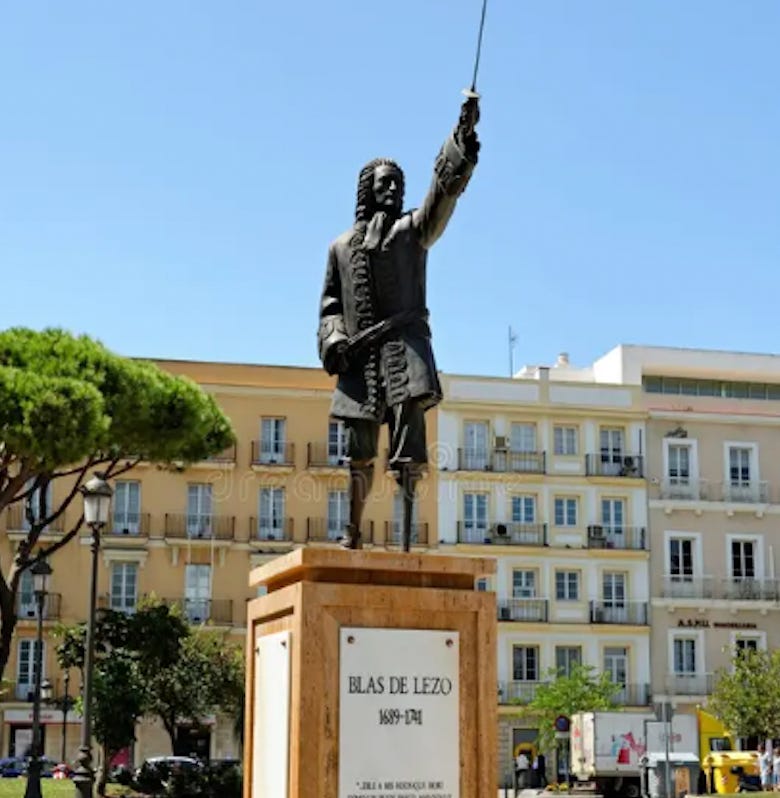
A monument in Cadiz depicts him on his peg leg with his saber drawn, apparently about to slash an English pirate to ribbons.
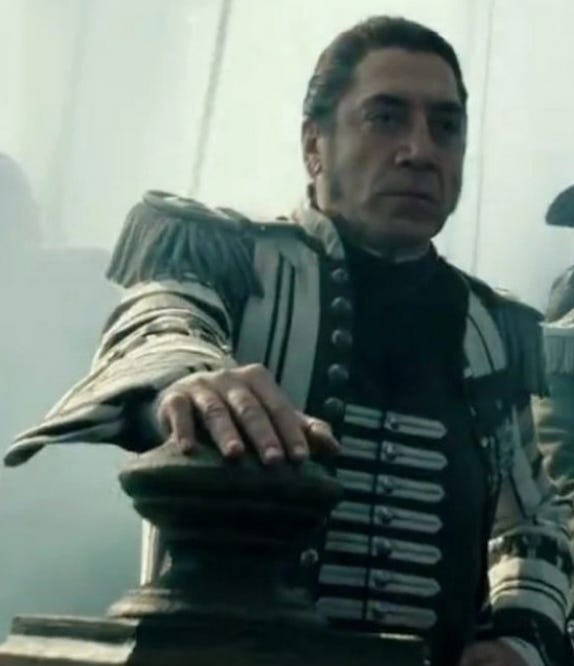
It’s tempting to think he is the inspiration of Captain Armando Salazar, the fanatical Spanish captain who seeks revenge against Jack Sparrow, played by Javier Bardem in the 2017 film, Pirates of the Caribbean: Dead Men Tell No Tales.
British Navy officers were famous for their ability to handle their ships and work their guns, while the Spanish Navy was famous for the fighting quality of its boarding parties.
The history of maritime Spain is full of fascinating, adventurous, and incredibly brave men who are now largely forgotten. Reading it was a hobby of my carefree youth, before the world got so weird. Following the Freihafen conference here on Mallorca, I found myself wandering the waterside and wondering if any famous Spanish captains grew up here.
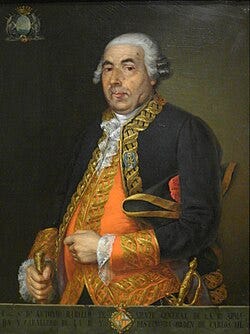
A little research turned up the story of gallant Lieutenant-General Antonio Barceló y Pont de la Terra (1 January 1717 – 30 January 1797). Of humble Mallorca origin, Barceló advanced on his merits alone, which was extremely unusual at a time when noble birth and connections were the rule for Spanish officers.
He fought against Barbary corsairs in the western Mediterranean, adopting their tactics to counter them, as served as a corsair hunter for most of his career. He later developed the Spanish usage of naval artillery and gunboats, leading to the creation of the fuerzas sutiles.
While writing this essay—waxing romantic about the gallant men and beautiful women of Spain—I was jolted from my reverie by a text message, sent from a friend, with the following announcement, issued by the Congressional Equality Caucus.

Is this a sign that I should remain in Spain?
A great essay about men with balls ending with a message about a balless Congress.
Yes, out of country for a couple of years is a great idea John! I'm seriously considering Uruguay.