


Modern cancer policy is dominated by expensive drugs, marginal survival gains, and soaring end-of-life costs. Yet quietly, a low-cost and widely accessible intervention has been sitting in plain sight.
A peer-reviewed analysis published in Molecular Oncology examined what would happen if adults aged 50 and older received routine vitamin D supplementation at modest daily doses. The results are deeply inconvenient for a system built around high-cost treatment rather than prevention.
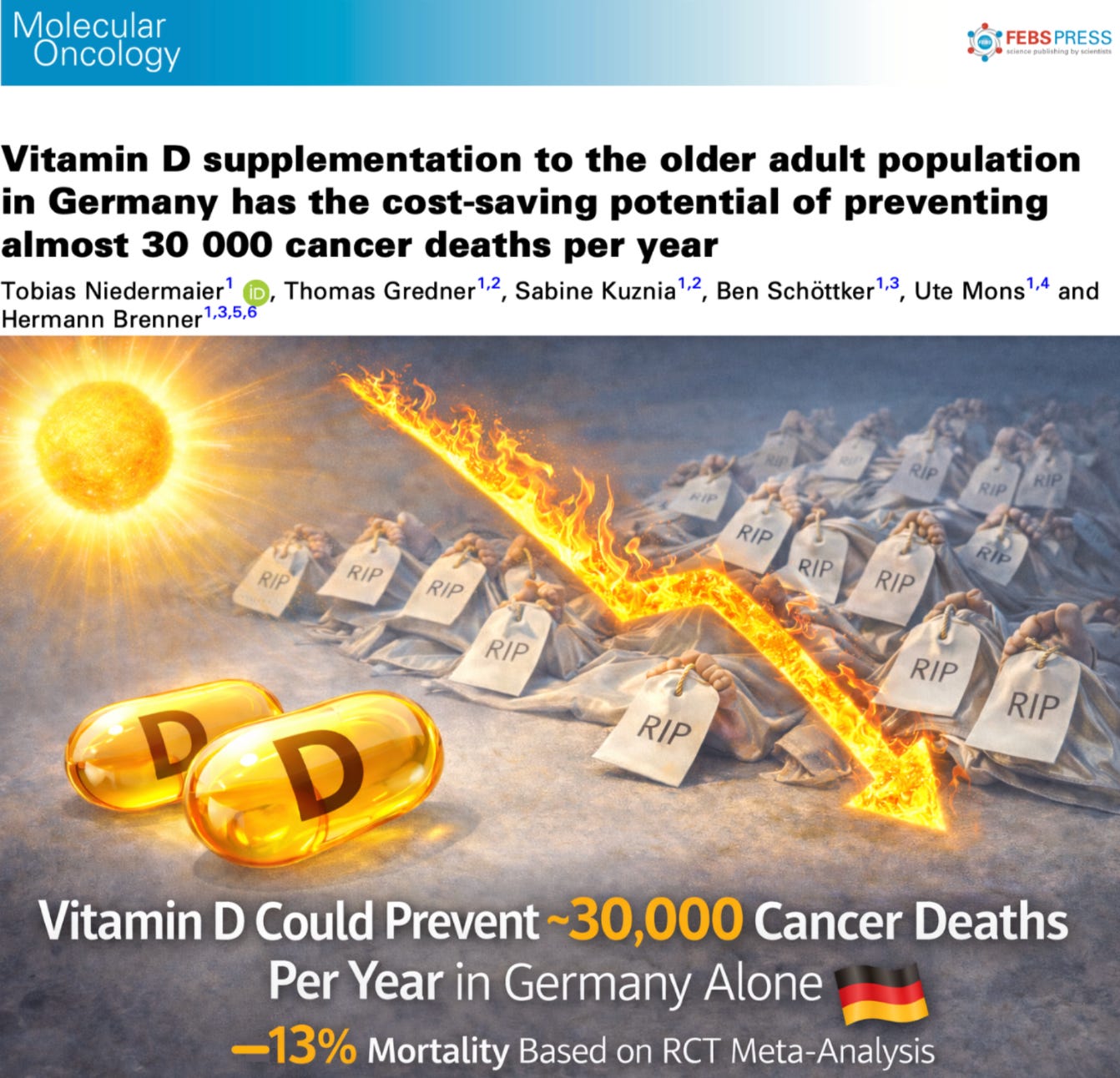
Using national mortality data and randomized controlled trial meta-analyses, researchers estimated that daily vitamin D supplementation could:
Prevent ~30,000 cancer deaths per year in Germany alone
Save ~322,000 life-years annually
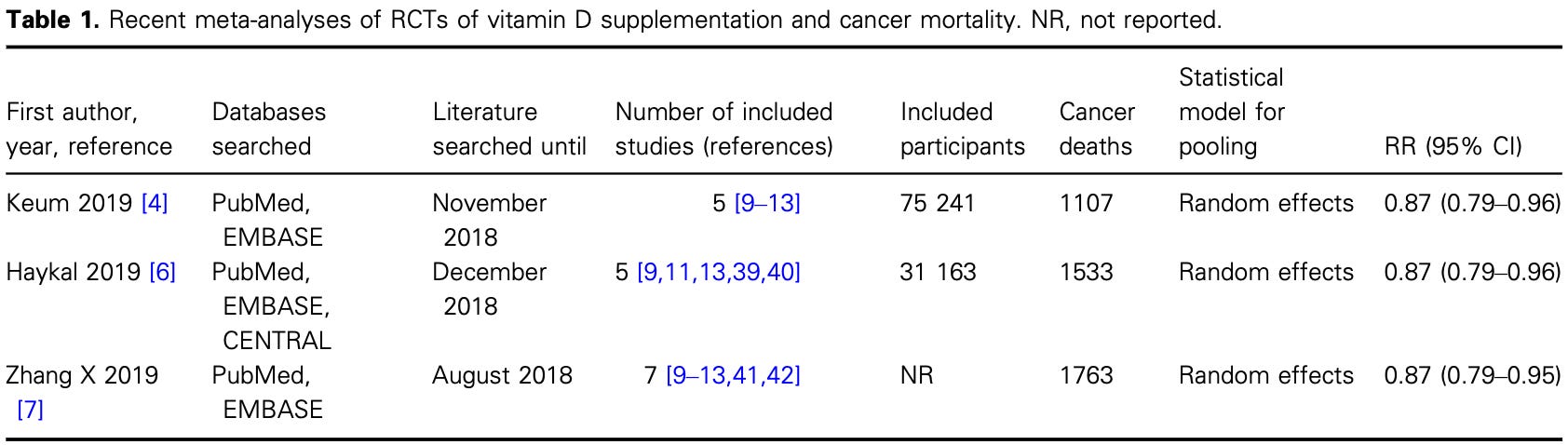
Reduce overall cancer mortality by ~13%, consistent across multiple RCT meta-analyses
Lower total healthcare spending, even after accounting for the cost of supplementation
Annual supplementation costs (~$1.0 billion per year) were outweighed by reductions in end-of-life cancer care, producing net savings of ~$280 million annually.
For context, many modern oncology drugs cost tens of thousands of dollars per patient while extending survival by weeks or months. By contrast, vitamin D supplementation:
Costs ~$11–$55 per person per year
Demonstrates actual mortality reduction
Remains highly cost-effective even under worst-case assumptions
Even when researchers ignored all cancer-care cost savings, the cost per life-year saved was approximately $3,100 — far below standard cost-effectiveness thresholds used to justify new cancer drugs.
Yet despite widespread deficiency, routine vitamin D supplementation remains absent from most cancer-prevention strategies — while healthcare systems continue to pour resources into late-stage treatment with diminishing returns.
Cancers Vitamin D Has Shown Benefit Against
Beyond population-level mortality reductions, a large and growing body of mechanistic, clinical, and translational evidence shows vitamin D activity across multiple cancer types. A 2023 peer-reviewed synthesis of over 900 recent studies highlights consistent anti-cancer effects mediated through vitamin D receptor (VDR) signaling, immune modulation, and tumor microenvironment control.
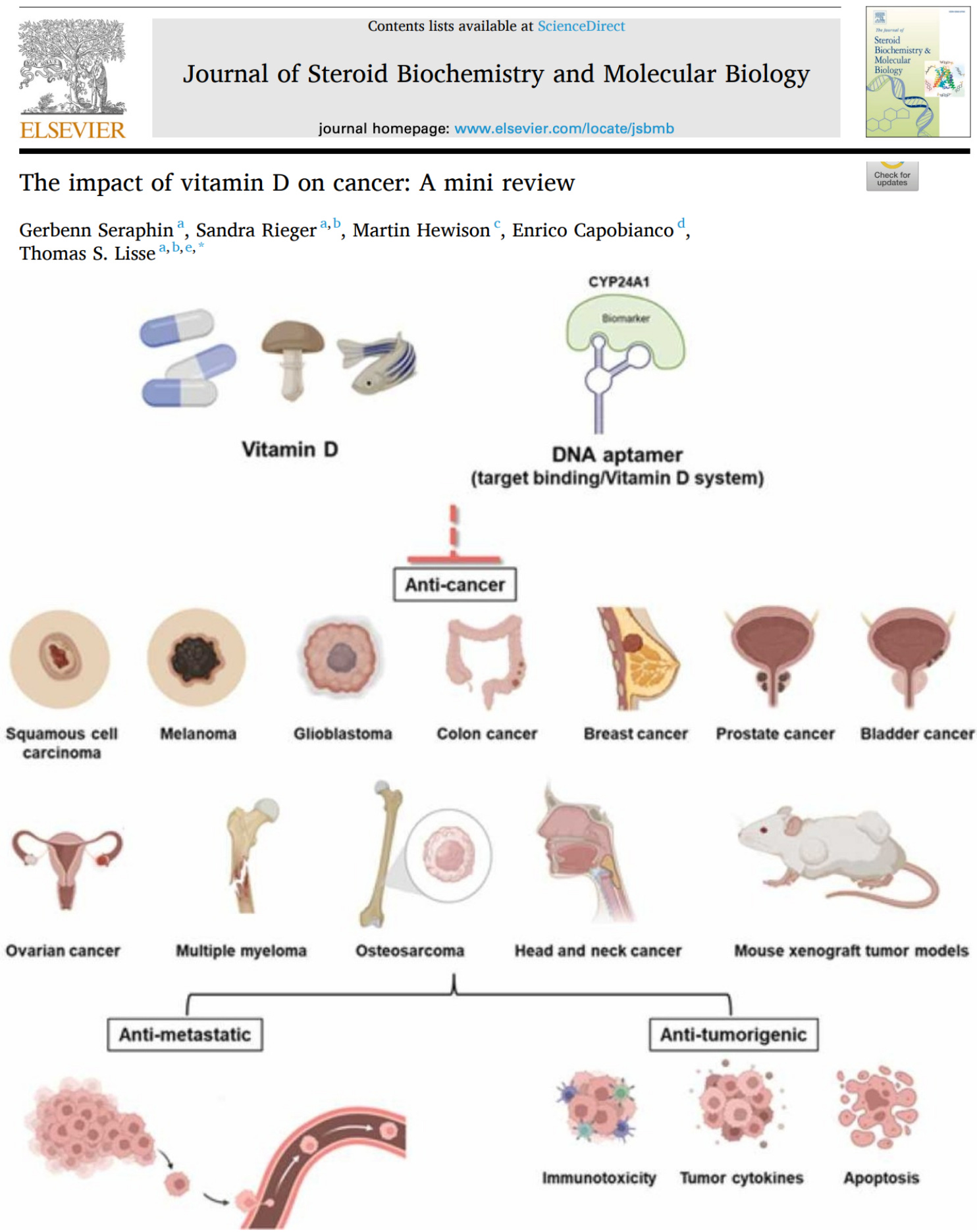
.Vitamin D has demonstrated protective or therapeutic effects in:
Breast cancer (including triple-negative subtypes)
Prostate cancer
Colorectal cancer
Ovarian cancer
Glioblastoma (brain cancer)
Melanoma
Squamous cell carcinoma (skin and head & neck)
Head and neck cancers
Bladder cancer
Non-small cell lung cancer
Multiple myeloma
Osteosarcoma (bone cancer)
Across these cancers, vitamin D has been shown to:
Suppress tumor growth and proliferation
Induce apoptosis and ferroptosis
Inhibit metastasis and epithelial-to-mesenchymal transition (EMT)
Improve response to chemotherapy and immunotherapy
Reduce treatment resistance
Improve survival in deficient patients
Importantly, low vitamin D status is repeatedly associated with worse prognosis, more aggressive disease, and reduced survival — while adequate levels or supplementation are linked to improved outcomes.
Some of the most powerful cancer-prevention tools are neither novel nor profitable.
Vitamin D is inexpensive. It is biologically active across immune, inflammatory, and cellular regulatory pathways. And according to randomized trial evidence, it saves lives — at scale.
The only real question left is why public health policy continues to ignore it.
Epidemiologist and Foundation Administrator, McCullough Foundation
www.mcculloughfnd.org
Please consider following both the McCullough Foundation and my personal account on X (formerly Twitter) for further content.
Recommended dosage? Most of us have been loading up on vitamin D since before and of course during Covid. I think the typical medical ranges recommended are low. What do you say?
I take 5000 IU’s daily with vitamin K and my blood value stays around 65 to 70 NG’s. I do spend my winters in Arizona, which means I don’t have to boost my vitamin D during the winter time if you are in the northern climate.. the key is to have your blood value of vitamin D measured. It can be done at www.grassrootshealth.net via mail order.! Vitamin D is responsible for managing 3000 gene expressions and this is ignored by mainstream medicine because if we boosted our vitamin D blood value for all adults to over 50 ng’s prescription drug sales would drop as well as physicians visits!