


The World Health Organization just went on record to claim that ivermectin is “not an effective treatment for hantavirus,” fully dismissing the large body of research suggesting the opposite is likely true.
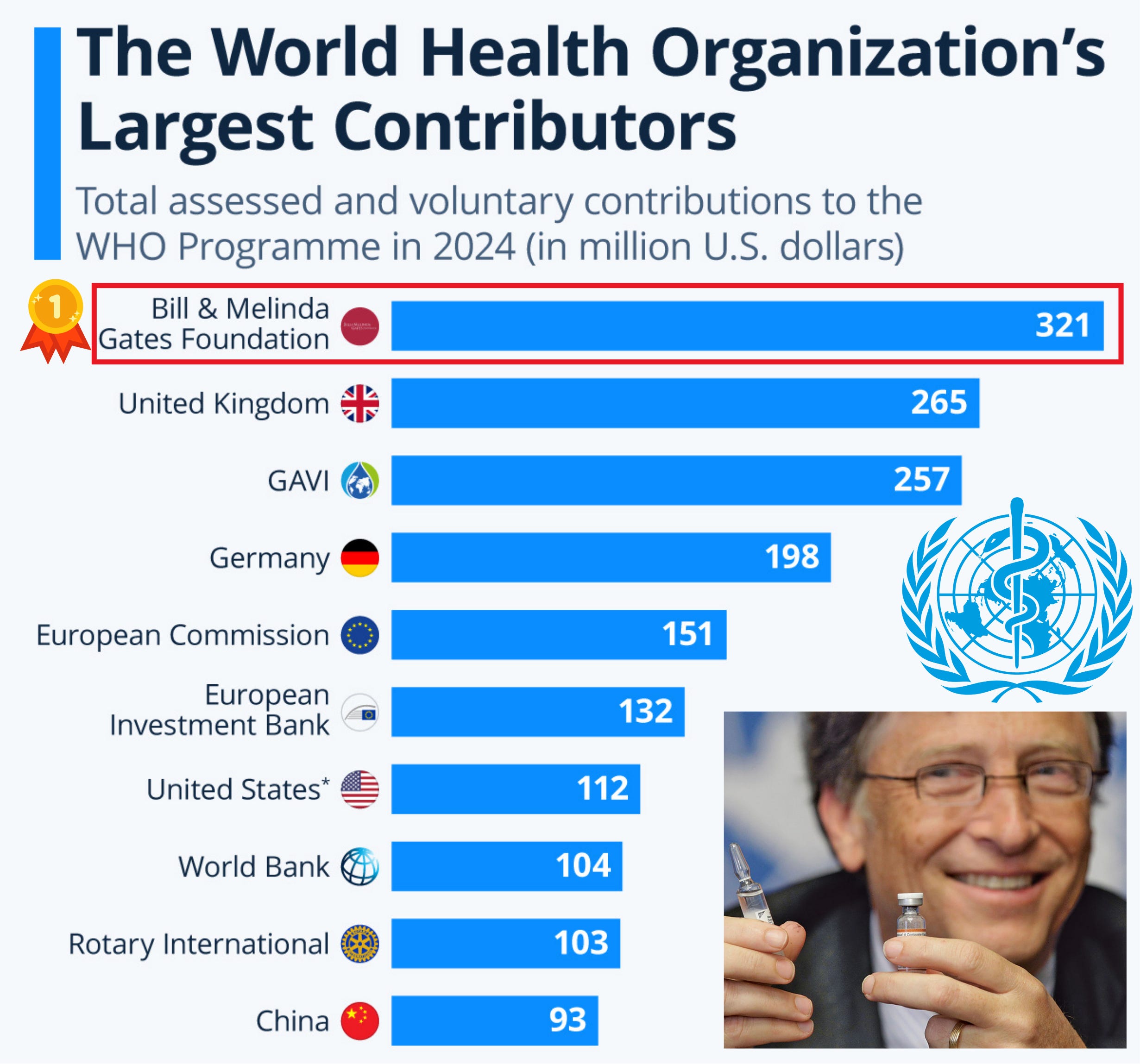
This is no surprise given that Bill Gates is now the WHO’s top funder and 13 hantavirus vaccines and gene therapies are under development:

This rapid dismissal of a safe, cheap, widely available drug follows a now-familiar pattern. When health authorities immediately reject repurposed medicines with plausible mechanisms and real-world data against RNA viruses in favor of experimental “vaccines”, it often means that the opposite the true. We see this out with the dilemma of a rodent infested ship with hantavirus in the Atlantic Ocean where the WHO has 147 passengers locked down without access to early treatment kits.

Let’s look at the evidence for ivermectin and chloroquine/hydroxychloroquine against hantavirus:
Ivermectin’s Strong Track Record Against RNA Viruses
Since the early 2010s, researchers have documented ivermectin’s broad-spectrum antiviral activity against a wide range of RNA viruses, including dengue, Zika, West Nile, yellow fever, chikungunya, influenza, HIV, and SARS-CoV-2. These antiviral effects are summarized across dozens of studies in a 2020 systematic review by Heidary et al.
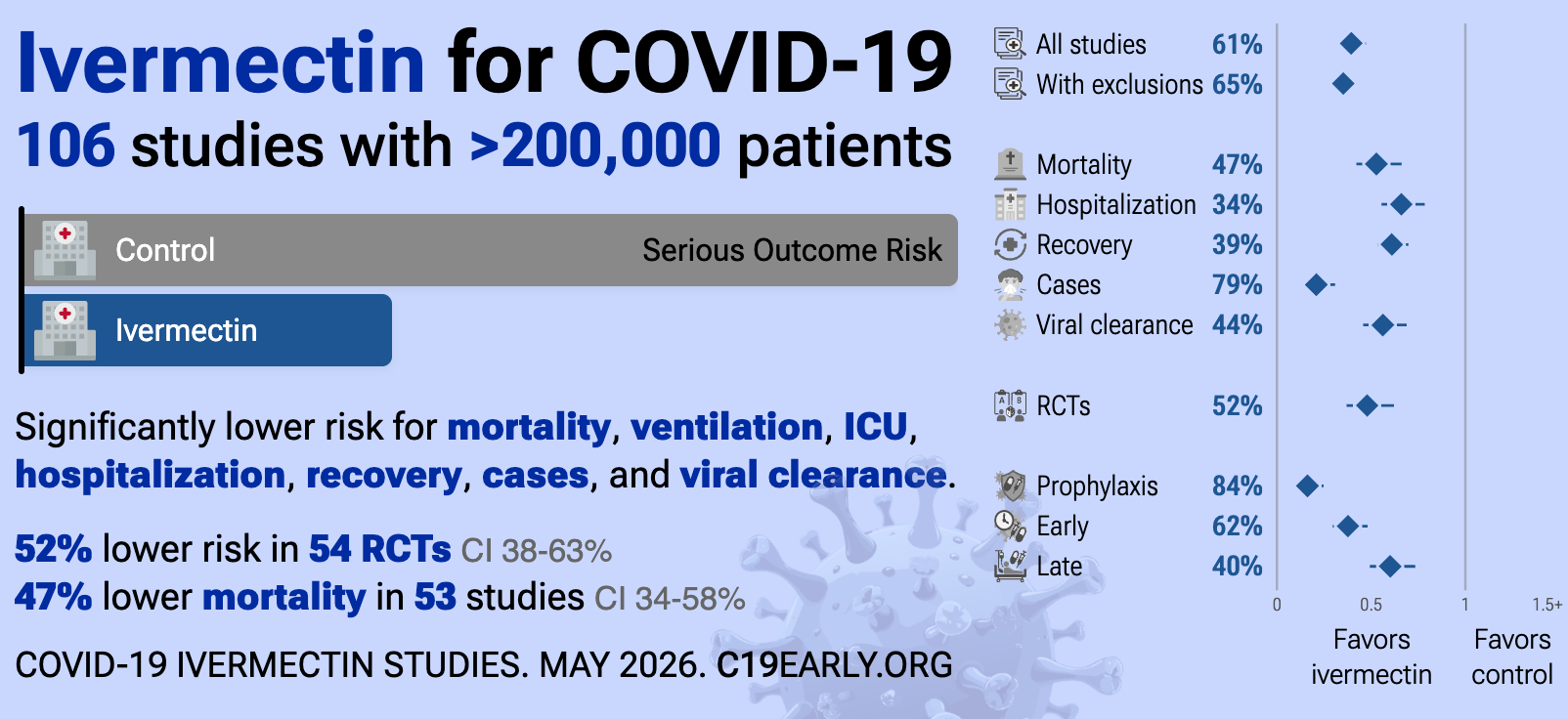
The most compelling real-world evidence comes from its performance against COVID-19. The comprehensive real-time meta-analysis at https://c19early.org/i now includes 106 studies involving hundreds of thousands of patients. These studies consistently show strong benefits — particularly when used early or as prevention — with major reductions in mortality, hospitalization, and severe disease.
Crucially, hantaviruses are also RNA viruses — specifically negative-sense single-stranded RNA viruses. While they differ in structure and replication details from viruses like SARS-CoV-2, they still rely on host cell machinery and intracellular transport pathways that ivermectin is known to disrupt.
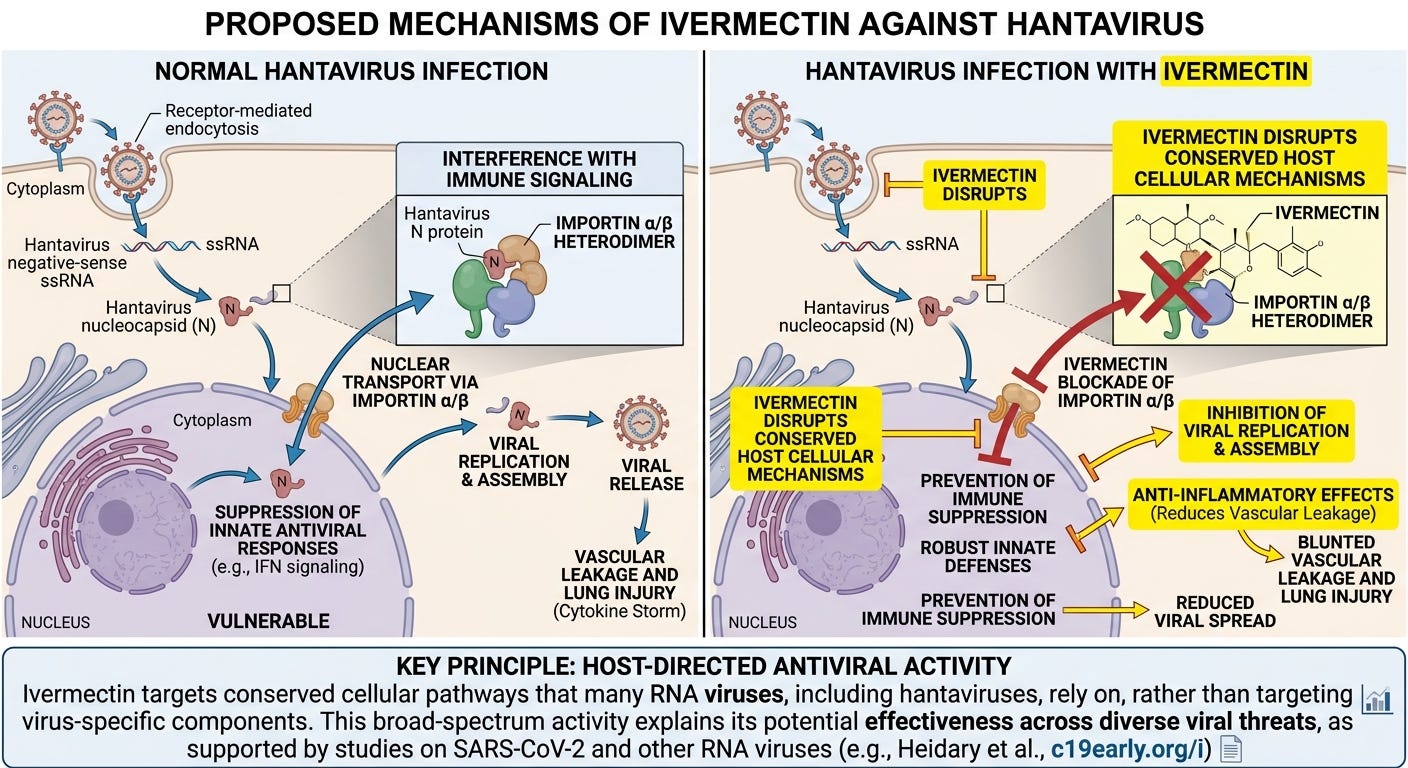
Mechanistically, ivermectin inhibits importin α/β nuclear transport, a pathway many RNA viruses exploit to shuttle viral proteins into the host cell nucleus to suppress antiviral responses. Hantavirus nucleocapsid (N) protein has been shown to interact with these same host pathways to interfere with immune signaling. By blocking this transport system, ivermectin may prevent the virus from disabling the host’s innate defenses.
In addition, ivermectin interferes with viral replication and assembly processes inside the cell, and exerts anti-inflammatory effects that could blunt the vascular leakage and lung injury characteristic of severe hantavirus disease.
This is the key point: ivermectin does not need to be “hantavirus-specific” to be effective. Its antiviral activity is largely host-directed — targeting conserved cellular mechanisms that many RNA viruses, including hantaviruses, depend on.
Given this combination — a shared RNA-virus biology, overlapping reliance on host pathways, and a well-documented antiviral mechanism — ivermectin likely exerts at least some degree of anti-hantavirus activity and warrants serious investigation, not dismissal.
Compelling Evidence for Hydroxychloroquine
A 2021 peer-reviewed study in Frontiers in Cellular and Infection Microbiology directly evaluated chloroquine against multiple hantaviruses, including the Andes virus — the most clinically relevant strain and the one implicated in the recent cruise ship outbreak .
The key finding comes from the Andes virus model:
In the gold-standard Syrian hamster model of hantavirus pulmonary syndrome (which closely mimics severe human disease), chloroquine produced a striking survival benefit. When administered continuously before infection:
60% of treated animals survived to 26 days
100% of untreated controls died within ~14 days
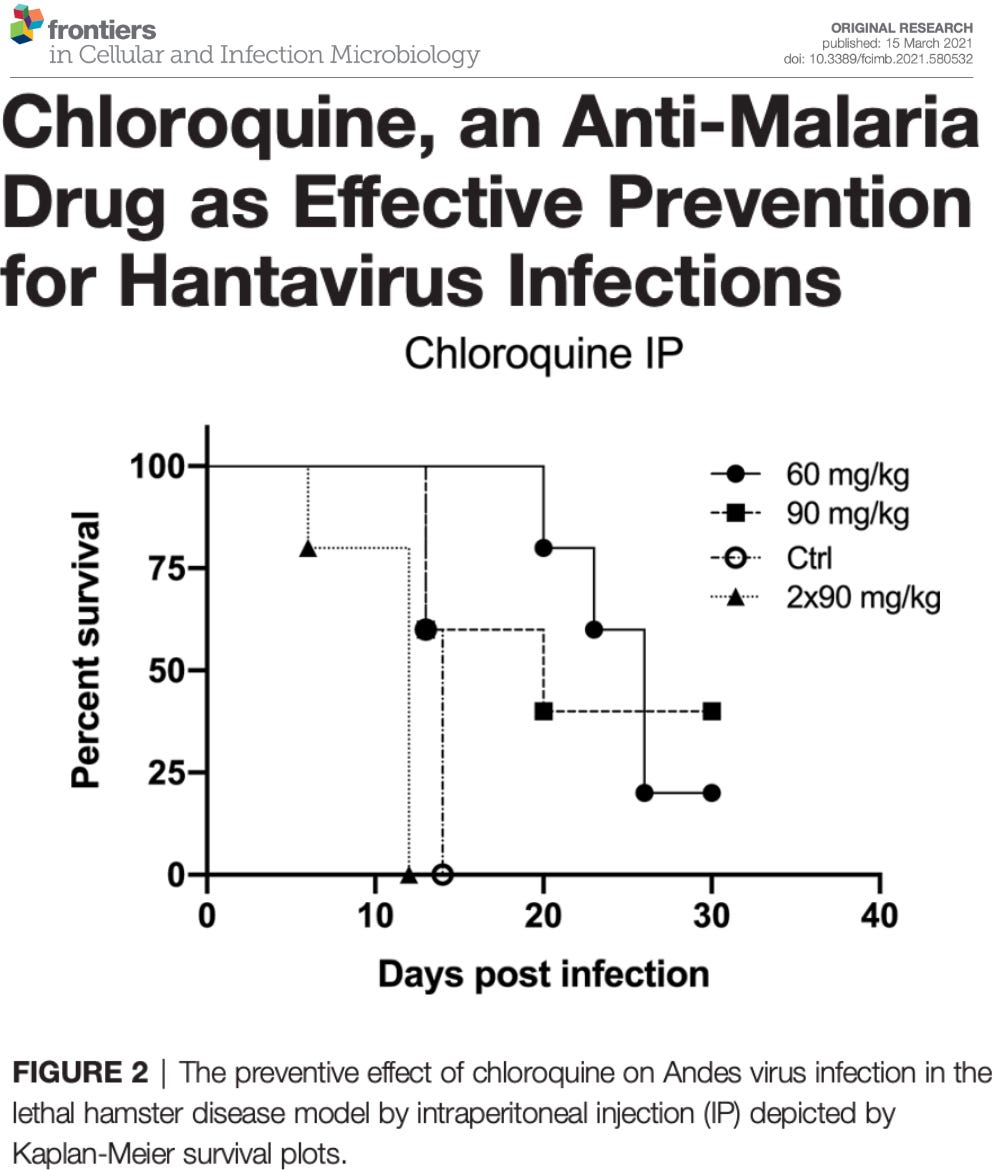
Even when treatment was started after infection, survival improved and time to death was significantly delayed — demonstrating both prophylactic and therapeutic potential.
Supporting this, chloroquine also showed strong antiviral activity in vitro across multiple hantavirus species, inhibiting replication at concentrations far below toxic levels, with a favorable selectivity index.
Hydroxychloroquine, the safer and more commonly used human derivative, shares the same core mechanisms. It raises endosomal pH to block viral entry and uncoating, acts as a zinc ionophore that facilitates intracellular zinc accumulation (which can inhibit viral RNA polymerase activity), and exerts immunomodulatory effects that may reduce the vascular leakage and inflammation central to severe hantavirus disease.
Taken together, the data show a clear, consistent pattern: chloroquine-class drugs can directly inhibit hantavirus replication and meaningfully improve survival in a lethal Andes virus model — with hydroxychloroquine representing the more practical candidate for human use.
Conclusion
Both drugs likely attack key steps in the hantavirus life cycle and the body’s harmful over-reaction to infection:
Hydroxychloroquine (and chloroquine):
Raises the pH inside cell endosomes, blocking hantavirus entry and uncoating. Hantaviruses depend on acidic conditions in these compartments to release their genetic material.
Acts as a zinc ionophore, facilitating the entry of zinc ions into cells. Once inside the cell, zinc potently inhibits the RNA-dependent RNA polymerase enzyme that hantaviruses require for replicating their genetic material (a mechanism well-documented against other RNA viruses).
Helps modulate the immune system to reduce dangerous inflammation and vascular leakage that drive severe disease.
Ivermectin:
Inhibits importin α/β nuclear transport proteins, disrupting the virus’s ability to hijack host cell machinery and suppress antiviral defenses.
Interferes with viral replication and assembly.
Reduces excessive inflammation that contributes to lung damage.
These mechanisms are complementary: hydroxychloroquine primarily blocks early viral entry, while ivermectin targets later intracellular replication and inflammation. For those interested in having these compounds on-hand in case of emergency, you can obtain some from TWC.
Specific, well-designed clinical trials for both hydroxychloroquine and ivermectin against hantavirus are needed. However, the science here is far stronger than the official “nothing to see here” narrative suggests.
Adding zinc, vitamin D, and vitamin C could compose a synergistic protocol:
Zinc amplifies hydroxychloroquine’s effectiveness as its natural ionophore partner, enabling high intracellular zinc concentrations that directly inhibit the viral RNA polymerase enzyme essential for hantavirus replication.
Vitamin D is a critical immune modulator that strengthens the body’s innate antiviral defenses, helps regulate inflammatory responses, and has been associated with better outcomes in severe respiratory viral infections.
Vitamin C, a potent antioxidant, supports immune cell function, reduces oxidative stress, protects blood vessels from damage, and helps counteract the cytokine storm and vascular leakage that are hallmarks of hantavirus pulmonary syndrome.
While the hantavirus outbreak is expected to remain quite small and limited, we can’t put anything past the pandemic profiteering cartel who’s high-containment biolabs remain fully operational.
Epidemiologist and Foundation Administrator, McCullough Foundation
Support our mission: mcculloughfnd.org
Please consider following both the McCullough Foundation and my personal account on X (formerly Twitter) for further content.
Before his passing, Dr Zelenko stated his protocol of Quercetin, Zinc and Vitamins C & D would be effective on ALL single stranded RNA viruses. I’m assuming this true for Hantavirus if you’re mentioning Hydroxychlorequin and Ivermectin???
Also, I’m CERTAIN that if your Endocannabinoids are full, you cannot get COVID. Would full Endocannabinoids also block Hantavirus???
Thank you!!!
Covid 2.0 nonsense from the WHO.