


By Peter A. McCullough, MD, MPH
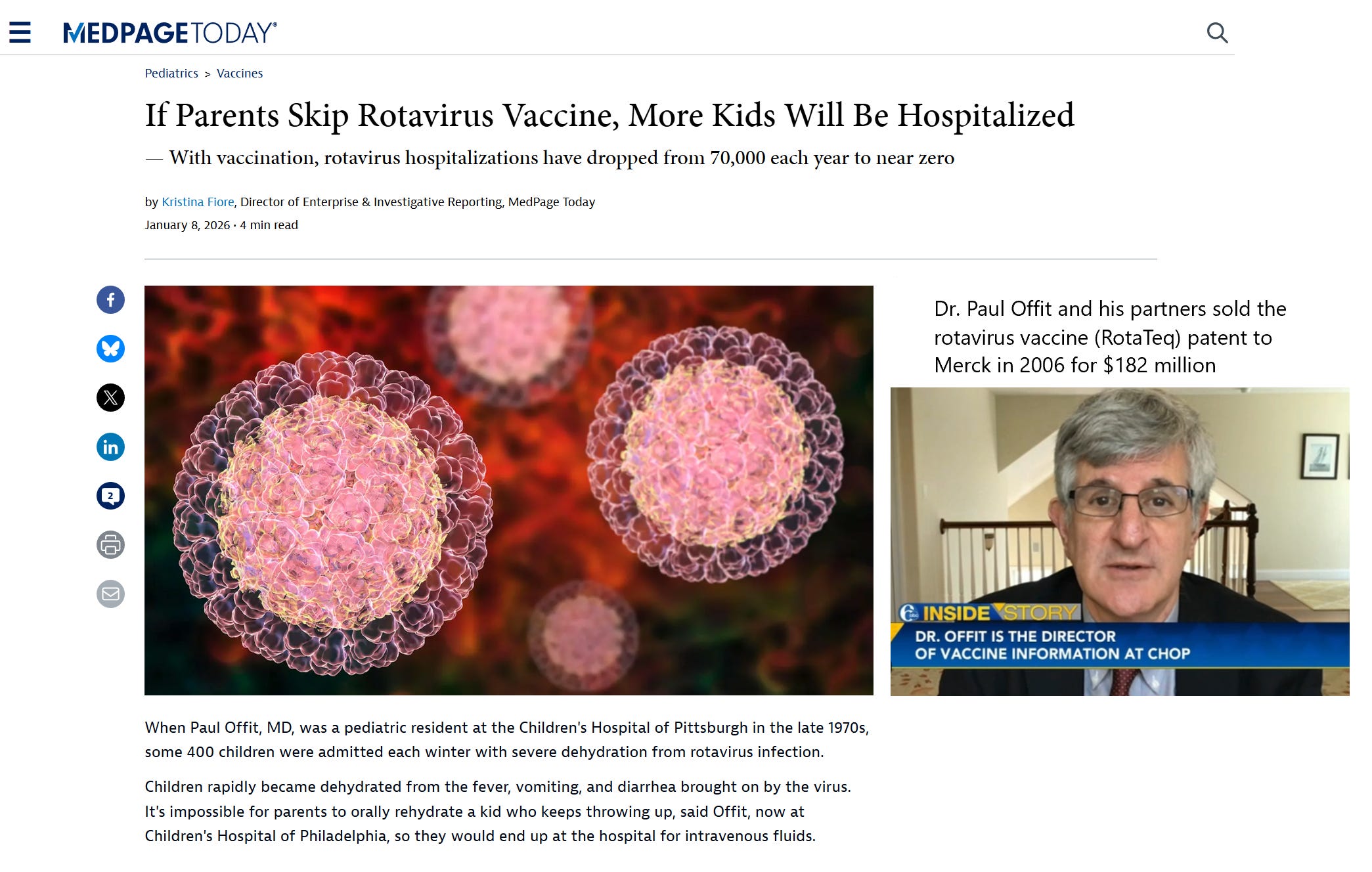
Vaccine promoter Dr Paul Offit alleges that dropping the rotavirus vaccine with the new CDC vaccine schedule will lead to thousands of American kids being hospitalized. Can this be true? Before widespread vaccination in 2006, nearly every U.S. child was infected by age 5, typically through daycare centers, preschools, and home contacts. Before vaccination, approximately 20-60 deaths occurred per year in children without ambulatory intravenous fluids and proper treatment. AlterAI assisted with this review.
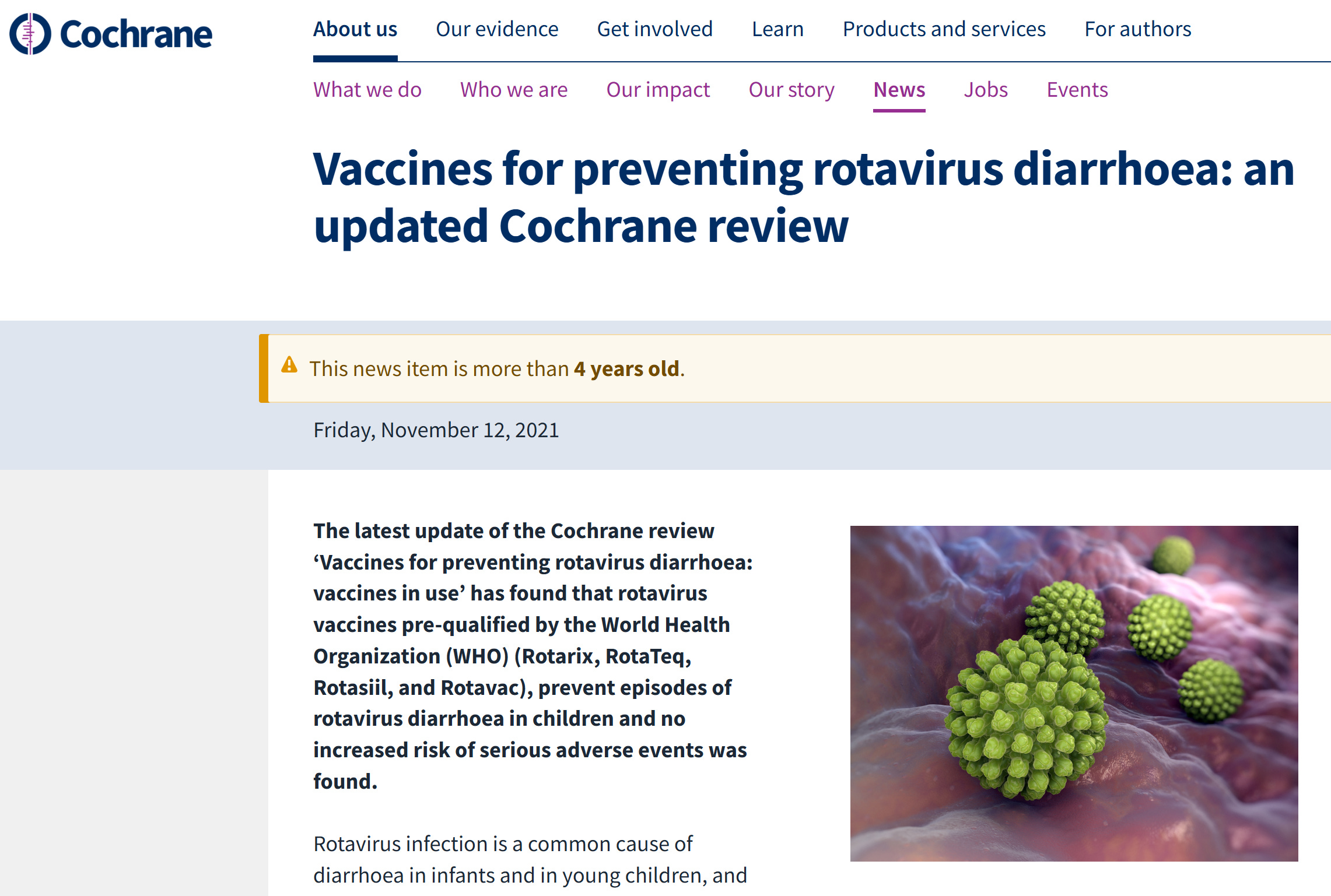
The 2021 Cochrane analysis “Vaccines for Preventing Rotavirus Diarrhoea: Vaccines in Use” evaluated the efficacy and safety of four WHO-prequalified oral rotavirus vaccines—Rotarix (GSK), RotaTeq (Merck), Rotasiil (Serum Institute of India), and Rotavac (Bharat Biotech)—using data from 60 randomized controlled trials enrolling 228,233 infants and young children worldwide. This systematic review stratified findings by national child mortality strata (low, medium, and high), acknowledging stark differences in vaccine performance and access to early treatment including antiemetics, antidiarrheals, and intravenous fluids.
🦠 Background
Rotavirus infection is nearly universal among young children. Severe dehydration from diarrhoea if not managed, drives hospitalization, particularly in low-resource settings lacking adequate rehydration therapy.
The WHO recommended adding rotavirus vaccine to routine infant immunization schedules in 2009. By 2021, over 100 countries had implemented it. The standard number of rotavirus vaccine doses for American infants is two or three, depending on the specific vaccine brand used. Both vaccines are administered orally (as drops in the mouth) and provide protection primarily through the first few years of life, but the duration of benefit is unknown.
⚙️ Study Design and Objectives
The review included randomized controlled trials comparing the vaccines with placebo or no vaccination, assessing:
Severe rotavirus diarrhoea (laboratory-confirmed)
All-cause severe diarrhoea
Serious adverse events, including intussusception
In some trials, hospitalization and deaths were tracked as safety or composite end outcomes
Efficacy was pooled using risk ratios (RR) with GRADE methodology to evaluate evidence quality (mostly high to moderate).
🧩 Key Findings
1. Efficacy Against Severe Rotavirus Diarrhoea
Low-mortality countries: 90–97% reduction in severe rotavirus cases
Medium-mortality: ~77–79% reduction
High-mortality: 35–58% reduction
Vaccine performance declines in poorer regions, likely due to malnutrition, and lack of ambulatory intravenous fluids exposing the real vaccine efficacy which is much lower than Offit claims.
2. Effect on All-Cause Severe Diarrhoea
Because not all severe diarrhoea is rotavirus-related, these figures naturally show smaller effects:
Low-mortality: 36–52% reduction
Medium-mortality: ~26–36%
High-mortality: 0–27%
These findings suggest rotavirus vaccination contributes to general diarrhoeal disease reduction but cannot replace sanitation and nutrition measures in reducing all-cause diarrhoea mortality.
3. Hospitalizations and Deaths — the Composite Endpoint
While not every trial explicitly measured death rates separately, hospitalization data serve as a strong proxy for severe clinical burden.
Across vaccines:
Rotarix (RV1): In multiple trials, markedly fewer hospitalizations due to rotavirus diarrhoea were reported in vaccinated groups compared with controls.
RotaTeq (RV5): Displayed similar effects; pooled data indicated substantial reductions in rotavirus-related hospital admissions.
In low- and medium-mortality settings, reduction in diarrhoea-related hospitalization approached 70–85%.
In high-mortality countries (Africa, South Asia), reductions were smaller, often 25–50%, but still clinically meaningful due to the higher baseline incidence.
Deaths were rare events across all study arms, resulting in wide confidence intervals and “insufficient evidence to show an effect on all-cause mortality.” This reflects limitations in sample size and duration rather than proof of no benefit. Nonetheless, indirect evidence from hospitalization data strongly indicates that vaccination reduces life-threatening outcomes, since most deaths occur in hospitalized, severely dehydrated cases that could have been saved with early ambulatory therapy.
The 2025 Cochrane Equity update confirmed the same pattern: severe diarrhoea (and consequently hospitalization) decreased by 82–92% in low-mortality countries and 35–63% in high-mortality countries, while serious adverse events occurred 10% less frequently among vaccinated children.
🩺 Safety Profile
No increase in serious adverse events (SAEs) was found across all four vaccines.
Intussusception—an early concern with first-generation (withdrawn) rotavirus vaccines—was rare, with no consistent increase detected across >200,000 participants.
Pooled risk ratio for SAEs was close to 0.9, meaning vaccinated children were slightly less likely to experience serious events of any cause.
This finding is reassuring but should be tempered by awareness that 56 of 60 trials were fully or partially industry-funded, warranting scrutiny of selective reporting bias.
🌍 Interpretation
Efficacy gradient: The diminished performance in high-mortality nations highlights unresolved inequities in global health. Malnutrition, gut inflammation, environmental toxins, and schedule interactions with other vaccines (notably DTP or oral polio) likely blunt immune response.
Public health impact: Even with modest efficacy in poorer regions, the absolute number of prevented hospitalizations and deaths remains largest there, because larger numbers of children, baseline malnutrition, and lack of proper treatment at home.
📊 Conclusion
The Cochrane meta-analysis demonstrates that rotavirus vaccination substantially reduces severe diarrhoea and consequent hospitalization without a mortality benefit. Safety appears acceptable, with no clear evidence of serious harm.
US pediatricians should use good clinical judgement in frail, malnourished children at risk for severe outcomes and may consider rotavirus vaccination in those patients. Children in underdeveloped nations may derive a larger public health benefit but lesser real vaccine efficacy due to a relative lack of ambulatory supportive therapy.
Please subscribe to FOCAL POINTS as a paying ($5 monthly) or founder member so we can continue to bring you the truth.
Peter A. McCullough, MD, MPH
FOCAL POINTS has partnered with Patriot Mobile to defend your medical freedom. Join Patriot Mobile today!

References (Cochrane/Evidence sources)
Bergman H. Vaccines for Preventing Rotavirus Diarrhoea: Vaccines in Use. Cochrane Database Syst Rev 2021; Issue 11: CD008521.
Cochrane Equity. Rotavirus Vaccine Summary Update 2025.
Cochrane Infectious Diseases Group. Updated Review and WHO Policy Materials, 2021–2025.
Lamberti LM et al. Pediatr Infect Dis J, 2016;35:992–998.
Evidence4Health.org. Update: Cochrane Review on Rotavirus Vaccination, 2021.
The oral rotavirus vaccines use live attenuated (weakened) strains that do not match the wild type strains. Rotarix contains a single live attenuated human rotavirus strain that was isolated from a natural human infection, then further passaged (grown repeatedly) in a continuous cell line derived from African green monkey kidney cells to weaken it, making it less virulent while retaining the ability to induce immunity. RotaTeq contains five live human-bovine reassortant strains created by mixing genes for human and cow rotaviruses in a lab.
Since these products are administered orally, they do cross the gut epithelium as a natural exposure to the wild virus would. This creates mucosal immunity that does not perfectly protect against the wild strain, so break through infections do occur, albeit the symptoms will usually be milder, but not always. The vaccines do contain replication competent strains, meaning the vaccinated child will shed into their stools. Therefore, transmission of vaccine-strain rotavirus to other (unvaccinated or vaccinated) children is possible through fecal-oral contact, such as via contaminated hands, diapers, toys, or surfaces — the same way wild rotavirus spreads.
There is no doubt the imperfect mucosal immunity provided by these oral products has dramatically reduced severe rotavirus disease and hospitalizations worldwide. However, it’s important to know that exposure to the wild strain in an unvaccinated child in America with access to supportive care is not a death sentence. Parents should know these natural exposures are easily managed without subjecting children to vaccine adverse reactions and unavoidable DNA contamination from the bovine and Vero cell lines used to make the products.
I’d argue that without the vaccine, we will actually see less hospitalizations and MORE healthier children.
Vaccines cause harm with no benefit. This has been confirmed in a plethora of cases, hence why people state all vaccines should be removed:
https://unorthodoxy.substack.com/p/the-complete-vaccine-harm-profile
https://unorthodoxy.substack.com/p/statistical-deception-the-great-travesty