


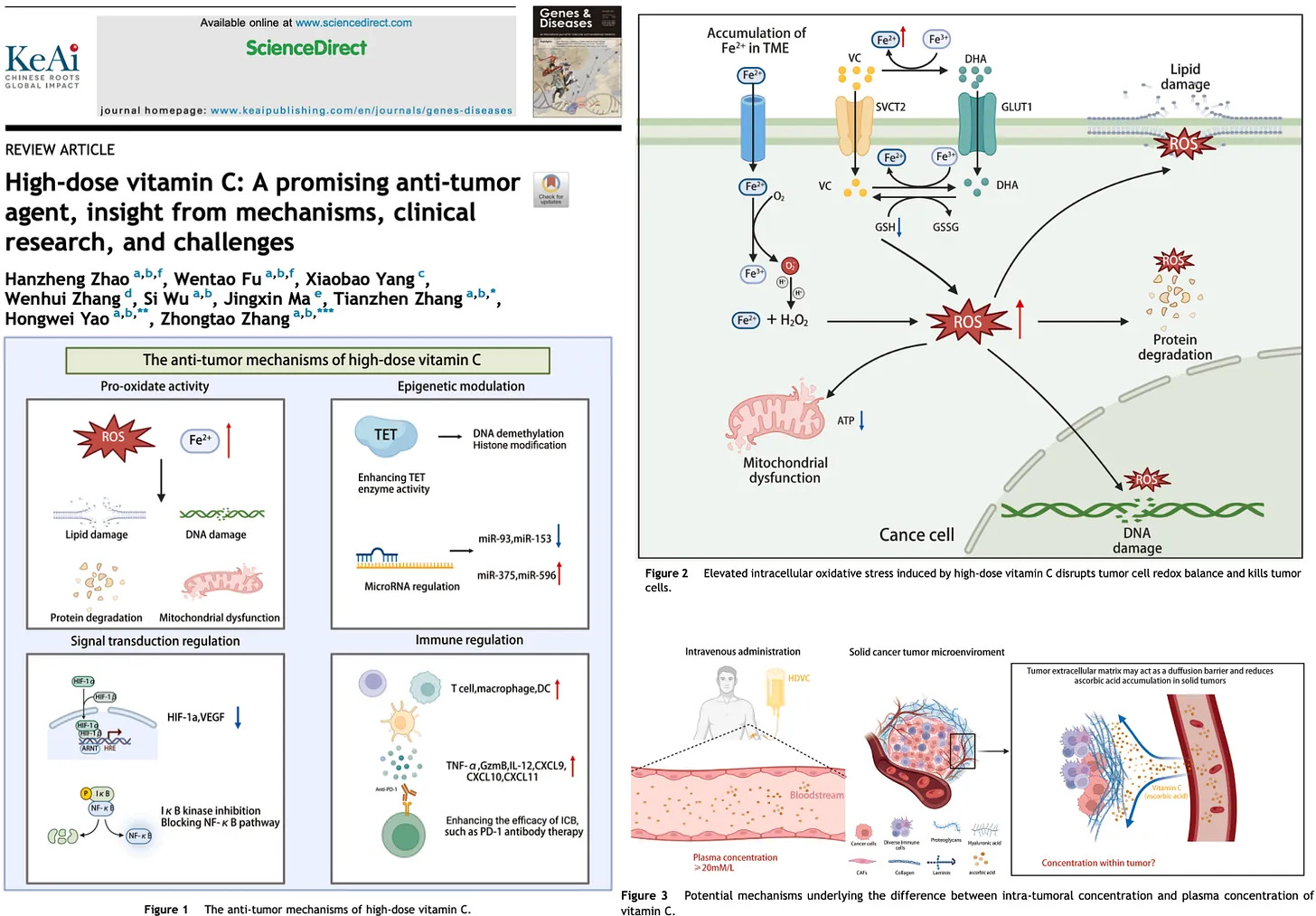
Before we dig into the extremely promising randomized trial, it’s important to understand that over 100 studies and decades of evidence reveal that vitamin C exerts anti-cancer effects through four powerful mechanisms: pro-oxidative cytotoxicity, epigenetic reprogramming, signaling-pathway suppression, and immune activation. A recent comprehensive review paper titled, High-dose vitamin C: A promising anti-tumor agent, insight from mechanisms, clinical research, and challenges, analyzed 150+ studies and found that when vitamin C reaches true pharmacologic levels (20–30 mM), it behaves like a targeted, tumor-selective therapy — something past trials missed by under-dosing.

Now, a recently published randomized controlled trial has reported striking results in one of the deadliest cancers: Stage IV pancreatic ductal adenocarcinoma. Researchers tested whether adding high-dose intravenous vitamin C (75 grams, 3 times per week) to standard chemotherapy could improve survival outcomes.
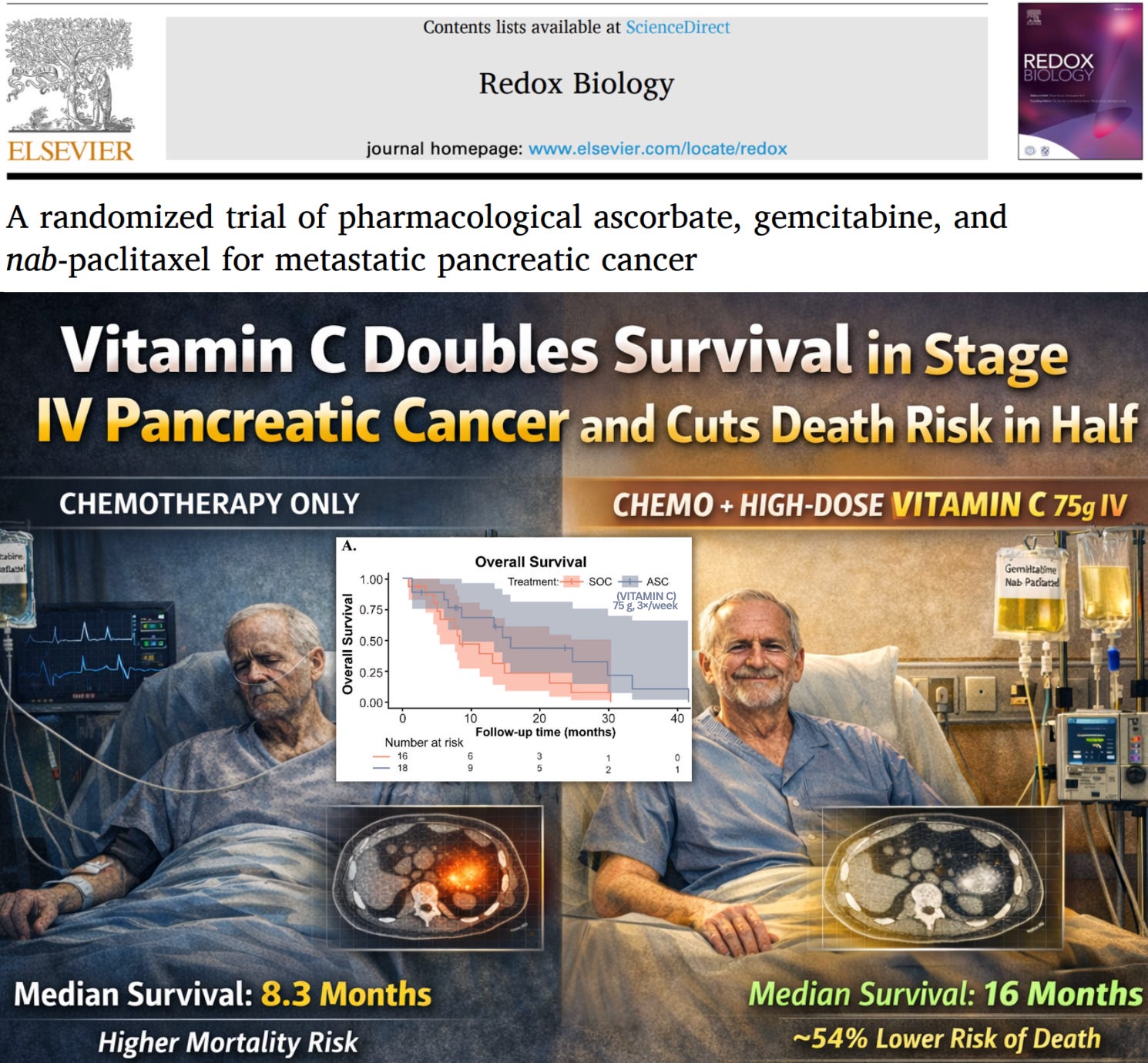
Patients were randomized 1:1 to receive either gemcitabine plus nab-paclitaxel alone (n=16) or the same chemotherapy regimen combined with pharmacologic IV vitamin C (75 g, three times weekly) (n=18).
The results were striking in patients with Stage IV pancreatic cancer who received high-dose IV vitamin C:
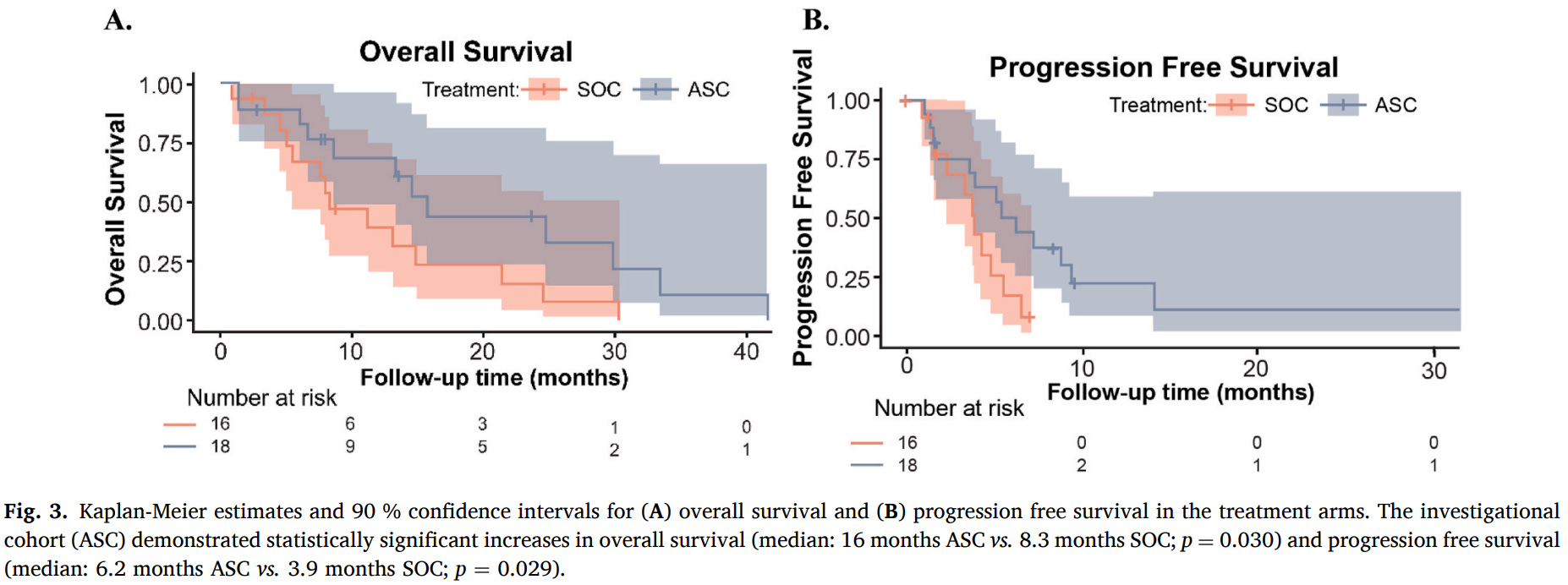
Median overall survival doubled
8.3 months (chemo alone) → 16 months (chemo + IV vitamin C)~54% reduction in risk of death
Hazard ratio: 0.46Progression-free survival improved
3.9 months → 6.2 monthsHigher objective response rate
23% → 38%Lower rates of serious adverse events overall
Lower rates of severe hematologic toxicity (e.g., neutropenia)
Pharmacologic plasma vitamin C levels achieved (~500-fold increase)
Both groups received identical chemotherapy backbones, meaning the survival difference is attributable to the addition of vitamin C.
While the trial was relatively small and stopped early at interim analysis due to a strong efficacy signal, the magnitude of effect in a randomized setting is difficult to ignore. In a disease where median survival has historically hovered around 8–11 months, doubling survival warrants serious attention and larger confirmatory trials.
This study represents one of the strongest modern clinical signals supporting high-dose vitamin C as an anti-cancer agent.
Epidemiologist and Foundation Administrator, McCullough Foundation
Support our mission: mcculloughfnd.org
Please consider following both the McCullough Foundation and my personal account on X (formerly Twitter) for further content.
Now do a study of vitamin C only without the chemo.
Good luck finding a place to give it and paying out-of-pocket for it because no insurance will cover it.