


By Peter A. McCullough, MD, MPH
In this March 24, 2026 episode of Focal Points, captured by Alter AI and titled “The Hot Zone,” Dr. Peter McCullough and historian-investigator John Leake analyze the ongoing serogroup B meningococcal (MenB) outbreak centered in Canterbury, UK. They examine its epidemiology, potential origins, and broader implications for public health transparency and vaccine policy.
The discussion opens by explaining the term “hot zone”—both a military term for an active combat area and a medical metaphor for an outbreak epicenter. Here the “hot zone” is Canterbury, where dozens of young adults connected to the University of Kent and a nightclub called Club Chemistry became severely ill. By mid-March, 30 meningitis cases and two deaths had been confirmed, with other cases identified among individuals who had traveled to London, Manchester, and even France.
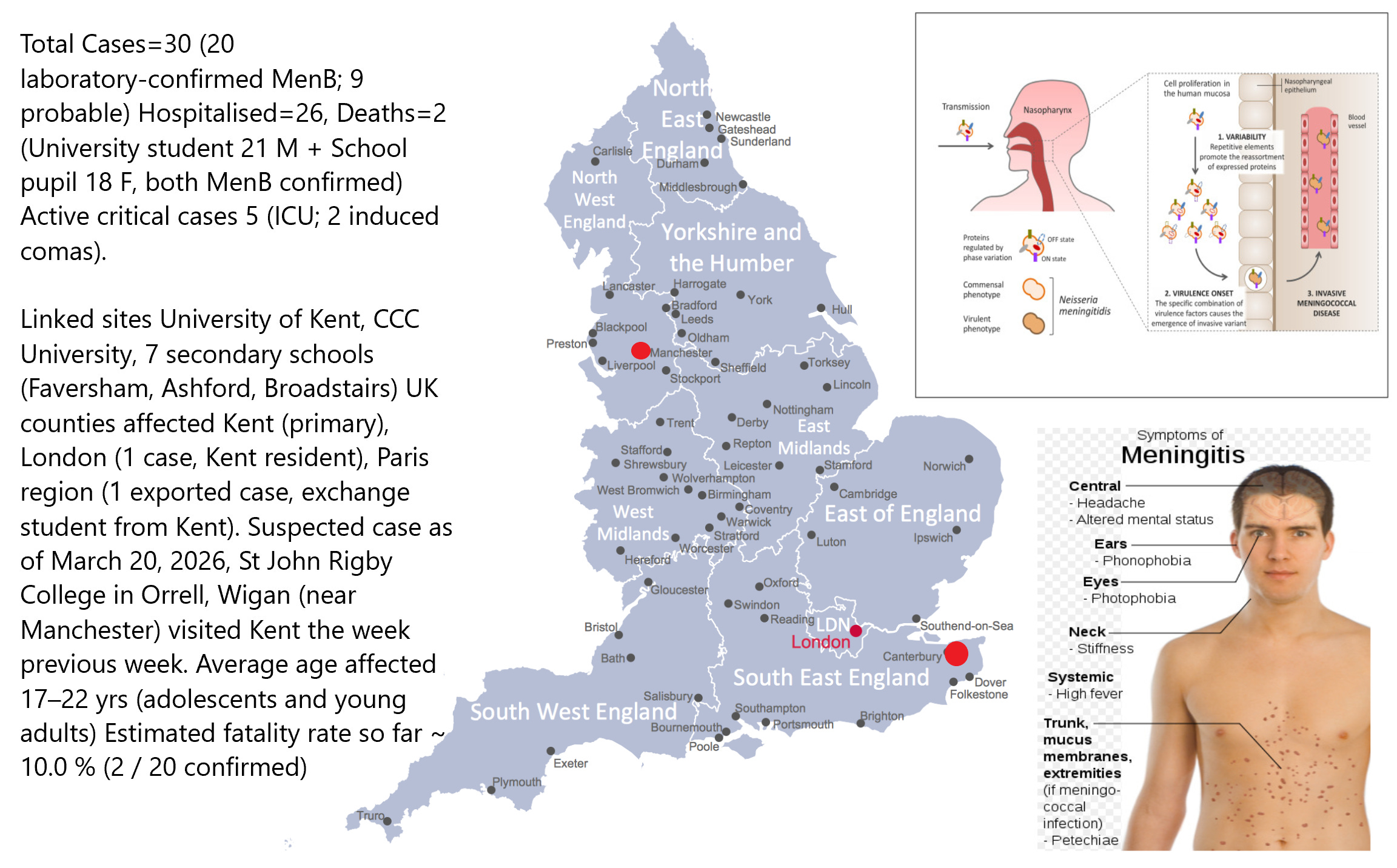
Dr. McCullough describes Neisseria meningitidis serogroup B as a naturally colonizing bacterium, present in 10–15% of healthy adults but capable of causing deadly infection when the nasal or throat mucosa is damaged—through upper respiratory infections, vaping, or drug use such as cocaine. The duo speculate that shared inhalant paraphernalia (e.g., straws, vapes) and sleep deprivation among students may have facilitated transmission.
Treatment strategies are straightforward: rapid diagnosis, immediate intravenous ceftriaxone, adjunct steroids, and mass prophylaxis with single-dose ciprofloxacin, which can eliminate nasopharyngeal carriage in one dose. McCullough notes antibiotics, not vaccination, are what currently “win the day,” while arguing that public health authorities often use outbreaks to push vaccine campaigns.
Both hosts discuss how the MenB vaccine (Bexsero), introduced in 2015 for infants but not routinely for teens, provides incomplete and delayed protection. They anticipate that UK health officials will use this outbreak to justify expanding MenB vaccination to adolescents and possibly even U.S. students. However, they raise a deeper concern: long-term, widespread use of non‑sterilizing (“leaky”) vaccines may create evolutionary pressure for more virulent or vaccine‑resistant strains—analogous to selective antibiotic resistance.
McCullough and Leake explore multiple possible scenarios, including laboratory involvement, though they stop short of asserting one. They note the UK hosts several meningococcal research centers—such as Oxford’s ChAdOx1 MenB genetic vaccine program and Bristol’s Spencer‑Dayman Laboratories, which store thousands of pathogenic isolates. They emphasize the ethical and biosafety risk of gain‑of‑function or challenge‑study research, warning that “biolabs may now pose greater risk to public health than nature itself.”

The pair conclude that the outbreak, though nearing resolution, illustrates the fragility of modern biosecurity systems and the need for open genomic investigation to confirm whether this strain emerged naturally or from a research environment. They call for complete transparency from UK authorities, independent genomic verification, and prudent hygienic behavior among young people.
Finally, McCullough and Leake remind listeners that resilience against infection depends not only on pharmaceuticals but also on immune health, sleep, nutrition, and basic hygiene—“wholesome routines,” as Leake calls them. The show ends on a cautiously optimistic note that antibiotics, careful investigation, and renewed respect for natural immunity will close this “Canterbury tale.”
Please subscribe to FOCAL POINTS as a paying ($5 monthly) or founder member so we can continue to bring you the truth.
Peter A. McCullough, MD, MPH
President, McCullough Foundation
FOCAL POINTS has partnered with Patriot Mobile to defend your medical freedom. Join Patriot Mobile today!

References
Focal Points Podcast – The Hot Zone with Dr. Peter McCullough and John Leake (Transcript, Mar 23 2026).
UK Health Security Agency (UKHSA) reports on MenB outbreaks (March 2026).
McCullough P.A., Leake J. “Focal Points: Meningitis B Hot Zone, Kent UK.” America Out Loud (2026).


