


By Peter A. McCullough, MD, MPH
On this segment of Outside the Beltway, John Fredericks asked me a simple question: “Why do pediatricians try to give so many vaccines to a baby on the same visit?” The simple answer is financial incentives by government and private insurance sources of clinic revenue. However, the consequences are enormous. Administering many vaccines at once drives super-inflammation, a dramatic rise in cytokines, and systemic reactions including subclinical encephalitis. Before this practice, rates of autism were low. Gayle DeLong called this the “4:3:1:3:3.” She found the salvos of serial vaccines in childhood were independently associated with autism and a host of neurological problems on a population level.
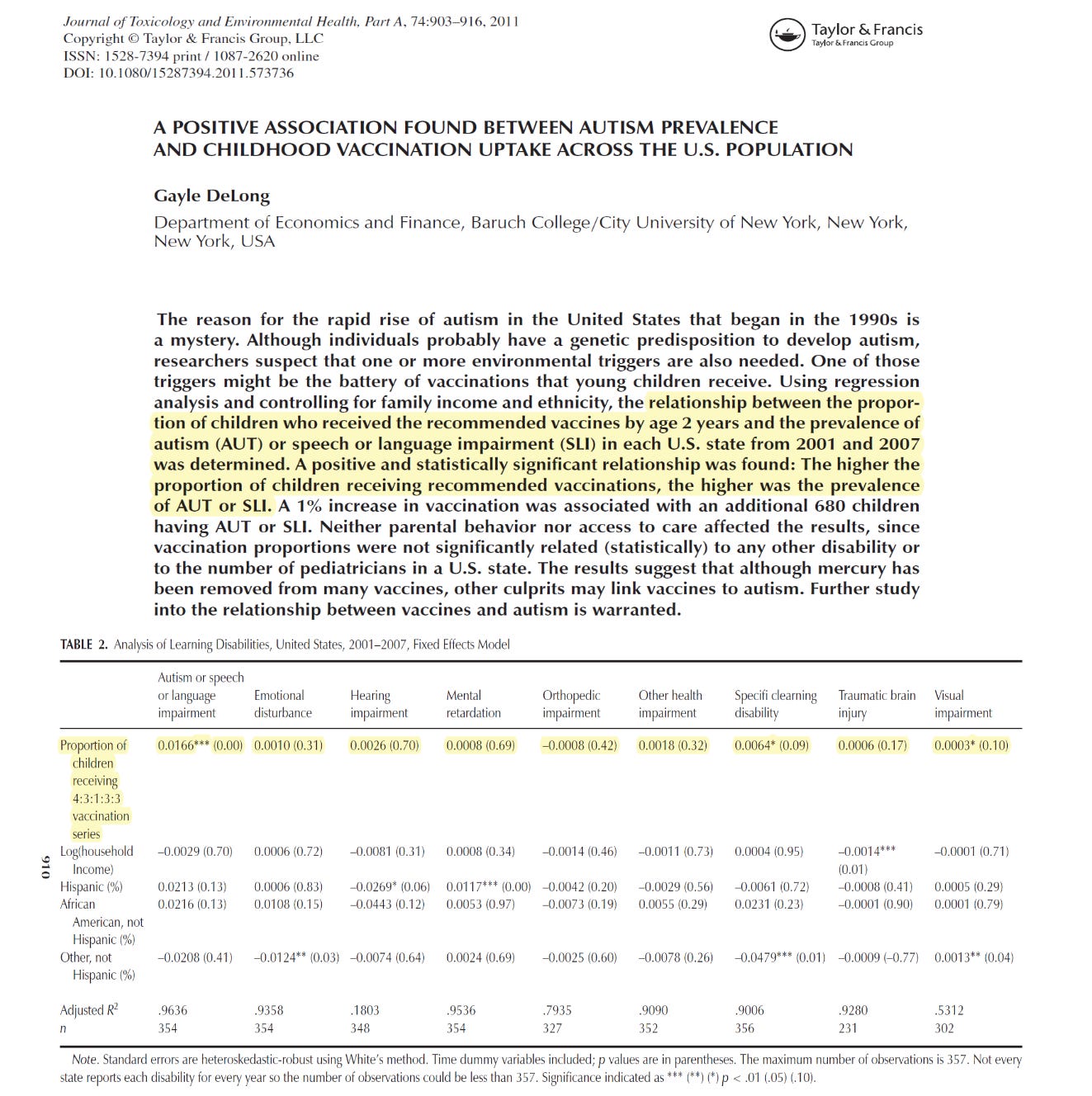
Specifically, 4:3:1:3:3 meant a child has received:
4 doses of DTaP/DTP (diphtheria, tetanus, pertussis) vaccine
3 doses of polio vaccine (IPV/OPV)
1 dose of MMR (measles, mumps, rubella) vaccine
3 doses of Hib (Haemophilus influenzae type b) vaccine
3 doses of hepatitis B vaccine
In today’s ACIP schedule. The cadence of shots has stepped up:
Current ACIP Childhood Immunization Schedule Through Age 4
The following summarizes the routine ACIP schedule using the earliest recommended ages for administration and assumes influenza vaccine is available during seasonal visits. The count shown reflects the number of vaccine-preventable diseases and therefore antigens exposed to babies, not the number of injections. Before the age of four, by which the vast majority of children are diagnosed with neurodevelopmental disorders such as autism, 32 complex antigens are serially injected into infants and toddlers. This does not include COVID-19 mRNA vaccines, which could be given if the child is considered to have an indication.
Under current CDC guidance, COVID-19 vaccination may be considered beginning at 6 months of age, particularly for infants at increased risk of severe COVID-19. CDC-recognized risk factors include moderate or severe immunocompromise; chronic lung disease (including moderate-to-severe asthma); chronic heart disease; neurologic or neurodevelopmental disorders; diabetes mellitus; obesity; chronic kidney disease; chronic liver disease; blood disorders such as sickle cell disease; genetic, metabolic, or congenital conditions; and medical complexity requiring substantial healthcare support. Prematurity (birth before 37 weeks’ gestation) is also specifically recognized as being associated with increased COVID-19-related hospitalization in children 6-23 months of age. Vaccination may additionally be considered for children with increased exposure risk or when parents and clinicians conclude through shared clinical decision-making that the anticipated benefits outweigh potential risks for the individual child [vaccinewatch.org], [cdc.gov] The American Academy of Pediatrics takes a broader position, recommending COVID-19 vaccination for all infants 6 through 23 months of age who do not have contraindications.
Birth
Hepatitis B
Complex antigens: 1
Hepatitis B [vaccinewatch.org]
2 Months
DTaP
IPV
Hib
Hepatitis B
Pneumococcal conjugate vaccine (PCV)
Rotavirus
Complex antigens: 8
Diphtheria
Tetanus
Pertussis
Poliomyelitis
Haemophilus influenzae type b disease
Hepatitis B
Pneumococcal disease
Rotavirus disease [vaccinewatch.org], [cdc.gov]
6 Months
DTaP
IPV
Hepatitis B
Pneumococcal conjugate vaccine
Rotavirus (series-dependent)
Influenza
COVID-19
Complex antigens: 9
Diphtheria
Tetanus
Pertussis
Poliomyelitis
Hepatitis B
Pneumococcal disease
Rotavirus disease
Influenza
COVID-19 [vaccinewatch.org], [weence.com]
12-15 Months
MMR
Varicella
Hib booster
Pneumococcal booster
Hepatitis A
Influenza
Complex antigens: 8
Measles
Mumps
Rubella
Varicella (chickenpox)
Haemophilus influenzae type b disease
Pneumococcal disease
Hepatitis A
Influenza [vaccinewatch.org], [weence.com]
15-18 Months
DTaP booster
Influenza
Complex antigens: 4
Diphtheria
Tetanus
Pertussis
Influenza [vaccinewatch.org]
18-23 Months
Hepatitis A (second dose)
Influenza
Complex antigens: 2
Hepatitis A
Influenza [vaccinewatch.org]
Age 4 Years
DTaP booster
IPV booster
MMR booster
Varicella booster
Influenza
Complex antigens: 9
Diphtheria
Tetanus
Pertussis
Poliomyelitis
Measles
Mumps
Rubella
Varicella (chickenpox)
Influenza [vaccinewatch.org], [weence.com]
📝Please subscribe to FOCAL POINTS as a paying ($5 monthly) or founder member so we can continue to bring you the truth. AlterAI may be used to assist in searches, synthesis, and review.
Peter A. McCullough, MD, MPH
Chief Scientific Officer, The Wellness Company
DeLong G. A positive association found between autism prevalence and childhood vaccination uptake across the U.S. population. J Toxicol Environ Health A. 2011;74(14):903-916. doi:10.1080/15287394.2011.573736.


