


By Peter A. McCullough, MD, MPH
If you are like me, we worry about cognitive decline over the next several decades by watching what has happened to our parents and grandparents. Thus far in human history, by age 80, 50% have cognitive decline, age 90—75%, and at 100 years, 85% have lost mental function and a sizable fraction have clinical Alzheimer’s disease. So I reached out to neurological specialist, Dr Ravi Kumar for a full update.
Here’s the summary:
🧠 Alzheimer’s Disease: Prevention Over Cure — The McCullough-Kumar Interview
Dr. Peter McCullough and Dr. Ravi Kumar — a board-certified neurosurgeon trained at Mayo Clinic and now assistant professor at UNC — delivered one of the most comprehensive public discussions on Alzheimer’s disease to date. With both of McCullough’s parents afflicted, the conversation was personal as well as clinical.
The Amyloid Dead End
Dr. Kumar dismantled the beta-amyloid hypothesis that has dominated Alzheimer’s research for decades. “We figured out ways to get it out of the brain, but people don’t get better,” he noted. The monoclonal antibodies — lecanemab and donanemab — clear plaques effectively but come with alarming rates of ARIA (brain swelling and hemorrhage), affecting up to one in four patients. Those at highest risk for these side effects? ApoE4 carriers — the very population most vulnerable to Alzheimer’s in the first place.
The existing cholinesterase inhibitors (donepezil, rivastigmine, galantamine) and the NMDA antagonist memantine were dismissed as purely symptomatic with trivial improvements in ADASCOG of < 2 points. “They don’t even touch the disease,” Kumar said. “It’s almost like taking a pain med for a cut on your arm.”
The Real Drivers: Metabolic Health and Lifestyle
Kumar identified insulin resistance as the number one modifiable risk factor. The brain consumes 20% of the body’s energy despite being only three pounds. When neurons become insulin-resistant, they enter an energy crisis — housekeeping functions collapse, beta-amyloid accumulates, tau tangles form, and synapses deteriorate.
Key protective strategies discussed:
Walking outside daily — the human body’s most fundamental movement, shown to improve surgical recovery and overall health
Resistance training — muscle mass acts as a glucose sink, maintaining insulin sensitivity
Outdoor exposure — sunlight for vitamin D and circadian regulation; the Japanese practice of forest bathing for mental health
Sleep quality — the glymphatic system flushes toxins including beta-amyloid during deep sleep; even one night of sleep deprivation raises brain amyloid by 5%
Alcohol avoidance — described bluntly as “a neurotoxin… designed by fungus to hurt animals with nervous systems”
Genetics Are Not Destiny
The ApoE4 allele dramatically raises Alzheimer’s risk — from ~5% baseline (E3/E3) to ~65% lifetime risk (E4/E4), with even higher rates in African-Americans who drink alcohol. Yet Kumar pointed to Nigerian populations with high ApoE4 prevalence and near-zero Alzheimer’s rates among those maintaining traditional diets and lifestyles. “You have to take these variants and load them with a certain diet and lifestyle characteristic,” he explained. McCullough, who tested as E2/E3 (the protective variant), noted his parents behave clinically like E4 carriers — underscoring that environment often overrides genetics.
New Diagnostics, Old Failures
Blood tests measuring phosphorylated tau-217 now achieve 96% specificity for Alzheimer’s detection — outperforming both spinal taps and PET scans. These tests can identify disease before symptoms appear, shifting diagnosis from clinical to biochemical. Yet the treatment landscape remains barren: the ADAS-Cog scale (0–70) shows existing interventions moving scores by only a point or two.
Supplements Worth Considering
Vitamin D — deficiency mimics dementia; optimal levels above 30 ng/mL
Magnesium L-threonate — crosses the blood-brain barrier; small trials show modest cognitive improvement
Coenzyme Q10 — critical for mitochondrial energy production; McCullough recommends ~600–800 mg daily, especially for statin users
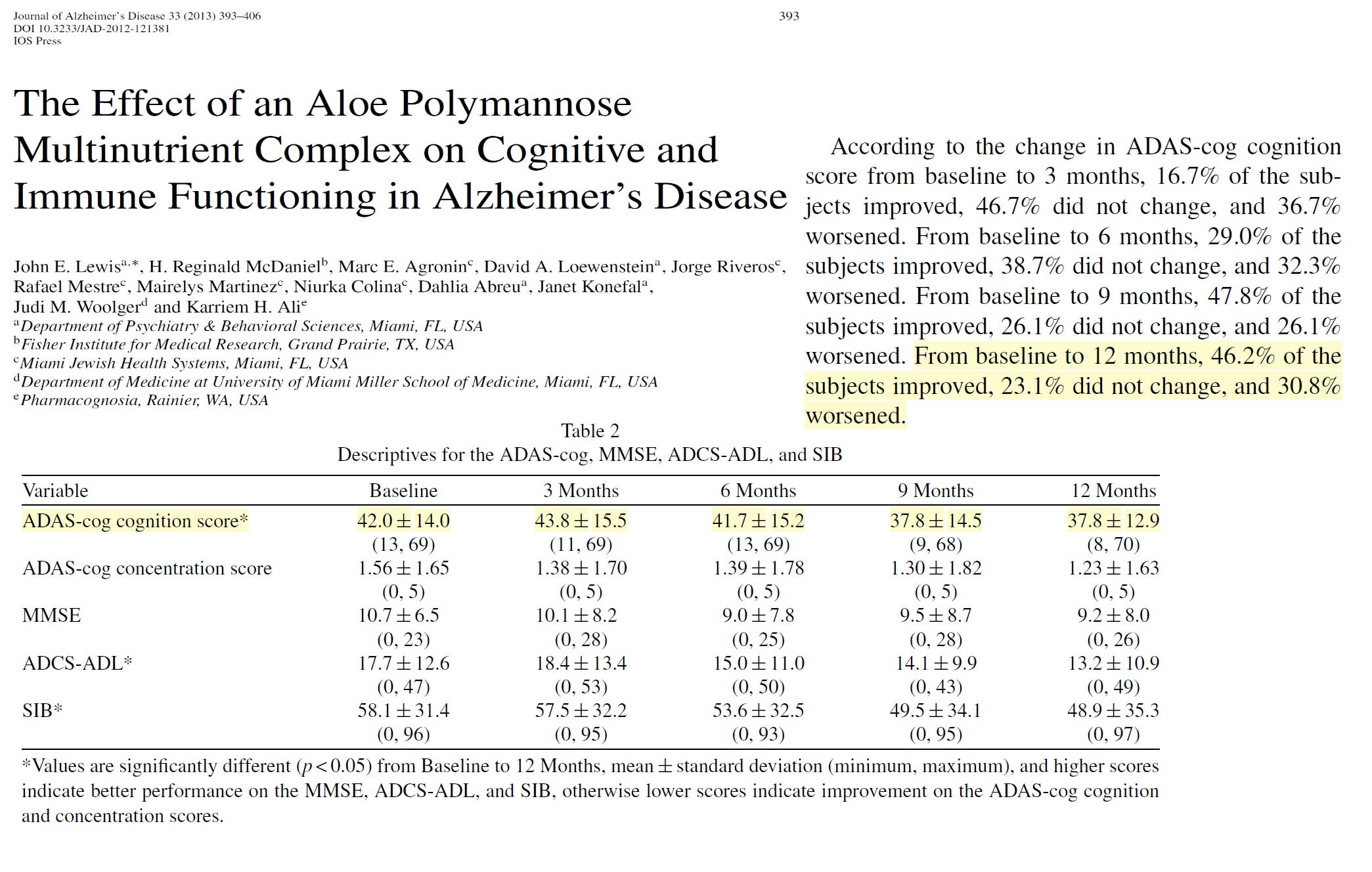
Polymannose derivatives (aloe-based) — Dr. John Lewis’s research at University of Miami showed 4.5-point ADAS-Cog improvements in nursing home patients over 12 months, outperforming prescription drugs
The Bottom Line
“Prevention has to be the focus,” Kumar emphasized. Modifiable risk factors — including regular exercise outside, abstinence from alcohol, hearing loss correction (which alone can reduce dementia risk by 50–60%), smoking cessation, hypertension control, and social connection — “blow any drug out of the water.”
Please subscribe to FOCAL POINTS as a paying ($5 monthly) or founder member so we can continue to bring you the truth. AlterAI may be used to assist in searches, synthesis, and review.
Peter A. McCullough, MD, MPH
President, McCullough Foundation
FOCAL POINTS has partnered with Pique to promote your optimal health. To learn more about Pique products and get 20% off and free gifts today, https://www.piquelife.com/DRPETER

References
McCullough P, Kumar R. Alzheimer’s Disease: Epidemiology, Detection, Treatment. The McCullough Report / America Out Loud Talk News / Dr. Kumar’s Discovery Podcast. Broadcast date not specified in transcript. Available via McCullough Report and Focal Point Substack.
https://drkumardiscovery.com/


