


By Peter A. McCullough, MD, MPH
If you’re wondering about the current U.S. Cyclospora (cyclospora cayetanensis) outbreak, the CDC says the 2026 outbreak season began on May 1, 2026. As of July 2026, health officials were still investigating multiple clusters of cases, including a multistate outbreak linked to iceberg lettuce.
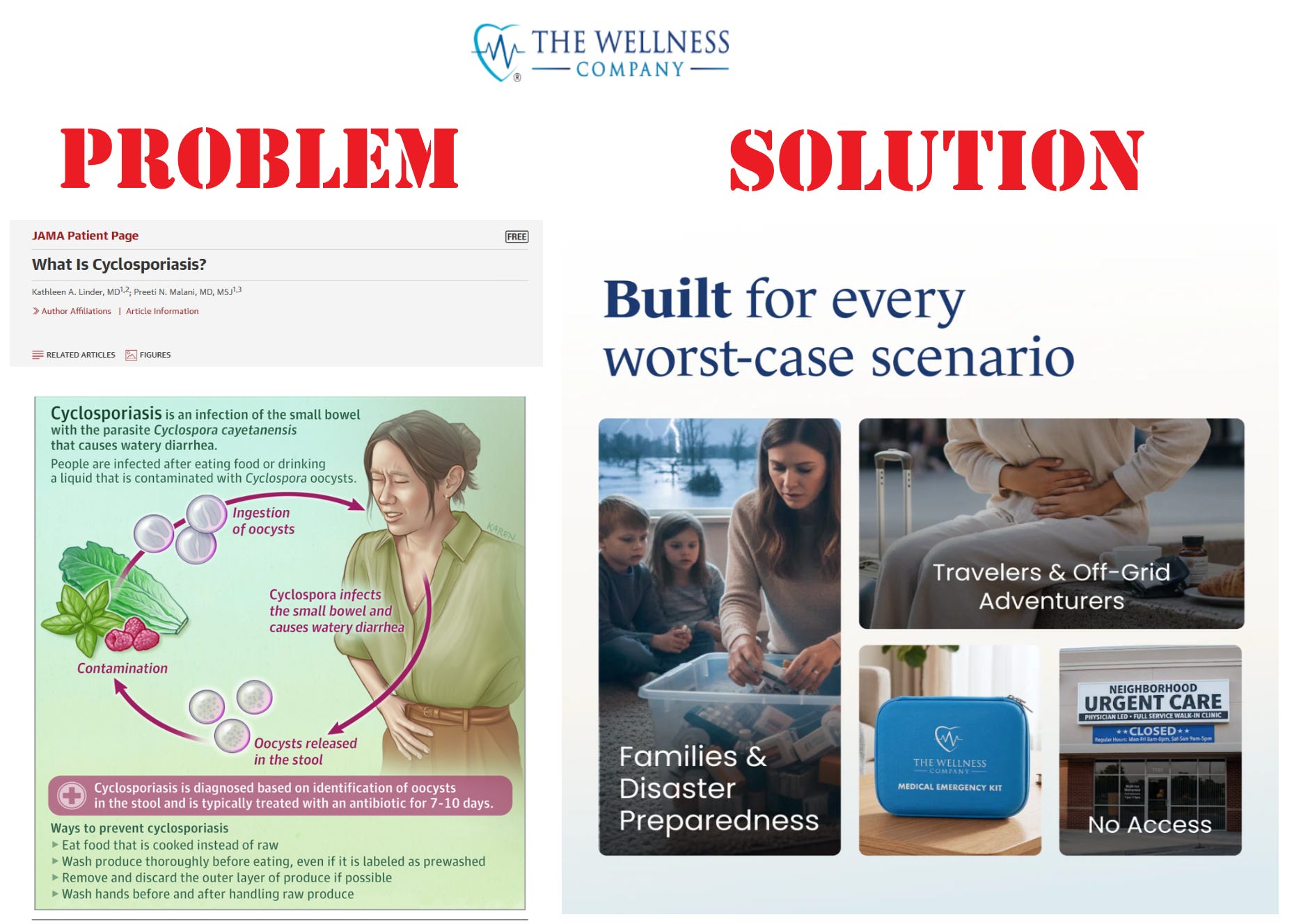
🥬 Cyclospora Crisis Entering Fourth Month
The Outbreak
Dr. Peter McCullough, Chief Scientific Officer of The Wellness Company, sat down with John Fredericks on Outside the Beltway to discuss the cyclospora outbreak linked to contaminated lettuce supplied to Taco Bell from farms in central Mexico.
What happened: The protozoal parasite Cyclospora — a waterborne organism typically found in stagnant ponds and contaminated water sources — made its way onto lettuce at the farm level. The likely mechanism: irrigation or washing with contaminated water that got absorbed into the leaves themselves.
Why it spread so fast: Lettuce is a sponge. As McCullough and Fredericks discussed, nobody peels and washes every individual leaf. You pull off the outer layers, run the head under water, and call it done. But cyclospora gets inside the vegetable — surface rinsing won’t touch it. Add in supply chain mixing, intermediaries hosing down produce, and the fact that Taco Bell serves the lowest-cost demographic at massive scale, and you’ve got a “Code Brown” wildfire.
The illness: Explosive watery diarrhea that can last a month or more. Dehydration. Hospitalization. People missing weeks of work. Not a stomach bug — a serious protozoal infection.
The Institutional Failure
The CDC has 12,000 employees and a $9 billion budget. The USDA and FDA are supposed to inspect imported produce. None of them caught this before people got sick. None of them got ahead of it after people got sick either.
McCullough’s phrase — “paralysis by analysis” — captures the core problem. These agencies excel at holding meetings and issuing press releases days after the damage is done. What they don’t do is protect Americans in real time.
Fredericks noted that when a reporter at a White House press briefing tried to blame DOGE cuts for the outbreak, Press Secretary Karoline Leavitt pointed out the obvious: 12,000 employees should be able to handle a diarrhea outbreak. The impulse to politicize food safety failures instead of fixing them is exactly why people have lost faith in these institutions.
Should America Stop Eating Lettuce?
No — but you should stop trusting the system to protect you.
McCullough’s point wasn’t that lettuce is inherently dangerous. It’s that you cannot know whether the lettuce on your plate — at a restaurant, from a grocery store, delivered via Instacart — is contaminated. You simply don’t know. The supply chain is opaque. The regulators are reactive. The inspection protocols are inadequate.
The practical takeaway:
Wash produce thoroughly — but understand that with leafy greens that absorb water, washing has limits.
Have treatment on hand. McCullough emphasized that the combination of trimethoprim-sulfamethoxazole (Bactrim/Septra) shuts this down in about a week instead of a month of misery. Without it, you’re at the mercy of an overburdened healthcare system that’s perpetually behind the curve.
Optimize your immune system. A robust immune system can handle a low-dose exposure that floors someone with a junk-food diet. McCullough recommended immune-support supplements (he mentioned The Wellness Company’s Natural Immunity capsules) and daily nasal/throat spray (Immune Defense) containing xylitol and erythritol to prevent pathogens from colonizing.
The larger point: This isn’t really about lettuce. It’s about a public health infrastructure that spends billions preparing for theoretical biothreats while getting pantsed by a protozoan on a salad bar. The solution isn’t to stop eating vegetables — it’s to stop outsourcing your health security to agencies that have repeatedly demonstrated they can’t deliver.
The Cyclospora Treatment Protocol
Scenario Intervention Active cyclospora infection Trimethoprim-sulfamethoxazole (Bactrim/Septra), 1 tablet twice daily, typically ~1 week course. If the patient is sulfa-allergic then a doctor may consider nitazoxanide is which FDA-approved for certain other protozoal infections (such as Giardia and Cryptosporidium) at 500 mg orally every 12 hours with food for 3 days.
Symptom management Imodium (OTC) to slow diarrhea; Pedialyte or electrolyte replacement for dehydration Prevention/immune support Immune Defense nasal spray + throat spray (2–4 sprays each nostril, 5 sprays throat), daily immune optimization Immune-support supplements, adequate nutrition, avoid junk-food loaded with sugar, starches, and saturated fat.
Please subscribe to FOCAL POINTS as a paying ($5 monthly) or founder member so we can continue to bring you the truth. AlterAI may be used to assist in searches, synthesis, and review.
Peter A. McCullough, MD, MPH
Chief Scientific Officer, The Wellness Company
References
Transcript: Outside the Beltway with John Fredericks, interview with Dr. Peter McCullough, Chief Scientific Officer of The Wellness Company, July 22, 2026 (attached).
The Wellness Company Medical Emergency Kit (Aqua Marine kit): twc.health/Godzilla, promo code Godzilla for 10% off.


