


Yesterday, I testified before the Michigan House Oversight Subcommittee on Child Welfare System on Henry Ford Health’s unpublished vaccinated-vs.-completely-unvaccinated birth cohort study.
Henry Ford declined to appear despite being assured the opportunity to have both the first and last word.
So I found myself in the unusual position of defending Henry Ford’s own study—the study Henry Ford itself should have been there to defend, explain, and openly scrutinize.
As I stated during the hearing, this was not a parental survey or a small convenience sample. It was the largest and most comprehensive vaccinated vs. completely unvaccinated birth cohort study to date looking at long-term chronic disease outcomes.
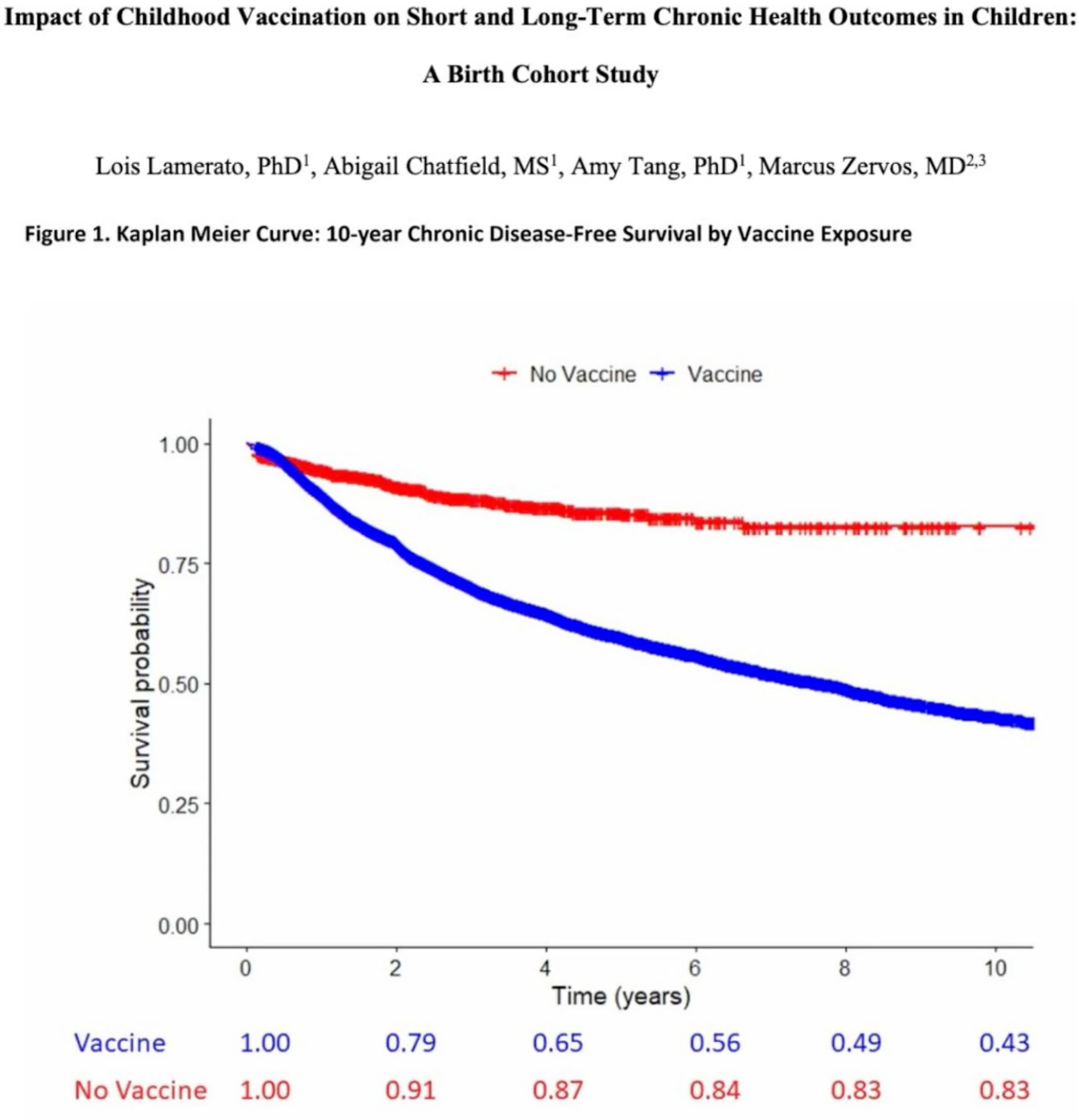
It was a longitudinal birth cohort of 18,468 children, including roughly 16,500 vaccinated children and nearly 2,000 completely unvaccinated children. Investigators used medical records and the Michigan immunization registry to verify vaccination status, then applied standard epidemiological methods including incidence-rate analyses, Cox proportional-hazards models, multivariable adjustment, Kaplan-Meier survival analysis, and multiple sensitivity analyses.
As I told lawmakers, the main result was striking. After statistical adjustment for important baseline differences, vaccinated children had roughly a 2.5-times higher risk of developing a chronic health condition during follow-up.
At 10 years, the Kaplan-Meier analysis estimated that 57% of vaccinated children versus 17% of completely unvaccinated children had developed at least one chronic condition.
Then I opened our peer-reviewed reanalysis of the Henry Ford data and walked lawmakers through the raw numbers and crude proportions.
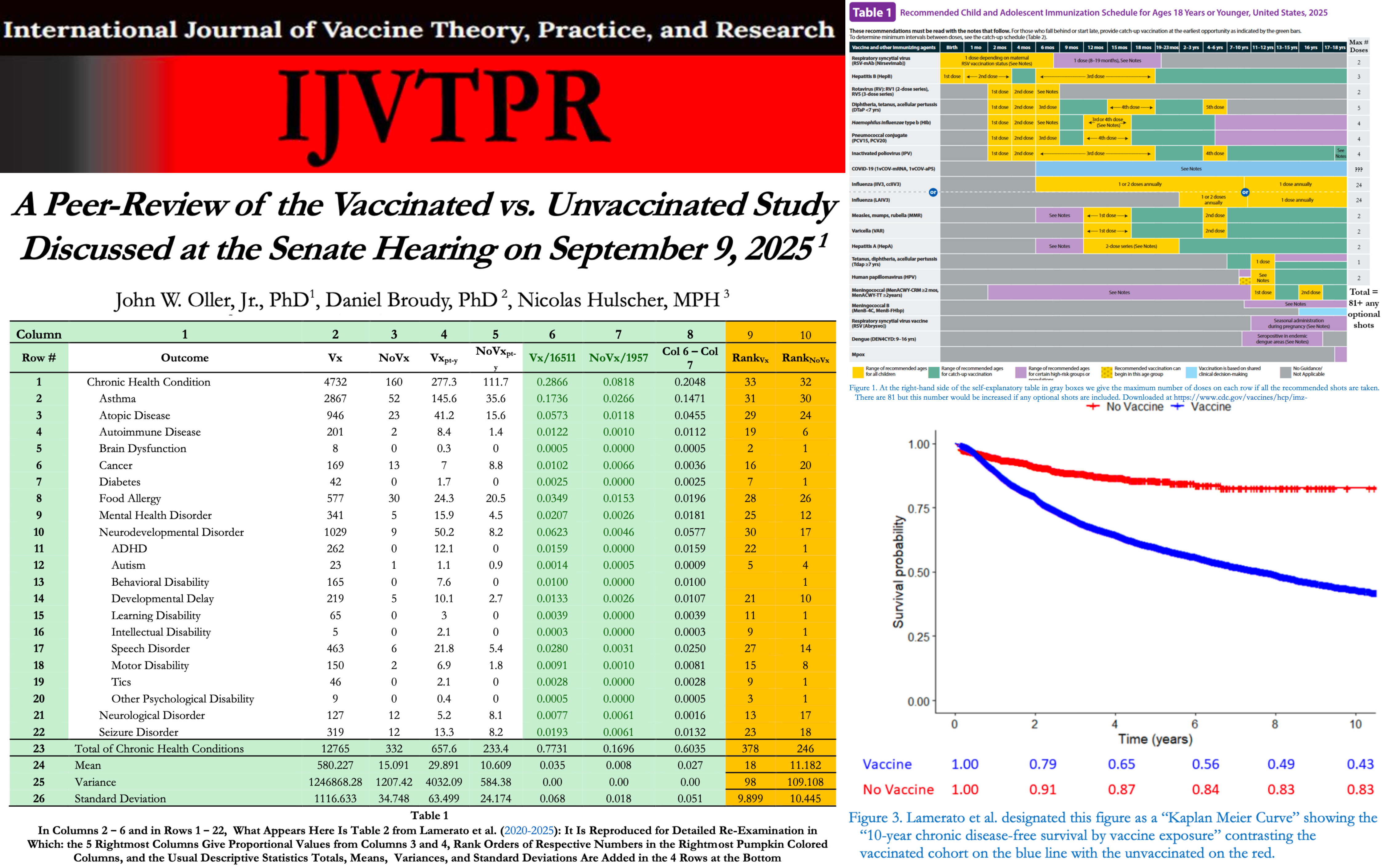
As I stated:
“ALL 22 of the chronic disease categories were proportionally higher in the vaccinated children in the largest and most comprehensive vaccinated vs. unvaccinated birth cohort study to date.”
Our reanalysis found:
Any chronic condition: 250% HIGHER
Asthma: 553% HIGHER
Atopic disease: 386% HIGHER
Autoimmune disease: 1,120% HIGHER
Brain dysfunction: ONLY IN VACCINATED
Cancer: 54% HIGHER
Diabetes: ONLY IN VACCINATED
Food allergy: 128% HIGHER
Mental health disorders: 696% HIGHER
Neurodevelopmental disorders: 1,254% HIGHER
ADHD: ONLY IN VACCINATED
Autism: 180% HIGHER
Behavioral disabilities: ONLY IN VACCINATED
Developmental delay: 412% HIGHER
Learning disabilities: ONLY IN VACCINATED
Intellectual disabilities: ONLY IN VACCINATED
Speech disorders: 803% HIGHER
Motor disabilities: 810% HIGHER
Tics: ONLY IN VACCINATED
Other psychological disabilities: ONLY IN VACCINATED
Neurological disorders: 26% HIGHER
Seizure disorders: 216% HIGHER
These are raw proportional comparisons from the study’s reported counts, separate from the original investigators’ adjusted statistical models.
One lawmaker directly challenged me on perhaps the biggest criticism of the study: the unvaccinated children had shorter follow-up.
As I explained, the investigators knew that. They therefore repeated the analysis in children followed for at least 1 year, 3 years, and 5 years. The chronic-disease association remained statistically significant in every analysis.
But perhaps the most revealing part of the hearing involved recorded comments from Henry Ford researcher Dr. Marcus Zervos, the senior author of the study:
“Yeah, it is important.”
“I’m just not gonna do [publish] it. I’m not gonna do it because I don’t want to.”
“I don’t want to suffer what McCullough did.”
After Del Bigtree said, “If we weren’t in this world of censorship…” Zervos replied: “I’d put it out just how it is.”
“Part of my reluctance to do anything is that nothing is going to come out of it. Other than me losing my job, which I’d rather not see happen.”
“It’s actually the right thing to do.”
“It’s the right thing to do, but I just don’t want to.”
I asked the obvious question during the hearing:
Why would a highly respected Henry Ford researcher be worried about losing his job for publishing a study he considered important and said he would “put out just how it is”?
That is a question Henry Ford should’ve been there to answer.
The next step is straightforward: commission a much larger vaccinated-vs.-completely-unvaccinated birth cohort, correct the limitations of the original analysis, use stronger matching and standardized follow-up, and make the results available for independent scientific scrutiny.
In the meantime, every single study so far comparing vaccinated to completely unvaccinated children finds the same pattern: the vaccinated are far sicker. These studies can be found in Table 4 of the McCullough Foundation study, Determinants of Autism Disorder.

All in all, I’d say yesterday’s hearing was a major WIN.
Epidemiologist and Foundation Administrator, McCullough Foundation
Support our mission: mcculloughfnd.org
Please consider following both the McCullough Foundation and my personal account on X (formerly Twitter) for further content.


