


By Peter A. McCullough, MD, MPH
This week US Health and Human Services rolled out their new inverted food pyramid that has created a buzz in the health freedom community. Analysis of my response was summarized by AlterAI.
🩺 Summary: Dr. Peter McCullough’s Response to the New HHS Inverted Food Pyramid
In his Focal Points presentation, Dr. Peter McCullough, an internist, cardiologist, and epidemiologist, critiques and evaluates the new inverted food pyramid introduced by Robert F. Kennedy Jr. and the Make America Healthy Again (MAHA) coalition under the Department of Health and Human Services (HHS). The new model flips the traditional pyramid structure—placing previously limited foods at the base and moving carbohydrate-heavy items to the to the bottom tip meaning low or no intake.

🔍 Core Principles from McCullough’s Analysis
Humans as Omnivores but Poor Starch Tolerance
McCullough emphasizes that humans are omnivorous by design but historically suffered rising chronic disease rates after adopting agrarian, starch-based diets (wheat, rice, potatoes). He calls starch the primary driver of obesity and insulin resistance, noting that up to 60% of modern caloric intake comes from starch, which he likens to “sugar molecules linked together.”Three Primary Dietary Villains — “The Three S’s”
He identifies three major contributors to chronic disease:Sugar – Addictive, nonessential, and dangerous in both processed and natural concentrated forms. This group is associated with obesity and diabetes.
Starch – Excessive carbohydrates converted to sugar, fueling obesity and diabetes.
Saturated Fat – Found in animal products like meat, butter, cheese, and pork; stimulates hepatic cholesterol synthesis and promotes atherosclerosis. Saturated animal fat is calorie dense, provides nonessential fatty acids, and directly contributes to obesity. They also are associated with increased risk of some cancers. So this group is associated with atherosclerotic cardiovascular disease, cancer, and obesity.
He critiques the new HHS pyramid for defending the third “S.” According to him, saturated fat intake should remain below 10 grams daily to prevent cardiovascular disease and obesity. Robert F. Kennedy has said there has been an '‘unjust war against saturated fat.” McCullough disagrees.
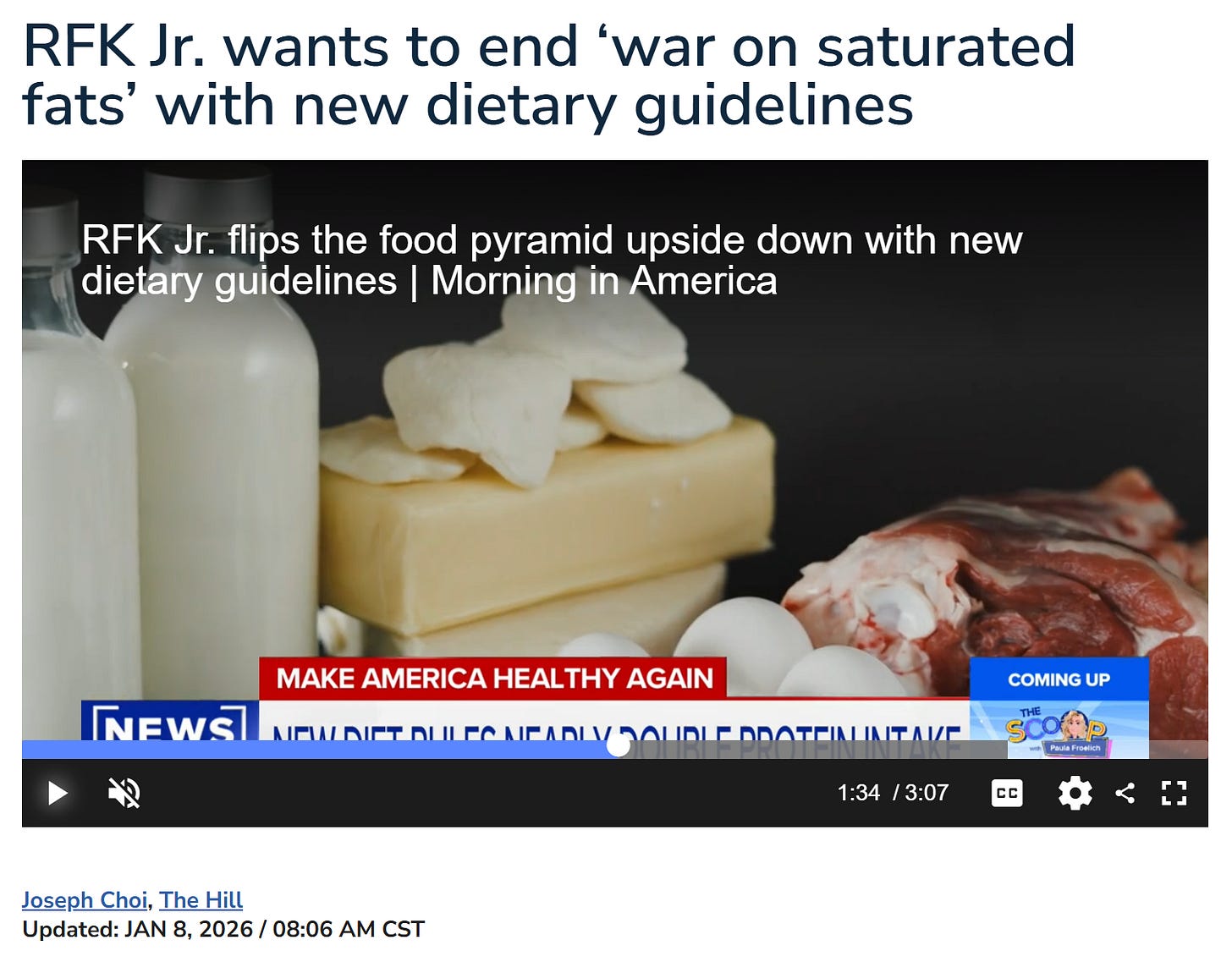
Americans consume around 50 billion hamburgers annually. This figure comes from USDA estimates and industry reports, which note that the average American eats about three burgers per week, adding up to roughly 150 burgers per person per year across the population. That is hardly a “war” on animal fat. Rather there will plenty of work for interventional cardiologists, cardiac surgeons, and heart centers eager for more cases as the new pyramid advances more animal fat from pork, beef, chicken, and full-fat dairy products.
Evidence Linking Saturated Fat to Disease
McCullough references extensive clinical evidence—over 1,500 studies—linking saturated fat to elevated LDL cholesterol and coronary artery disease. He rejects recent “pro-saturated-fat” or keto/carnivore reinterpretations as methodologically weak, calling them “sloppy dietary epidemiology” done to justify the keto-carnivore craze.Recommended Diet Composition McCullough proposes a diet emphasizing:
High-quality proteins: fish, beans, nuts, egg whites, and nonfat dairy.
Fruits and vegetables: unrestricted consumption.
Avoidance: pork (due to “genetic vaccines” in livestock), processed oils, refined starches, sugars, and saturated fats.
He approves limited, infrequent consumption of lean chicken or beef.
Praise and Critique of the Inverted Pyramid
Grade: B — McCullough praises the pyramid’s reduced emphasis on starch and sugar but criticizes inclusion of red meat, butter, cheese, and pork.
Suggestions for “A+” rating: remove those saturated fat sources entirely or relegate them to the bottom with refined starch.
Lifestyle Validation: The Seventh-Day Adventist Example He cites Seventh-Day Adventists—noted vegans and vegetarians—as having the lowest rates of coronary disease, diabetes, and metabolic syndrome, highlighting National Nutrition Advisor Dr. Ben Carson as an exemplar. McCullough notes their dietary purity and longevity as benchmark outcomes.
Takeaway Dr. McCullough concludes that minimizing all three S’s (sugar, starch, and saturated fat) is the key to optimizing cardiovascular and metabolic health, reducing cancer risk, and promoting longevity. He underscores that health is not achieved by favoring one macronutrient but by simultaneously de-emphasizing all harmful dietary groups.

📚 References
HHS / MAHA Announcement: “Department of Health and Human Services, Make America Healthy Again Coalition Announces Inverted Food Pyramid” (U.S. Department of Health and Human Services, 2025).
American Heart Association (AHA) Dietary Guidelines: “Dietary Fats and Cardiovascular Disease: A Presidential Advisory from the AHA,” Circulation, 2017 — reaffirmed updates 2024.
Recommends <10% of daily calories from saturated fat and substitution with unsaturated plant oils.
McCullough, P. (2025). Focal Points: Response to New Food Pyramid.
Please subscribe to FOCAL POINTS as a paying ($5 monthly) or founder member so we can continue to bring you the truth.
Peter A. McCullough, MD, MPH
FOCAL POINTS has partnered with Patriot Mobile to defend your medical freedom. Join Patriot Mobile today!


