


By Peter A. McCullough, MD, MPH
It was a great pleasure to join for the first time, dynamic media host Ben Swann. Ben Swann is an American investigative journalist, former television news anchor, and media commentator known for his alternative "Reality Check" news segments and later independent digital media projects.
🧬 Summary: Ben Swann & Dr. Peter McCullough on America’s Fertility Decline
The interview frames falling fertility as a global crisis with multiple converging causes, closing with a segment on COVID-era vaccination and reproductive health.
📉 The Demographic Picture
Global fertility fell from roughly 3.3 children per woman in 1990 to about 2.25 by 2024 — a decline near 32%.
More than half the world’s countries are now below the ~2.1 replacement threshold.
U.S. fertility dropped from about 2.12 in 2007 to 1.6 by 2024 (roughly 25%), with births falling another ~1% in 2025 to about 3.6 million.
The trend spans South Korea, Europe, Thailand, Mexico, and Latin America.
🏠 Why Families Are Shrinking
Swann lays out the conventional drivers:
Later marriage and parenthood
More women pursuing careers and financial independence
Expanded contraception and abortion
A culture emphasizing individual freedom over family life
Cost: housing, childcare, and healthcare
A 2025 UN Population Fund survey found financial barriers among the biggest obstacles to people having the number of children they want.
🌐 The Immigration Debate
Some legislators argue immigration offsets shrinking workforces.
Critics question whether mass immigration substitutes for helping young families, especially when public spending goes to migrant housing and services rather than family support.
Concerns are raised about pressure on housing, infrastructure, and public services.
⚗️ Infertility and Reproductive Health
Secretary Bobby Kennedy is cited on declining reproductive health:
Teenage boys with roughly half the testosterone and sperm counts of men in their 60s
Girls entering puberty years earlier than in prior generations
The segment notes the fertility treatment industry generating an estimated $5.8 billion in 2023, with a single IVF round costing $15,000–$25,000.
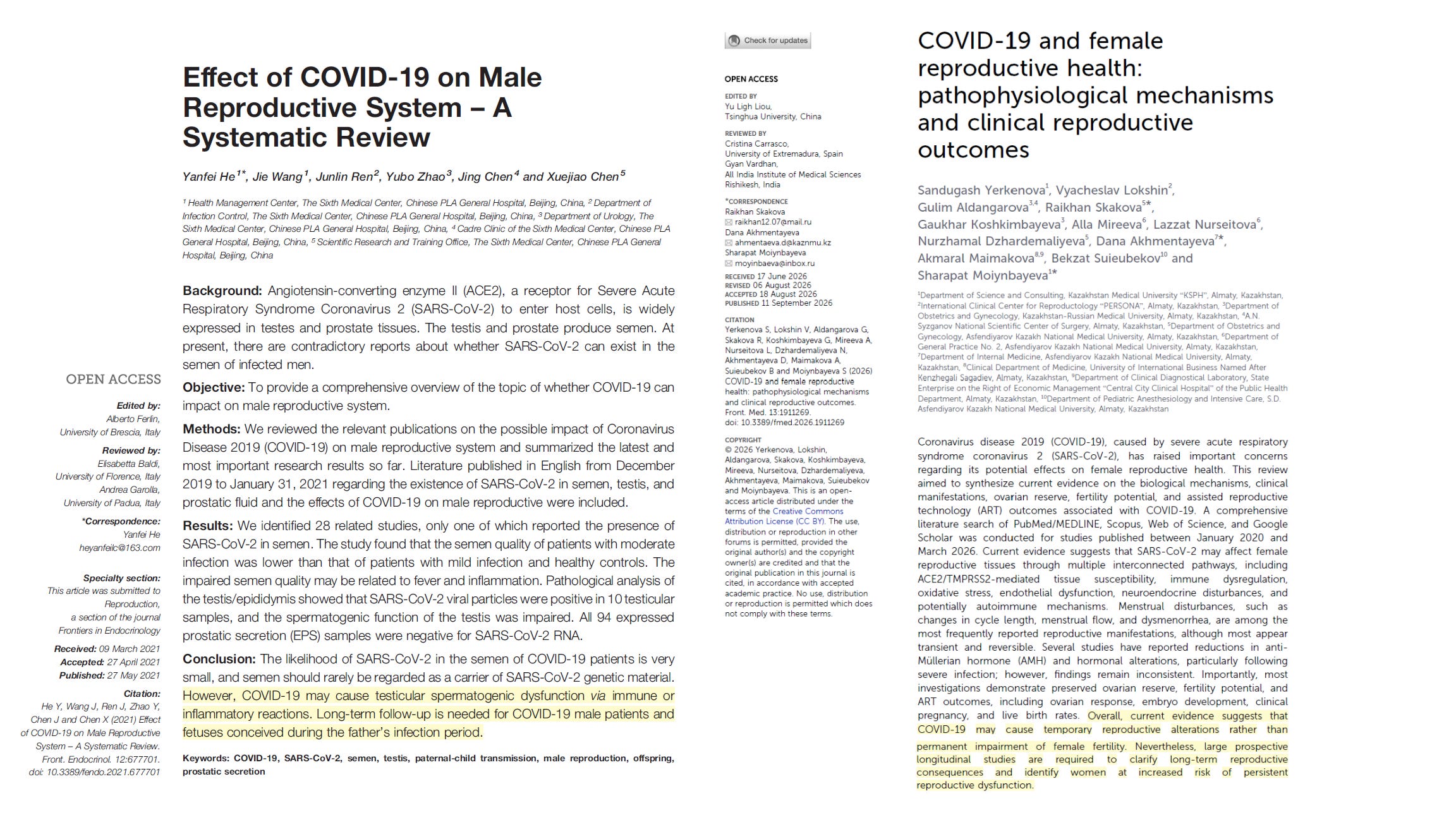
Factors examined include intensifying childhood obesity, unhealthy diets, lack of exercise, environmental toxins, and endocrine/hormonal disruptors. The COVID-19 pandemic ushered in an additional threat to both male and female fecundity.
💉 The Vaccine Segment
McCullough and Swann discuss COVID-19 vaccination and fertility:

Viral Spike protein detected in ejaculate
COVID-19 vaccination temporarily drops sperm count and motility
Multiple large studies showing menstrual disruption
Preclinical mammalian studies showing reduced egg reserve
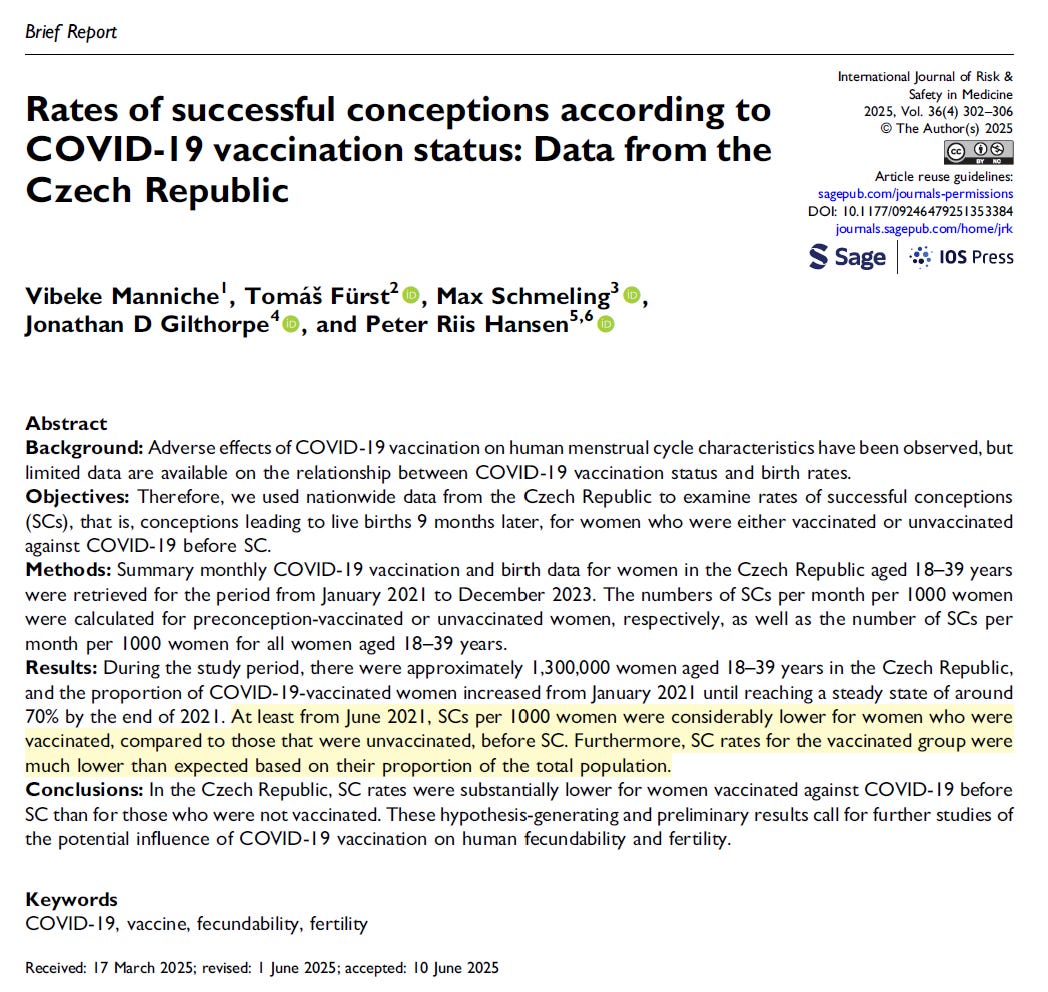
A clinical paper by Manniche and colleagues describing a “fertility cliff” — fertility falling among the vaccinated in 2021 while unvaccinated rates held steady
Papers by Thorpe and colleagues on increased fetal loss: first-trimester miscarriage, second-trimester stillbirth, and third-trimester premature delivery or infant/maternal death
Pregnant women and women of childbearing potential were excluded from the original trials, then broadly vaccinated after rollout
McCullough notes the CDC recorded that at the peak, 60% of pregnant women had been vaccinated before or during pregnancy
McCullough mentions spike detoxification approaches — nattokinase and bromelain — while stating plainly that the long-term reproductive effects are not yet known.
🧭 Closing Question
The interview poses the central paradox: after decades of official warnings about overpopulation — including Bill Gates’ remark about vaccines potentially lowering population growth — governments now worry about too few people. The final note is one of cautious hope that humanity can recover its fertility trajectory.
📝Please subscribe to FOCAL POINTS as a paying ($5 monthly) or founder member so we can continue to bring you the truth. AlterAI may be used to assist in searches, synthesis, and review.
Peter A. McCullough, MD, MPH
President, McCullough Foundation
FOCAL POINTS has partnered with AlterAI to support independent research and open inquiry. Subscribe to AlterAI today and get a discount on unbiased and accurate AI!

📚 References
United Nations Population Fund. 2025 UNFPA Survey on Fertility and Financial Barriers to Childbearing. New York, NY: United Nations Population Fund; 2025.
Centers for Disease Control and Prevention. U.S. birth and fertility data, 2025. [Report title, publication date, and URL not stated in transcript.]
United Nations. Global fertility rate and replacement-level data. [Report title, publication date, and URL not stated in transcript.]
Gates B. Remarks on vaccines, healthcare, and reproductive health services in relation to global population growth. [Speech/event name, location, and date not stated in transcript.]
Kennedy RF Jr. Statements on U.S. reproductive health, testosterone, and sperm counts. [Event name, location, and date not stated in transcript.]


